


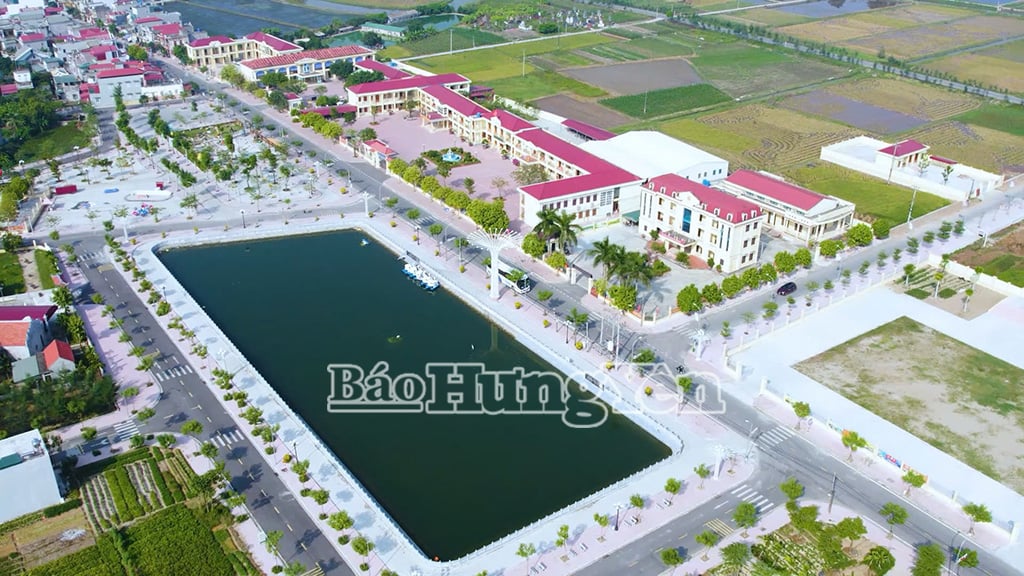
In the turbulent flow of Vietnamese national history, there are regions that not only bear witness to the ups and downs of history but also embody profound cultural and spiritual values, becoming a source of pride for generations.
A Sào commune, now part of Hung Yen province, is such a land. Bearing the sacred spirit of the Hoa River and embracing the heroic traces of the Tran Dynasty army under the brilliant command of General Tran Quoc Tuan (Hung Dao Dai Vuong), A Sào is not just a place name but also a symbol of patriotism, indomitable will, and the nation's aspiration for independence and freedom. Today, as A Sào commune enters a new chapter in its administrative history, each of us feels an even deeper sense of pride in having lived and grown up on this land of outstanding people and rich history.
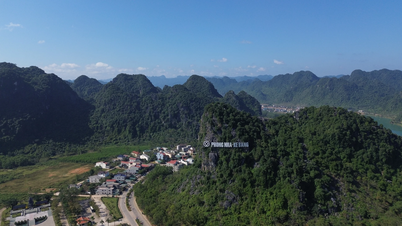
Nestled along the tranquil Hoa River, A Sao boasts not only beautiful and fertile scenery but also an extremely important strategic location. Bordering key economic regions such as Hai Phong and Hai Duong, A Sao combines the auspicious energy of both river and sea, creating a strategically advantageous position for defense and development. Because of this special location, A Sao was chosen as the fiefdom of Phung Can Vuong Tran Lieu, the father of the national hero Tran Quoc Tuan. The title "Saint Tran," which the Vietnamese people often use to refer to Tran Quoc Tuan, not only expresses respect and admiration but also serves as proof of his immense contributions to the country.
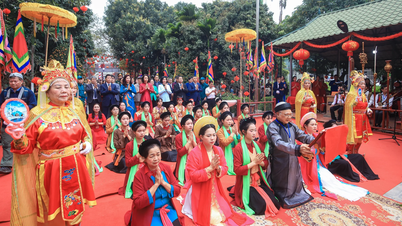
folk verse "No matter who the person is, when passing through A Sao Temple, they must dismount from their horse." It has become deeply ingrained in the consciousness of every Vietnamese person. It not only shows the solemnity and sacredness of the A Sào Temple but also expresses respect for this land – which was once a strong base for the Trần Dynasty army. Legend has it that at the age of 18, Trần Quốc Tuấn was entrusted by the court with the important task of defending the A Sào region. Young and talented, he quickly demonstrated strategic vision and outstanding military ability, laying a solid foundation for the glorious victories that followed.
Following the flow of language and culture, the name A Sào also carries profound meanings, closely linked to the great achievements of the Trần dynasty. The character "A" in Chinese, when broken down, is "Đông A," meaning "the Trần family." The character "Sào" means nest or lair. Thus, A Sào can be understood as the "nest" of the Trần dynasty. When the Trần dynasty achieved resounding victories in the three wars against the Mongol invaders, the fighting spirit of the Đại Việt army and people was praised with the phrase "the heroic spirit of Đông A." The name A Sào thus became even more sacred and meaningful, symbolizing the origin and nurturing ground of the strength of a heroic dynasty.
Over 700 years have passed, but the land of Quynh Phu (formerly) still preserves traces of the granary system, an important part of the logistics of the Tran Dynasty army. Place names such as Me Thuong village (rice granary), A Me (Tran Dynasty rice storage), Dai Nam (large grain granary), Am Qua village (sword granary), Go Dong Yen (horse saddle making place)... are not just names but also silent witnesses of a glorious historical period.
Furthermore, A Sào is also associated with Bến Tượng, a place deeply marked by the third resistance war against the Mongol invaders in 1288. Legend has it that when Trần Hưng Đạo led his army across the Hóa River to Lục Đầu Giang, the site of the decisive battle against the Mongol army commanded by Ô Mã Nhi, an elephant got stuck in the mud at this riverbank.
Tracing back through history, from the time the Trung Sisters raised the banner of rebellion in Me Linh in 40 AD, the land of A Sao was already a gathering place for heroes and valiant warriors. General Le Do from Dong Trang Hiep Luc village (now part of Hiep Luc hamlet, An Khe commune (formerly), recently merged into A Sao commune) also rose up to recruit soldiers, training day and night before marching to Me Linh (Hanoi) to join the Trung Sisters' rebel army.
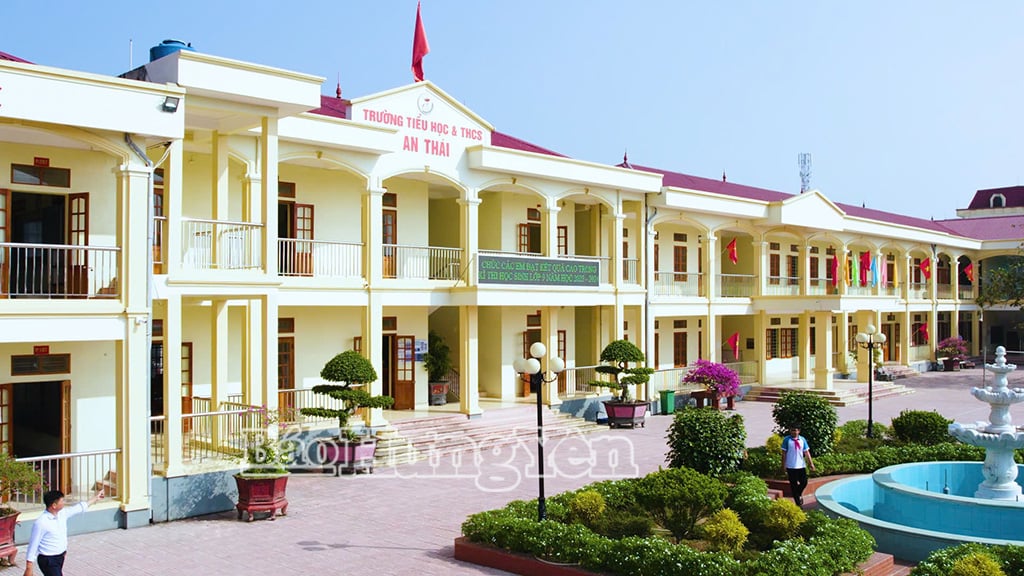
In the context of the country entering a new stage of development, implementing the Central Party Committee's Resolution on streamlining the administrative apparatus and reorganizing administrative units is a strategic step, opening up many opportunities for localities to develop more strongly. Thai Binh and Hung Yen merged to form the new Hung Yen province, and Quynh Phu district also merged its communes. The people of An Khe, An Dong, An Thai, and An Hiep communes were merged into a single commune called A Sao.
The merger of four communes into A Sao commune not only brings about a new administrative appearance but also creates greater synergy. Each area has its own unique characteristics, potential, and strengths. By uniting them as one commune, we can maximize these advantages, creating powerful breakthroughs in economic, cultural, and social development. We have more room to plan infrastructure development, attract investment, and improve the quality of life for the people.
With a glorious and heroic historical tradition forged through generations, from its formation to becoming the gathering place of General Le Do, and then the solid headquarters of General Tran Quoc Tuan (Hung Dao Dai Vuong), we, the people of A Sao commune today, have the right to be proud of our homeland. This pride is not only a source of honor for the past but also a driving force for us to continue writing the glorious history of our homeland in the new era. We have the responsibility to inherit and promote the good values of our ancestors, to build A Sao into an increasingly prosperous and civilized place, contributing to bringing Hung Yen and the country into an era of strong and prosperous development.
A Sào faces new opportunities and challenges. Economic planning and development should be based on the region's existing potential, combined with the preservation and promotion of cultural and historical values. The commune can fully exploit its historical tourism potential by investing in the construction and restoration of relics related to the Trần dynasty and General Lê Đô, attracting domestic and international tourists to visit and learn about the nation's glorious history. In addition, developing high-tech agriculture and traditional crafts are also important directions to improve the lives of the people.
The pride of being from A Sao commune will forever be a great source of motivation, urging each of us to constantly strive and contribute to making our homeland increasingly prosperous and beautiful.
Source: https://baohungyen.vn/tu-hao-la-nguoi-xa-a-sao-3182753.html

















































Comment (0)