

|
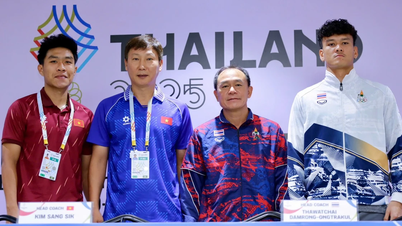
Vietnam needs to play with composure against Thailand. |

For coach Kim Sang-sik and his team, the biggest challenge in the upcoming 90 minutes will likely not only be the 11 players in blue on the field, but also a far more formidable "invisible opponent": the refereeing in the absence of VAR support, compounded by the pressure from the host nation to win at all costs.
Thailand's thirst for gold may lead them to disregard ethical boundaries.
The Thai team is experiencing an incredibly long title drought at the SEA Games. Eight years have passed since their last victory in men's football (in 2017). Their defeats in the finals of the last two Games (SEA Games 31 and 32) have further wounded the pride of the "War Elephants." Therefore, at the SEA Games 33 held on home soil, winning the Gold Medal has become a mandatory objective.
Not only in football, but immense pressure weighed on the Thai organizers and athletes to break the record for the number of gold medals set by the Vietnamese delegation at the 31st SEA Games. This desire was so great that regional public opinion began to notice signs of the host country's "desperate measures" to achieve its goal. We witnessed ugly scandals on the pencak silat mats that showed the extreme thirst for gold among the Thais.
The peak of the controversy came from eSports . The case of a Thai Arena of Valor (RoV) player being accused of cheating and using third-party software to interfere with the match, leading to his disqualification from the tournament, is the clearest evidence of the "win at all costs" mentality. This incident served as a wake-up call about the host country's greed for gold, causing concern among fans of other sports, especially football.
In men's football, the home advantage seems to have been carefully calculated even before the ball was kicked. The draw "accidentally" placed the U22 Thailand team in a relatively easy group, facing only weak opponents like Timor Leste and Singapore. Even in the semi-finals, Thailand was scheduled to face the weakest team.
But that's not all; the semi-final match against Malaysia on December 15th is another prime example. Just 15 minutes into the game, with the score evenly balanced, the referee didn't hesitate to issue a second yellow card, sending a Malaysian player off after a collision in the midfield – a decision widely considered harsh and "unfair." That early red card shattered Malaysia's fighting spirit, paving the way for Thailand to comfortably advance to the final.
|
Thai athletes are willing to cheat for the gold medal. |
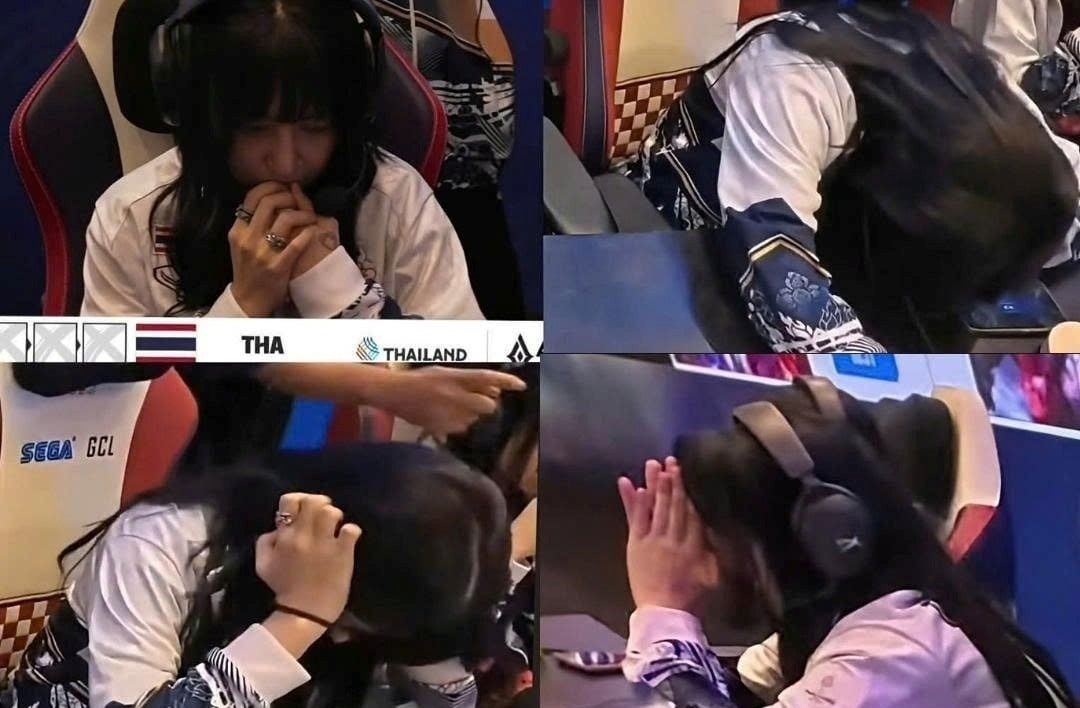
The concern with third-party software is that it can be misleading.
Entering the final match, the Vietnam U22 team needs to clearly define their mindset: We are playing away from home, under pressure from the host nation Thailand, and most importantly, without the support of VAR ( Video Assistant Referee) technology. In major FIFA or AFC tournaments, VAR is the "scales of justice" that helps minimize erroneous or biased decisions. But at the SEA Games 33, ultimate power still rests with the main referee and his assistants on the field.
The clear lesson from Malaysia's semi-final match serves as a stark warning to Vietnamese defenders. In a "do or die" match where the home team must win, 50-50 challenges become a fatal weakness. A legitimate tackle by a Vietnamese player might be penalized, but a similar tackle by Thailand could be overlooked.
The most dangerous situations are within the penalty area. With pressure from the stands and a desire to "compensate" for the home team, referees can be very sensitive to falls by Thai strikers. Just a small impact can trigger a whistle, and without VAR to review, all of Vietnam U22's efforts will be wasted.
Therefore, the coaching staff needs to instill an extremely cautious approach in the players. Calmness and a cool head are paramount. Players need to minimize unnecessary movements, risky tackles in the penalty area, or excessive reactions to the referee, which could lead to unnecessary yellow cards, as Malaysia has already received.
Defeating U22 Thailand on a technical level is difficult enough, but overcoming the external influences from "third-party software" in the form of referees is even more challenging. To win the gold medal, U22 Vietnam will need to learn from the Mobile Legends team: Accept the opponent's use of "third-party software" to control the game and win by their own hand.
Source: https://znews.vn/tu-scandal-lien-quan-u22-viet-nam-can-than-trong-post1612133.html

![[Photo] Prime Minister Pham Minh Chinh receives the Governor of Tochigi Province (Japan)](/_next/image?url=https%3A%2F%2Fvphoto.vietnam.vn%2Fthumb%2F1200x675%2Fvietnam%2Fresource%2FIMAGE%2F2025%2F12%2F16%2F1765892133176_dsc-8082-6425-jpg.webp&w=3840&q=75)
![[Live] 2025 Community Action Awards Gala](/_next/image?url=https%3A%2F%2Fvphoto.vietnam.vn%2Fthumb%2F1200x675%2Fvietnam%2Fresource%2FIMAGE%2F2025%2F12%2F16%2F1765899631650_ndo_tr_z7334013144784-9f9fe10a6d63584c85aff40f2957c250-jpg.webp&w=3840&q=75)
![[Image] Leaked images ahead of the 2025 Community Action Awards gala.](/_next/image?url=https%3A%2F%2Fvphoto.vietnam.vn%2Fthumb%2F1200x675%2Fvietnam%2Fresource%2FIMAGE%2F2025%2F12%2F16%2F1765882828720_ndo_br_thiet-ke-chua-co-ten-45-png.webp&w=3840&q=75)
![[Photo] Prime Minister Pham Minh Chinh receives Lao Minister of Education and Sports Thongsalith Mangnormek](/_next/image?url=https%3A%2F%2Fvphoto.vietnam.vn%2Fthumb%2F1200x675%2Fvietnam%2Fresource%2FIMAGE%2F2025%2F12%2F16%2F1765876834721_dsc-7519-jpg.webp&w=3840&q=75)

























































![[Live] Closing Ceremony and Award Presentation for the "Impressive Vietnam Tourism" Video/Clip Creation Contest 2025](https://vphoto.vietnam.vn/thumb/402x226/vietnam/resource/IMAGE/2025/12/17/1765974650260_z7273498850699-00d2fd6b0972cb39494cfa2559bf85ac-1765959338756946072104-627-0-1338-1138-crop-1765959347256801551121.jpeg)



























Comment (0)