

Building a safe, just, and happy society.
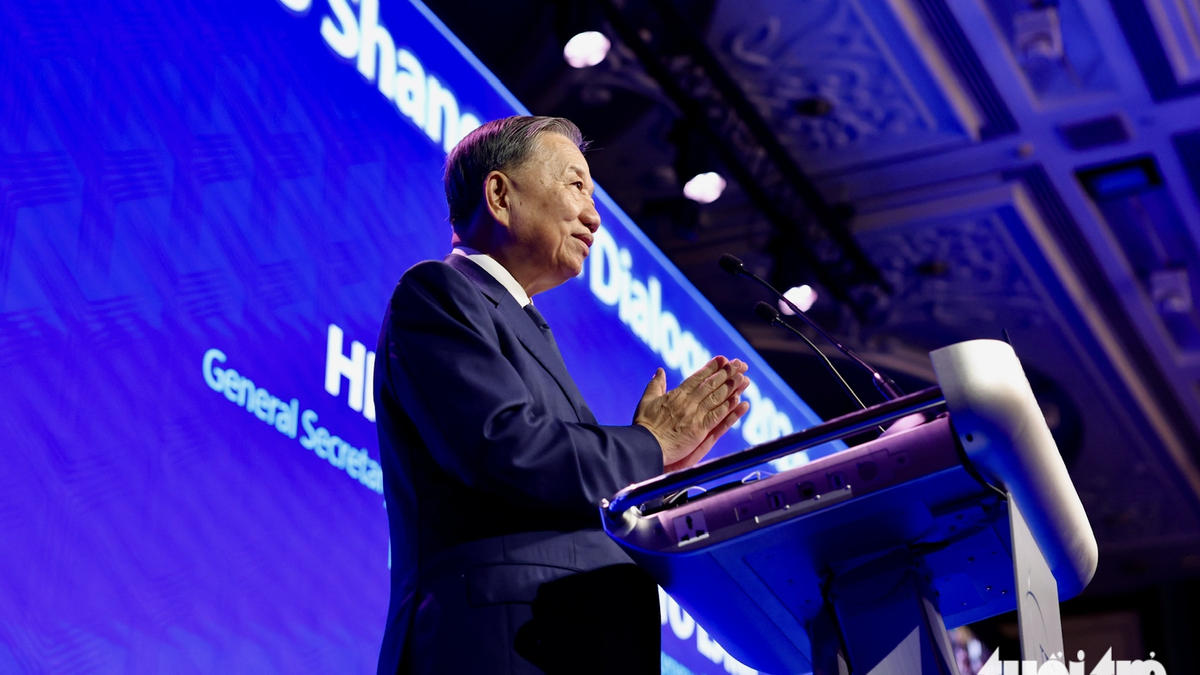
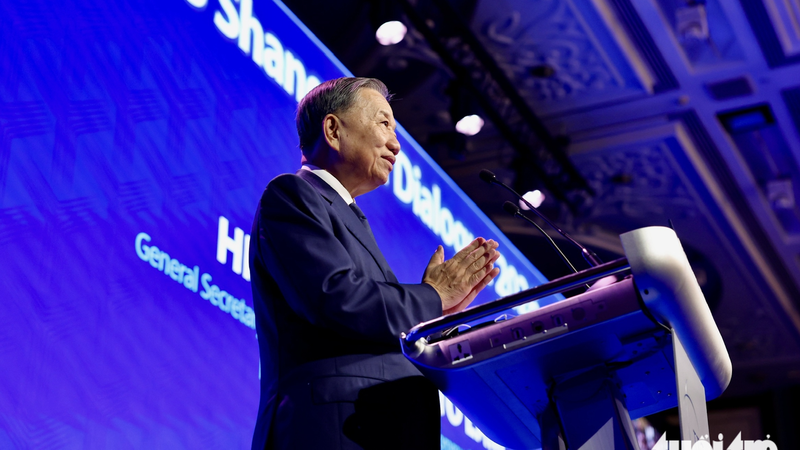
In recent development guidelines, General Secretary To Lam emphasized that prosperity is not just about economic growth, but about the ability to create a safe, equitable, and happy society for all, leaving no one behind. This message is particularly meaningful for Ho Chi Minh City – a megacity facing the widening gap between rich and poor, and pressure on housing, healthcare, and education.
Many developed countries have paid a heavy price for neglecting social equity. For Ho Chi Minh City, the goal of "inclusive prosperity" requires humane urban policies: sustainable social housing development, expansion of high-quality public healthcare and education to suburban areas, increased green spaces, public welfare, and access to culture, sports, and creativity for all.
The General Secretary affirmed that the city must be a "livable" place, where every citizen receives comprehensive care in terms of health, education, living environment, and safety. The concept of "livability" is not a slogan, but a set of criteria requiring sustained investment and a clear strategy. Despite its vibrancy, Ho Chi Minh City is facing traffic congestion, flooding, air pollution, a lack of green spaces, and urban psychological stress.
To develop a "human-centered city," it's necessary to shift from economic indicators to happiness indicators; from prioritizing motorized vehicles to public transportation and pedestrian walkways; and from concrete urbanization to "ecological cities." Seoul (South Korea) once demolished the Cheonggyecheon Expressway to restore a natural stream, thereby revitalizing public spaces and increasing its happiness index.
Ho Chi Minh City can certainly learn from the experiences of canals like the Nhieu Loc - Thi Nghe canal, the Lo Gom canal, or the Thu Thiem - Cat Lai area. Holistic human development must be a steadfast goal, closely linking growth with social equity and quality of life. A city is not just a place of high-rise buildings, but a place where tens of millions of people, especially young people and workers, live, work, study, and aspire to a better life.
The consolidation of localities presents an opportunity to connect diverse cultures, people, and creative capabilities. Ho Chi Minh City needs to develop a people-centered innovation ecosystem, with a network of universities, research institutes, and startups as its core. Thu Duc City could absolutely become the "Silicon Valley" of Vietnam if it builds an education, research, and business model similar to Stanford (USA) or Tsukuba (Japan). Binh Duong could also become a southern innovation hub if it effectively links education, industry, and startups.
Institutions for the people
When General Secretary To Lam emphasized, "Prosperity is not just about economic growth, but about the ability to build a safe, just, and happy society," it was not just a political message, but a strategic guideline for building a new system of development values – starting with institutions. Institutions are not just laws or bureaucracy, but the way society is organized and operates.
An expanding metropolis with over 20 million inhabitants cannot develop using outdated thinking. Ho Chi Minh City needs a modern, multi-centered, digitally integrated regional institution – where the government is flexible, transparent, and innovative in its governance. However, that institution must retain its unique identity.
No city is truly livable if it loses its memory, culture, and urban soul. The diversity of Ho Chi Minh City, Binh Duong, and Ba Ria - Vung Tau is a valuable asset: from the historical depth of Saigon - Gia Dinh, the industrial vitality of Binh Duong, to the maritime and port heritage of Vung Tau. If properly developed, each region can become a unique hub of economic, tourism, innovation, and quality of life development.
The world has proven that modern institutions and indigenous culture can coexist. Copenhagen (Denmark) has become a high-tech, green city without losing its identity. Kyoto (Japan) preserves its millennia-old heritage amidst the wave of globalization. Ho Chi Minh City can also do the same, if it develops for its people, uses culture as a foundation, and innovates its institutions to spread Vietnamese values.
With the historic merger decision and clear direction from the central government, Ho Chi Minh City is entering a new chapter – not only expanding geographically but also elevating its development mindset. From an economic center to a livable city; from pure growth to inclusive development; from administrative management to creating happiness. If this vision is maintained, Ho Chi Minh City will not only be the largest city in the country, but also a symbol of comprehensive and distinctive development in the new era.
Source: https://www.sggp.org.vn/tu-tang-truong-kinh-te-den-phon-vinh-toan-dien-post801304.html








![[Video] Sunset at Lap An Lagoon – Where the sun sets over the fishing nets](https://vphoto.vietnam.vn/thumb/340x192/vietnam/resource/IMAGE/2026/05/31/1780192137701_beach-landscape-sea-water-nature-grass-745871-pxhere-com.jpeg)




![[Image] A brilliant symphony and explosive power in the skies of Da Nang.](https://vphoto.vietnam.vn/thumb/1200x675/vietnam/resource/IMAGE/2026/05/31/1780196945787_anh-man-hinh-2026-05-31-luc-10-08-51.png)
















































Comment (0)