

Over the past 70 years, the entertainment industry has developed tremendously alongside the growth of television, YouTube, social media, and more. Users have access to content anytime, anywhere. Forms like online music streaming and movie streaming have experienced strong growth, while traditional forms have declined or stagnated.
Speaking at the seminar "Solving the problem of copyright protection for the digital music , film, and television industries," Mr. Nguyen Ngoc Han, General Director of Thu Do Multimedia, shared that Vietnam currently has approximately 50 million OTT users.
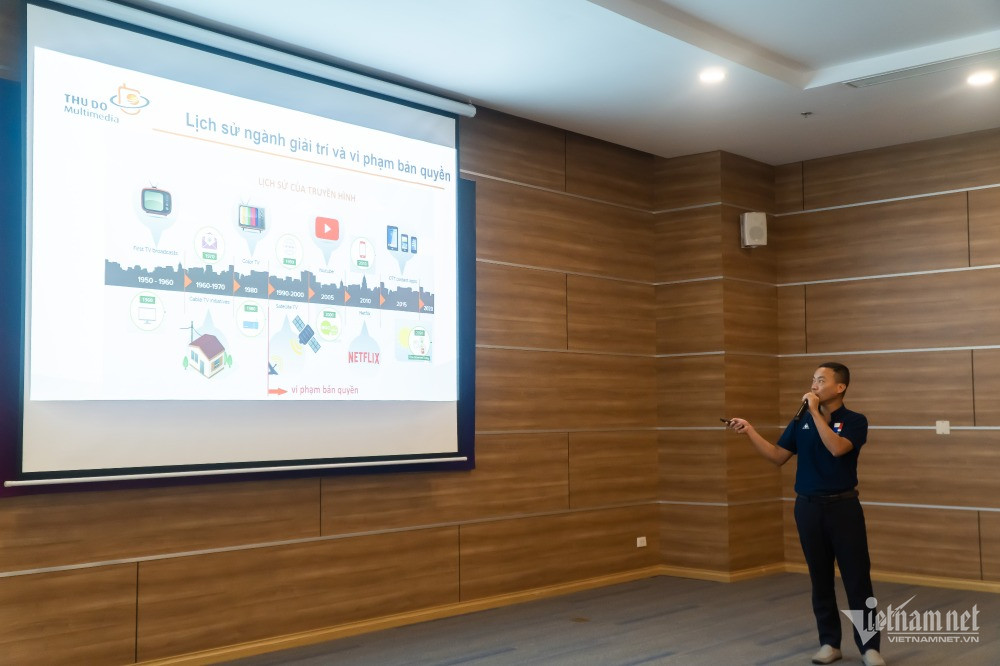
Since the 1990s, the concept of copyright infringement has also emerged thanks to the popularity of the Internet. The digital revolution has posed unprecedented challenges in content security and copyright protection, requiring new solutions to protect content from a range of copyright infringement risks.
Although Vietnam has implemented measures to block domain names and deployed Digital Rights Management (DRM) solutions to prevent unauthorized access and distribution, these are still insufficient and require a multi-faceted solution. In particular, DRM has vulnerabilities that allow for packet spoofing to deceive license servers and bypass authentication to grant access to untrusted accounts.
In addition, OTT television providers and online broadcasters face other risks such as: transnational breaches using VPNs, breaches across multiple platforms (mobile, set-top boxes, web), and breaches through re-streaming.
Copyright infringers are willing to use cameras to record live footage and then replay it on other platforms, or plug in HDMI cables to capture content and then distribute it on the Internet.
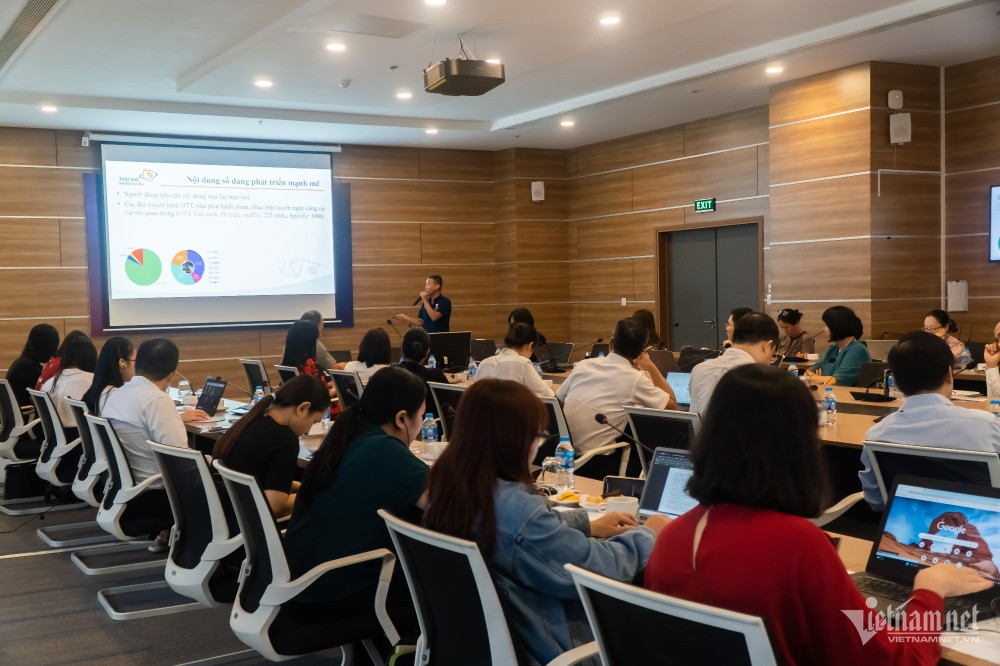
According to Mr. Nguyen Ngoc Han, 80% of violations occur on digital platforms, with the most frequently infringed content being television programs (49.4%), films (17.1%), music (16%), books (11.2%), and software (6.2%).
In Vietnam alone, copyright infringement resulted in losses of $348 million in 2022. Globally, this figure reaches $65 billion across the music, film, and television industries. Without effective copyright protection, content producers will lack the budget to invest in new projects to serve their users.
In response to this situation, device manufacturers have implemented measures such as removing infringing device lines and upgrading software, but these have not yet provided comprehensive protection.
A multi-faceted solution is needed, including an additional layer of proactive monitoring that observes and reports all interference from the operating system and interfering software before granting viewing permissions; granting permissions to each device flexibly according to content; and intelligently analyzing and reporting on copyright infringement trends and methods, thereby proposing appropriate copyright protection solutions.
Multimedia Capital has developed the Sigma Multi-DRM solution, which includes three layers of protection certified by Catersian, and applies artificial intelligence (AI) to address the complex issues of copyright infringement.
The Active Surveillance Environment (SAO) solution comprises five key features: multi-dimensional threat detection, VPN detection and removal, packet spoofing resistance, user behavior analysis, and real-time intelligence.
By using Sigma Multi-DRM integrated with SAO, OTT television service providers and online movie and music distributors can protect proprietary content, enhance brand reputation, optimize revenue, and proactively manage security.
According to Mr. Nguyen Ngoc Han, regarding copyright infringement, part of the blame lies with the copyright holders themselves for not protecting their content from the outset. In recording studios, as soon as recording begins, they attach a code to confirm that the recording was produced in that studio. When uploaded to the internet, it's possible to identify which studio recorded it in.
With the Sigma Multi-DRM solution, Capital Multimedia is ready to collaborate with state management agencies and copyright holders to create a content protection environment. This is also a way for the country's economy and the entertainment content industry to develop.

Source
![[Image] Central Party Office summarizes work in 2025](/_next/image?url=https%3A%2F%2Fvphoto.vietnam.vn%2Fthumb%2F1200x675%2Fvietnam%2Fresource%2FIMAGE%2F2025%2F12%2F18%2F1766065572073_vptw-hoi-nghi-tong-ket-89-1204-jpg.webp&w=3840&q=75)


























































































Comment (0)