

Van Don district suffered the most severe damage to its aquaculture industry in the province due to Typhoon No. 3, with the area of marine aquaculture almost completely wiped out. With the province's determined and decisive leadership in addressing difficulties and gradually reviving the marine aquaculture industry in Van Don, the district has actively implemented solutions. To date, many aquaculture areas have been restocked, bringing renewed hope and confidence to the local people.
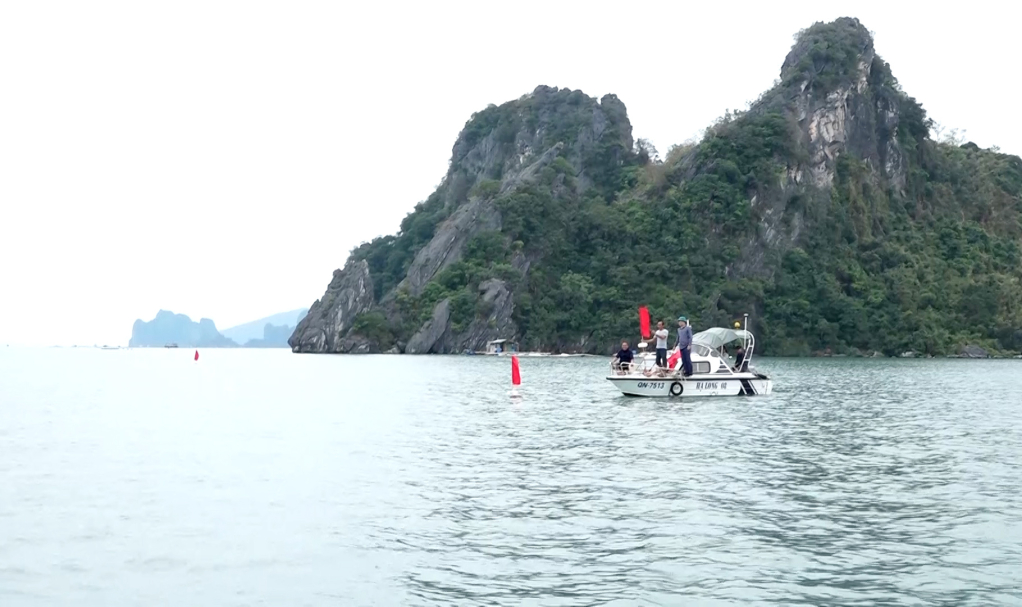
Typhoon No. 3 caused severe damage to aquaculture facilities and households in Van Don district. The total loss of harvested seafood was approximately 32,112 tons (25,638 tons of oysters, 636 tons of fish, and 5,840 tons of other seafood); in addition, 2,000 hectares of oyster farms and 3,500 newly stocked fish cages were also damaged. The total estimated damage to aquaculture in Van Don district is over 2,300 billion VND.
With the goal of quickly restoring the marine aquaculture industry in Van Don district, ensuring the welfare of the people, and following the direction of the province, the People's Committee of Van Don district has promptly implemented solutions to overcome difficulties for businesses, cooperatives, and households engaged in marine aquaculture.
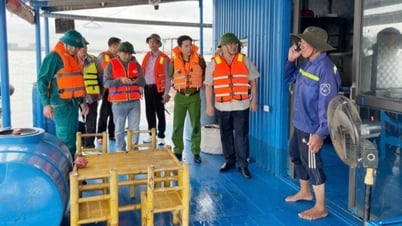
Mr. Vu Duc Huong, Chairman of the Van Don District People's Committee, said: Immediately after the storm, the district directly organized many working sessions with credit institutions, businesses, and aquaculture households to listen to the concerns and aspirations of the people. From there, they discussed solutions to resolve the issues in the direction of creating the most favorable conditions for people to have their bank loans restructured, postponed, or extended; access new loan sources without collateral or with "zero" interest rates so that people have the resources to restore production.
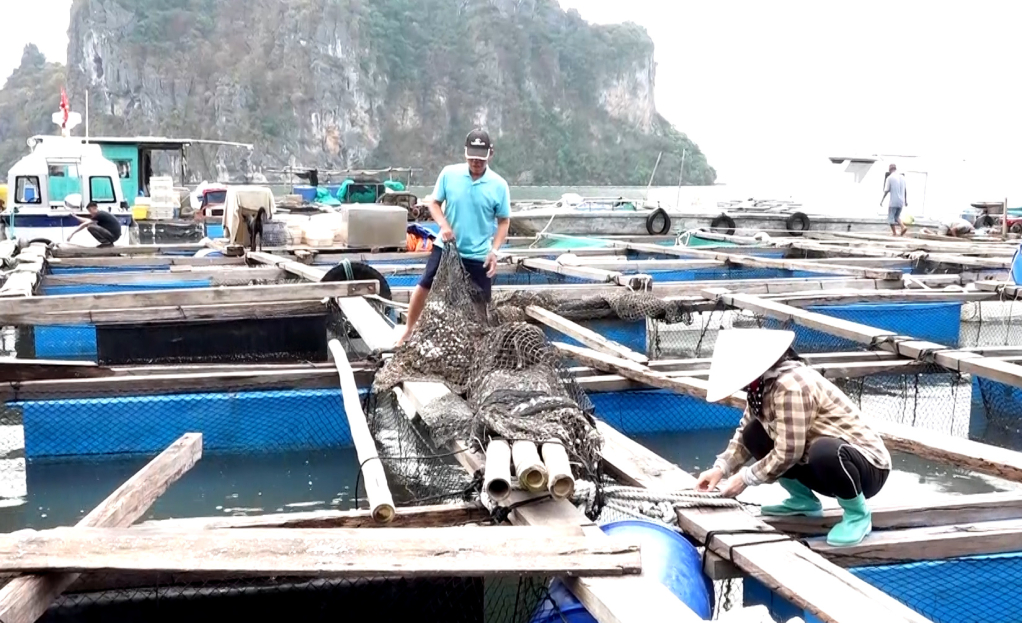
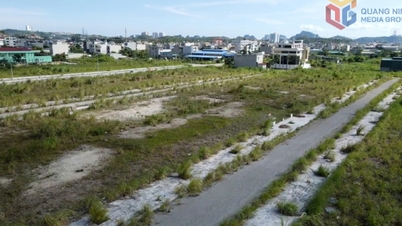
In parallel with working with credit institutions, the People's Committee of Van Don district directed specialized departments to closely coordinate with the authorities of communes and towns in the area to establish many working groups to carry out the steps to allocate sea areas under the jurisdiction of the District People's Committee within the 3-nautical-mile management zone. Accordingly, by September 30th, the District People's Committee had completed the procedures for allocating the location, coordinates, boundaries, and area of the sea area to nearly 600 households of 50 cooperatives in the area, with an area of 4,553 hectares, an increase of 118% in aquaculture area compared to the period before typhoon No. 3.
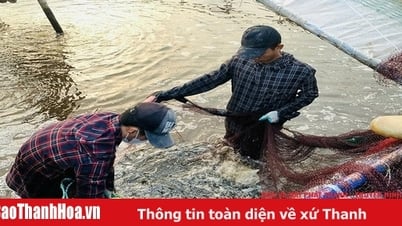
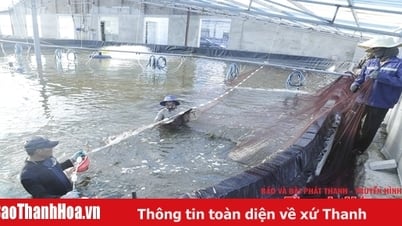
According to reports from communes and towns, currently 75 households have identified locations, coordinates, and boundaries and have begun setting up ropes and buoys for oyster farming, covering an area of 495 hectares. To date, 90 hectares have been used for oyster farming, mainly in the communes of Ban Sen, Ha Long, Dong Xa, and Thang Loi. For the remaining areas, people are actively marking boundaries, redefining sea areas, attaching buoys, and rearranging rafts according to the designated areas and boundaries assigned by the People's Committees of the communes and towns.
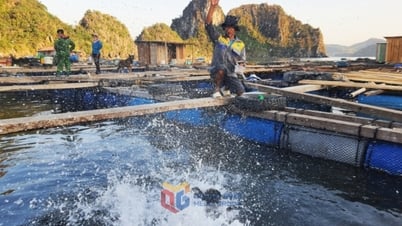
Besides oyster farmers, fish cage farmers are also urgently repairing and restoring damaged and deformed cages. It is estimated that since the storm, 2,000 fish cages have been repaired, representing 30% of the affected cages. These cages are being used to raise the remaining fish after the storm.
On September 30th, the District People's Committee issued decisions assigning areas of sea under its jurisdiction within a 3-nautical-mile management zone to five households engaged in marine fish farming in the waters of Cai Rong town, with a total area of 2.5 hectares (0.5 hectares per family).
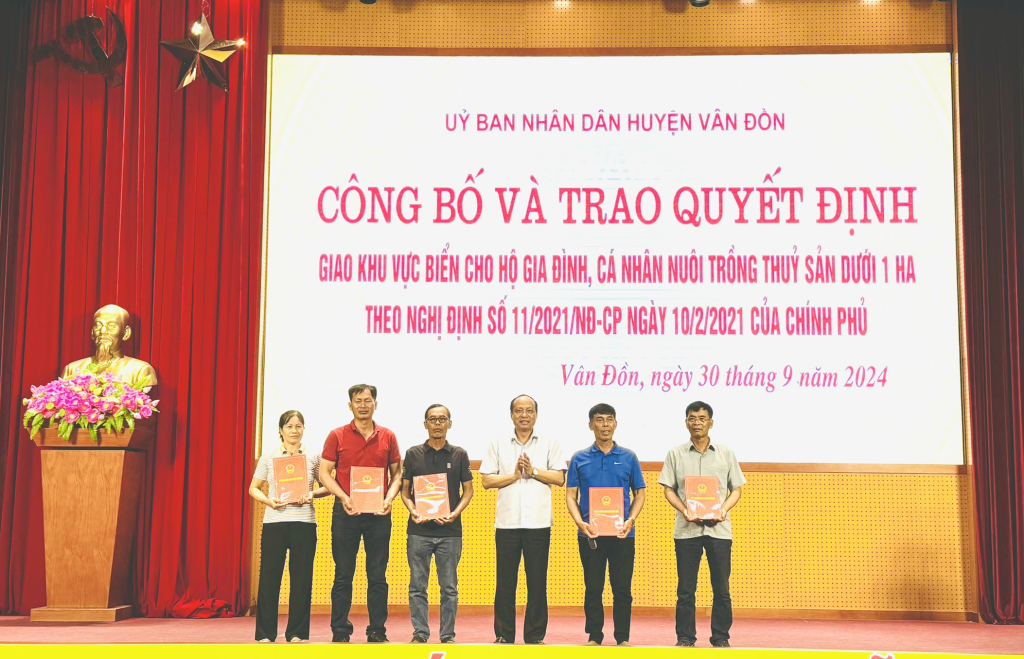
Mr. Pham Van Long, from Zone 9, Cai Rong town (Van Don district), shared: "My family is very excited to be one of the first households in the district to be allocated land for sea farming according to regulations. Previously, our family mainly farmed on our own initiative, so when typhoon No. 3 caused damage, we had almost no basis to benefit from the state's support mechanisms and policies. Now that we have received the decision to allocate sea land, this is considered an asset that can be mortgaged to the bank to obtain loans for reinvestment."
It is known that, in order to support aquaculture farmers in Van Don district in overcoming difficulties step by step, in addition to credit institutions providing capital support, many businesses producing floating materials for aquaculture inside and outside the province have also actively participated in supporting farmers by donating breeding floats, reducing the selling price of HDPE floats produced and supplied directly to the farms.
In just a short time since its implementation, what was once a barren "white sea" after the storm has gradually transformed into new, larger-scale aquaculture areas in many parts of Van Don.
Source















![[Photo] Reception to welcome General Secretary and President To Lam and his wife on their State visit to the Philippines](https://vphoto.vietnam.vn/thumb/1200x675/vietnam/resource/IMAGE/2026/06/01/1780295488620_vna-potal-chieu-dai-chao-mung-tong-bi-thu-chu-tich-nuoc-to-lam-va-phu-nhan-tham-cap-nha-nuoc-toi-philippines-8798060-7855-jpg.webp)

















































Comment (0)