

In Hanoi, there's a place where, just by stepping through the triple-arched gate, the pace of the city slows down: time-worn brick walls, straight pathways along the North-South axis, and naturally quiet conversations fading away, giving way to tranquility. The Temple of Literature – National University is a stop for those who want to "slow down" in the heart of the city, admiring the architecture while tracing the history of Vietnamese Confucian education .
Quick information for scheduling
- Address: 58 Quoc Tu Giam Street, Van Mieu - Quoc Tu Giam Ward, Hanoi City
- Location: Situated between four streets: Nguyen Thai Hoc, Van Mieu, Quoc Tu Giam, and Ton Duc Thang, Hanoi (an area with many one-way streets).
- Opening hours: 8:00 AM - 5:00 PM (every day of the week)
Entrance ticket prices
| Object | Ticket prices |
|---|---|
| Adult | 70,000 VND |
| Vietnamese students (with student ID card) | 35,000 VND |
| Severely disabled persons, elderly persons (Vietnamese citizens aged 60 and above, with a citizen identification card) | 35,000 VND |
| Children under 16 years old | Free of charge |
| Automatic narration, foreign languages | 100,000 VND |
Note: Opening hours and entrance fees may change over time. Please contact the site management for the latest information.
Why is this place special in history?
The Temple of Literature was built in 1070 during the reign of King Ly Thanh Tong; in 1076, King Ly Nhan Tong built the National Academy right next to it to teach the king's children and the children of noble families. During the reign of King Tran Thai Tong, it was renamed the National Academy and also accepted talented children of commoners.
During the reign of King Le Thanh Tong, the Temple of Literature - National University began erecting steles commemorating those who passed the doctoral examinations. In 1962, the site was classified as a National Monument. In 1947, the French colonialists shelled the site, causing one house to collapse, leaving only the foundation, two pillars, and four stone inkstones.
Travel to the Temple of Literature - National University.
- By private vehicle: If starting from Hoan Kiem Lake, travel through Trang Thi, Nguyen Khuyen, and Hai Ba Trung streets to reach the destination. Parking is available right next to the entrance gate, at 58 Quoc Tu Giam Street.
- Bus: You can choose routes such as 38, 41, E08, 08A… depending on your starting point.
- Ride-hailing services: can be booked via app or hailed directly. The source also mentions Green SM taxi, which can be booked via the Green SM app, the hotline 1900 2088, or hailed directly on the street.

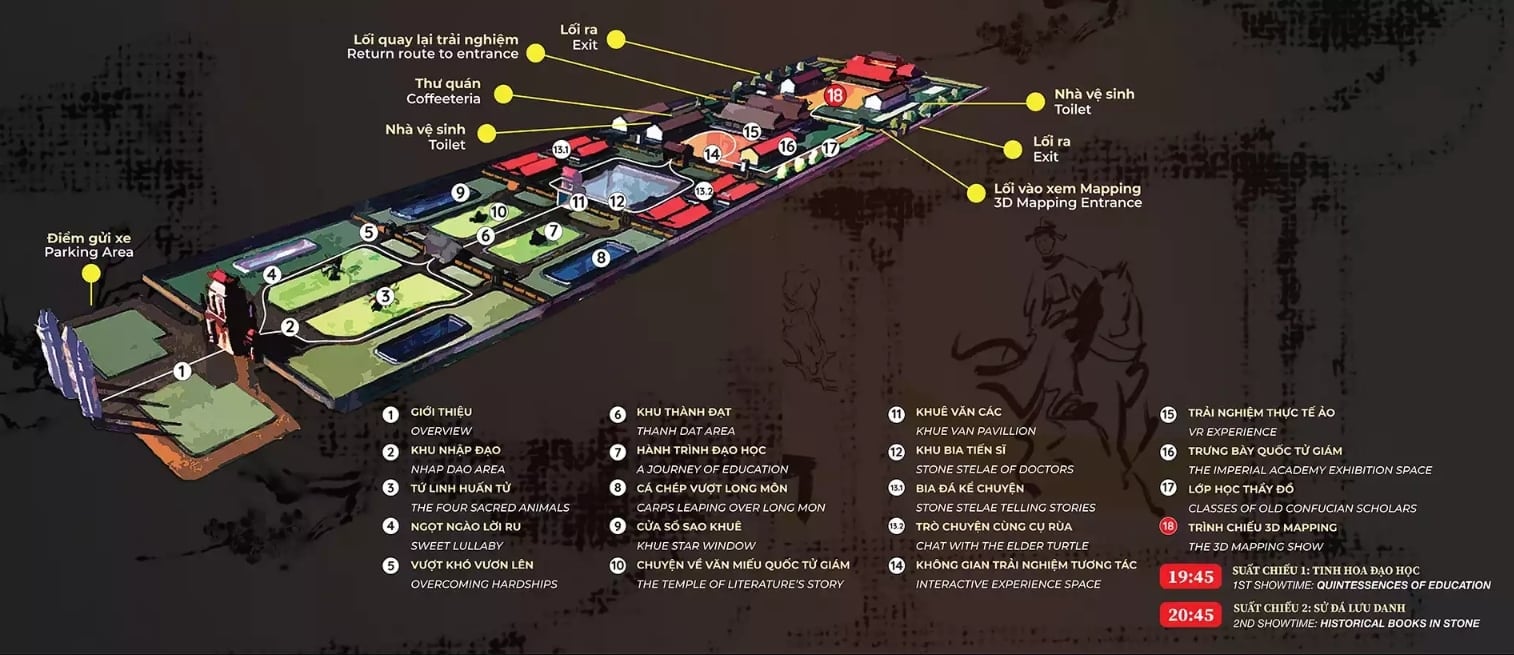
Follow the axis of the 5 zones: the easiest path to experiencing "the philosophy of learning".
The complex of historical relics covers an area of approximately 54,331 square meters and includes many structures such as the Temple of Literature, Ho Van Lake, Quoc Tu Giam, Khue Van Cac, Giam Garden, etc. The architecture reflects the style of the early Nguyen dynasty's royal court, with a symmetrical layout in layers along the North-South axis.
Zone 1: From the Temple of Literature Gate, enter the slow pace of ancient space.
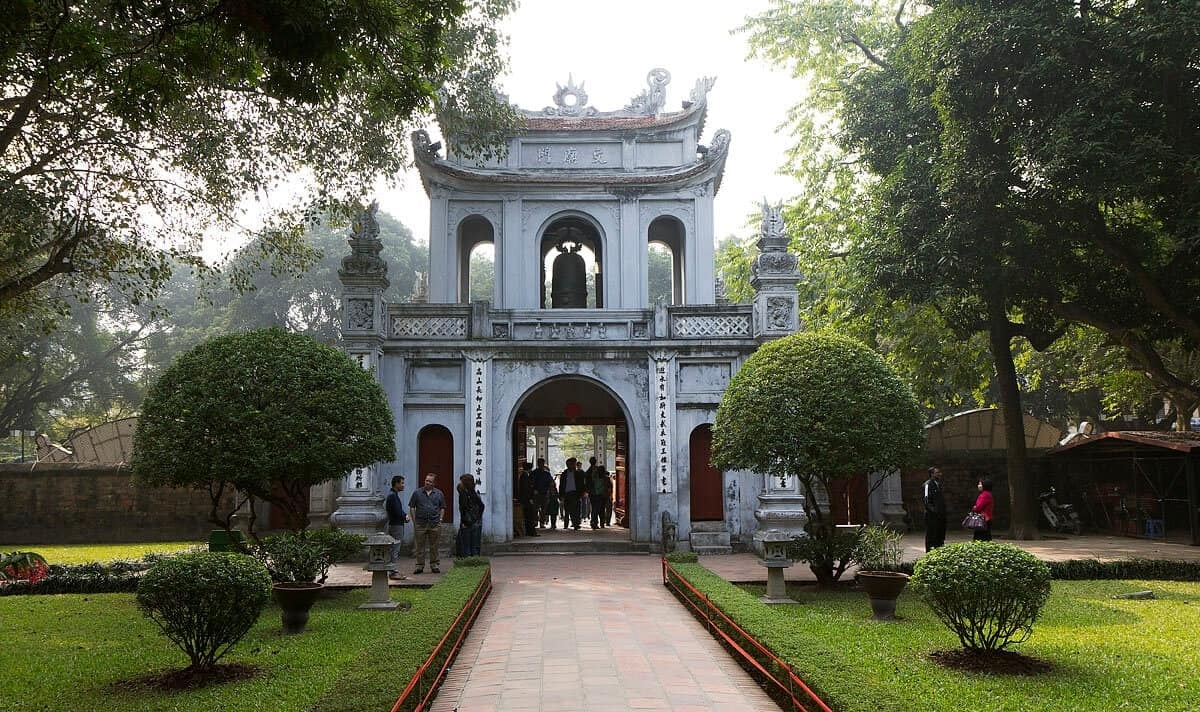
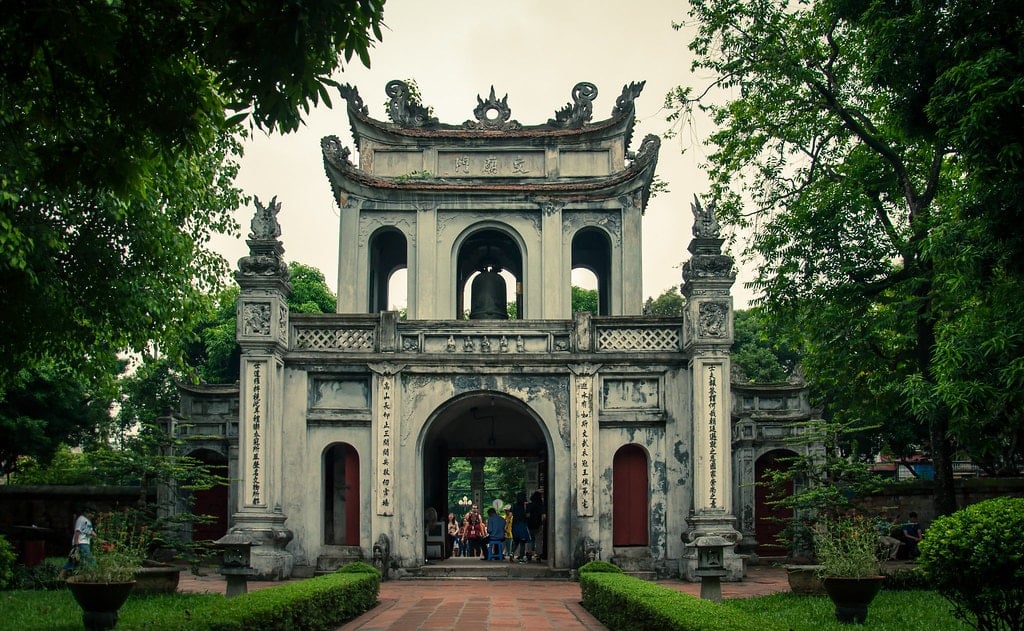
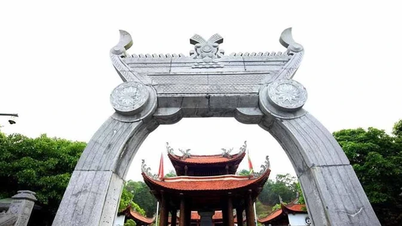
The Văn Miếu Gate is the outer triple-arched gate: three doors, two levels, with the upper level bearing the three characters "Văn Miếu Môn" in ancient Chinese script. From here, the feeling of being separated from the bustling streets becomes apparent—a spacious courtyard, patches of moss on the bricks, and just enough solemnity to make you automatically lower your voice.
Section 2: Dai Trung Mon Gate, then opening up to Khue Van Cac Pavilion.
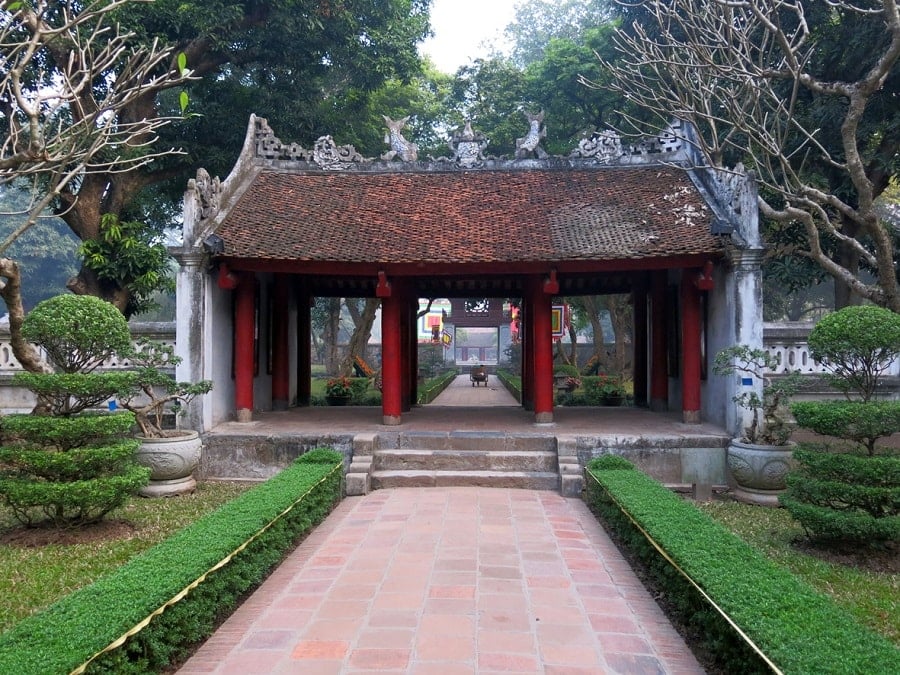
Passing through Dai Trung Mon—the second gate, consisting of three bays with a tiled roof in the style of a traditional Vietnamese pavilion—the space becomes expansive with parallel walkways, greenery, and water features. The "tranquility" here stands out because it directly contrasts with the rhythm of Hanoi outside the brick walls.
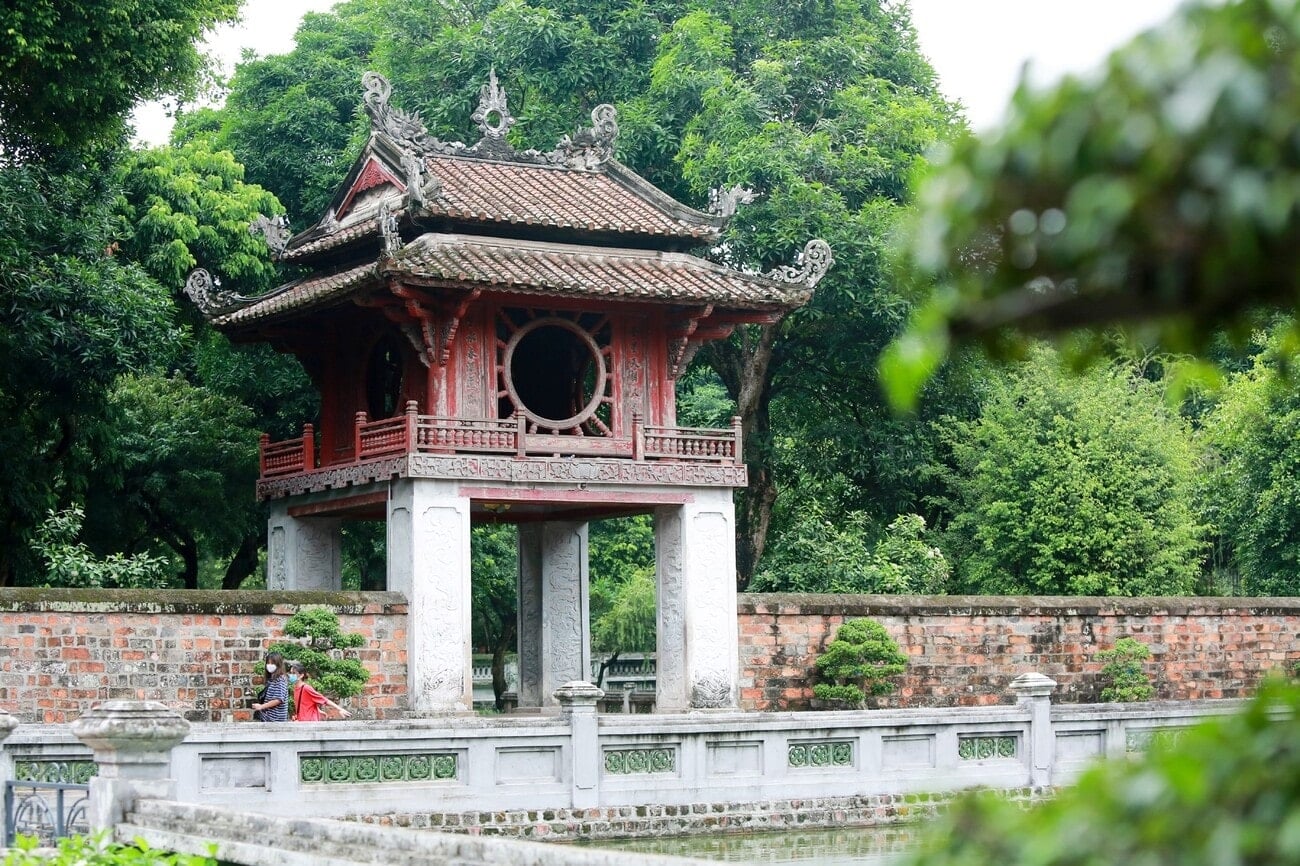
The visual highlight is Khue Van Cac . Built in 1805 by Governor-General Nguyen Van Thanh during the Nguyen Dynasty, this square pavilion has eight roofs, stands nearly nine meters tall, and rests on a square base measuring approximately 6.8 meters on each side. The upper floor is painted in red and gold, with two layers of red tile roofing; the lower floor consists of four square brick pillars carved with floral patterns. The round windows create a sense of "bright spots" against the backdrop of the ancient architecture.
Zone 3: Thien Quang well and the garden of doctoral steles.
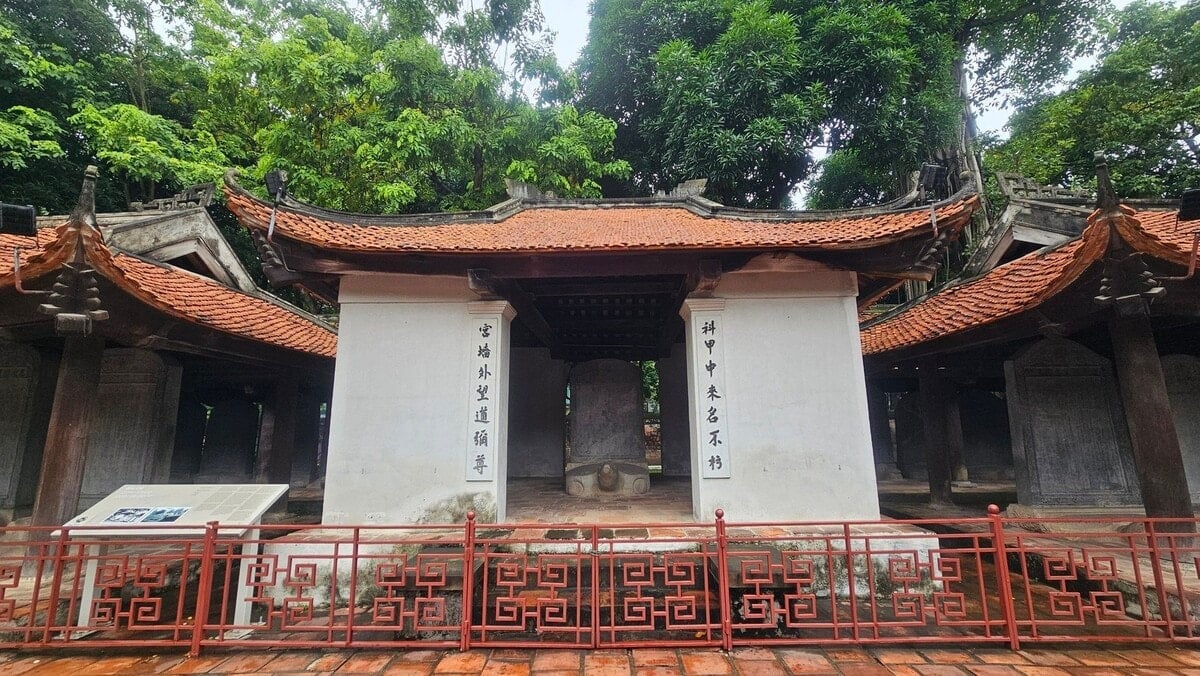
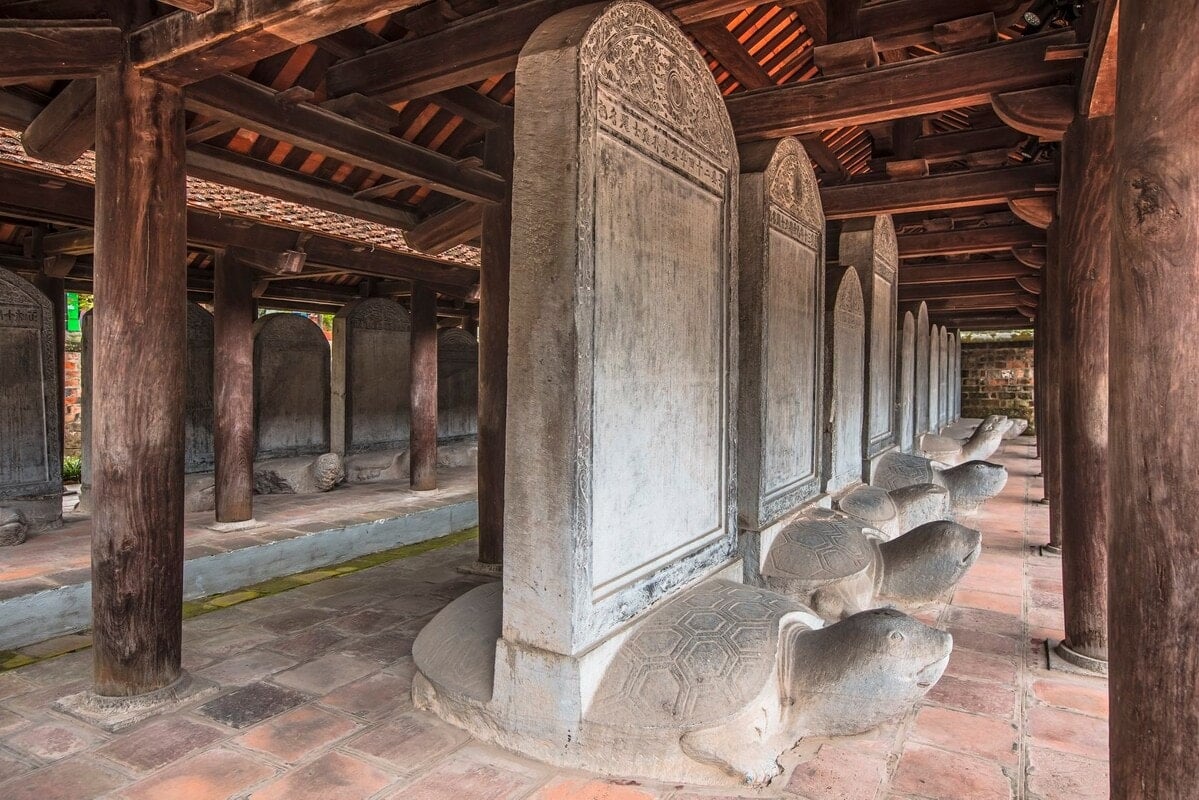
This is the section that naturally makes many people linger longer: 82 doctoral steles placed on the backs of stone turtles, inscribed with information about 82 top-ranking scholars from various dynasties. On March 9, 2010 , these 82 stone steles were recognized by UNESCO as a World Documentary Heritage site.
Right next to it is Thien Quang Well (also known as Van Pond), a square well symbolizing the earth, built with the intention of "illuminating knowledge". This is also a great spot for taking beautiful photos: the water surface is calm, the architecture is balanced, and there are few unnecessary details.
Zone 4: Dai Thanh Temple, the rhythm of rituals and the depth of religious beliefs.
The fourth layer of space includes the central Great Worship Courtyard, with two rows of buildings running along the west and east sides. The Worship Hall was formerly the site of the Confucius worship ceremony; the Great Hall and the Worship Hall run parallel, connected by a small pavilion. The Great Hall consists of nine bays, with walls enclosing three sides, and is where Confucius, the Ten Sages, and the Four Disciples are worshipped.
Zone 5: Thai Hoc area, where the story of education "comes to life".
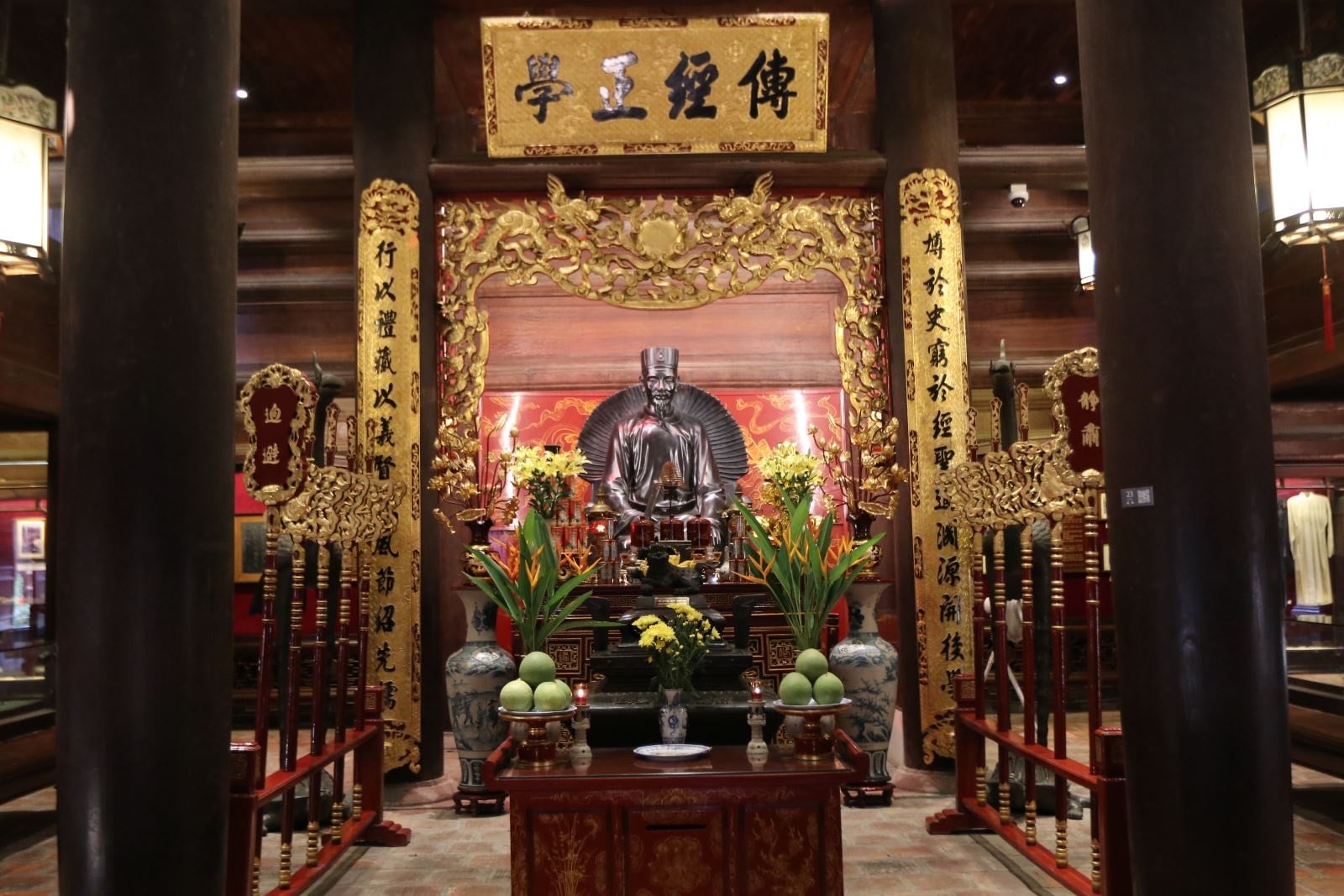
The Thai Hoc area was rebuilt in 1999; in 2000, the Thai Hoc building was constructed in a traditional architectural style, using fired tiles, wood, and brick. It serves both as a space for cultural and educational activities and a place to honor prominent figures: the first floor displays information about the Thang Long Temple of Literature and the Confucian education system in Vietnam; and honors the renowned scholar Chu Van An. The second floor is dedicated to the kings Le Thanh Tong, Ly Nhan Tong, and Ly Thanh Tong.
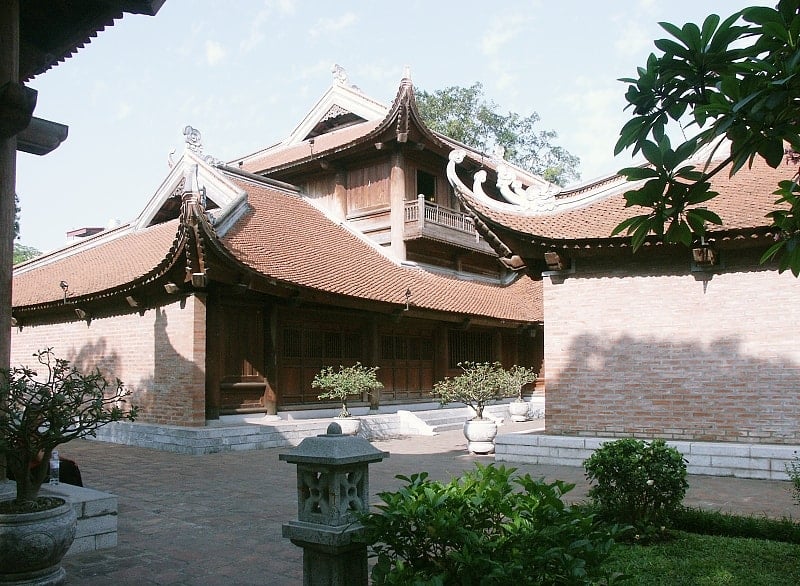
Experiences worth trying to give your trip a "story".
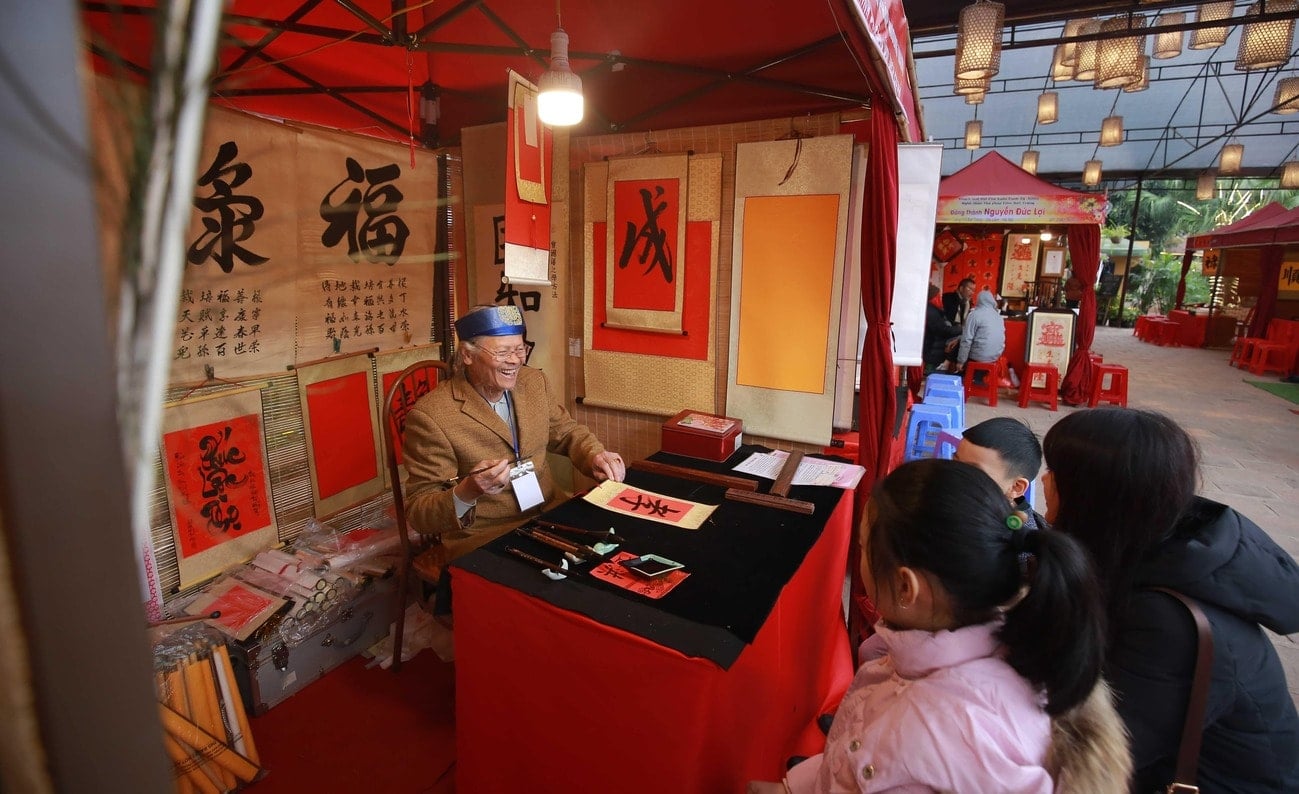
Requesting calligraphy, offering incense to pray for good fortune.
January is usually bustling with calligraphy enthusiasts seeking blessings. Many students and exam candidates also come to offer incense and pray for success in their exams—a glimpse of contemporary life interwoven with the historical site.
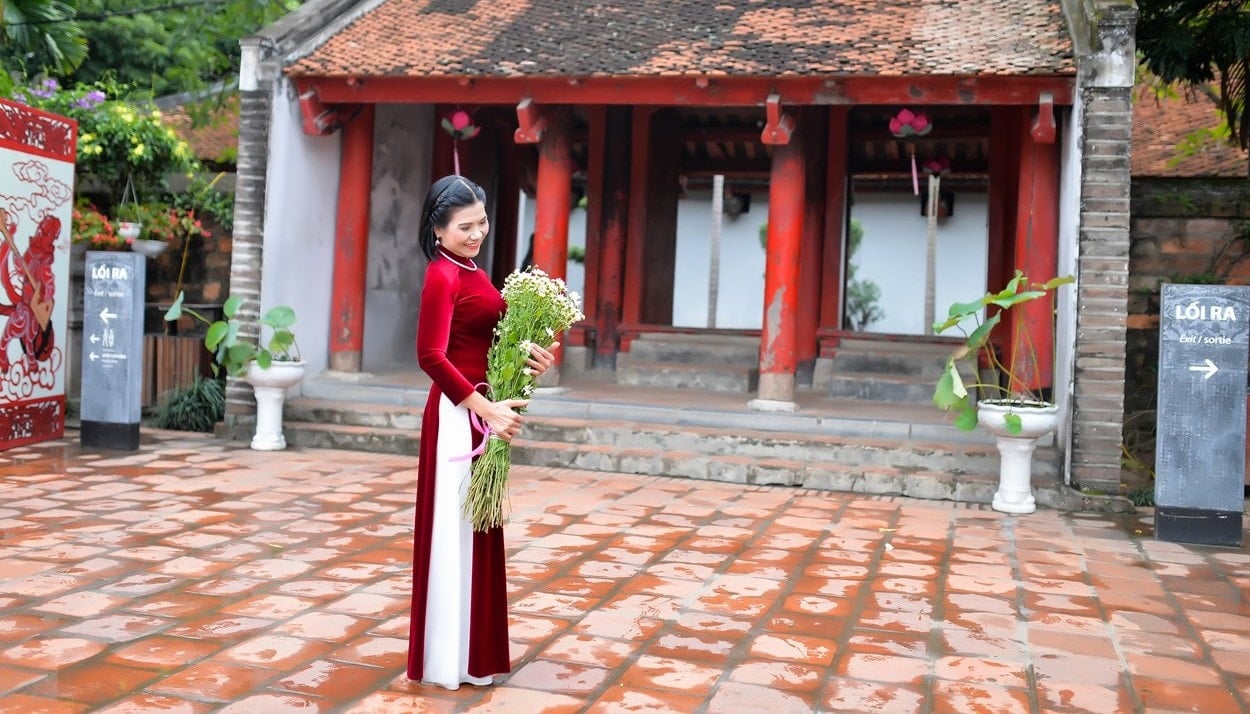
Taking photos in a religious setting.
The Temple of Literature - National University is well-suited for "low-noise" photos: polite attire, muted colors, and standing on symmetrical axes (gates, walkways, lakes) will help create a compact frame with depth.
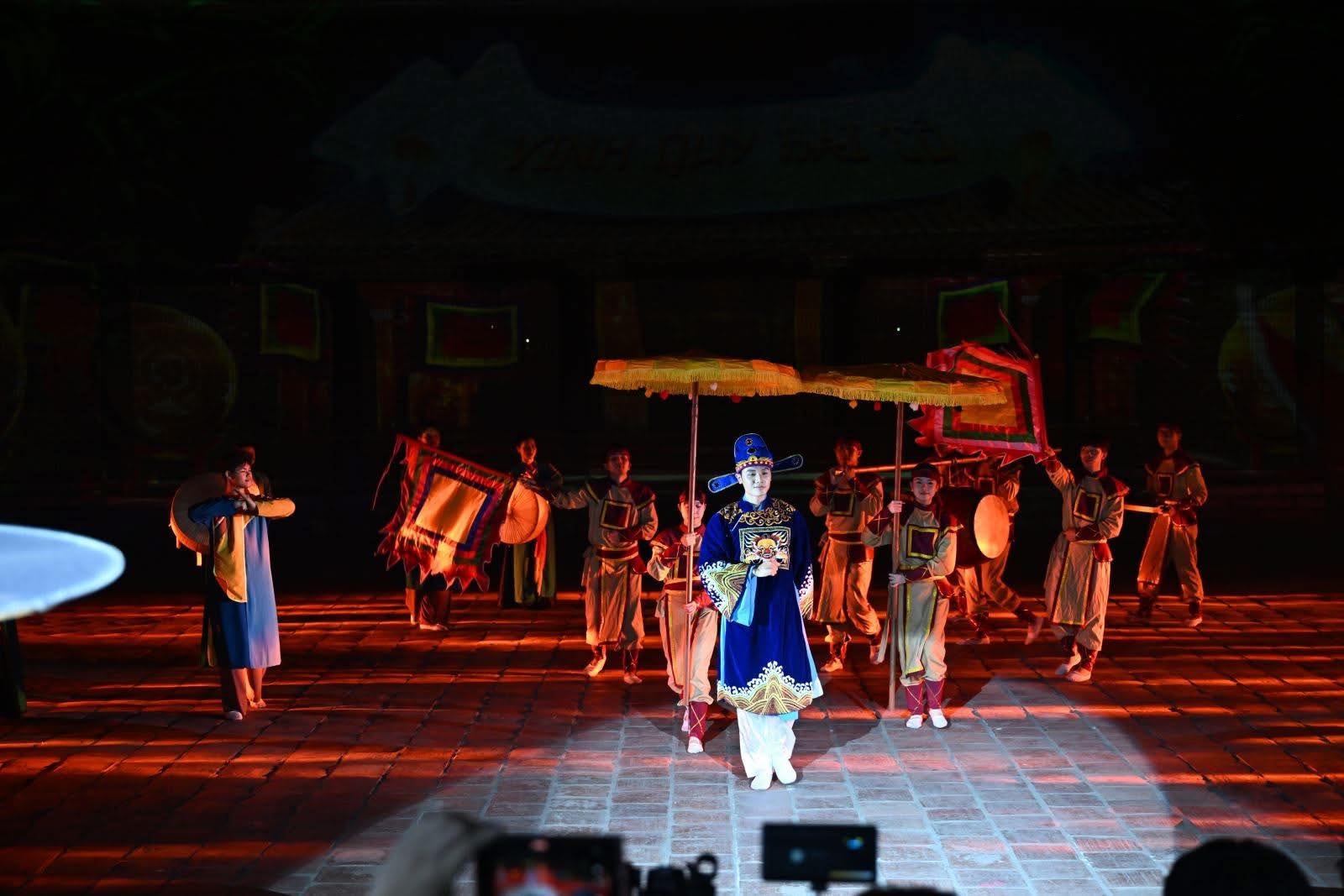
Nighttime sightseeing and 3D projection show.
If you want to see the historical site from a different perspective, you can consider a night tour program with light and sound experiences, folk games, "storytelling stone tablets," "learning with a traditional teacher," etc. The highlight is a 3D projection show called "The Essence of Taoist Learning."
- Opening hours: 6:30 PM - 9:30 PM
- Showtimes: 7:45 PM and 8:45 PM
- Entrance fee: for heights from 1m to 1.3m: 199,000 VND; children under 1m: free.
Suggestions for combining nearby destinations.
Thanks to its central location, you can easily connect the Temple of Literature - National University with nearby landmarks (distances according to source):
| Location | Distance |
|---|---|
| Hanoi Flagpole | 1.1km |
| Thang Long Imperial Citadel | 1.2km |
| Ho Chi Minh Mausoleum | 1.6km |
| Ho Chi Minh Museum | 1.7km |
| Hoa Lo Prison | 1.9km |
The source also suggests additional entertainment options at Vincom Mega Mall Times City such as VinKE and Vinpearl Aquarium.
Tips for a fulfilling trip
- Purchase your ticket and present it at the ticket counter.
- Maintain cleanliness and the surrounding landscape; do not touch, sit on, lie on, or move the artifacts from their original location.
- Comply with regulations on public order and fire prevention; no smoking.
- Dress politely and modestly.
- For the 3D mapping show, the source states a duration of 20-30 minutes and recommends arriving 60 minutes before the show starts; the organizers are not responsible for late arrivals.
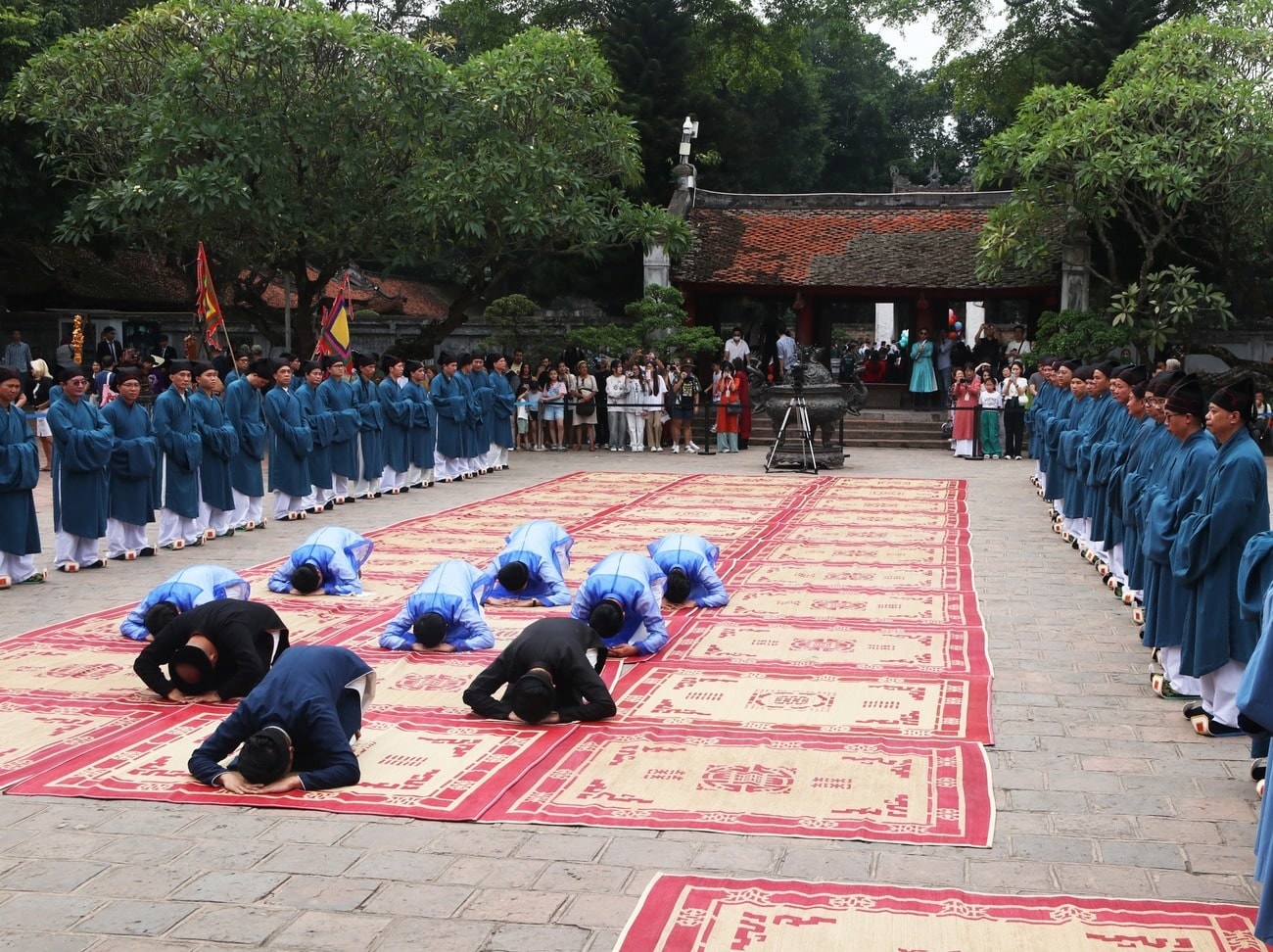
The Temple of Literature - National University is not a destination to "meet the checklist," but rather a place to hear a long story of knowledge, respect for teachers, and how Hanoians preserve historical memories amidst modern life.
Source: https://baonghean.vn/van-mieu-quoc-tu-giam-mot-buoi-dao-buoc-dao-hoc-10315465.html
![[Image] Leaked images ahead of the 2025 Community Action Awards gala.](/_next/image?url=https%3A%2F%2Fvphoto.vietnam.vn%2Fthumb%2F1200x675%2Fvietnam%2Fresource%2FIMAGE%2F2025%2F12%2F16%2F1765882828720_ndo_br_thiet-ke-chua-co-ten-45-png.webp&w=3840&q=75)
![[Live] 2025 Community Action Awards Gala](/_next/image?url=https%3A%2F%2Fvphoto.vietnam.vn%2Fthumb%2F1200x675%2Fvietnam%2Fresource%2FIMAGE%2F2025%2F12%2F16%2F1765899631650_ndo_tr_z7334013144784-9f9fe10a6d63584c85aff40f2957c250-jpg.webp&w=3840&q=75)
![[Photo] Prime Minister Pham Minh Chinh receives the Governor of Tochigi Province (Japan)](/_next/image?url=https%3A%2F%2Fvphoto.vietnam.vn%2Fthumb%2F1200x675%2Fvietnam%2Fresource%2FIMAGE%2F2025%2F12%2F16%2F1765892133176_dsc-8082-6425-jpg.webp&w=3840&q=75)
![[Photo] Prime Minister Pham Minh Chinh receives Lao Minister of Education and Sports Thongsalith Mangnormek](/_next/image?url=https%3A%2F%2Fvphoto.vietnam.vn%2Fthumb%2F1200x675%2Fvietnam%2Fresource%2FIMAGE%2F2025%2F12%2F16%2F1765876834721_dsc-7519-jpg.webp&w=3840&q=75)

![[Image] The tenacious fighting spirit of Vietnamese women's football](/_next/image?url=https%3A%2F%2Fvphoto.vietnam.vn%2Fthumb%2F1200x675%2Fvietnam%2Fresource%2FIMAGE%2F2025%2F12%2F17%2F1765990260956_ndo_br_4224760955870434771-copy-jpg.webp&w=3840&q=75)


















































![[Live] Closing Ceremony and Award Presentation for the "Impressive Vietnam Tourism" Video/Clip Creation Contest 2025](https://vphoto.vietnam.vn/thumb/402x226/vietnam/resource/IMAGE/2025/12/17/1765974650260_z7273498850699-00d2fd6b0972cb39494cfa2559bf85ac-1765959338756946072104-627-0-1338-1138-crop-1765959347256801551121.jpeg)















Comment (0)