

On December 15th, China's Ministry of Industry and Information Technology officially granted commercial licenses for the first vehicles equipped with Level 3 autonomous driving technology. This marks a milestone, indicating that this technology in China has moved beyond the testing phase and is preparing for practical market application.
The first two commercially available electric sedans feature L3 functionality.
According to published information, two all-electric sedan models have received roadworthiness certificates with Level L3 autonomous driving capabilities, each optimized for different traffic scenarios.
The first model is the Changan SC7000AAARBEV. This vehicle is equipped with lane-based autonomous driving capabilities on highways and urban ring roads. This feature is designed to provide special assistance in congested traffic environments with high vehicle density and frequent stop-and-go driving. The maximum speed at which the autonomous driving system on the Changan SC7000AAARBEV is permitted is 50 km/h.
The second model is the Arcfox BJ7001A61NBEV, also a purely electric sedan. On this model, the Level L3 autonomous driving feature focuses on highway and urban ring road operation with a wider operating range, allowing the car to drive autonomously at speeds up to 80 km/h.
Both models will be piloted in designated areas in Beijing and Chongqing. Limiting the operating area allows regulators and manufacturers to monitor and evaluate performance before scaling up.
Summary of information for the two L3 models
| Car model | Vehicle type | Autonomous driving context | Maximum speed when driving autonomously | Pilot area |
|---|---|---|---|---|
| Changan SC7000AAARBEV | All-electric sedan | In a lane on a highway or urban ring road, priority is given to heavy traffic. | 50 km/h | Beijing, Chongqing (designated areas) |
| Arcfox BJ7001A61NBEV | All-electric sedan | Highways and urban ring roads | 80 km/h | Beijing, Chongqing (designated areas) |
Level 3: Not fully autonomous
The vehicles licensed this time use Level L3 autonomous driving technology. At this level, the vehicle can handle most driving tasks under certain conditions, but it is not fully autonomous. The driver must still be ready to intervene when the system requires it or in situations outside the scope of assistance.
The maximum speed limit of 50 km/h on the Changan SC7000AAARBEV and 80 km/h on the Arcfox BJ7001A61NBEV shows that the management and manufacturer have chosen a cautious approach, clearly controlling the operating conditions of the autonomous driving system. This helps reduce risks in the initial commercialization phase and creates a real-world database for refining the technology.
Deepal – Changan's flagship smart electric vehicle.
Of the two licensed models, Changan's product actually belongs to the Deepal brand. According to industry insiders, the SC7000AAARBEV model is part of Deepal's product line – Changan's sub-brand specializing in smart electric vehicles.
The use of the Deepal brand for the L3 autonomous driving-certified vehicle demonstrates a strategy of clearly separating and positioning its product lines. Instead of simply adhering to the traditional Changan name, the company leverages the sub-brand to emphasize electrification and smart features, while also easily reaching new customer groups interested in electric vehicles and advanced driver assistance technologies.
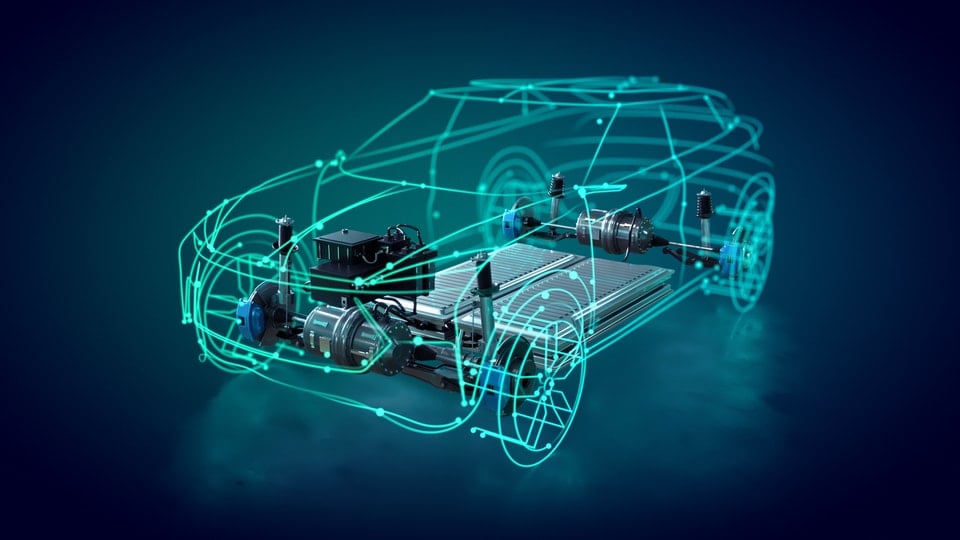
From testing to commercial application
Prior to being licensed, L3 autonomous driving technology in China was primarily in the testing phase. The Ministry of Industry and Information Technology's official authorization for commercial use marks a transition from testing to practical application.
With the approval of two electric sedan models, the Changan SC7000AAARBEV (under the Deepal brand) and the Arcfox BJ7001A61NBEV, China is opening a new phase for its domestic automotive industry. These vehicles are moving beyond basic driver assistance, taking a step further in partially automating control tasks under clearly defined conditions.
The pilot implementation in Beijing and Chongqing allows for the evaluation of the system's operational efficiency in two different urban and traffic environments. This enables stakeholders to adjust policies, technical standards, and usage scenarios accordingly before scaling up.
Significance for the automotive industry and consumers
The granting of commercial licenses for Level 3 autonomous vehicles is seen as positive news for the Chinese automotive industry. Manufacturers have a stronger basis to continue investing in smart electric vehicles, while regulators have a clearer framework for monitoring and safety inspections.
From the user's perspective, the appearance of models like the Changan SC7000AAARBEV and Arcfox BJ7001A61NBEV opens up access to more advanced driver assistance technologies, promising a more convenient and safer travel experience within permitted conditions. However, because this is Level 3 autonomous driving technology, the driver must still remain focused and ready to take over the vehicle when necessary.
More broadly, China's official commercialization of the L3 self-driving car also provides further impetus to the global race to develop smart electric vehicles. The experiences from this pilot phase could become an important reference for other markets when developing policies and standards for self-driving cars in the future.
Source: https://baonghean.vn/changan-sc7000aaarbev-l3-buoc-ngoat-xe-tu-lai-10315570.html

![[Photo] Prime Minister Pham Minh Chinh receives the Governor of Tochigi Province (Japan)](/_next/image?url=https%3A%2F%2Fvphoto.vietnam.vn%2Fthumb%2F1200x675%2Fvietnam%2Fresource%2FIMAGE%2F2025%2F12%2F16%2F1765892133176_dsc-8082-6425-jpg.webp&w=3840&q=75)

![[Live] 2025 Community Action Awards Gala](/_next/image?url=https%3A%2F%2Fvphoto.vietnam.vn%2Fthumb%2F1200x675%2Fvietnam%2Fresource%2FIMAGE%2F2025%2F12%2F16%2F1765899631650_ndo_tr_z7334013144784-9f9fe10a6d63584c85aff40f2957c250-jpg.webp&w=3840&q=75)
![[Image] Leaked images ahead of the 2025 Community Action Awards gala.](/_next/image?url=https%3A%2F%2Fvphoto.vietnam.vn%2Fthumb%2F1200x675%2Fvietnam%2Fresource%2FIMAGE%2F2025%2F12%2F16%2F1765882828720_ndo_br_thiet-ke-chua-co-ten-45-png.webp&w=3840&q=75)
![[Photo] Prime Minister Pham Minh Chinh receives Lao Minister of Education and Sports Thongsalith Mangnormek](/_next/image?url=https%3A%2F%2Fvphoto.vietnam.vn%2Fthumb%2F1200x675%2Fvietnam%2Fresource%2FIMAGE%2F2025%2F12%2F16%2F1765876834721_dsc-7519-jpg.webp&w=3840&q=75)







































![[Live] Closing Ceremony and Award Presentation for the "Impressive Vietnam Tourism" Video/Clip Creation Contest 2025](https://vphoto.vietnam.vn/thumb/402x226/vietnam/resource/IMAGE/2025/12/17/1765974650260_z7273498850699-00d2fd6b0972cb39494cfa2559bf85ac-1765959338756946072104-627-0-1338-1138-crop-1765959347256801551121.jpeg)

















Comment (0)