

Tesla disassembled and analyzed Chinese electric vehicles to learn how to cut costs by reusing components on a large scale, and applied it directly to the Model 3 and Model Y. According to John McNeill, who served as Tesla's president from 2015–2018 (when the Model 3 and Model Y were developed), this philosophy helped Tesla lower costs without sacrificing the user experience.
McNeill told Business Insider that Chinese engineers are disciplined about sharing components under the hood—components that customers rarely see. He cited manufacturers like BYD, which share windshield wiper motors, heat pumps, and even plumbing systems, keeping costs low and prices competitive.
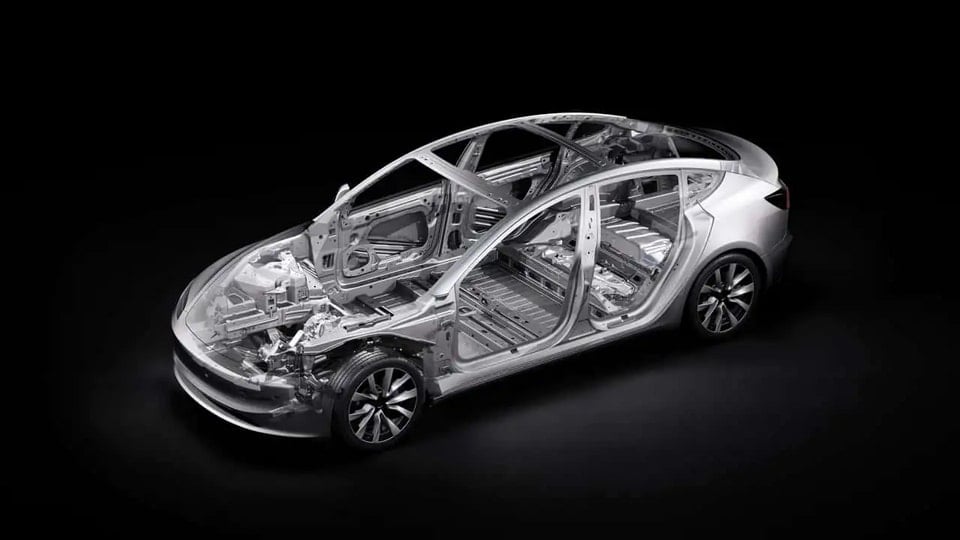
Component sharing: manufacturing discipline and cost efficiency
The biggest lesson Tesla has learned from Chinese EVs, according to McNeill, is to maximize the level of component sharing between models. The parts under the hood – which have less direct impact on the user experience – are prioritized for sharing. This allows for cost savings without significantly affecting the day-to-day driving experience.
Tesla has also publicly stated that the Model 3 and Model Y share about 75% of their components. The level of commonality extends from the platform, powertrain, interior to small details like door handles and buttons. Even the front seats are the same, just in a different mounting position on the Model Y.
Model 3/Model Y: Thorough application to create sales advantage
The philosophy of sharing components has helped Tesla reduce production costs, thereby achieving competitive prices. The Model 3 quickly became a hit: in 2018, it was the best-selling luxury car in the US, with around 138,000 units sold. In China, the Model 3, launched in 2019, became the best-selling plug-in electric car in 2020, with sales of nearly 138,000 units; it is produced at the Gigafactory Shanghai to serve European markets as well.
The Chinese market has changed: cost reduction alone is not enough
Tesla’s sales in China have been falling, hitting a three-year low in October, with its market share dropping from 8.7% to 3.2%, according to CNBC. Meanwhile, domestic automakers are growing rapidly, launching cheaper models that are more tailored to local tastes and outperform in many aspects such as charging speed, power and features that Chinese consumers prefer.
McNeill admits Tesla is “absolutely relentless” in its efforts to reduce costs, but that alone is not enough to compete in the world’s most dynamic electric vehicle market. This puts pressure on meeting changing consumer priorities in China.
Key milestones and figures
| Milestone/Event | Data/Information |
|---|---|
| Percentage of components shared between Model 3 and Model Y | About 75% |
| Model 3 best seller in the US (2018) | About 138,000 vehicles |
| Model 3 in China (2020) | Nearly 138,000 vehicles; best-selling plug-in electric vehicles |
| Tesla market share in China | Down from 8.7% to 3.2% (according to CNBC) |
| Tesla sales in China in October | Hits three-year low (no figure given) |
Global picture: charging ecosystem remains a strong point
Globally, Tesla still offers a good electric car experience, especially thanks to its extensive Supercharger network. However, sales have been on a downward trend over the past year.
Conclude
The disassembly of Chinese EVs has reinforced Tesla’s clear direction: share as many components as possible where they have the least impact on the experience to keep costs down, a lesson that has been applied directly to the Model 3 and Model Y. But with the Chinese market changing and domestic competitors advancing rapidly, cost optimization alone is not enough to sustain growth. References: Business Insider, CNBC (via insideevs).
Source: https://baonghean.vn/tesla-model-3-va-model-y-toi-uu-chi-phi-tu-xe-trung-quoc-10313590.html


![[Photo] Cat Ba - Green island paradise](/_next/image?url=https%3A%2F%2Fvphoto.vietnam.vn%2Fthumb%2F1200x675%2Fvietnam%2Fresource%2FIMAGE%2F2025%2F12%2F04%2F1764821844074_ndo_br_1-dcbthienduongxanh638-jpg.webp&w=3840&q=75)








































![[VIMC 40 days of lightning speed] Hai Phong Port determined to break through, reaching the target of 2 million TEUs by 2025](https://vphoto.vietnam.vn/thumb/402x226/vietnam/resource/IMAGE/2025/12/04/1764816441820_chp_4-12-25.jpeg)










































Comment (0)