

Typical examples are Mr. Nguyen Giang Tri, Ms. Pham Thi Bich Kieu and Ms. Tran Thi Kim Be, who have persistently built brands from local land and agricultural products.
From architect to free range chicken farm owner
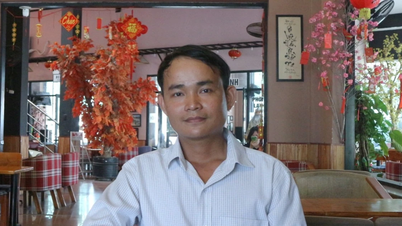
Graduated in architecture and used to work in Ho Chi Minh City, Mr. Nguyen Giang Tri (31 years old, in Tan Thinh village, An Tuong commune) has a love for farming, a familiar job of his family. In 2018, he decided to leave the city to return to his hometown to start a business with a model of raising chickens on the hills.
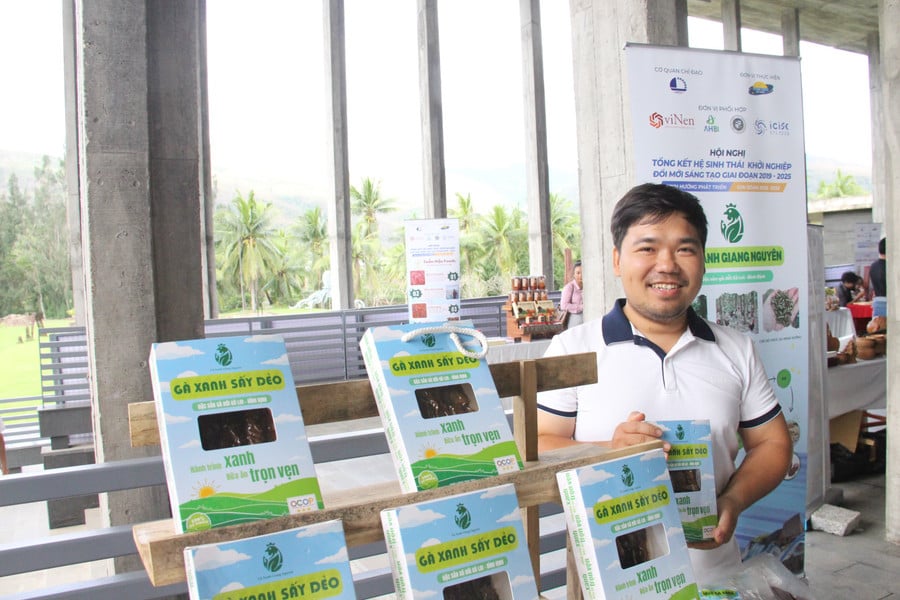
Mr. Nguyen Giang Tri with the product lines processed by the facility. Photo: T. Loi
In the early days, diseases and erratic weather caused the chickens to decline, and the output was unstable. However, thanks to family experience and technical support, he persevered to rebuild. When the province implemented a policy to support free-range chicken farming, he boldly registered and was supported with 2 batches each year, each batch of 2,000 - 3,000 chickens. He also imported Minh Du and Cao Khanh breeds to expand the scale.
Currently, his 5-hectare farm has 12 rows of cages, selling about 20,000 chickens each year. Focusing on quality, he lets the chickens roam under the forest canopy, feeds them grains, green vegetables, calcium worms and herbs so the meat is firm and low in fat.
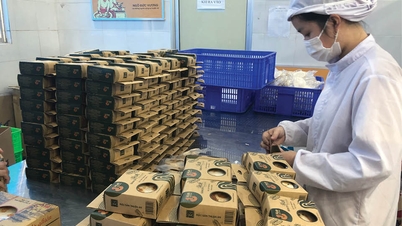
From clean raw materials, he invested 300 million VND to build a factory and processing line, creating products under the Giang Nguyen brand such as chicken rolls, dried green chicken, chicken lasu, chicken sausage...
Of which, Giang Nguyen sugarcane chicken and dried chicken have achieved 3-star OCOP; chicken sausage is completing its profile. Each year, the model creates jobs for 5 workers and brings in over 1 billion VND in revenue.
In the coming time, Mr. Tri plans to complete the packaging, improve the quality of processed products and aim to bring Giang Nguyen sugarcane chicken into the supermarket system.
Entrepreneurial journey from kitchen to supermarket
Starting her business in 2017, Ms. Pham Thi Bich Kieu (35 years old, living in area 7, Quy Nhon Bac ward) came to the cereal production profession from a very simple need. During her maternity leave, her mother often made cereal to supplement her nutrition after giving birth.
After a period of use, she felt her health improve significantly and her milk supply was also more abundant. Realizing that many mothers in the groups complained about the lack of milk for their children, Ms. Kieu came up with the idea of selling this product.
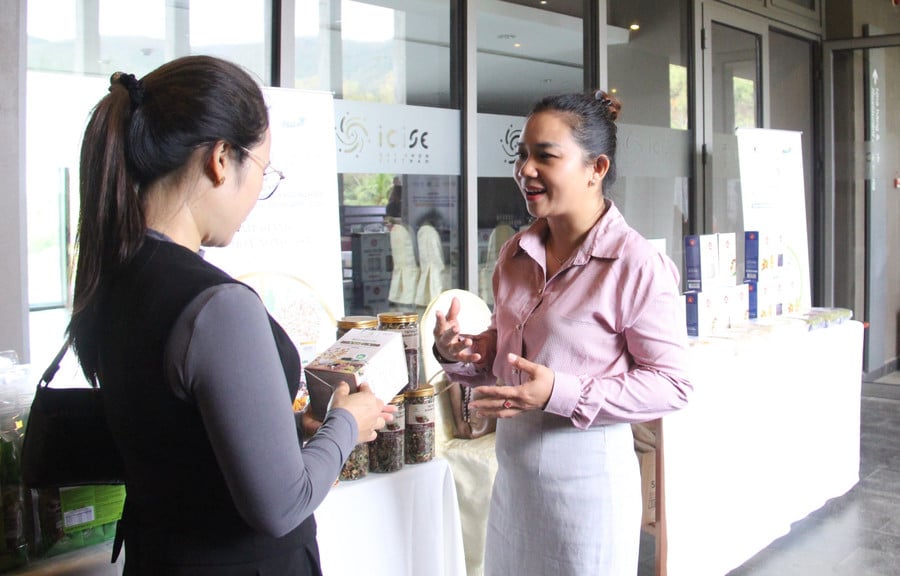
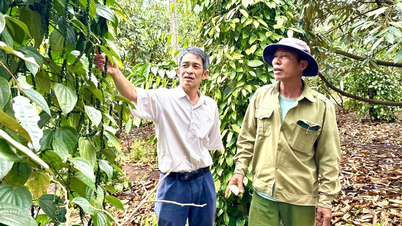
Ms. Pham Thi Bich Kieu introduces cereal products to customers. Photo: T. Loi
She decided to try making and selling the first batches of cereal on social media. After only 2 days, the product had orders and very positive feedback, helping her to believe more in her entrepreneurial path.
Launching her first product with 8-grain cereal powder, she encountered many difficulties: Limited knowledge, having to select raw materials, and many failed mixing attempts. Ms. Kieu persistently researched each type of bean and seed, prioritizing local ingredients; nutritious seeds such as walnuts, almonds, chia seeds, etc. were imported from reputable companies.
The meticulousness in the stages from screening, cleaning, roasting to mixing helps the product have its own flavor and characteristic smoothness. Up to now, her Khanh Giang cereal facility provides 3 types of cereal powder (8, 12 and 22 types of seeds) along with boat cakes and black sesame powder.
Some products such as boat cakes, 8 and 22 grain cereal powders have achieved 3-star OCOP, sold at 6 Co.opmart supermarkets in the Central region; annual revenue reaches nearly 500 million VND.
Each year, the facility uses more than 2 tons of raw materials, and the products are highly appreciated for their fat content and nutrition. In the context of a highly competitive market, Ms. Kieu is considering maintaining or slightly reducing output, focusing more on cereal-based cake products - a segment where banh thuyen is selling well. In the near future, she plans to invest in more machinery, design eye-catching packaging, and seek partners to expand the market.
Enhancing local agricultural products through deep processing
Born in Ha Tinh, graduated with a degree in Vietnamese studies and then went to Pleiku to start a career, Ms. Tran Thi Kim Be (35 years old, living in residential group 1 Tra Ba, Hoi Phu ward) soon became passionate about tourism and the culture of the Central Highlands.
During her trips to the villages, she realized the rich agricultural potential of this land.
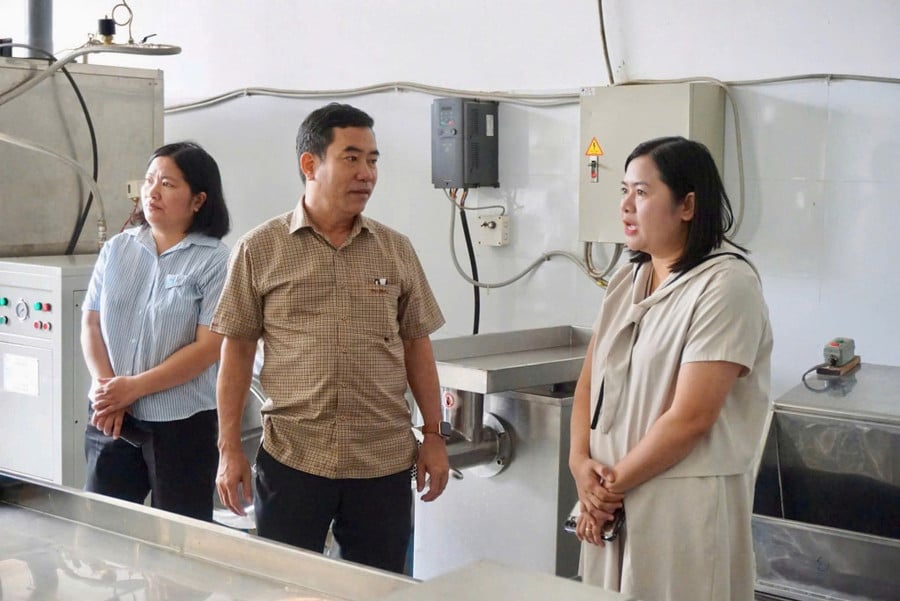
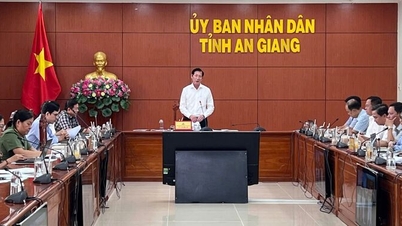
Ms. Tran Thi Kim Be talked with the leaders of the Department of Science and Technology about her own startup process. Photo: T. Loi
In 2016, when attending a workshop on agricultural product development in Ho Chi Minh City, she further realized the importance of deep processing as the key to increasing the value of agricultural products. At the same time, pork prices fell sharply, farmers suffered losses, further urging her to find a new direction.
Remembering the batches of homemade sausages that her friends had ordered for her children, she decided to invest in machinery and start processing pork into sausages, Chinese sausages, dried pork, etc.
In 2018, she established Tran Lam Gia Phat One Member Co., Ltd., expanding professional production. Up to now, the company has a 4-hectare farm, raising and cooperating with farmers about 10,000 pigs, cows, and chickens, ensuring proactive raw material sources.
Products such as pork sausage, chicken sausage, pork roll, shrimp sausage, chicken jerky, beef jerky, smoked chicken, etc. all achieve 3-star OCOP. The company also develops Central Highlands specialties such as macadamia nuts, cashew nuts, and coffee.
The company has linked up with people in over 30 hectares of raw material growing areas, creating regular jobs for 15 workers, and in peak season up to 30-40 people. Annual revenue reaches 10-12 billion VND, profit is about 8-10%. Despite lacking capital and experience, Ms. Be still persevered to overcome difficulties, placing her faith in the potential of Gia Lai agricultural products.
She is currently applying for a project to build a factory in an industrial cluster under the policy of supporting small and medium enterprises, and is also aiming at exporting, especially macadamia and coffee products to the Chinese market. The company's products are only exported in small quantities to Laos and Cambodia, the rest are consumed domestically.
Source: https://baogialai.com.vn/khat-vong-lam-giau-tu-nong-san-dia-phuong-post574125.html
![[Photo] Cat Ba - Green island paradise](/_next/image?url=https%3A%2F%2Fvphoto.vietnam.vn%2Fthumb%2F1200x675%2Fvietnam%2Fresource%2FIMAGE%2F2025%2F12%2F04%2F1764821844074_ndo_br_1-dcbthienduongxanh638-jpg.webp&w=3840&q=75)


































![[VIMC 40 days of lightning speed] Da Nang Port: Unity - Lightning speed - Breakthrough to the finish line](https://vphoto.vietnam.vn/thumb/402x226/vietnam/resource/IMAGE/2025/12/04/1764833540882_cdn_4-12-25.jpeg)

































Comment (0)