

Sound of the Great Forest
In September, at the beginning of the rainy season, the Liêng River was still shallow. The road from National Highway 24 connecting Quảng Ngãi with the Central Highlands provinces, passing through Ba Thành commune to Phan Vinh village (Ba Vinh commune - the former base of the heroic Ba Tơ guerrilla team), was covered in a green hue of mountains and forests. I met Mrs. Phạm Thị Sỹ (Ba Vinh commune, Ba Tơ district, Quảng Ngãi province) – an 82-year-old gong player, frail and weak. When we asked about the set of three gongs, Mrs. Sỹ quickly mentioned that her son, Phạm Văn Rôm, brought the set consisting of three gongs: the Tum gong (also called the father gong), the Vông gong (also called the mother gong), and the Túc gong (also called the child gong).
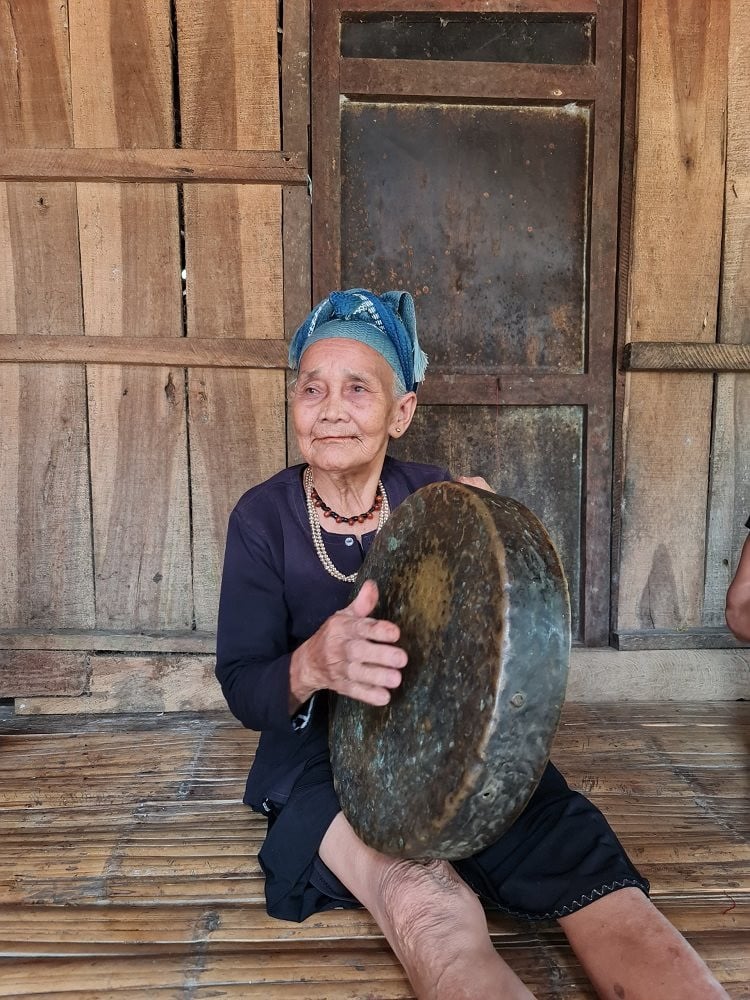
The passage of time has left its mark on each gong, with its glossy black spine and gleaming bronze heart. Under hands marked by the passage of time, yet wielded with decisive force, the sound of Mrs. Pham Thi Sy's Vong gong harmonizes with the sounds of the Tuc and Tum gongs played by Pham Van Rom and his neighbor, Pham Van Nhot. The three-gong set, played by all three, produces deep, resonant sounds that echo through the mountains and forests.
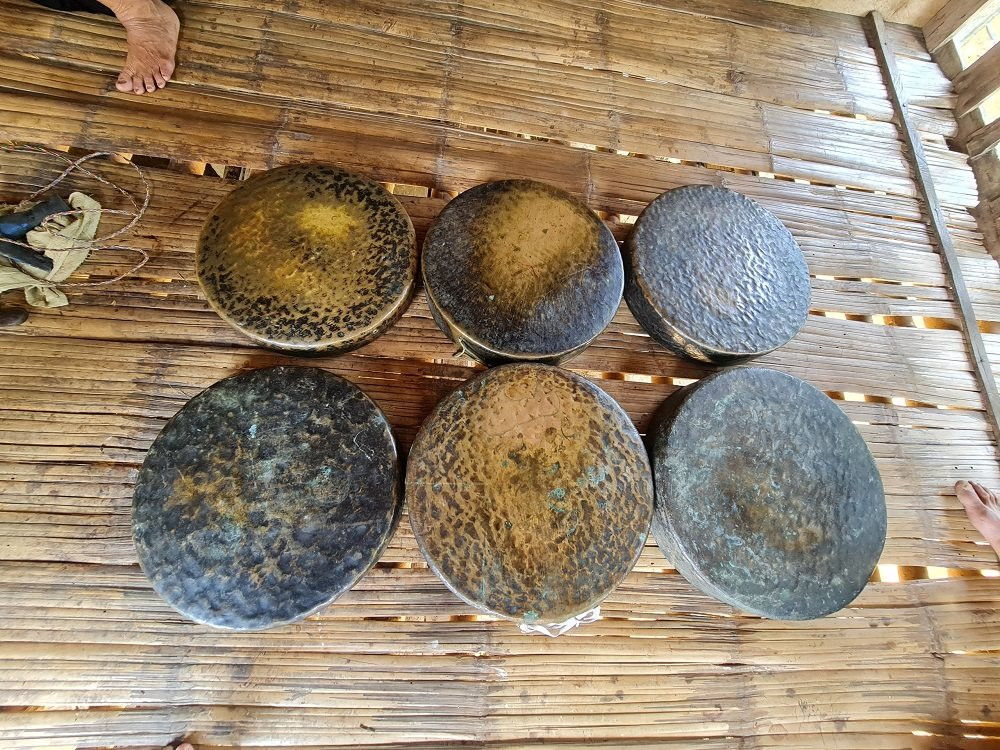
The three-gong set is the most popular and characteristic musical instrument of the H're people in Ba To district. According to the villagers, it's called a three-gong set because it consists of three gongs. During performances, the Vong gong is tilted, the Tum gong is laid flat, and the Tuc gong is suspended on a string. The Tum gong plays the role of keeping the rhythm, while the Vong and Tuc gongs follow the melody. The Vong and Tum gongs are played with bare fists, while the Tuc gong is played with a fist wrapped in a cloth to give the gong a warmer sound. The most skilled gong player will play the Tuc gong, leading the gong ensemble in the performance according to the correct melody and rhythm. When performing with a three-gong ensemble, the gong player sits in a stable position and does not move.
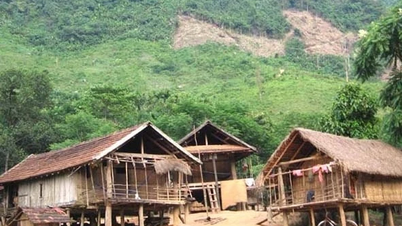
Ms. Sy remembers vividly that from a young age, she had memorized many of the Ta Leu and Ca Choi melodies of the H're people. During festivals, weddings, and other celebrations, accompanied by the sound of gongs and other musical instruments, the villagers would sing and dance together. In the darkness, the villagers would gather around the crackling fire in front of the stilt house; the strong, muscular young men would play the gongs, while the young women sang and danced Ta Leu and Ca Choi. The villagers would also let their souls be carried away by the resonant gongs. The custom of the H're people is to celebrate Tet (Lunar New Year) in their respective villages and hamlets. Today it might be in one village, tomorrow in another. The sound of the gongs would then reverberate throughout the mountains and hills.
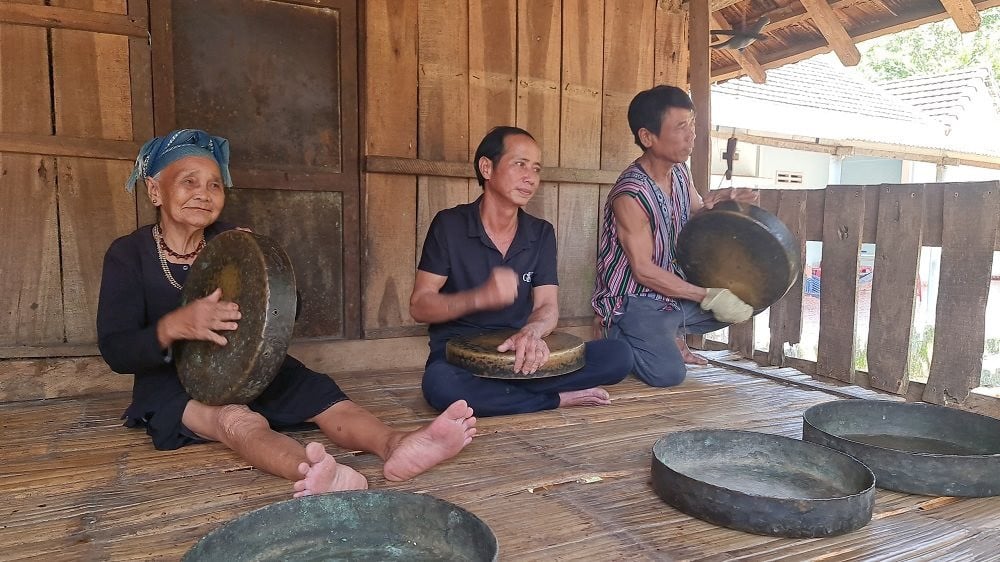
“The three-gong set has been around for a very long time; I’ve seen it since I was born. The three-gong set is unique to the H’re people because it’s expensive. It can be exchanged for money, silver, buffaloes, and cows. The gongs are used during Tet (Lunar New Year), offerings, festivals, and generally on joyous occasions. My parents both knew how to play the gongs. When my father passed away, he left each of the five siblings a set of gongs, boys and girls alike. If a girl doesn’t play, she gives it to her husband or children; she’s not allowed to sell it,” Mr. Pham Van Rom recounted.
Besides Mrs. Sy, several other women in Ba To also know how to play the gong, including Mrs. Pham Thi De (Ba Thanh commune). Mrs. Sy recounted that on moonlit nights when the gongs sounded, she would sing the "ca choi" song. The lyrics expressed the pure and heartfelt feelings of a young woman, stirring the hearts of young men and prompting them to confess their love.
Let the gongs resonate forever.
The H're people in Quang Ngai mainly live in the districts of Ba To, Son Ha, and Minh Long. However, only the H're people in Ba To district know how to perform the three-gong ensemble, making it a traditional cultural activity. The vast majority of H're gongs are three-gong sets, passed down and preserved by families from generation to generation as family treasures. Over hundreds of years, the sound of the three-gong ensemble has become a familiar sound, deeply connected to generations of H're people.
The three-gong set of the H're people in Ba Tơ has a unique and distinctive, wild sound. From the rhythm and tempo to the arrangement and harmony, the skillful and subtle use of the gong players creates a beginning, a climax, and an end; sometimes solemn and majestic, sometimes lively and exhilarating, sometimes intensely passionate, sometimes powerfully forceful and compelling. In the past, rare sets of three gongs were worth dozens of buffaloes; their sound was not only clear but also deep and warm, creating a luxurious, powerful, and exhilarating sound.
The three-gong performance is so captivating and enchanting, but like other cultural forms of ethnic minorities across the country, it has faced many challenges due to the integration of highland and lowland cultures.
“Most of the gong players are men, while the women who know how to play the gongs are mostly older. My mother also knows how to play, but she rarely does. Nowadays, very few young people know how to play; even I only know the basics,” shared Ms. Pham Thi Sung (Ba Thanh commune).
In recent years, local authorities have made many efforts to restore and preserve the culture of the H're people, including the performance of the three-gong ensemble. Most communes in Ba To district have maintained the art of performing the three-gong ensemble, with Ba Vinh commune being the most exemplary.
According to Mr. Le Cao Dinh, Deputy Head of the Culture and Information Department of Ba To District, the H're people's three-gong performance art is not only a cultural activity but, more importantly, a preservation of traditional cultural and religious values that are deeply rooted in the ethnic identity.
“Normally, they are busy with fields, farms, and countless other tasks to make a living, but they are willing to participate when invited to play the gongs and attend folk art performances promoting the traditional gong music. The enthusiasm of the young people warms the hearts of the elderly, because for a long time, the people have been worried about the decline of traditional art, including the art of playing the gongs,” Mr. Dinh shared.
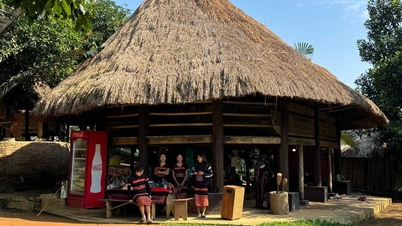
In the past, the H're ethnic people only played gongs during Tet (Lunar New Year) or ceremonies celebrating the new rice harvest. Now, as part of the "Back to the Roots" program and visits to historical sites in Ba To, tourists can also witness performances of the three-gong ensemble. Amidst the vast mountains and forests, the vibrant sounds of the three-gong ensemble and the heartfelt singing of the Ta Leu (a H're folk song) further enhance the understanding of the enduring vitality of the H're people, rich in cultural identity. I believe that the art forms of the H're people, like the Lieng and Re rivers, may sometimes ebb and flow, but they will forever remain in the hearts of the people.
Currently, in Ba To district, there are approximately 890 households that own gongs, with over 900 sets of Ba gongs and 740 people who know how to use them. In 2021, the art of performing Ba gong music by the H're people in Ba To was recognized by the Ministry of Culture , Sports and Tourism as a National Intangible Cultural Heritage.
Source
![[Photo] Delegation attending the 14th Congress of the Vietnam Trade Union visits the Mausoleum of President Ho Chi Minh.](https://vphoto.vietnam.vn/thumb/1200x675/vietnam/resource/IMAGE/2026/06/03/1780451842301_ndo_br_img-3824-jpg.webp)















































































Comment (0)