

(CLO) Fact-checking experts from Brazil, Nigeria, Ukraine, and the Philippines have shared concerns as Meta (the parent company of Facebook and Instagram) ceases support for its content moderation program.
Many organizations are losing the financial resources to verify information.
Meta's decision to stop moderating content and cut funding for this work has put many organizations around the world in a difficult position. These organizations are heavily dependent on Meta's funding. Although no organization has announced it will close down, the loss of such a significant source of funding will undoubtedly create many challenges and force them to seek alternative funding sources.
Despite confidentiality agreements with Meta, some organizations have revealed that funding from Meta accounts for only about 20-30% of their budget, lower than the 50% many had predicted. This suggests that organizations have been making efforts to diversify their revenue streams and reduce their dependence on a single funding source.

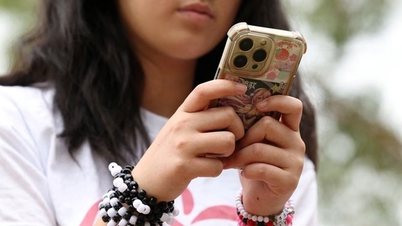
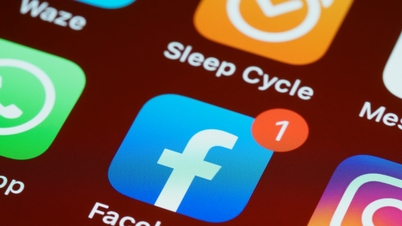
If Meta ceases support for its fact-checking program, some news organizations will have to cut staff. (Illustrative image)
Kemi Busari, editor at Dubawa, a Nigerian fact-checking organization that has partnered with Meta since 2019, said that if Meta ceases supporting the fact-checking program in Nigeria, Dubawa will be forced to cut staff, leading to a significant reduction in its ability to verify misinformation.
But if they had a year to prepare, Busari thinks they could find other revenue streams: "We're seeing this as an opportunity to innovate and explore more sustainable business models. We understand that fact-checking is a community-oriented activity, not just a business. With this mindset, we'll find new ways to continue our work."
Tai Nalon is the CEO of Aos Fatos, a fact-checking organization in Brazil that has partnered with Meta since 2018. In addition to grants, they have diversified their funding sources through licensing journalistic content, membership subscriptions, technology sales, and intelligence services. However, Nalon stated that Meta's support is essential to their journalistic work.
“Our partnership with Meta has been crucial in making Aos Fatos a leading news organization in Brazil and across the continent,” she said. “For a long time, Meta has shared tools to track trends that support our investigative journalism, such as the public Crowdtangle API. Tracking the attacks in Brasília on January 8, 2023, would not have been possible without a robust strategy to combat misinformation through fact-checking and investigation.”
Natalia Leal, CEO of the Brazilian fact-checking organization Agência Lupa, said their partnership with Meta has allowed them to grow as a company and expand their target audience by reaching users they previously couldn't. Their revenue streams range from selling content to other news organizations to providing workshops and training.
“We’ll need more people to support our work, ” Leal said. “It’s not just about money. It’s about awareness of the importance of journalism and fact-checking.”
The threat to global information quality.
Fact-checkers say the most significant impact of Meta's decision will be felt in the information ecosystem, particularly in many countries in the Southern Hemisphere.
Facebook and Instagram remain primary sources of news in many of those countries. Therefore, removing fact-checking from news feeds could lead to an increase in the amount of misinformation users see.
One of those countries is the Philippines, where 61% of users get their news from Facebook, according to the Reuters Institute's 2024 Digital News Report.
Lax regulations could turn social media into fertile ground for fake news and misinformation. (Illustrative image)
Celine Samson, head of the online verification team at VERA Files, a Philippine fact-checking organization that has partnered with Meta since 2018, said: “Facebook is still king here.”
“Despite the rise of other platforms, Facebook continues to be the most widely used social media platform. This is where native Filipinos and our large Filipino diaspora community get their news. If the program is removed, we are concerned about the quality of information they will receive,” Samson said.
Yevhen Fedchenko, co-founder and chief editor of StopFake.org – Ukraine’s leading fact-checking organization – shared that Meta was the first tech company to proactively contact them seeking support in their fight against misinformation during the war.
For the 2023 Nigerian general election, Busari's Dubawa fact-checking organization researched the different types of misinformation circulating on social media platforms by drawing data from published fact-checking reports from three African fact-checking agencies. They found that Facebook was the platform where misinformation was most prevalent.
Nalon from Aos Fatos of Brazil points out that the loosening of hate speech regulations has facilitated the spread of misinformation. She argues that fact-checking helps identify conspiracy theories spread by hate groups.
Without fact-checking programs, it would be difficult to distinguish high-quality, professionally verified information from other types of content on social media. Trust would be eroded.
Nalon shared: "Lax rules could turn social media into fertile ground for fake news and misinformation."
Phan Anh (according to Meta, Reuters, Dubawa)
Source: https://www.congluan.vn/giua-dai-dich-thong-tin-viec-dung-kiem-duyet-noi-dung-cua-meta-rat-nguy-hiem-post330915.html


![[Image] Central Party Office summarizes work in 2025](/_next/image?url=https%3A%2F%2Fvphoto.vietnam.vn%2Fthumb%2F1200x675%2Fvietnam%2Fresource%2FIMAGE%2F2025%2F12%2F18%2F1766065572073_vptw-hoi-nghi-tong-ket-89-1204-jpg.webp&w=3840&q=75)



























































Comment (0)