

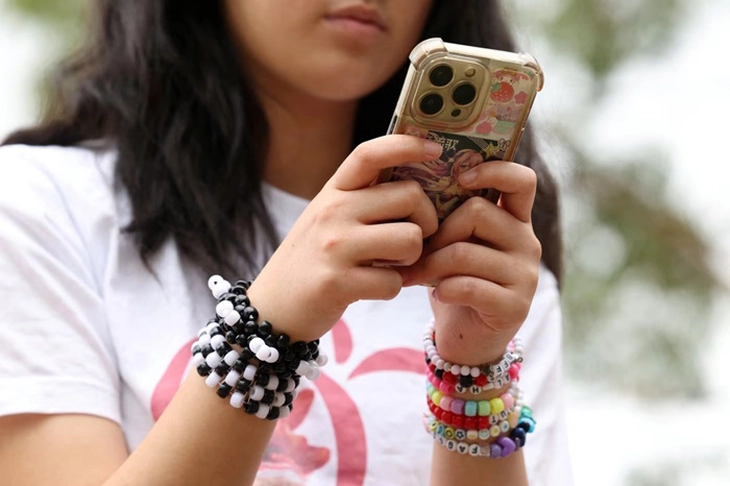
New laws have been enacted in Australia to protect children from the risks of cyberspace - Photo: Reuters
Despite the controversy, this bold move is reshaping how the world protects children from the addictive algorithms of social media.
On the morning of December 11th, 14-year-old Lucy Brooks woke up and opened her phone with anxiety. She thought her Instagram account would disappear after the ban took effect. But it wasn't. Her friends had created new accounts, some using their parents' faces to bypass age verification technology.
"They came back pretty easily," the girl told CNN. This story illustrates the complex reality of the world's first social media ban – a bold but challenging experiment to protect the younger generation.
Mixed reactions
Prime Minister Anthony Albanese emphasized the global significance of the decision. Reuters quoted him as saying: "This is one of the most profound social and cultural transformations our country has ever undergone. This is a groundbreaking reform that will resonate throughout the world for years to come."
The Australian and international expert communities are deeply divided on the new law, but arguments in favor are increasingly strengthened by scientific research.
On the Australian Science Media Centre website, proponents present strong evidence about the harmful effects of social media on developing brains.
Associate Professor Susannah Tye from the Queensland Brain Research Institute (Australia) explains: "Social media is training the brain to prioritize quick, reactive thinking and emotions over deeper cognitive skills."
She warned: "Every hour spent on social media reinforces the way the brain functions, prioritizing reactive, emotional thinking rather than focused, rational, and problem-solving."
Professor Susan Sawyer from the University of Melbourne - Director of the Adolescent Health Centre at the Royal Children's Hospital (Australia) - emphasized the particular vulnerability of adolescents.
She asserted: "Unlike other protective measures that parents can take, once children have smartphones, no matter how good the parenting is, it's impossible to resist the power of the dopamine-addictive algorithms created by big tech corporations."
Similarly, Dr. Joseph Scott from the University of Sunshine Coast (Australia) made a strong statement: "Numerous studies have shown that social media addiction causes serious health problems for teenagers. This is a warning sign of a worrying future and requires urgent action."
However, opponents have also raised concerns about unintended consequences. Professor Paula Gerber from Monash University shared her worries about the LGBTIQA+ youth group. According to the Australian Science Media Centre, she pointed out: "Nearly three-quarters of transgender youth in Australia say social media helps them feel more confident about themselves, and 91% of LGBTIQA+ youth say social media helps them find people in similar situations."
Associate Professor Jennifer Alford from Griffith University argues that the ban is too harsh a tool: "Adults created the internet and social media platforms for profit, then gave it to children like candy. Now we want to take it away, leaving some – especially vulnerable ones – to find their own ways to stay connected."
Meanwhile, Professor Daniel Angus from Queensland University of Technology warned that the government could be falling into a "hopeless chase." According to the journal Nature , he is monitoring teenagers' shift to platforms not on the banned list: "We know, for example, Lemonade and Yope are seeing a surge in downloads."
Nevertheless, global trends are leaning toward protecting children. The mental health situation of Australian youth highlights the need for action. According to Square Holes, an estimated 26% of teenagers aged 15-24 suffer from anxiety disorders and 17% from chronic depression.
Data from Headspace in 2022 indicated that 57% of young people felt their mental health was deteriorating, with 42% citing social media as the primary cause.
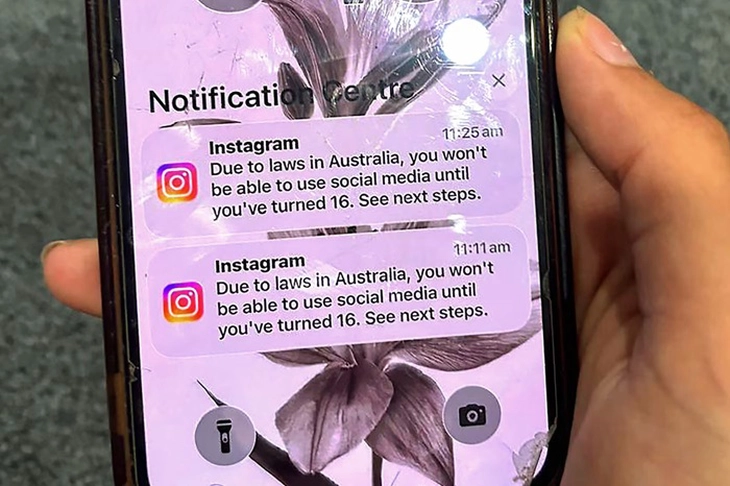
Teenagers in Australia have received notifications regarding age verification - Photo: AFP
Global wave
Australia's ban is creating a global domino effect. According to Reuters, it marks "the beginning of a wave of regulation worldwide" and opens up "a real-world test for governments frustrated by the tech industry's slow response to harm."
Many countries have planned to follow suit. Specifically, Malaysia announced it will ban children under 16 from using social media starting next year. In Europe, EU MEP Christel Schaldemose told CNN: "I'm glad they want to protect children, and we have a chance to observe how they do it and learn from it."
In the US, several states are implementing similar measures. According to USA Today , in Florida, officials will begin enforcing laws banning social media access for children under 14 and requiring parental consent for those aged 14-15. Nebraska has passed a bill requiring parental consent for minors to create accounts.
The British government is also closely monitoring this issue. According to Reuters, a UK government spokesperson said they are "closely watching Australia's approach to age restrictions" on social media and stressed: "When it comes to child safety, all options are open."
Australia is not just enacting legislation, but is also committed to seriously monitoring its impact. According to the journal Nature , Australia's eSafety Commissioner, Julie Inman Grant, stated that she interviewed 177 teenagers aged 13-16 about social media use and mental health before the law came into effect, and will conduct a follow-up survey six months later. Stanford University and 11 international scholars will collaborate with the eSafety Commissioner in collecting and analyzing data, according to CNN.
Julie Inman Grant told Reuters that she has received a lot of support from American parents. She said, "I regularly hear parents, activists, and Americans alike expressing their desire for a government that puts children's safety above technology profits."
Professor Tama Leaver from Curtin University told Reuters: "Australia was the first country to pass this ban, but it's certainly not the only one. Governments around the world are seeing how a nation can successfully counter the power of Big Tech."
American psychologist Jonathan Haidt, author of the influential book "The Anxious Generation," wrote on social media that this is "the most meaningful measure ever taken to protect children from the harms of social media."
Technology verifies the age of social media users.
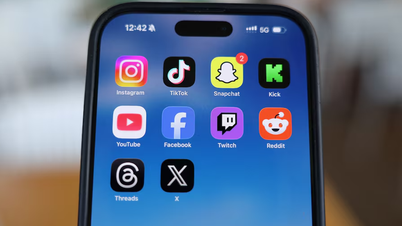
Platforms are implementing various age verification methods to comply with the new law. According to CNN, Snapchat suspends user accounts for three years or until they turn 16. TikTok disables all accounts under 16 regardless of the email or name used. Meta began deleting accounts on December 4th, prompting users to download content before disabling them.
According to Reuters, tech companies say they will combine multiple methods such as age inference (estimating age from online behavior), age estimation (based on selfies), along with requiring identification in some cases.
Yoti, a partner of Meta, said that most users choose the option of scanning selfie videos, in which the system analyzes data points on the face to estimate age, according to CNN.
Which platforms are exempt?
In addition to the 10 banned platforms, the Australian government also announced a list of exempted platforms. According to CNN, applications such as Discord, GitHub, Google Classroom, LEGO Play, Messenger, Pinterest, Roblox, Steam and Steam Chat, WhatsApp, and YouTube Kids are still permitted.
Roblox's inclusion on the exemption list has raised questions among many Australians, especially given recent allegations of children being accessed by malicious actors through the platform. eSafety Commissioner Julie Inman Grant explained that she had been in negotiations with Roblox since June, and the company had committed to implementing new protective measures in Australia, New Zealand, and the Netherlands.
Specifically, users must verify their age to use the chat function and can only message people of the same age. CNN reports that the banned list is still being updated – emerging or popular platforms may be added later.
Source: https://tuoitre.vn/cam-tre-em-dung-mang-xa-hoi-the-gioi-nhin-ve-uc-cho-xem-dung-hay-sai-20251215105332797.htm



![[Photo] Two flights successfully landed and took off at Long Thanh Airport.](/_next/image?url=https%3A%2F%2Fvphoto.vietnam.vn%2Fthumb%2F1200x675%2Fvietnam%2Fresource%2FIMAGE%2F2025%2F12%2F15%2F1765808718882_ndo_br_img-8897-resize-5807-jpg.webp&w=3840&q=75)














































































Comment (0)