

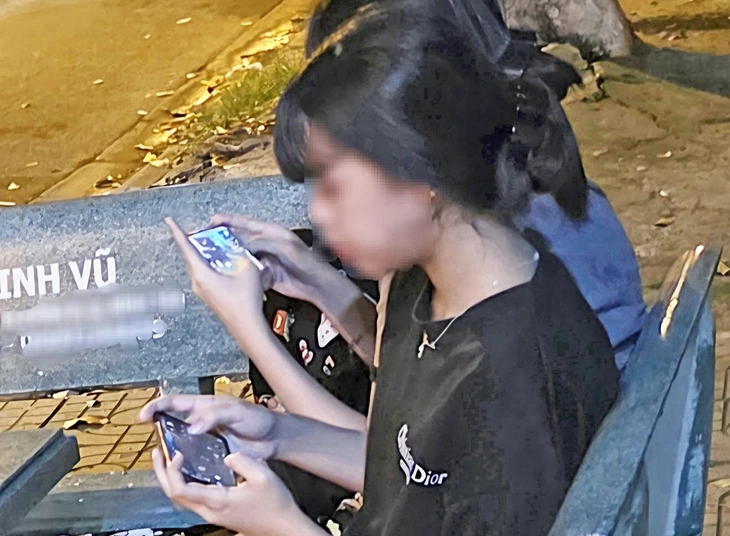
Many Vietnamese children now have easy access to social media and play games anytime, anywhere - Photo: Thuy Chi
In Vietnam, this issue has also received particular attention, with many parents, teachers, and experts expressing support for tightening regulations on children's use of social media as soon as possible.
The consequences of being caught online are very serious for children.
MSc. Le Anh Tu (Lecturer in Public Relations and Communication at the University of Economics and Finance Ho Chi Minh City (UEF) and Director of iGem Agency):
Good way to do it
From a child protection perspective, I find the tightening and banning of children's use of social media very commendable. Australia's ban on children under 16 using social media is entirely reasonable. Many European countries are also implementing similar regulations with age limits such as 12, 13, or 16 depending on the level of risk and the ability to control it.
Some platforms now contain a lot of adult content, for example, Elon Musk's social network X (formerly Twitter). After acquiring it, he shifted the content direction towards a more commercial one, resulting in a lot of adult and sensitive content. Therefore, I think banning children from using this platform is perfectly reasonable.
With the proliferation of short video clips, which can easily lead to children watching them continuously and becoming "brain-numbed," the habit of repeatedly watching one clip after another will gradually reduce their mental agility, concentration, and critical thinking abilities. Recent studies have also shown that even adults who rely too heavily on AI tend to experience a decline in cognitive flexibility.
Regarding management, in my opinion, social media platforms should require verification of identity using official documents; this would make it very difficult for children to provide false information. In cases of intentional use of false information, users should be held responsible and may have their accounts blocked, which would be more effective.
Ms. Che Da Thao, M.Sc. in Education (Director of the Center for Student Counseling and Competency Development, Ho Chi Minh City University of Technology):
Beneficial for children's mental health.
Regarding the ban on social media for children under 16 in Australia, I believe this is a strong move and beneficial for the mental health of children under 16. Children under 16 have rapidly developing emotions, but their self-control and risk assessment abilities are limited. Therefore, they are particularly sensitive to stimuli from the online environment, especially shocking, deviant, or extremist content.
These contents affect children in three ways:
From a cognitive standpoint, children easily develop distorted standards about beauty, fame, or self-worth. Trends like showing off, dangerous challenges, or negative communication styles can lead them to believe these are normal.
Emotionally, prolonged exposure to harmful content such as incitement, comparison, and body shaming can make children anxious, insecure, and irritable. Many children become dependent on likes and comments to determine their self-worth.
In terms of behavior, due to their weak self-control, children are very prone to imitation. Dangerous challenges, verbal abuse, or the tendency to dramatize events can cause children to act impulsively and harmfully.
The worrying aspect is that personalized algorithms will push deviant content to appear more frequently once children accidentally interact with it. The impact therefore becomes repetitive, deeply ingrained, and unpredictable, especially when children lack digital skills, emotional skills, and support from family and school.
In my opinion, a ban is only part of the solution; it needs to be accompanied by digital skills education, increased platform accountability, and family support. A comprehensive protection system will be more effective than a ban alone.
It should be implemented like in other countries.
Mr. Nguyen Van Thai (35 years old, parent of a student residing in Tan Hiep Ward, Ho Chi Minh City):
Prioritize your child's participation in sports and skill development.
I fully support Australia's implementation of a regulation banning children under 16 from using social media. In my opinion, the current online environment is flooded with too much violent, obscene, and offensive content that spreads very quickly.
At an age when my child, like many young people, is not yet capable of distinguishing right from wrong, they are easily curious and prone to imitating deviant behaviors shown in harmful videos.
Many parents are busy and unable to supervise their children 24/7, so a clear legal framework would provide families with greater peace of mind. I believe this regulation helps protect children and contributes to creating a healthy online environment for their development.
At home, I always prioritize my 11-year-old daughter's participation in sports and her learning of skills like drawing in the evenings.
Ms. Dang Ngoc Thu (Director of the Vocational Education and Continuing Education Center of District 6):
Many countries have taken strong measures to ban them.
Many countries that have taken drastic measures to ban or restrict social media use for children under 16 are not reacting to extreme measures, but rather are the result of long-term observation of the widespread psychological harm among young people.
From an educator's perspective, I can clearly see the consequences unfolding every day. Many students are losing focus, their academic performance is declining, their emotions are unstable, and their behavior is changing abruptly...
Minor disagreements online can escalate into real conflicts at school. Some students stay up until midnight browsing videos, then walk into class exhausted the next morning.
In reality, at our school, many students enroll in continuing education programs due to family circumstances or other objective reasons. However, there are also quite a few cases of problematic students who are late for class because they are addicted to video games or their phones, leading to failing exams and not having enough points to get into public schools.
When teachers work with parents about students with low grades, they also express helplessness because the main reason is that the students only like to use their phones and browse social media at home, and that time takes up all of their study time.
Mr. Nguyen Huy Phuong (Deputy Principal of IVS Boarding School):
Vietnam should implement a ban.
The online environment is becoming a catalyst for children's psychological problems to flare up more intensely than ever before. Having worked at IVS for many years, I've clearly seen that most of our students have experienced significant setbacks such as gaming addiction, social media dependence, disrupted daily routines, and some even fall into depression or become involved in violent conflicts due to a single comment online.
Some students may seem very gentle, but after just a few months immersed in the virtual world, they become irritable, withdrawn from their families, and lose their ability to concentrate. Many parents think their children are just "addicted to gaming," but in reality, it's a form of psychological dependence similar to behavioral addiction, difficult to overcome without professional intervention.
Therefore, when many countries restrict social media use for children under 16, I believe it's not an excessive measure, but rather a necessary effort to protect children from an environment that even adults find difficult to control. Vietnam should definitely consider adopting similar models, but in a way that suits our management capabilities.
In a boarding school environment like IVS, we witness a noticeable change when students are disconnected from social media for a period of time. They sleep better, communicate better, start thinking again, and focus on physical activities and academics.
Many students, after quitting gaming and social media, admit that they used to "lose control of themselves," and that social media made them angrier, more impulsive, or more insecure.
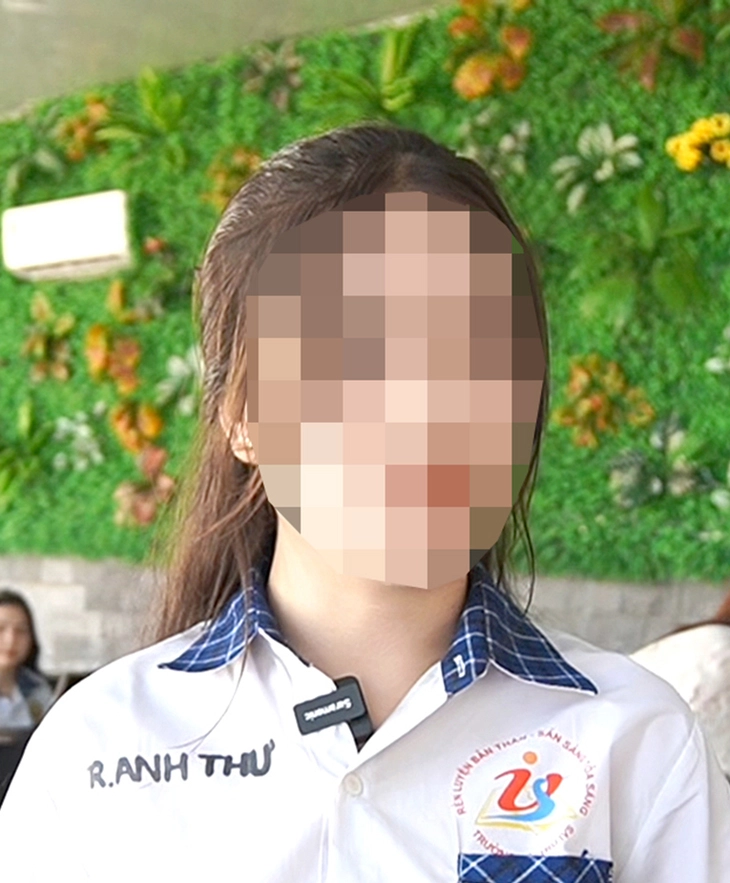
Pham Anh Thu (9th grade at IVS Boarding High School) says she has changed for the better thanks to overcoming her addiction to social media and games - Photo: AV
Pham Anh Thu: I used to play so many games that I didn't care about my studies anymore, I rarely talked to my parents, and sometimes I even got angry for no reason just because my playing time was limited.
Social media has also drawn me into many negative things. I often watch "drama" clips, shocking stories, or arguments online. At first, I watched them for fun, but gradually my mind was always filled with frustration and comparisons.
When my parents took me to IVS, I reacted very strongly. I felt forced, like I was being separated from the world I was familiar with.
But after a few months without social media, I felt much more at ease, slept better, was less prone to anger, and started paying more attention to the people around me.
When I have free time, I play sports or read books with friends, and I naturally feel happier than before.
If you asked me if I support restricting social media use for children under 16, I would say yes right now.
Source: https://tuoitre.vn/cam-tre-em-dung-mang-xa-hoi-the-gioi-nhin-ve-uc-nguoi-viet-y-kien-gi-20251215104442695.htm

![[Photo] Prime Minister Pham Minh Chinh receives the Governor of Tochigi Province (Japan)](/_next/image?url=https%3A%2F%2Fvphoto.vietnam.vn%2Fthumb%2F1200x675%2Fvietnam%2Fresource%2FIMAGE%2F2025%2F12%2F16%2F1765892133176_dsc-8082-6425-jpg.webp&w=3840&q=75)
![[Photo] Prime Minister Pham Minh Chinh receives Lao Minister of Education and Sports Thongsalith Mangnormek](/_next/image?url=https%3A%2F%2Fvphoto.vietnam.vn%2Fthumb%2F1200x675%2Fvietnam%2Fresource%2FIMAGE%2F2025%2F12%2F16%2F1765876834721_dsc-7519-jpg.webp&w=3840&q=75)

![[Image] Leaked images ahead of the 2025 Community Action Awards gala.](/_next/image?url=https%3A%2F%2Fvphoto.vietnam.vn%2Fthumb%2F1200x675%2Fvietnam%2Fresource%2FIMAGE%2F2025%2F12%2F16%2F1765882828720_ndo_br_thiet-ke-chua-co-ten-45-png.webp&w=3840&q=75)
![[Live] 2025 Community Action Awards Gala](/_next/image?url=https%3A%2F%2Fvphoto.vietnam.vn%2Fthumb%2F1200x675%2Fvietnam%2Fresource%2FIMAGE%2F2025%2F12%2F16%2F1765899631650_ndo_tr_z7334013144784-9f9fe10a6d63584c85aff40f2957c250-jpg.webp&w=3840&q=75)






































![[Photo] Prime Minister Pham Minh Chinh attends the Vietnam Economic Forum 2025](https://vphoto.vietnam.vn/thumb/402x226/vietnam/resource/IMAGE/2025/12/16/1765893035503_ndo_br_dsc-8043-jpg.webp)























Comment (0)