

Easily judged
Khoai Lang Thang is widely loved by audiences for his simple travel videos , capturing the everyday life in remote areas: from meals in the riverside regions and highland markets to the struggles of poor laborers. His image is associated with moderation in speech, careful storytelling, and a positive spirit.
However, a single social media post suggesting that "that gentleness is just a facade" immediately sparked a heated debate. Defendants argued that the positive values he had spread were undeniable, while skeptics questioned the line between the image he projects and his true self behind the camera.
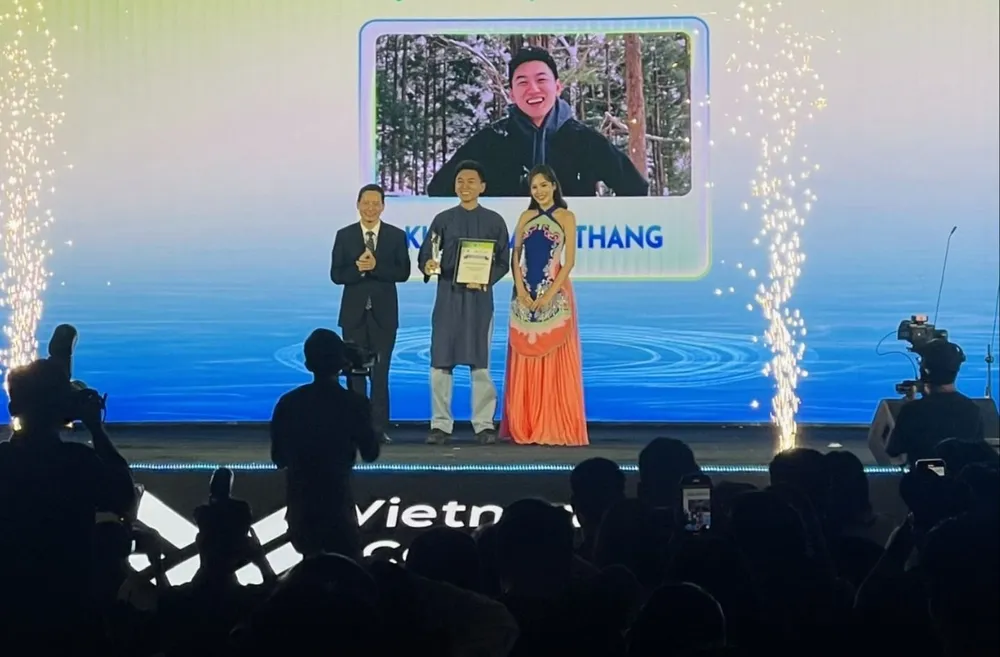
From a specific story, the question "what's the point of being kind?" quickly spread, becoming a concern for many young people. In a context where everyone has to protect themselves, build their image, and compete for every opportunity, being kind is sometimes seen as... a disadvantage.
It's not difficult to find such stories in real life. In the classroom, some students are misunderstood for remaining silent during a group argument because they "don't want to cause trouble," but that very act of yielding ends up causing them to suffer more in the overall evaluation.
Online, mild statements about a sensitive issue can be attacked by the community, who might interpret them as "proof" of support. In schools, some students are bullied for years but choose to endure it for fear of being ostracized or having videos of it posted online...
Leaving the lecture hall and entering the workplace, the situation becomes even more complicated. Many young people enter the workforce with the mindset of "being gentle to learn the ropes," or "being gentle to keep opportunities." Some accept unpaid overtime. Others are assigned tasks outside their scope of responsibility but silently accept them for fear of being perceived as "uncooperative."
Social media, once envisioned as a space for connection, has now become a "battleground" for judgment. A single cropped video clip, a quote taken out of context, can thrust someone into the eye of a public storm. In this world , many choose to attack first in self-defense, fearing that if they aren't assertive enough, they will be the ones hurt.
A way of life with boundaries
Looking deeper, the issue isn't about being "kind or not kind," but rather about how one is kind. Kindness in modern life is no longer about unconditional submission or yielding. Rather, kindness is conscious and limited. It's when a person remains level-headed enough to protect their legitimate rights, but doesn't choose to harm others to achieve them.
From another perspective, the story of Khoai Lang Thang is also a test of society's understanding of positive values. An individual may have been loved for many years, but a single doubt is enough to shake their image. However, instead of hastily concluding what is right or wrong, perhaps what is more necessary is caution in judgment and humanity in how we treat others.
In everyday life, there are small but enduring acts of kindness, such as offering free iced tea, repairing bicycles for passersby, or even providing free funeral services... These actions are not noisy, do not create trends, and do not generate large amounts of interaction. But it is these small things that keep this society from becoming cold and indifferent.
Young people today need to be strong to adapt, to compete, and to assert their self-worth. But they also need to be gentle so as not to become a tough, rigid version of themselves. They need to be alert enough to know when to speak up to defend themselves, and also need to be tolerant enough to know when to listen to others.
Source: https://www.sggp.org.vn/hien-lanh-co-bat-loi-post829102.html

![[Image] "Journey of Hope" promotes the organ and tissue donation movement in Vietnam.](https://vphoto.vietnam.vn/thumb/1200x675/vietnam/resource/IMAGE/2026/05/20/1779294400833_1-8910-jpg.webp)
![[Photo] National Assembly Chairman Tran Thanh Man working with the Standing Committee of the National Assembly's Ethnic Council](https://vphoto.vietnam.vn/thumb/1200x675/vietnam/resource/IMAGE/2026/05/21/1779337435930_ndo_br_1-jpg.webp)










































































Comment (0)