


 |
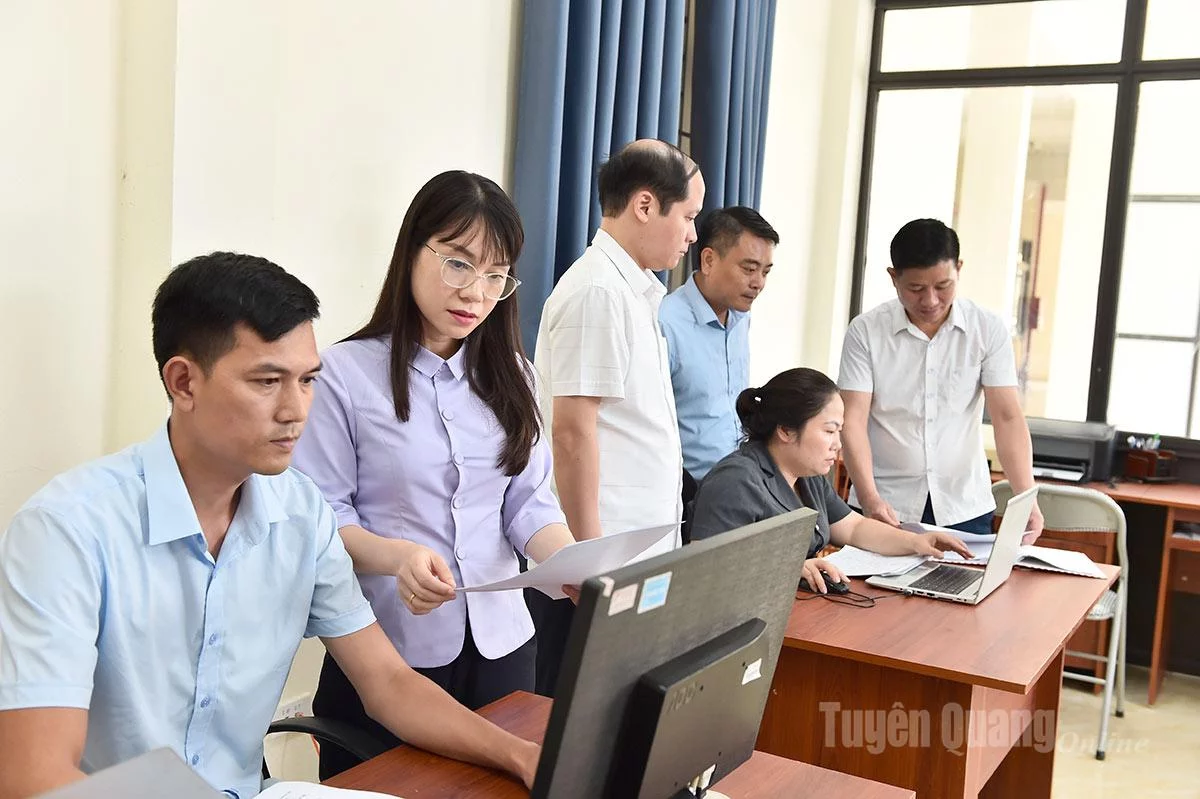
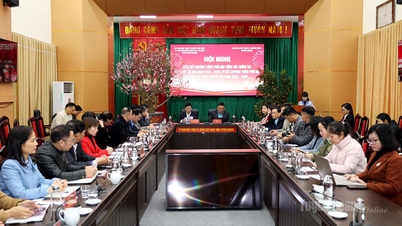
| Comrade Pham Thi Kieu Trang, Secretary of the Party Committee of Binh Thuan Ward, is directing the completion of the document. |
High levels of authority mean greater responsibility.
With its "large province, large commune" model, Tuyen Quang currently has 124 communes and wards. These communes and wards are formed by merging 2 to 6 old communes and wards, resulting in a 3-5 fold increase in area and population density. Commune governments have many new and important responsibilities, and are given more authority; therefore, the responsibility of each official is also greater.
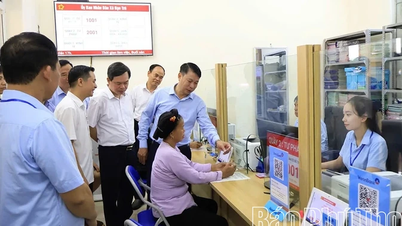
Ms. Ha Thi Thu, from Hamlet 6, Quy Quan, Luc Hanh Commune, needs to convert her land use purpose to residential land for building a house. On the afternoon of July 6th, Ms. Thu brought her documents to the Luc Hanh Commune Public Administrative Service Center to apply for a land use right certificate. Ms. Thu is one of the residents who experienced this convenience; when she came to the Center to complete the procedures, she was guided attentively by the staff. “After only 20 minutes, all my documents were accepted and I received an appointment slip. It was really quick and convenient, just as I expected,” Ms. Thu shared.
The two-tiered government model is bringing local government closer to the people. This change not only brings convenience to the people but also places higher demands on local officials.
Having served for many years as Chief of the Lam Binh District Party Committee Office after the merger, Mr. Truong Van Quang was transferred and appointed as Chairman of the Lam Binh Commune People's Committee. Mr. Truong Van Quang shared: “Lam Binh Commune was formed by merging Xuan Lap Commune, Phuc Yen Commune, and Lang Can Town. It has a fairly large area of 327.65 km2 and a population of 6,999 people.”
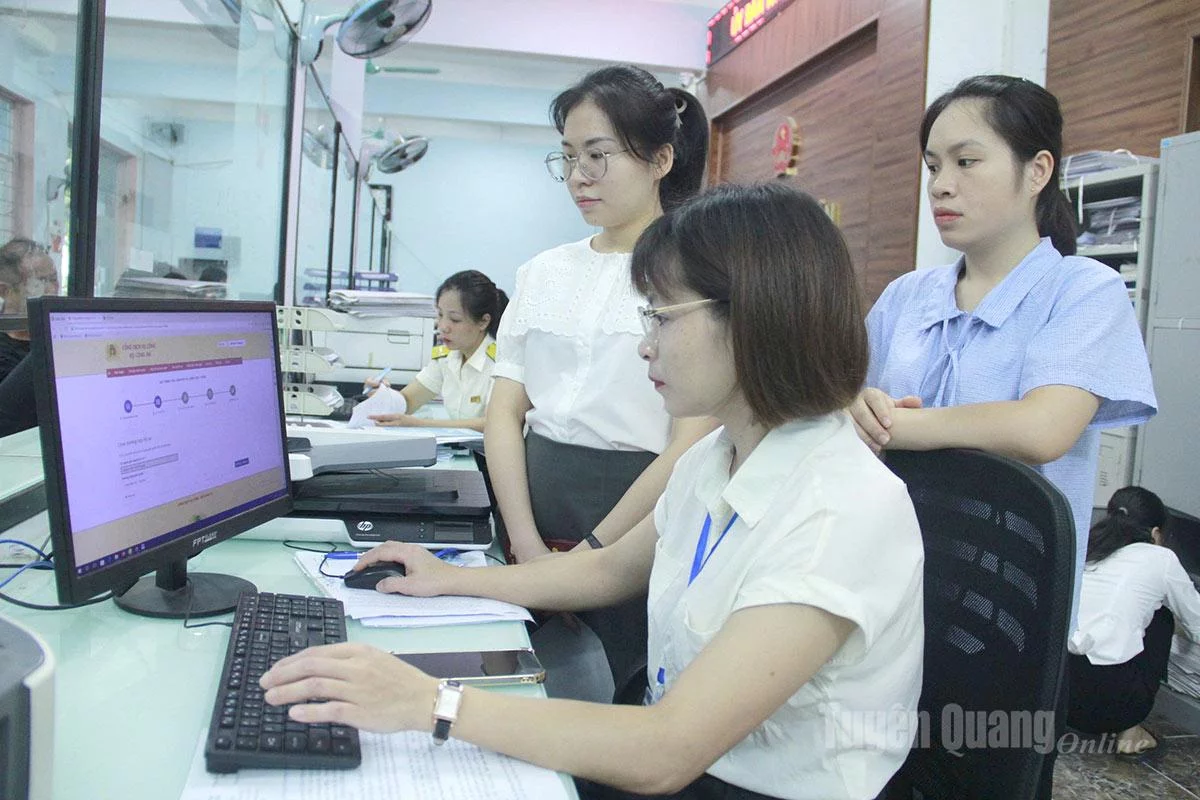 |
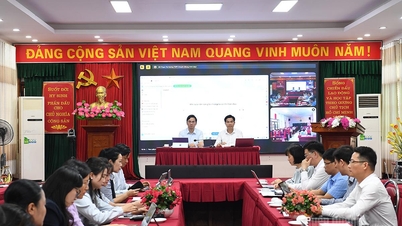
| Officials and civil servants of Ha Giang 2 ward exchange professional knowledge and expertise. |
The areas under the jurisdiction of the newly established commune-level People's Committees are numerous and new, including some quite sensitive areas such as land management, mineral resources, and construction. Therefore, when assigned this new task, I had to thoroughly understand the legal regulations in these areas, especially to avoid lax management that could lead to violations.”
Furthermore, the role of the People's Council at the commune level has been significantly strengthened. Comrade Then Van Quan, Chairman of the People's Council of Dong Tam commune, shared that the People's Council now decides on most important local issues. This includes the development and approval of socio-economic development plans, budget estimates, allocation, and final settlement approval, policies supporting agriculture, environmental protection, education, healthcare, and culture, as well as decisions on local security and defense. With greater power and responsibility, officials are required to adapt quickly and strive to improve their professional skills to fulfill their duties.
The "bottlenecks" that need to be resolved.
After two weeks of operation, many commune-level officials clearly felt the pressure of taking on a large number of new tasks. This required commune officials to work while simultaneously researching and learning about the continuously issued regulations, decrees, and circulars.
Ms. Pham Thi Nguyet, a staff member at the Public Administrative Service Center of Ha Giang 2 Ward, shared: “There are many new documents, and we have to spend time outside of working hours to read and understand them. This sometimes makes the work process less smooth than desired. We always strive to complete our work, ensuring the quick receipt and processing of administrative documents and procedures for citizens and businesses.”
Speaking about the initial difficulties, Ms. Hoang Thi Thuy, a specialist at the Fatherland Front Committee of Luc Hanh commune, shared: "There are quite a few new regulations, decrees, and circulars that have been issued. We had to study and learn as we went along, so the initial period of operation was still difficult." This is also the common opinion of many officials in communes when approaching the new government model.
The digital transformation journey, while an inevitable trend, is also facing many "bottlenecks" when carrying out administrative procedures on the National Public Service Portal. Many procedures remain complex, and the sections on the Public Service Portal are sometimes difficult to understand, causing people, especially the elderly, to still choose to submit applications in person. Ms. Tran Thi Hoa, from Hamlet 5, Quy Quan, Luc Hanh Commune, said: "I tried to submit my application online, but I found many sections unclear. The commune officials had to guide many people at once, which was quite tiring."
Furthermore, the development of community-based digital technology teams in many areas is slow, leading to a shortage of staff to guide people in using online public services. The weak digital skills of some commune officials are also a major obstacle, preventing them from meeting the requirements of the digital transformation process.
 |
| Youth Union officials in Luc Hanh commune regularly visit local communities to guide people in digital transformation. |
Sharing her thoughts on this issue, Ms. Luong Thu Hien, an office staff member of the Tan Trao Commune People's Committee, said: "Many officials still face difficulties using specialized software or navigating the Public Service Portal. Despite training, applying it to daily work remains challenging, affecting processing speed and the quality of online public services for citizens. Not to mention the issue of some citizens not having registered and activated their level 2 electronic identification, which hinders the processing of their applications."
Another existing difficulty is the shortage of office space and facilities in many localities after mergers. A typical example is Hung Loi commune, formed by the merger of the former Hung Loi and Trung Minh communes. Currently, the office is located in Hung Loi with over 60 staff members, leading to overcrowding and a lack of workspace. Similarly, Son Vi commune is also facing a similar challenge. The main reason is the long geographical distance between the former commune offices, making it impossible to effectively utilize existing facilities and hindering the arrangement of workspaces and living quarters for staff.
Officials must improve themselves.
These days, Ms. Hoang Thi Thuy, a specialist at the Fatherland Front Committee of Luc Hanh commune, is quite busy with her workload. Alongside fulfilling her assigned duties at the office, she proactively dedicates time to researching materials and participating in online courses on AI and digital transformation to better serve her work.
Ms. Thuy shared: “Previously, I was the Secretary of the Youth Union of Quy Quan commune. Currently, I am a specialist in charge of the Ho Chi Minh Communist Youth Union work in Luc Hanh commune. Luc Hanh was formed by merging three communes: Quy Quan, Luc Hanh, and Chieu Yen. The Youth Union work in the commune is now handled by two officers, resulting in a larger workload and greater responsibility, so I have to constantly learn to meet the job requirements.”
In a rapidly changing environment, self-learning, research, and professional development are essential. Recently, Mr. Liu Van Thang, an office staff member of the People's Committee of Pa Vay Su commune, has dedicated considerable time to studying new regulations on commune-level financial management. He affirmed: “We cannot wait for training courses. Everyone must proactively seek out and acquire new knowledge to meet job requirements. This change demands that each official be a role model in the spirit of learning.”
Alongside self-effort, organizing training courses to enhance the capacity of officials is extremely necessary. Mr. Do Anh Tuan, Director of the Department of Internal Affairs, stated: “We are developing a detailed training plan, closely aligned with the practical needs of each group of officials. These courses will help officials update their knowledge, improve their professional skills, and resolve any difficulties that arise during their work.”
To address the "bottleneck" in digital transformation, strengthening the community-based digital technology team is an urgent task. Team members need thorough training to be competent in guiding citizens to easily and conveniently access online public services. Mr. Ma Cong Kham, Chairman of the People's Committee of Thuong Lam commune, stated: "We have required each official to master basic digital skills. This is an inevitable trend and a mandatory requirement to serve the people in the digital age."
Currently, many localities across the country, such as Phu Tho, Ninh Binh, and Ho Chi Minh City, have proactively adjusted administrative working hours for officials, civil servants, and employees to better suit practical conditions. Compared to the current working hours in Tuyen Quang, this adjustment will allow officials to start the morning shift 30 minutes later and finish the afternoon shift 30 minutes earlier.
Comrade Do Anh Tuan, Director of the Department of Internal Affairs, added: “Given the practical difficulties regarding travel distance and life arrangements for commune-level officials after the merger, Tuyen Quang province is considering adjusting administrative working hours and learning from the experiences of other localities. This is seen as a flexible change that can create more favorable conditions for officials and improve overall work efficiency.”
The transformation of the two-tiered administrative model in Tuyen Quang is a promising step towards a more streamlined, efficient, and people-oriented administration. While the road ahead remains challenging, this also serves as a strong motivation for each official to consciously strive to improve their capabilities. Each truly competent official in the "larger commune" will contribute to building a strong and modern grassroots government.
Giang Lam
Source: https://baotuyenquang.com.vn/thoi-su-chinh-polit/tin-tuc/202507/xa-lon-trach-nhiem-lon-1d922d4/














































































Comment (0)