

According to Dr. Nguyen Quang Duong, Department of Surgery, Tue Tinh Hospital, cold feet are not only caused by the weather but also related to a deficiency of yang energy and poor blood circulation, especially in the meridians of the lower limbs.
- 1. Massage and acupressure can help reduce cold feet.
- 2. Soak your feet in herbal water.
- 3. Acupuncture and moxibustion
- 4. Use warming foods and medicinal remedies.
Traditional Chinese medicine holds that "when yang energy is deficient, cold arises." When yang energy is weak, the body lacks sufficient heat to warm the extremities, leading to cold feet. Therefore, the important treatment principle is to warm the yang, replenish qi, and promote blood circulation, improving blood flow to the lower limbs. Adjusting lifestyle, diet, and combining these with traditional therapies will yield lasting results.
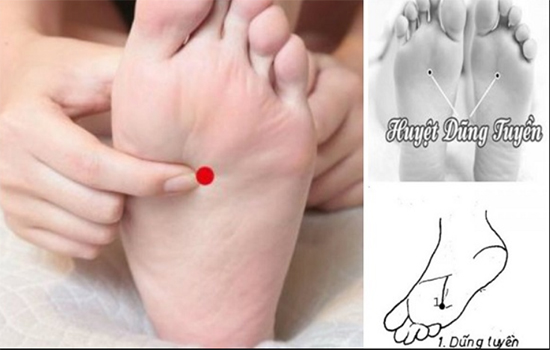
Acupressure on the Yongquan point helps warm the feet and reduce coldness.
1. Massage and acupressure can help reduce cold feet.
Acupressure massage is a simple and easy method that stimulates blood circulation and quickly warms the feet.
Some commonly used acupuncture points include:
Yongquan (sole of the foot): Located in the space between the second and third metatarsal bones.
How to locate the acupoint: Bend your foot and toes, and you will see a depression about one-third of the way down the sole of your foot. This depression is the Yongquan acupoint.
Effects: Unblocks and regulates the kidney meridian, warms the kidneys, returns fire to its origin, warms the feet; massage for about 1 minute to warm the feet before proceeding with acupressure.
Taikhe (inner side of the ankle): Located behind the inner ankle bone, in the depression near the heel.
Effects: Replenishes kidney yang, improves cold feet caused by kidney deficiency.
Sanyinjiao: Located on the inner side of the lower leg, 3 cun (width of the 2nd, 3rd, 4th, and 5th fingers) above the inner ankle bone.
Effects: Regulates blood circulation, enhances lower limb circulation, nourishes the liver, and strengthens the spleen.
Zusanli (良脉): Located in front of the tibia, about 3 cun below the knee; the point is one index finger's width from the tibial crest.
Effects: Nourishes the blood and vital energy, strengthens the body's defenses.
You can massage each acupoint for 1–2 minutes, combined with warming the soles of your feet before bed to increase effectiveness.

Soaking your feet in herbal water warms your feet and improves sleep.
2. Soak your feet in herbal water.
Soaking feet in warm herbal water is a method recommended by Traditional Chinese Medicine for preventing and improving cold feet. Some commonly used herbs include fresh ginger, mugwort, cinnamon, safflower, and coarse salt.
Soaking your feet for 15–20 minutes in the evening helps dilate blood vessels, increase blood circulation, warm your feet, and improve sleep.
3. Acupuncture and moxibustion
Acupuncture and moxibustion help to clear meridians, warm the meridians, and dispel cold. Moxibustion is particularly suitable for people with cold feet due to deficiency of cold energy and weak yang energy. This method should be performed by a Traditional Chinese Medicine practitioner to ensure safety.
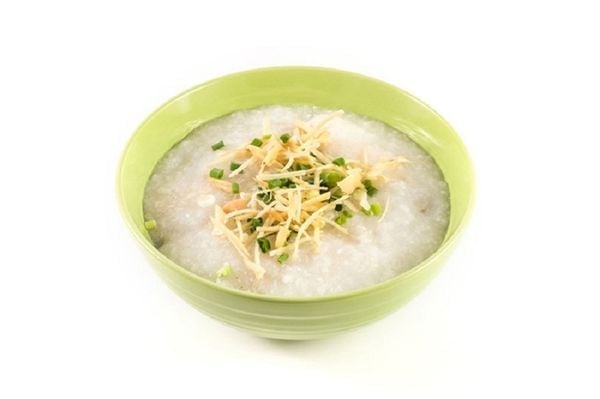
Ginger porridge has warming properties that help relieve cold feet.
4. Use warming foods and medicinal remedies.
Diet plays a crucial role in improving cold feet; warm and comforting foods such as ginger porridge, chicken soup with Chinese herbs, black bean porridge, and lotus seed and longan sweet soup should be consumed; raw, cold foods, ice water, and foods with a cooling nature should be avoided. In addition, keep your feet warm, wear thin socks while sleeping, avoid walking barefoot on cold surfaces, and increase gentle exercise to promote blood circulation.
If cold feet persist along with numbness, pain, skin discoloration, or excessive fatigue, patients should see a doctor for an accurate diagnosis.
See more trending articles:
Source: https://suckhoedoisong.vn/4-cach-giup-lam-giam-lanh-chan-169260210151957342.htm
![[Photo] General Secretary and President To Lam receives Amazon's Senior Vice President David Zapolsky](https://vphoto.vietnam.vn/thumb/1200x675/vietnam/resource/IMAGE/2026/05/22/1779466547770_a1-bnd-3513-6601-jpg.webp)









































































Comment (0)