

Quang Tri province , located in central Vietnam, was once a "white zone" during the war against the US. The province currently boasts numerous historical sites such as the Quang Tri ancient citadel, the Vinh Moc tunnels, Hien Luong bridge, and the Ben Hai river, marking important events of the period of national division.
During the April 30th holiday in 2025, heritage tourism tours attracted a large number of visitors from North to South, making Quang Tri a destination for sightseeing and learning about the Vietnam War and a chapter in the history of national reunification.
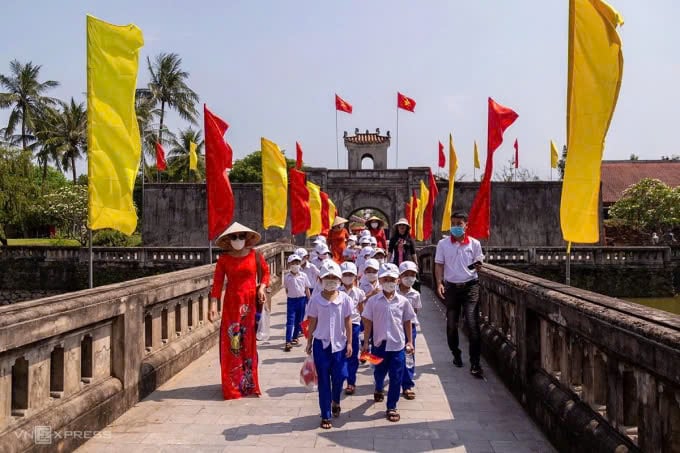
This 48-hour itinerary in Quang Tri is based on suggestions from Huy Hoang, a tour guide in the Central region, and research conducted by a VnExpress reporter.
Day 1
Move
To reach Quang Tri, tourists can fly to Hue or Dong Hoi ( Quang Binh ), then travel by road to Dong Ha - the provincial center. Phu Bai Airport (Hue) has a higher frequency of flights from Hanoi and Ho Chi Minh City. Quang Tri is located on National Highway 1A, making it convenient to travel by private car, bus, or train.
Alternatively, visitors can travel via the Ho Chi Minh Highway or the North-South Expressway (CT01). Several sleeper bus companies operating the North-South route stop in Dong Ha, including Camel Travel, Hoang Long, Quoc Vuong, Thien Trung, and Quang Dung. The Thong Nhat train, including the SE1/2 and SE3/4 express trains, also stops at Dong Ha station. Train and bus fares range from approximately 400,000 VND to 1,500,000 VND per person per way, depending on the departure point. From Hanoi, Ho Chi Minh City, and other locations, visitors should choose flights or trains/buses to Quang Tri early in the morning to have enough time for sightseeing.
Tourists can have breakfast in Dong Ha city before departure; suggested local dishes include steamed rice rolls with pork, beef noodle soup with pork trotters, and offal porridge, with prices ranging from 30,000 VND depending on the dish.
Quang Tri Ancient Citadel
The ancient citadel is located in the heart of Quang Tri town, about 14 km from Dong Ha city. The citadel was built between 1809 and 1837, during the reigns of Gia Long and Minh Mang. During the Republic of Vietnam era, the citadel was named Dinh Cong Trang Citadel.
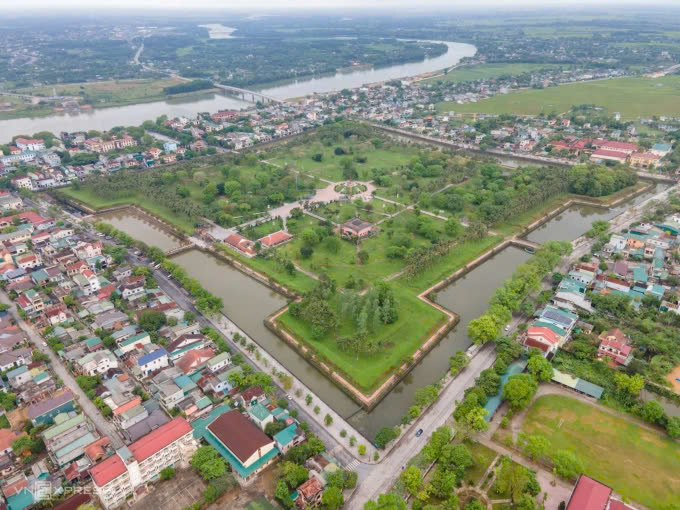
The citadel is square-shaped, with each side measuring 500 meters, surrounded by a moat 18 meters wide and up to 3 meters deep for defensive purposes. It has four gates, the main one facing south. From Quang Tri citadel, it's convenient to travel south or north by river, land, or sea. From June 28th to October 16th, 1972, the US and the South Vietnamese army dropped 328,000 tons of bombs and ammunition on the citadel and Quang Tri town in an attempt to retake it and put pressure on the Paris peace talks. Visitors can light incense at the central memorial and then visit the museum to hear stories about the 81-day and 81-night battle to defend the citadel.
Releasing floating lanterns at the memorial temple south of the Thach Han River.
Located about 500 meters from the ancient citadel, the two flower-releasing docks along the Thach Han River commemorate the martyrs who sacrificed their lives crossing the river to support the citadel in 1972. During holidays, locals and tourists often visit the memorial, releasing flowers to float down the river, paying tribute to those who fell.
For lunch in Dong Ha City, Huy Hoang suggests that tourists can choose restaurants serving family meals, group meals, or visit the food court at Dong Ha Market. Some popular local restaurants with reasonable prices include Yen Loan Clay Pot Rice Restaurant in Tan Chau, and Bich La Thon Restaurant, with prices ranging from 100,000 to 300,000 VND per person.
Truong Son National Martyrs Cemetery
The Truong Son Martyrs' Cemetery, located in Linh Truong commune, Gio Linh district, is approximately 25 km northwest of Dong Ha city and about 20 km from National Highway 1A. Covering an area of 140,000 m2, it is situated upstream of the Ben Hai River. The resting place of over 10,200 martyrs, it was constructed from October 24, 1975, and completed on April 10, 1977. It is the largest cemetery in Vietnam, divided into 10 sections according to locality. The cemetery is part of the Truong Son - Ho Chi Minh Trail national historical monument system. At the end of the trip, visitors can return to Dong Ha to rest or visit Cua Viet beach, about 17 km away, for swimming and dinner with delicious fresh seafood.
Tourists can also choose to stay at homestays or hotels in the center of Dong Ha City, such as Saigon - Dong Ha Hotel, Muong Thanh Hotel, Huu Nghi Hotel, with prices ranging from 500,000 to 1,000,000 VND per night.
Day 2
Breakfast: Fish porridge with minced snakehead fish.
Snakehead fish porridge, also known as "bed slat porridge," is a signature dish of Quang Tri province, made with rice flour and snakehead fish. Although called "porridge," it actually consists of long, flat strands of dough that resemble bed slats.
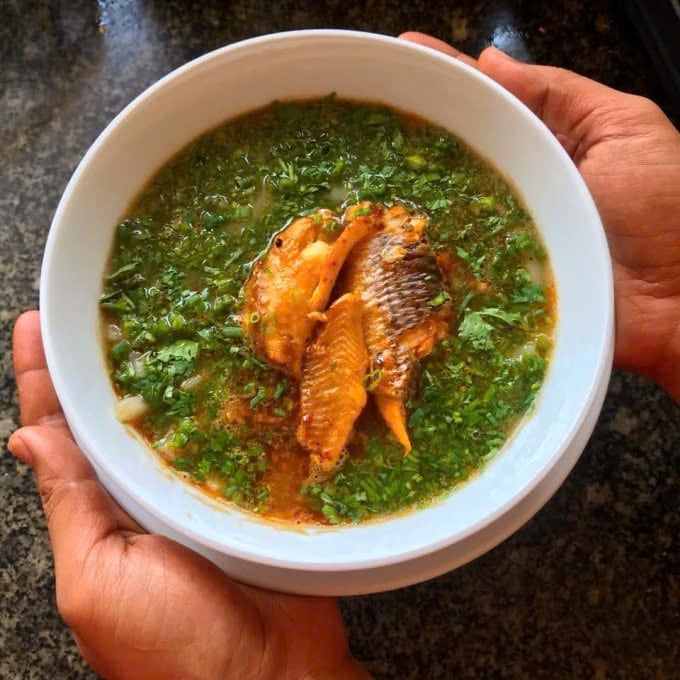
The cook selects high-quality rice, soaks it overnight until soft, then grinds it into a fine paste. The paste is then kneaded with a little water, rolled into a thin sheet using a glass bottle or bamboo tube, and then cut into even strands. The broth is the soul of the dish: snakehead fish is steamed until cooked, the meat is removed for the filling, and the head and bones are pounded and strained to make a sweet and savory broth.
Hien Luong Bridge historical site - Ben Hai River
The banks of the Hien Luong River are "historical witnesses" of the nation. The complex of historical relics currently includes the banks of the Hien Luong River, the Hien Luong Bridge, the Ben Hai River, the flagpole on the North bank, the combined building, the border police station, the loudspeaker system, the "Aspiration for Unification" monument on the South bank, and the 17th Parallel Museum. According to the 1954 Geneva Accords, the 17th parallel, along with the Ben Hai River and the Hien Luong Bridge, was chosen as the boundary dividing Vietnam into two military zones. After two years, the two regions would hold a general election to unify the country. However, the banks of the Hien Luong River remained divided until 1975.
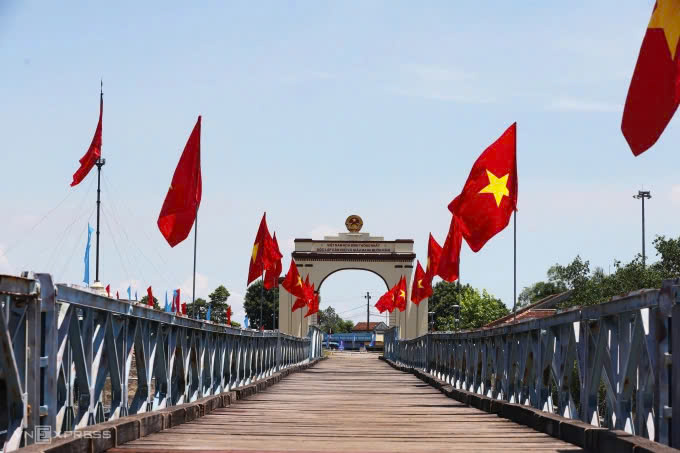
The bridge, once a witness to bombings and the war, was painted blue and yellow. After the country was reunified, it was repainted gray. In 2014, Hien Luong Bridge was restored for the first time in its two colors, blue and yellow, to emphasize the Vietnamese people's aspiration for national unity.
Vinh Moc Tunnels
The Vinh Moc Tunnels, located in Vinh Thach commune, Vinh Linh district, are over 1,700 meters long, comprising three levels and 13 entrances. During the war, the entire district had 114 tunnels and underground village systems, but currently only Vinh Moc is exploited for tourism. The structure is called a "tunnel village" because it fully recreates the living space underground, including a meeting hall, living quarters, a maternity ward, a water well, a surgical station, and toilets.
Besides the Vinh Moc tunnels, which are currently being used for tourism, Vinh Linh still has many intact tunnels that have not been explored, such as Mui Sy, Rooc village, Troong Mon - Cua Hang, Hai Quan, Huong Nam, the armed police tunnels, and tunnel 61.
Lunch and relaxation at Cua Tung beach.
Cua Tung Beach, located more than 6 km from the Vinh Moc Tunnels, was once a resort chosen by the French in the early 20th century thanks to its white, gently sloping sand beach stretching for nearly a kilometer. Previously, the beach had an arc shape, with a sandy shoreline of about 25-30 meters.
Since 2003, the province has constructed many projects at the Ben Hai estuary, such as breakwaters, a fishing port, and the Cua Tung bridge. These projects have altered the river's flow, causing erosion of the beach, sand washing away, and waves crashing against the base of the breakwater. Currently, tourists visiting Cua Tung can stop at seaside restaurants and enjoy local seafood dishes such as steamed squid, grouper porridge, and seaweed salad, with prices ranging from 100,000 to 300,000 VND per person.
Alternatives
Ta Con Airport, the Le Duan Memorial Area, the National Martyrs' Cemetery on Highway 9, and Con Co Island. These locations are scattered throughout the province, with different routes, so they require more travel time.
According to vnexpress.net
Source: https://baohanam.com.vn/du-lich/48-gio-o-dat-lua-quang-tri-158357.html
![[Image] Leaked images ahead of the 2025 Community Action Awards gala.](/_next/image?url=https%3A%2F%2Fvphoto.vietnam.vn%2Fthumb%2F1200x675%2Fvietnam%2Fresource%2FIMAGE%2F2025%2F12%2F16%2F1765882828720_ndo_br_thiet-ke-chua-co-ten-45-png.webp&w=3840&q=75)


![[Photo] Prime Minister Pham Minh Chinh receives the Governor of Tochigi Province (Japan)](/_next/image?url=https%3A%2F%2Fvphoto.vietnam.vn%2Fthumb%2F1200x675%2Fvietnam%2Fresource%2FIMAGE%2F2025%2F12%2F16%2F1765892133176_dsc-8082-6425-jpg.webp&w=3840&q=75)
![[Photo] Prime Minister Pham Minh Chinh receives Lao Minister of Education and Sports Thongsalith Mangnormek](/_next/image?url=https%3A%2F%2Fvphoto.vietnam.vn%2Fthumb%2F1200x675%2Fvietnam%2Fresource%2FIMAGE%2F2025%2F12%2F16%2F1765876834721_dsc-7519-jpg.webp&w=3840&q=75)
![[Live] 2025 Community Action Awards Gala](/_next/image?url=https%3A%2F%2Fvphoto.vietnam.vn%2Fthumb%2F1200x675%2Fvietnam%2Fresource%2FIMAGE%2F2025%2F12%2F16%2F1765899631650_ndo_tr_z7334013144784-9f9fe10a6d63584c85aff40f2957c250-jpg.webp&w=3840&q=75)














































![[Live] Closing Ceremony and Award Presentation for the "Impressive Vietnam Tourism" Video/Clip Creation Contest 2025](https://vphoto.vietnam.vn/thumb/402x226/vietnam/resource/IMAGE/2025/12/17/1765974650260_z7273498850699-00d2fd6b0972cb39494cfa2559bf85ac-1765959338756946072104-627-0-1338-1138-crop-1765959347256801551121.jpeg)



















Comment (0)