

The essence of the heritage region.
The Yên Tử - Vĩnh Nghiêm - Côn Sơn - Kiếp Bạc complex of historical sites and scenic spots has just been recognized by UNESCO as a World Cultural Heritage site, much to the delight of the people of the province. This affirms the outstanding global value of the heritage and honors the contributions of the localities to the treasury of human culture.
The heritage complex comprises 12 component sites spread across three provinces and cities: Bac Ninh , Quang Ninh, and Hai Phong. Among them, two sites in Bac Ninh province, Vinh Nghiem Pagoda (Tan An ward) and Bo Da Pagoda (Van Ha ward), are recognized as two centers of Truc Lam Buddhism, playing a crucial role in maintaining and developing Buddhism. Truc Lam Buddhism is a unique Zen school of Vietnam, founded by Emperor Tran Nhan Tong in the 13th century.
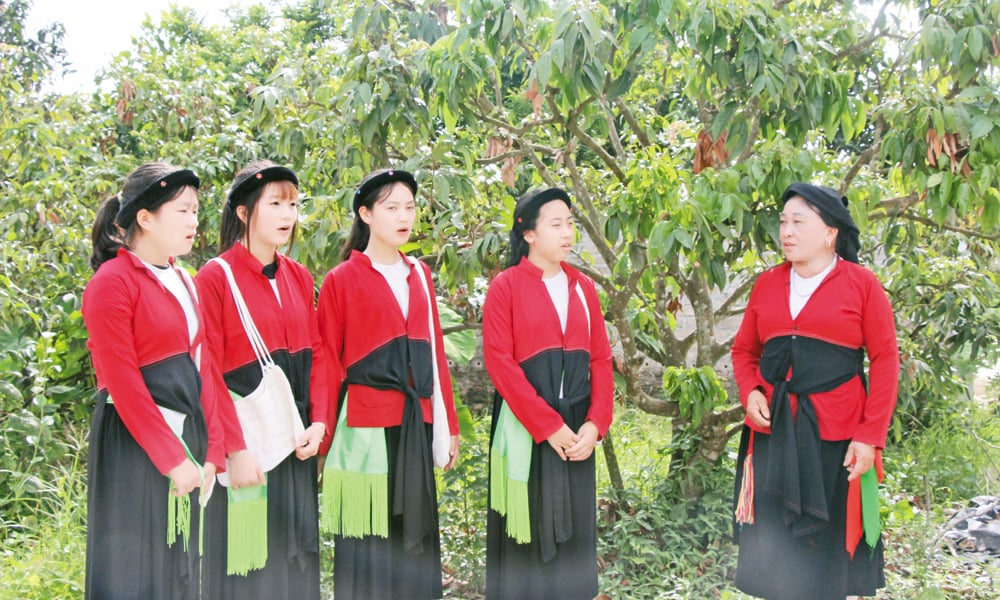 |
The San Diu Ethnic Culture Preservation and Development Association of Hai Cu residential area, Phuong Son ward, is teaching Soong Co singing to the younger generation. |
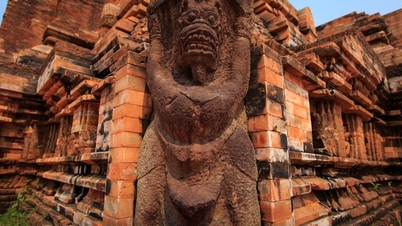
Along with its ancient and unique architecture, Vinh Nghiem Pagoda houses 3,050 wooden printing blocks carved with Buddhist scriptures, medical texts, and precepts, recognized as a Documentary Heritage under the Memory of the World Programme for the Asia-Pacific region. Bo Da Pagoda, with its thick earthen walls and large stupa garden, is the resting place of thousands of eminent monks throughout history, creating a sacred and tranquil spiritual space.
Having visited Vinh Nghiem Pagoda, Carmen Cano De Lasala, the Spanish Ambassador to Vietnam, expressed: “I have visited many pagodas around the world, but I am particularly impressed by the ancient beauty and unique features of Vinh Nghiem Pagoda. It is not only the birthplace of the Truc Lam Zen sect – a Zen tradition deeply rooted in Vietnamese national spirit – but also a space where culture, nature, and faith intertwine, conveying a very unique Vietnamese spirit of spirituality interwoven with everyday life.”
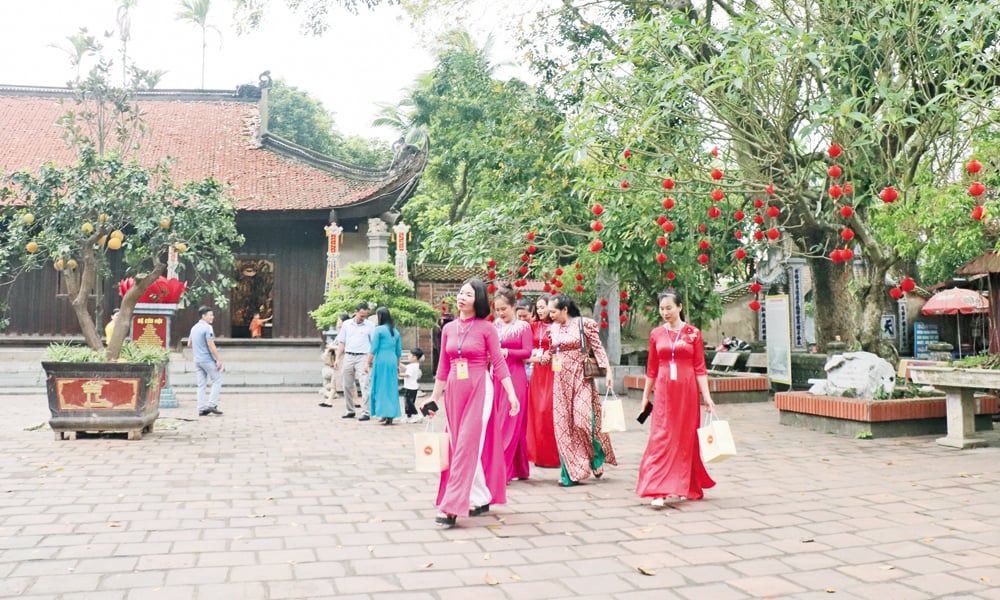 |
Tourists visiting Vinh Nghiem Pagoda. |
According to experts, the unique feature of this heritage complex is its sacred space, a convergence of the essence of Truc Lam Buddhism – a progressive, humane ideology that connects religion and life, accompanying the nation through many historical periods. This ideology is deeply ingrained in community life, creating spiritual strength to build a prosperous society and protect national independence. This is a vivid testament to the harmonious interplay between humans and nature, between ancient architecture and social life, creating values that endure over time.
Recently, four of the province's heritage sites were included in the National List of Intangible Cultural Heritage by the Ministry of Culture, Sports and Tourism: the Lim Festival; the Soọng cô folk performance art of the Sán Dìu people; Chèo theater; and the Thổ Hà rice paper making village. Among these, the Lim Festival, held annually on the 13th day of the first lunar month, not only features solemn processions, incense offerings, and rituals along with community-building activities, but also serves as a venue for performances of Quan Họ folk songs – a representative intangible cultural heritage of humanity. In the festival atmosphere, male and female singers perform sweet and melodious Quan Họ tunes, blending with the spring air to create a rich and lyrical cultural tapestry of the Kinh Bắc region.
| "In the coming time, the Department of Culture will implement a program to preserve and promote the heritage values of Vinh Nghiem and Bo Da pagodas in accordance with regulations, in conjunction with historical sites in Quang Ninh province and Hai Phong city. Focus will be placed on implementing the project "Restoring the Path of Buddhist Propagation of the Truc Lam Yen Tu Buddhist Patriarchs"; coordinating the development of tourist tours to the sacred land of Yen Tu. We will continue to promote and organize activities and events to spread the value of the Yen Tu - Vinh Nghiem - Con Son - Kiet Bac complex of historical sites and scenic spots. We will invest in upgrading infrastructure to meet the needs of tourists for accommodation, food, experiences, and entertainment," said Mr. Do Tuan Khoa, Deputy Director of the Department of Culture, Sports and Tourism of Bac Ninh province. |
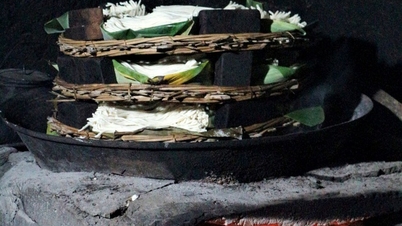
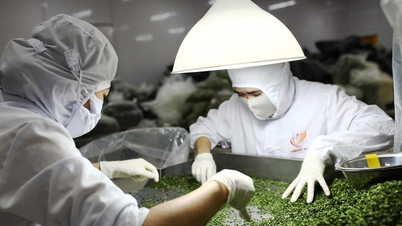
Through countless ups and downs, the artisans of Tho Ha (Van Ha ward) continue to diligently follow each step and family secret to create their renowned product. Artisan Nguyen Duc Tao, 70 years old, shared: “Inherited from my ancestors, I learned this craft from a young age and have been involved for over half a century. Every step is important, especially the proper salt mixing and drying techniques to ensure the rice paper is soft, crispy, fragrant, and doesn't break.” Currently, Tho Ha residential area has over 300 households engaged in this craft, employing approximately 1,000 workers. On average, each household produces 7,000 to 10,000 rice paper sheets per day. The product is not only consumed domestically but also exported to South Korea, Japan, and Europe. During the months leading up to Tet (Lunar New Year), the atmosphere of the craft becomes even more vibrant, leaving an unforgettable impression on visitors.
Preserving identity, spreading heritage
Bac Ninh is known as a cradle of culture, a land that has preserved and passed down countless cultural treasures, allowing those values to continue to shine today, honored by the whole country and the world. The province currently boasts 33 national intangible cultural heritage sites, 7 UNESCO-listed sites, and 24 national treasures. Over the years, Bac Ninh province has implemented many innovative solutions to ensure that heritage is not only "preserved" and protected but also truly integrated into contemporary life. Authorities at all levels and relevant agencies have mobilized resources to restore and renovate historical and cultural relics and scenic spots in accordance with the Law on Cultural Heritage, preserving as many original elements as possible. Simultaneously, monthly financial support is provided to encourage and motivate artisans to keep the flame of love for heritage alive. Traditional festivals are organized, and unique rituals and folk games are restored. Many intangible cultural heritages, such as folk songs and performing arts, are preserved and passed down through classes and clubs. For many years, the vibrant melodies of the San Diu people's Soọng cô songs have resonated on the hillsides and mountain slopes thanks to the dedication of artisans and cultural officials.
Artisan An Ngoc Luong, Vice President of the San Diu Ethnic Culture Preservation and Development Association of the province, proudly shared: “Soong Co is a unique lyrical folk song form, closely connected to the spiritual life of the people. Each lyric and melody not only expresses love and the joy of labor but also connects the community, preserving the language and writing of ethnic minorities amidst modern life. With passion and dedication, the artisans continue to teach, record songs, and compose introductions so that each Soong Co song is not just music but also a preservation of customs, language, and ethnic identity.”
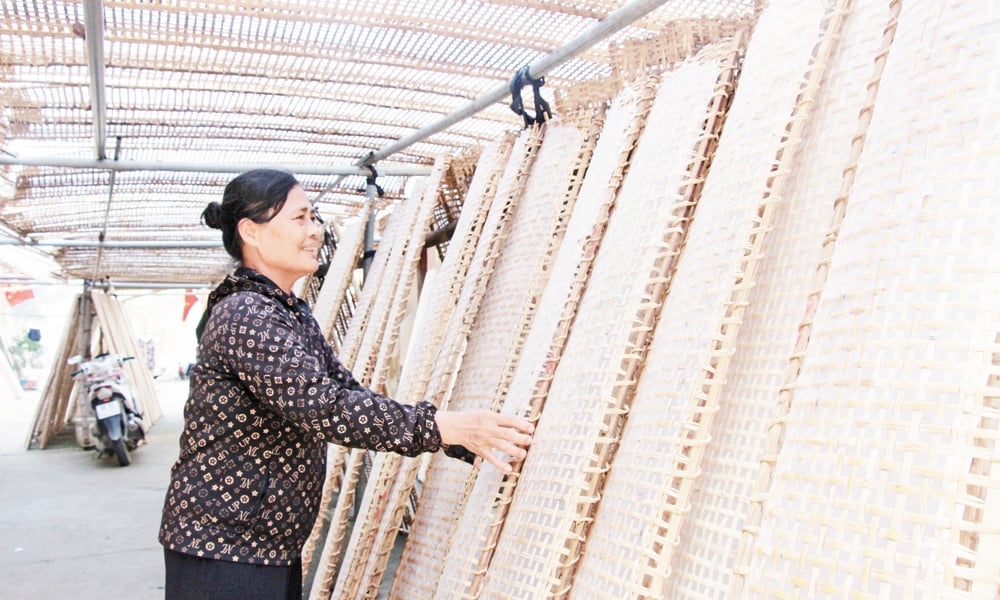 |
The craft of making Tho Ha spring roll wrappers has been preserved by the local people for generations. |
Local authorities and individual artisans are aware that honoring the heritage is only the first step; the important thing is to continue promoting and spreading its value. Mr. Nguyen Dai Luong, Secretary of the Party Committee of Van Ha Ward, said: “The local government has been creating favorable conditions for the people of Tho Ha rice paper making village to develop sustainably, focusing on promoting the brand and expanding markets both domestically and internationally. Rice paper is now not only a traditional culinary product but also an important part of Tho Ha's cultural experience tourism chain.” The locality is implementing a community tourism development project, exploiting the value of heritage to serve tourists. In the future, in addition to visiting historical sites and attending festivals, tourists will also have the opportunity to make, dry, or package rice paper themselves to take home as souvenirs.
According to Mr. Do Tuan Khoa, Deputy Director of the Department of Culture, Sports and Tourism, in the coming time, Bac Ninh will strengthen the preservation and promotion of heritage values associated with tourism development. The department will promote the digitization of historical sites, build a system of bilingual signboards and online smart maps to help tourists easily explore and understand the value of each site. It will coordinate with travel agencies and businesses to develop green, cultural, and spiritual tourism tours that directly connect with communities and craft villages in a friendly and sustainable way. At the same time, it will cooperate with units and schools to organize extracurricular activities such as: learning Quan Ho folk singing, Soong Co folk singing, performing Cheo opera, experiencing traditional crafts, visiting historical sites… contributing to educating love for the homeland and awareness of heritage preservation for the younger generation. Simultaneously, it will collaborate with regions to organize heritage festivals; art performance spaces, expanding cultural exchange, contributing to the further shining of Bac Ninh's cultural essence.
Source: https://baobacninhtv.vn/bac-ninh-giu-gin-di-san-trao-truyen-cho-mai-sau-postid422485.bbg



![[Photo] General Secretary and President To Lam presides over a meeting on preparations for the review of one year of operation of the three-tiered government system.](https://vphoto.vietnam.vn/thumb/1200x675/vietnam/resource/IMAGE/2026/06/02/1780391821195_a1-bnd-4595-9717-jpg.webp)






























































Comment (0)