

After taking over-the-counter cough medicine for five days, the boy was hospitalized with severe abdominal pain and a full-body rash.
The Pediatric Center of Bach Mai Hospital ( Hanoi ) recently admitted several child patients suffering from life-threatening anaphylaxis related to the use of unsafe medication.
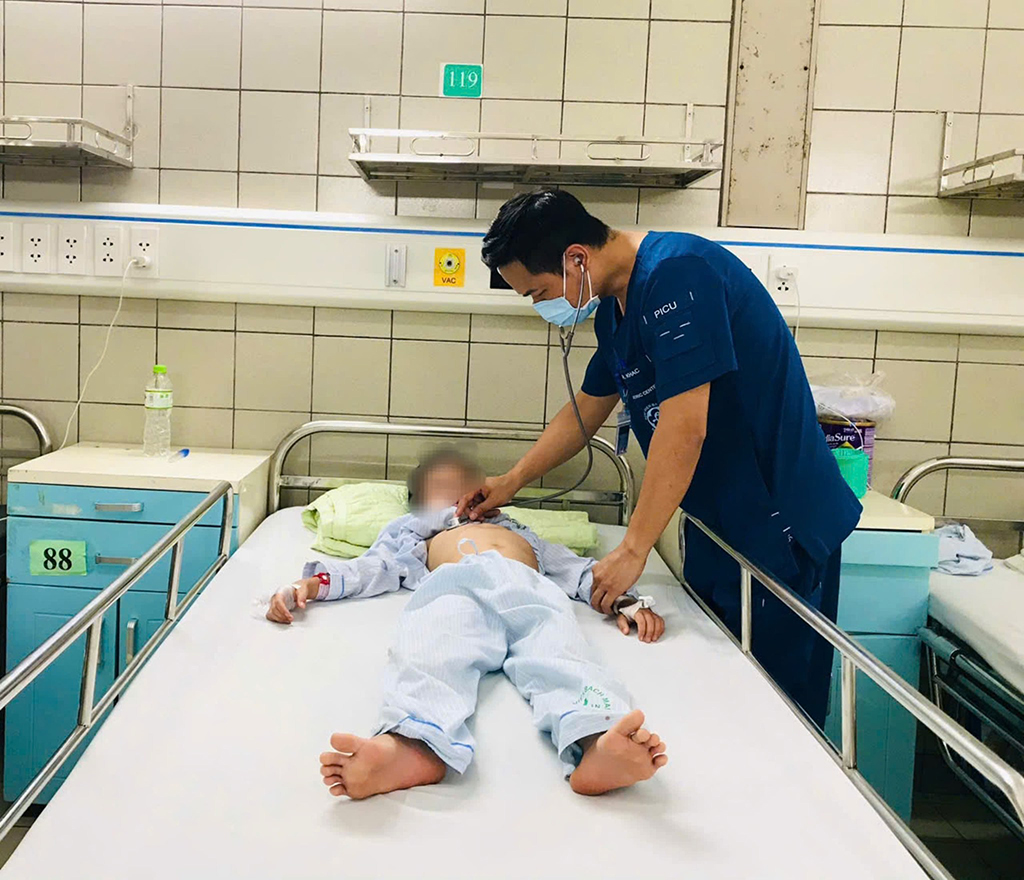
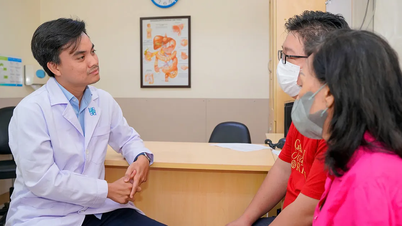
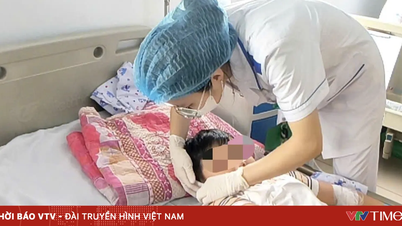
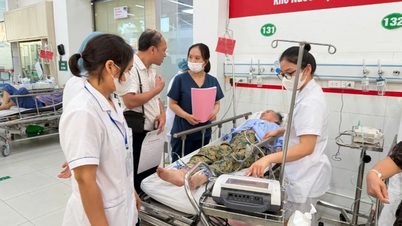
Doctors from the Pediatric Center - Bach Mai Hospital examine a child patient.
PHOTO: BACH MAI HOSPITAL
Most recently, a 7-year-old patient (from Ha Giang) was admitted with high fever, infectious rash, generalized itching, fatigue, epigastric pain, shortness of breath, rapid heart rate, and abdominal distension.
At the Pediatric Center, after examination and questioning, the doctors learned that 5 days prior to admission, the patient had a dry cough but no fever, and the family had self-medicated with antibiotics, cough medicine, and anti-inflammatory drugs.
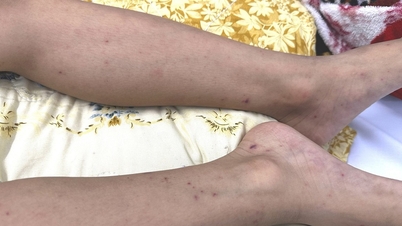
One day after taking the medication, the patient developed abdominal pain, a fever of nearly 38 degrees Celsius, itching, and a rash all over the body. The family continued to give the child additional allergy medication. However, the symptoms did not subside.
When the child developed more red spots and experienced more itching, along with severe abdominal pain, the family took the child to a nearby hospital. From there, the patient was transferred to Bach Mai Hospital (Hanoi).
At Bach Mai Hospital, after clinical examination and tests, the patient was diagnosed with anaphylaxis grade 2, suspected to be due to drug allergy, including several antibiotics, expectorants, anti-inflammatory drugs, anti-allergy medications, and some unlabeled pills.
According to the Pediatric Center's assessment, fortunately, the patient received immediate treatment according to the anaphylaxis protocol for children at the lower-level hospital and was transferred to Bach Mai Hospital for further treatment. After more than a week of treatment at the Pediatric Center, the patient has overcome the critical stage and is gradually recovering.
Medications are the most common cause of anaphylaxis.
Based on the experience of clinical cases of anaphylaxis requiring emergency care and intensive treatment, the Pediatric Center - Bach Mai Hospital advises families: The causes of anaphylaxis are very diverse, the leading ones being drugs and chemicals that enter the body through ingestion, inhalation, or through the bloodstream via injections or infusions...
In healthcare, there are many types of medications that can cause anaphylaxis, such as antibiotics, anesthetics, analgesics, anti-inflammatory drugs, vaccines, intravenous fluids, and contrast agents.
In daily life, chemicals such as lacquer, oil paint, herbicides, insecticides, etc., can also cause allergies and anaphylaxis depending on individual sensitivities. Furthermore, some foods derived from insects, exotic plants, seafood, and beverages containing chemicals can also cause allergies and anaphylaxis. Insect venom transmitted through bites should also be considered.
Parents, teachers, caregivers, schools, and families must absolutely refrain from buying medicine for children without a prescription from a specialist doctor at a medical facility, prevent children from coming into contact with chemicals, avoid playing in environments with insects, and properly manage the sources of food, medicine, and chemicals for children.
Anaphylaxis (formerly known as anaphylactic shock) in children is an immediate hypersensitivity reaction of the body to the introduction of an allergen (medicines, foods) into the body.
Anaphylaxis is a medical emergency that requires rapid diagnosis, prompt emergency treatment, and aggressive therapy to protect the child's life.
The clinical manifestations of anaphylaxis are diverse and affect many organs, including: respiratory (nasal congestion, sneezing, laryngeal edema, dyspnea, bronchospasm, respiratory muscle spasms, apnea), cardiovascular (tachycardia, hypotension, arrhythmias, cardiac arrest), neurological (chills, sweating, fever, headache, dizziness, convulsions, coma, agitation, tremors, fainting, syncope), digestive (abdominal pain, nausea, urinary and fecal incontinence, bloody stools), and dermatological (urticaria, erythema, itching).
If you notice any unusual symptoms in your child, you should immediately take them to the nearest medical facility for examination.
Source: https://thanhnien.vn/bi-phan-ve-do-tu-dung-nhieu-loai-thuoc-185241103181439343.htm





















































































Comment (0)