

Speaking at the Vietnam Population Day rally (December 26) and the conference summarizing population work in 2025 organized by the Ministry of Health on the morning of December 17, Deputy Minister of Health Do Xuan Tuyen stated that in many localities, the birth rate has fallen below the replacement level. The rate of population aging is increasing rapidly. The gender imbalance at birth remains high. In remote areas, child marriage, consanguineous marriage, and disparities in stature, physical fitness, and quality of health and education services compared to rural and urban areas remain challenges requiring specific solutions.
Therefore, population work needs to strengthen communication, ensuring that young people and healthcare facilities have a thorough understanding of pre-marital counseling, prenatal and newborn screening, in order to help children be born healthy.
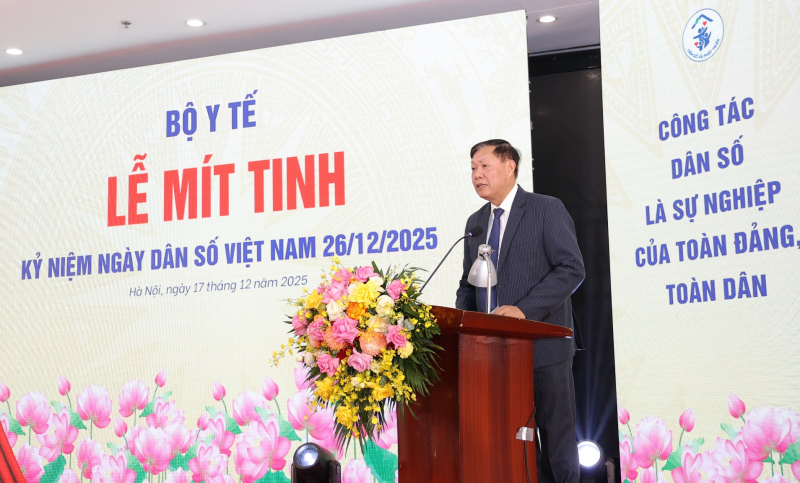
At the same time, every citizen needs to take concrete action and effectively implement family planning; in which couples proactively decide on the number of children, along with appropriate preferential policies, in order to contribute to maintaining the replacement fertility rate.
Speaking on the sidelines of the conference, Mr. Le Thanh Dung, Director of the Population Department (Ministry of Health), said that the average fertility rate per woman is currently 1.93 children, a slight increase compared to 2024 (1.91 children - the lowest level in history) but still lower than the replacement fertility rate of 2.1 children.
In 2025, 20 out of 34 provinces and cities are expected to see an increase in their total fertility rate, while 13 localities will experience a decrease, with Khanh Hoa remaining unchanged. Ho Chi Minh City will have the lowest fertility rate in the country (1.51 children per woman), while Dien Bien will have the highest (2.91 children). In 2025, 11 provinces nationwide will have a fertility rate below 2.0 children per woman, and 19 provinces will have a fertility rate above 2.2 children per woman. Despite improvements in fertility rates, significant regional disparities remain, requiring flexible population policies tailored to the specific characteristics of each locality.
The Population Law, effective from July 1, 2026, stipulates many new provisions such as maintaining replacement fertility levels, reducing gender imbalance at birth, adapting to population aging, and improving the quality of the population. The law abolishes restrictions on the number of children, encourages couples to have two children, and removes the phrase "each couple should only have one to two children."
"The population is on a downward trend and is expected to continue declining in the future. Therefore, there are many policies aimed at increasing the birth rate, such as granting individuals and couples the right to decide the number of children, the timing of births, and the spacing between births. Currently, some couples are considering having a third child. While this policy might slightly increase the birth rate, it will only be in the short term. In the long term, the downward trend in birth rates will persist," Mr. Dung stated.
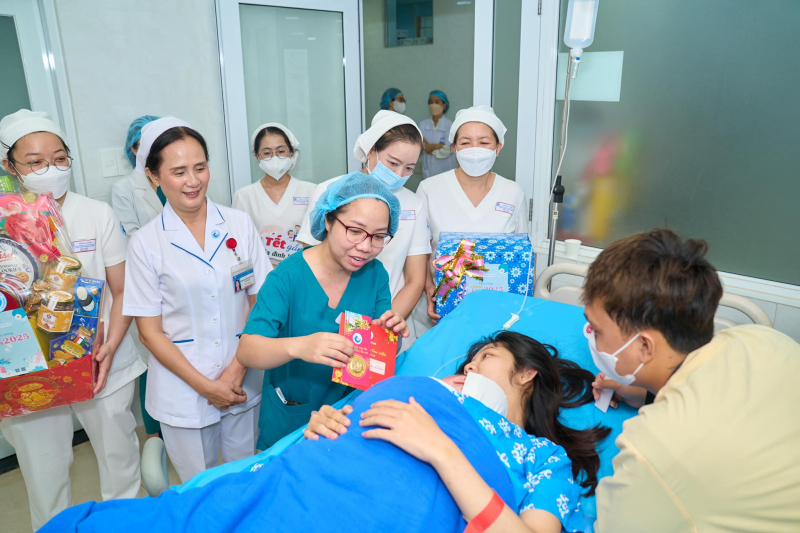
The Director of the Population Department stated that the groups currently experiencing a sharp decline in birth rates are those in large cities, industrial zones, intellectuals, artists, and civil servants. Surveys show that many in these groups still wish to have two children, or even more, but economic circumstances, work environments, living conditions, and housing are causing them to hesitate and worry about achieving this goal. Further efforts and policies will be implemented to increase birth rates in the future.
The Ministry of Health also proposed adding a policy to the Housing Law allowing women who have given birth to two children to purchase social housing. The criteria for purchasing social housing would be based on the criteria issued by the Ministry of Construction.
Currently, many localities have also issued resolutions of the People's Council on population work in the new situation, implementing policies to support family planning services, encouraging having two children in low-birth-rate areas, and reducing the number of third children in high-birth-rate areas.
In areas with low birth rates, policies providing one-time financial, in-kind, or medical expense support to women who have two children before the age of 35 are combined with models of pre-marital counseling and health check-ups, infertility support, and male reproductive health care. Following reorganization and mergers, some provinces and cities are reviewing and advising on the issuance of resolutions by the People's Council to unify policies and ensure they are consistent with reality.
According to the Director of the Population Department, raising the birth rate in the future requires a truly comprehensive policy, and most importantly, the involvement of Party committees, governments at all levels, and society as a whole. In addition to strengthening communication, a campaign with the message "patriotism means having two children" is needed to fill the alarming gap in the current low birth rate.
Source: https://cand.com.vn/y-te/can-nhieu-chinh-sach-dong-bo-de-lap-khoang-trong-muc-sinh-thap-bao-dong-i791345/
![[Photo] Prime Minister Pham Minh Chinh receives Lao Minister of Education and Sports Thongsalith Mangnormek](/_next/image?url=https%3A%2F%2Fvphoto.vietnam.vn%2Fthumb%2F1200x675%2Fvietnam%2Fresource%2FIMAGE%2F2025%2F12%2F16%2F1765876834721_dsc-7519-jpg.webp&w=3840&q=75)
![[Photo] Prime Minister Pham Minh Chinh receives the Governor of Tochigi Province (Japan)](/_next/image?url=https%3A%2F%2Fvphoto.vietnam.vn%2Fthumb%2F1200x675%2Fvietnam%2Fresource%2FIMAGE%2F2025%2F12%2F16%2F1765892133176_dsc-8082-6425-jpg.webp&w=3840&q=75)

![[Image] Leaked images ahead of the 2025 Community Action Awards gala.](/_next/image?url=https%3A%2F%2Fvphoto.vietnam.vn%2Fthumb%2F1200x675%2Fvietnam%2Fresource%2FIMAGE%2F2025%2F12%2F16%2F1765882828720_ndo_br_thiet-ke-chua-co-ten-45-png.webp&w=3840&q=75)

![[Live] 2025 Community Action Awards Gala](/_next/image?url=https%3A%2F%2Fvphoto.vietnam.vn%2Fthumb%2F1200x675%2Fvietnam%2Fresource%2FIMAGE%2F2025%2F12%2F16%2F1765899631650_ndo_tr_z7334013144784-9f9fe10a6d63584c85aff40f2957c250-jpg.webp&w=3840&q=75)



















































































Comment (0)