

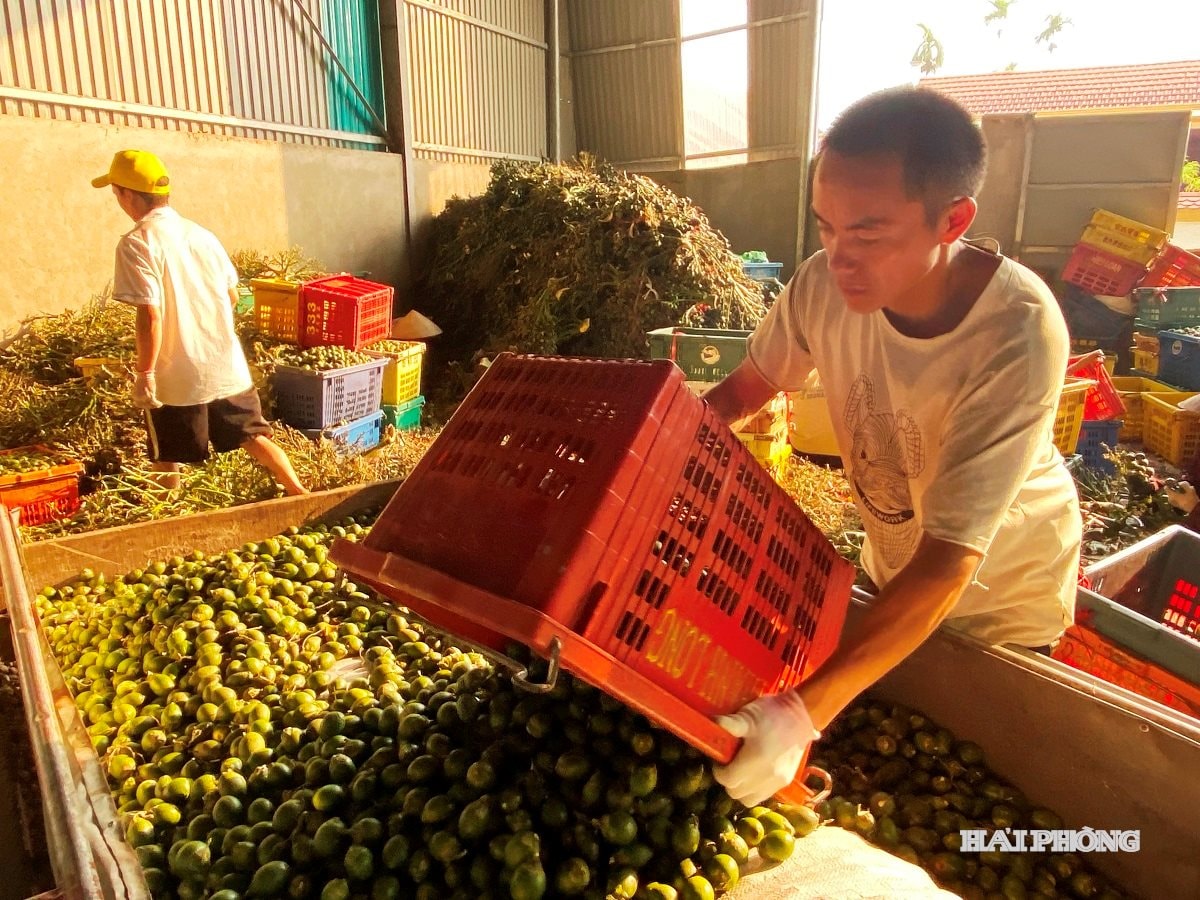
The furnace fires were sparse during the main harvest season.
In mid-December of the Gregorian calendar, or the end of October of the lunar calendar in 2025, while last year at this time, the 37 betel nut drying kilns in Cao Nhan were ablaze with activity and the buying and selling of fresh betel nuts was bustling, this year the village is quiet. The unstable market has left fewer than 10 kilns operating intermittently to preserve the craft. Many kilns have been forced to temporarily close due to the low price of betel nuts compared to last year.
According to Mr. Pham Van Tuan, Director of Tan Thu Co., Ltd., his facility has two workshops with a total of 10 betel nut drying ovens. One workshop dries fresh betel nuts domestically, and the other dries betel nuts imported from Thailand and Myanmar. In 2024, the company's drying ovens operated at full capacity day and night due to high import demand from China, with dried betel nuts fluctuating between 300,000 and 500,000 VND/kg. At that time, imported fresh betel nuts were priced from 50,000 to 60,000 VND/kg, helping the facility earn a profit of up to 10 billion VND and creating jobs for 50 workers with incomes ranging from 200,000 to 500,000 VND per day.
However, this year's harvest is completely the opposite. Demand for imports from foreign markets has dropped sharply; at times, Mr. Tuan was operating less than half of his drying ovens. The price of fresh betel nuts is currently only 12,000 VND/kg, while dried betel nuts for export are around 100,000 VND/kg, a decrease of about five times compared to 2024. Faced with this reality, he was forced to temporarily stop importing betel nuts from Thailand and Myanmar at certain times, maintaining production while waiting for the market to recover.
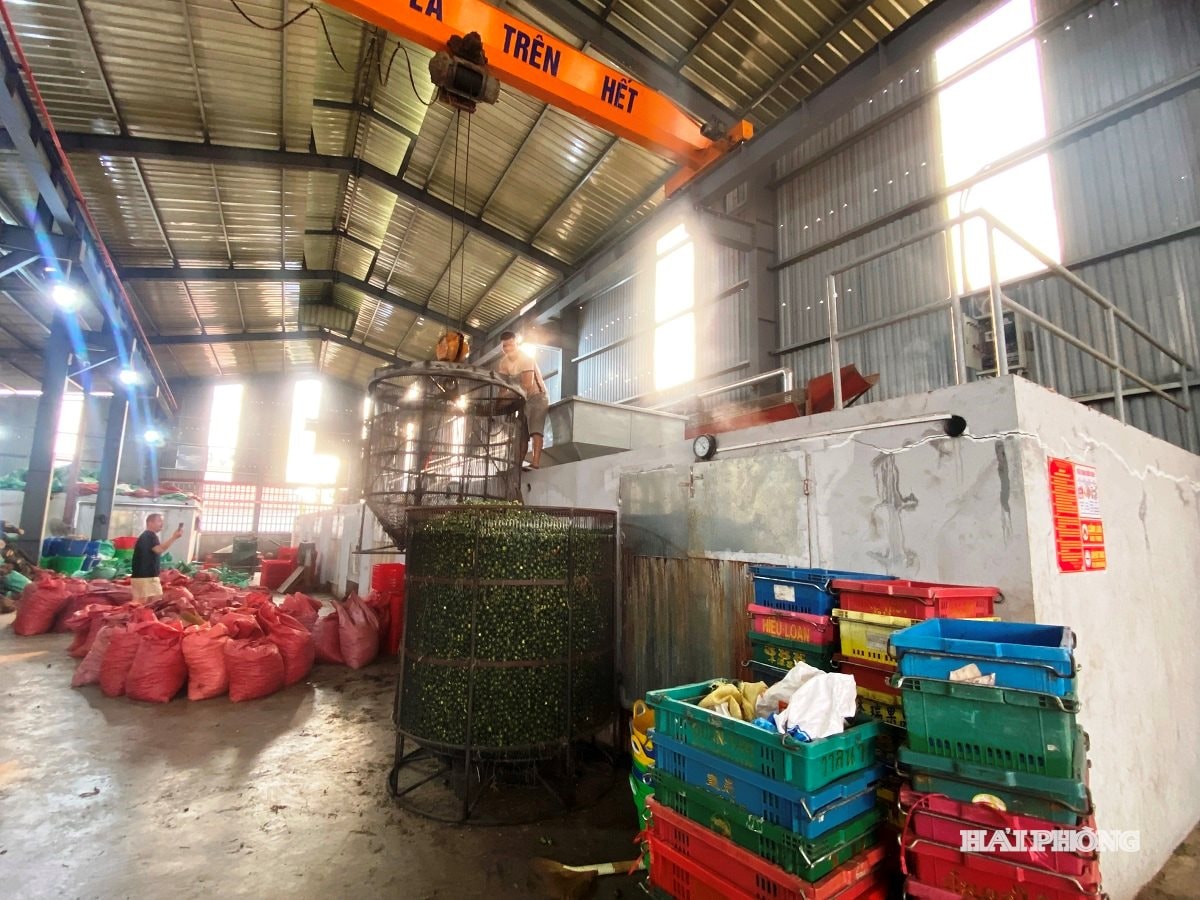
Similarly, Mr. Hoang Van Hung, the owner of a large betel nut drying factory in Cao Nhan, said that last year, his factory was always overloaded, with the drying ovens operating day and night and workers constantly busy. Currently, he only dries one batch of betel nuts on average once a week. His modern machinery, worth more than 6 billion VND, is now in a state of intermittent operation.
Previously, Hung's workshop employed 50-70 workers at one point, but now only about 10 remain. Dried betel nuts are piled up in the warehouse for days without being sold. Besides drying betel nuts in Cao Nhan, Hung also invested in opening 5-6 drying facilities in Central Vietnam, but the sales situation is similarly sluggish. From the beginning of 2025 until now, his facilities in Hai Phong and Central Vietnam have only exported over 100 tons of dried betel nuts, while in 2024 this figure reached nearly 1,000 tons.
According to Mr. Hung, because betel nuts fetched "record" prices in 2024, many businesses boldly invested billions of dong to expand and renovate their drying facilities. However, this season, they are all in a passive position as large inventories of dried betel nuts remain unsold. Mr. Hung's factory alone lost nearly 40 billion dong, while other smaller businesses lost between one and several billion dong. To maintain operations, many kiln owners had to borrow money and mortgage their properties to stay in the business. Without binding contracts, businesses are frequently subjected to price manipulation by their partners.
We need a sustainable approach.
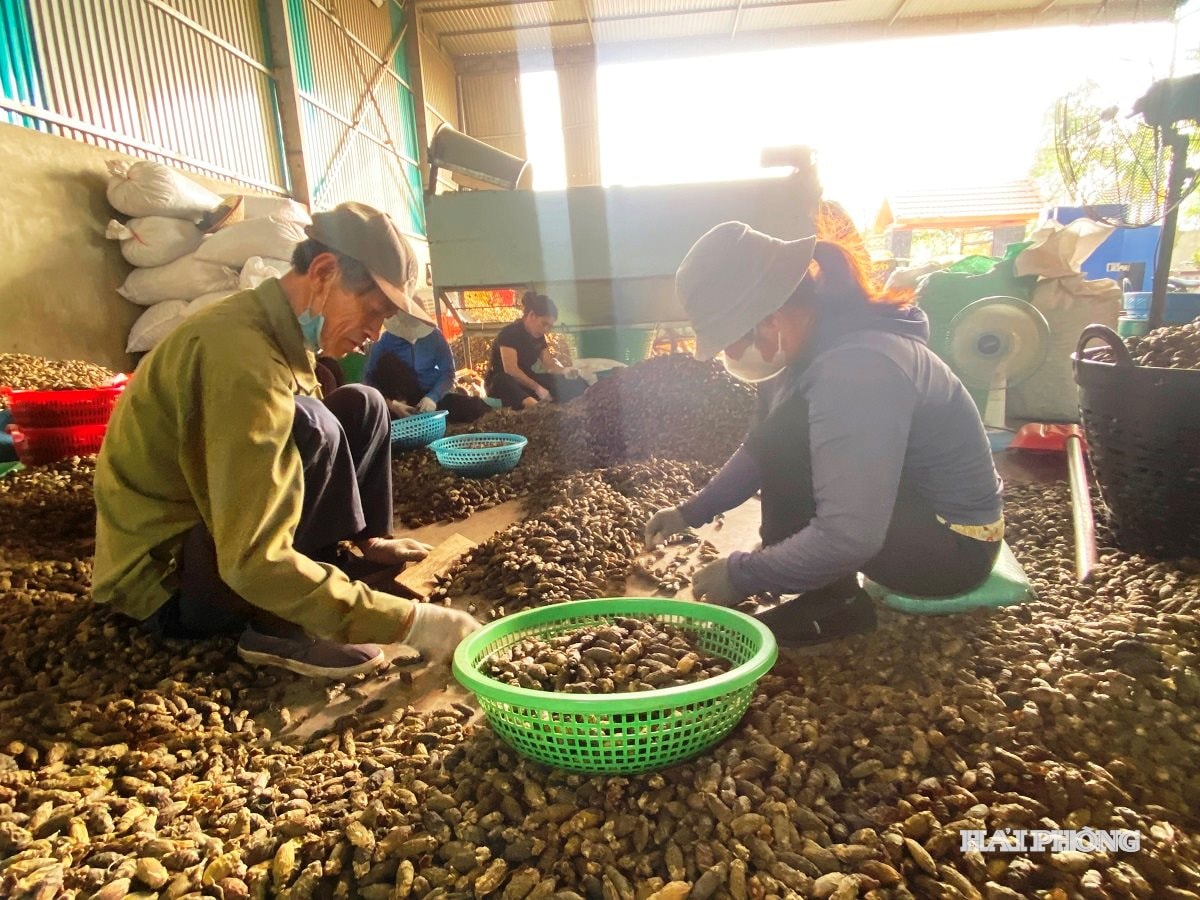
The sharp decline in revenue at dried betel nut processing facilities has led to employment problems. Many people, especially middle-aged workers, have lost their stable jobs and regular income. Ms. Nguyen Thi Toa, over 60 years old, from Cao Nhan betel nut village, said that while at the same time last year, the village was bustling with hundreds of people picking and drying betel nuts, earning between 300,000 and 500,000 VND per day, now the number of operating drying facilities has decreased significantly, and the number of seasonal workers has also dropped to only a few dozen. Her highest income is only about 200,000 VND per day, and it's irregular, with work coming and going.
In reality, despite having been established and developed for nearly 30 years, the Cao Nhan betel nut processing village remains unstable. The buying and selling activities of the businesses are mainly based on personal relationships and individual contracts, lacking legal binding agreements. Meanwhile, the betel nut products are still in the raw processing stage, without labels or brands, resulting in low value and complete dependence on purchasing partners. Ms. Nguyen Thi Dung, the owner of a betel nut drying facility here, said that those involved in the betel nut drying business are constantly monitoring the market.
Betel nut processing facilities need to be more proactive in gathering market information and regulating procurement and processing volumes. The Cao Nhan betel nut village should be organized into a cooperative or association to bring together production households, support each other with capital, inputs, and outputs, and gradually build a professional processing process with clear labels and brands.
BUI HUONGSource: https://baohaiphong.vn/cau-rot-gia-lang-nghe-cao-nhan-hoat-dong-cam-chung-529825.html
![[Photo] Prime Minister Pham Minh Chinh receives the Governor of Tochigi Province (Japan)](/_next/image?url=https%3A%2F%2Fvphoto.vietnam.vn%2Fthumb%2F1200x675%2Fvietnam%2Fresource%2FIMAGE%2F2025%2F12%2F16%2F1765892133176_dsc-8082-6425-jpg.webp&w=3840&q=75)
![[Photo] Prime Minister Pham Minh Chinh receives Lao Minister of Education and Sports Thongsalith Mangnormek](/_next/image?url=https%3A%2F%2Fvphoto.vietnam.vn%2Fthumb%2F1200x675%2Fvietnam%2Fresource%2FIMAGE%2F2025%2F12%2F16%2F1765876834721_dsc-7519-jpg.webp&w=3840&q=75)
![[Image] Leaked images ahead of the 2025 Community Action Awards gala.](/_next/image?url=https%3A%2F%2Fvphoto.vietnam.vn%2Fthumb%2F1200x675%2Fvietnam%2Fresource%2FIMAGE%2F2025%2F12%2F16%2F1765882828720_ndo_br_thiet-ke-chua-co-ten-45-png.webp&w=3840&q=75)
![[Live] 2025 Community Action Awards Gala](/_next/image?url=https%3A%2F%2Fvphoto.vietnam.vn%2Fthumb%2F1200x675%2Fvietnam%2Fresource%2FIMAGE%2F2025%2F12%2F16%2F1765899631650_ndo_tr_z7334013144784-9f9fe10a6d63584c85aff40f2957c250-jpg.webp&w=3840&q=75)






























































![[Live] Closing Ceremony and Award Presentation for the "Impressive Vietnam Tourism" Video/Clip Creation Contest 2025](https://vphoto.vietnam.vn/thumb/402x226/vietnam/resource/IMAGE/2025/12/17/1765974650260_z7273498850699-00d2fd6b0972cb39494cfa2559bf85ac-1765959338756946072104-627-0-1338-1138-crop-1765959347256801551121.jpeg)




















Comment (0)