

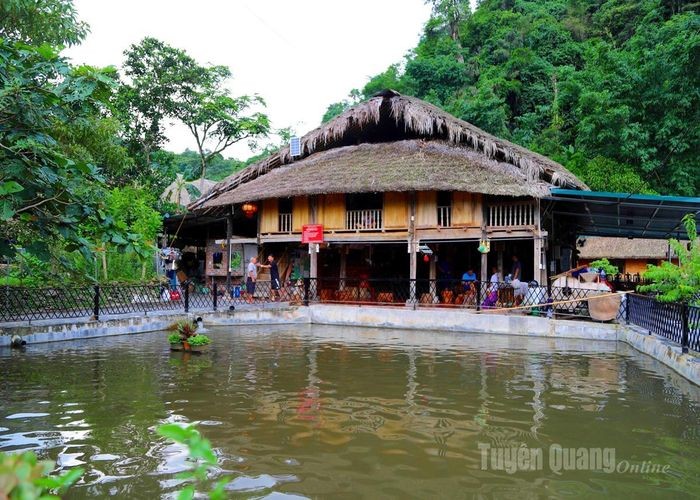
A new journey after the war.
In 1984, Nguyen Van Cay, then just 19 years old, a Tay ethnic man, volunteered to enlist in the army and fight on the Vi Xuyen border front. After many fierce battles, he was discharged in 1987 and returned to his hometown to start a family. From here, a new journey began for this soldier of Uncle Ho.
With the inherent resilience of a soldier, unafraid of hardship, he did all kinds of jobs to support his family. From growing rice and corn to raising pigs, chickens, buffaloes, and cows, and taking on many other jobs during the off-season, his family's finances remained unsatisfactory. More than a decade ago, when his hometown began to attract tourists seeking to explore the local culture, he realized the opportunity to change his life on his impoverished land.
In 2015, with his meager savings, Mr. Cay renovated his family's traditional stilt house, preserving the local architecture but making it cleaner. He learned how to welcome guests, serve traditional meals, and recount stories of ethnic culture and wartime experiences to entice tourists to stay.
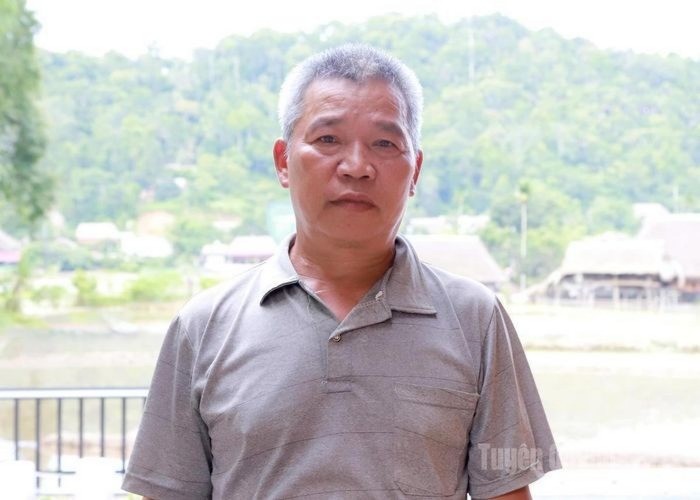
Mr. Cay shared: "In the beginning, when I started in tourism , with limited capital, I only bought two folding mattresses and blankets and mosquito nets to spread on the stilt house to serve guests. Later, as more and more guests visited, and there weren't enough rooms, I borrowed more money to invest in developing it into a homestay with a capacity of 25-30 people per night. I also connected with other households in the village to develop community tourism together."
Thus, Cậy'Homestay gradually became a favorite destination for its simplicity, rustic charm, and hospitality. Tourists come not only to relax but also to listen to stories about local culture and a fierce border war, as told by the old soldier.
The soldier did not give up.
When deciding to start a homestay business, Mr. Cay faced not only difficulties due to lack of capital and experience but also skepticism from those around him, even from his own family. “Initially, nobody believed I could do it. Some said I was too old to rest. Others said, ‘You don’t speak any foreign languages, Western tourists won’t stay,’” Mr. Cay said with a gentle smile.
In the early days, the number of customers was very low, and the monthly income wasn't enough to cover expenses; there was almost no profit. Once, a group of tourists booked a room but canceled at the last minute. Seeing everything already prepared, from clean accommodation to a decent meal, Mr. Cay could only sigh silently, not blaming anyone and not daring to complain to his wife and children.
But he persevered with his choice, actively participating in training courses, learning how to welcome guests and introduce local cuisine . Whenever a group of guests arrived, he would ask for feedback to improve. He started with the smallest things, learning how to clean rooms, how to cook traditional dishes to suit tourists' tastes, and how to speak naturally and friendly. These small but steady steps helped Cậy'Homestay attract more and more guests.
In 2020, just as the number of tourists stabilized, the Covid-19 pandemic broke out. With no tourists, the homestay became deserted, and for three years, he had no income from tourism, returning to farming rice, corn, pigs, and chickens. The flowerbeds in the yard still bloomed, the bamboo behind the gate still grew tall, but his spirits sank. However, in the face of hardship, Mr. Cậy did not give up.
“I’ve been through bombs and bullets, there’s nothing I can’t overcome,” he comforted himself, yet he persevered in cleaning each room, wiping down each window frame, and tending to each flowerbed. After the pandemic passed, guests returned to the homestay. They were delighted to see that it was still clean, the garden still green, and Mr. Cay still sitting on the porch of the stilt house, telling stories as if he had never been gone. Laughter echoed in the yard again, the hearth fire was warm once more, and the hearty meals of wild vegetables and stream fish once again captivated visitors from afar.
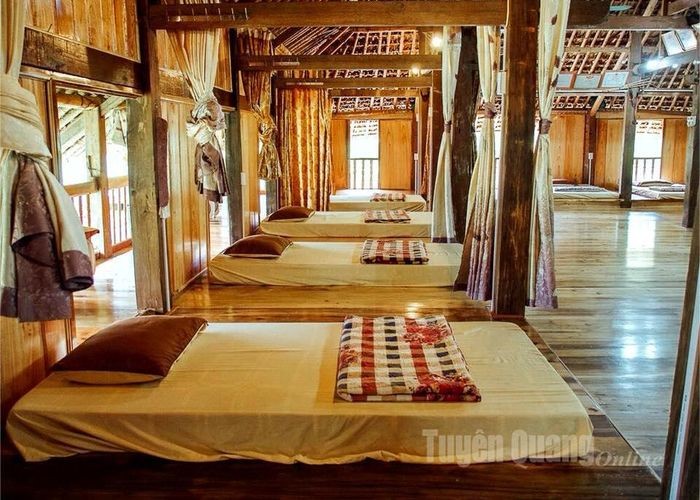
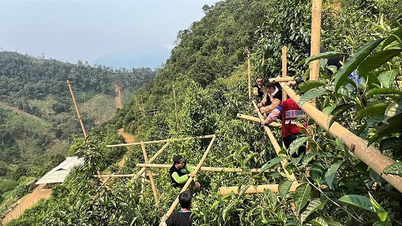
In order to develop sustainable tourism in an environmentally friendly way, Mr. Cay continued to renovate the homestay, diligently erecting each bamboo pole and plank each day, carefully saving up money and pouring his heart and soul into it—the heart of an old soldier wanting to preserve the spirit of his homeland amidst modern life.
A few years later, charming little bamboo bungalows, rustic yet sophisticated, sprang up on that land. He also renovated the fish pond, built an outdoor swimming pool, and planted more flowers and ornamental plants around, making Cậy'Homestay's space even more spacious and green. At 600,000 VND per room per night, the bungalows attract a large number of international tourists, contributing to the family's increased income. On average, his family welcomes over 1,000 guests annually, earning over 200 million VND from tourism. The homestay also provides seasonal employment for 3-5 local workers during peak tourist seasons.
From having only a few guests a month, his homestay is now fully booked during holidays, weekends, and the rice harvest season. From there, he began sharing his experience with the villagers. A few households boldly followed suit, awakening the village of Tha to the realization that tourism isn't just for cities or beaches, but can begin right in their traditional stilt houses, with simple meals of wild vegetables and stream fish from the highlands.
“Visitors here don’t need air conditioning or television. They need a meal with the aroma of a wood-fired stove, the sound of roosters crowing at dawn, the sight of children playing in the village, and the scent of young rice seedlings mingled with the breeze. I preserve those things and encourage the villagers to work together to maintain our ethnic identity. Preserving the soul of the village and our ethnic culture is the core of sustainable tourism,” Mr. Cậy further shared.
From a dilapidated stilt house, through the difficult early days of starting the business and the exhausting months due to the pandemic, Cậy'Homestay is now not only a place for tourists to rest but also a living testament to the spirit of "Uncle Ho's soldiers" in peacetime - always resilient, creative, and never giving up.
Source: https://baolaocai.vn/cayhomestay-cua-cuu-chien-binh-post649422.html
![[Photo] General Secretary and President visit the China-ASEAN AI Application Cooperation Center](https://vphoto.vietnam.vn/thumb/1200x675/vietnam/resource/IMAGE/2026/04/17/1776404277677_vna-potal-tong-bi-thu-chu-tich-nuoc-tham-trung-tam-hop-tac-ung-dung-ai-trung-quoc-asean-8706616-2286-jpg.webp)
![[Photo] Speaker of the National Assembly meets with the Vietnamese community in Türkiye](https://vphoto.vietnam.vn/thumb/1200x675/vietnam/resource/IMAGE/2026/04/18/1776483346102_1-8136-jpg.webp)










































































Comment (0)