

This is also why many large companies, including Amazon, Goldman Sachs, and Verizon, have banned or restricted OpenAI's ChatGPT. The ChatGPT application uses data from user conversations to improve accuracy.
 |
| Many businesses prohibit employees from using ChatGPT due to the risk of data leakage. |
Of course, the benefits that ChatGPT in particular, and AI-generated tools in general, have brought to businesses are undeniable. Some companies, such as Coca-Cola and Bain & Company, have even signed partnerships with OpenAI.
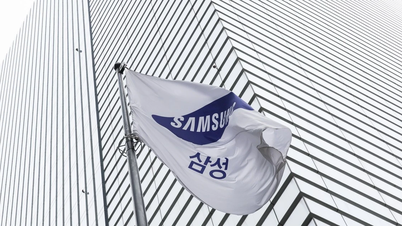
But the biggest concern for many employers is the security risk. In early April, Samsung announced that employees had inadvertently exposed internal source code and recorded meetings while using a chatbot.
Below is a list of companies that have banned or restricted ChatGPT:
Apple
Apple has restricted employees from using the ChatGPT app and third-party AI tools due to concerns about the leakage of highly confidential data. They have also instructed employees not to use the automated software development program Copilot, developed by GitHub and OpenAI. Currently, Apple is developing its own AI tool under the leadership of a former Google executive, John Giannandrea.
Bank of America
ChatGPT has been added to Bank of America's list of prohibited business applications. They are one of several banks implementing stricter compliance measures regarding internal communications after being fined over $2 billion by US authorities for failing to monitor the use of apps like WhatsApp.
Calix
Michael Weening, CEO of Calix, announced a ban on ChatGPT across all features and devices starting in April. He cited the Samsung data leak as the reason for the ban, fearing that ChatGPT could expose sensitive data such as internal memos or customer contracts to outsiders.
Citigroup
ChatGPT has been added to Citigroup's list of automatically banned third-party software. A spokesperson for the organization said they are investigating the risks and benefits associated with the technology.
Deutsche Bank
Starting in February, Deutsche Bank employees' access to ChatGPT will be disabled. This is standard practice for third-party websites to protect data from leaks. In the meantime, Deutsche Bank will seek ways to maximize the use of its chatbot while still protecting both its own and its customers' data. The bank is currently developing its own AI chatbot.
Goldman Sachs
Similar to Citigroup, Goldman Sachs also blocks access to ChatGPT through an automated process. They are developing their own AI tool to simplify tasks such as document classification and business report summarization.
JPMorgan Chase
The largest bank in the US also restricted employees from using the ChatGPT application from the end of February. This is part of a standard measure to control third-party software. However, the bank may use the tool in the future.
Northrop Grumman
Defense and aerospace company Northrop Grumman also banned ChatGPT earlier this year, stating it would not share company or customer information with outside parties before it was vetted.
Peninsula
The telecommunications giant Verizon is also concerned about privacy and security regarding ChatGPT. They instructed all employees not to use internal systems to access the chatbot from mid-February due to the risk of theft of sensitive information such as customer data and source code.
Samsung
The South Korean conglomerate also banned employees from using the ChatGPT application and other AI-generated tools starting in early May. This ban came after engineers inadvertently leaked sensitive information, including source code and meeting recordings, in April when uploading them to the chatbot. Samsung itself develops its own AI tools for employees to use in software development, translation, and document synthesis.
Additionally, some companies don't completely ban ChatGPT but only require employees not to share confidential information on the platform, such as Accenture, Amazon, and PwC Australia.
Source
![[Image] Central Party Office summarizes work in 2025](/_next/image?url=https%3A%2F%2Fvphoto.vietnam.vn%2Fthumb%2F1200x675%2Fvietnam%2Fresource%2FIMAGE%2F2025%2F12%2F18%2F1766065572073_vptw-hoi-nghi-tong-ket-89-1204-jpg.webp&w=3840&q=75)
































































Comment (0)