

The story by the Bạch Đằng River
During my most recent return to Ho Chi Minh City to attend a meeting between the City Party Secretary Tran Luu Quang and the city's scientific and entrepreneurial community, I received another piece of good news: “At a meeting with Deputy Prime Minister Nguyen Hoa Binh on the progress of the Vietnam International Finance Center in Ho Chi Minh City (IFC-HCM) on the afternoon of December 9th, Dr. Truong Minh Huy Vu, Director of the Ho Chi Minh City Development Research Institute, stated that the city has completed all preparatory steps regarding infrastructure, personnel, and investors… to operate the center. According to Dr. Vu, IFC-HCM is expected to open on December 19th, 2025.”
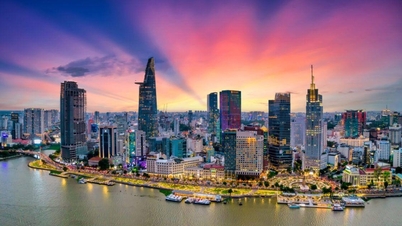
The total area of IFC is 793 hectares, located in the Ben Thanh ward of Saigon, the Thu Thiem area, and the Saigon River, with the core area situated in Thu Thiem. Thus, Ho Chi Minh City is about to have a financial center overlooking the river, similar to Shanghai and Singapore…
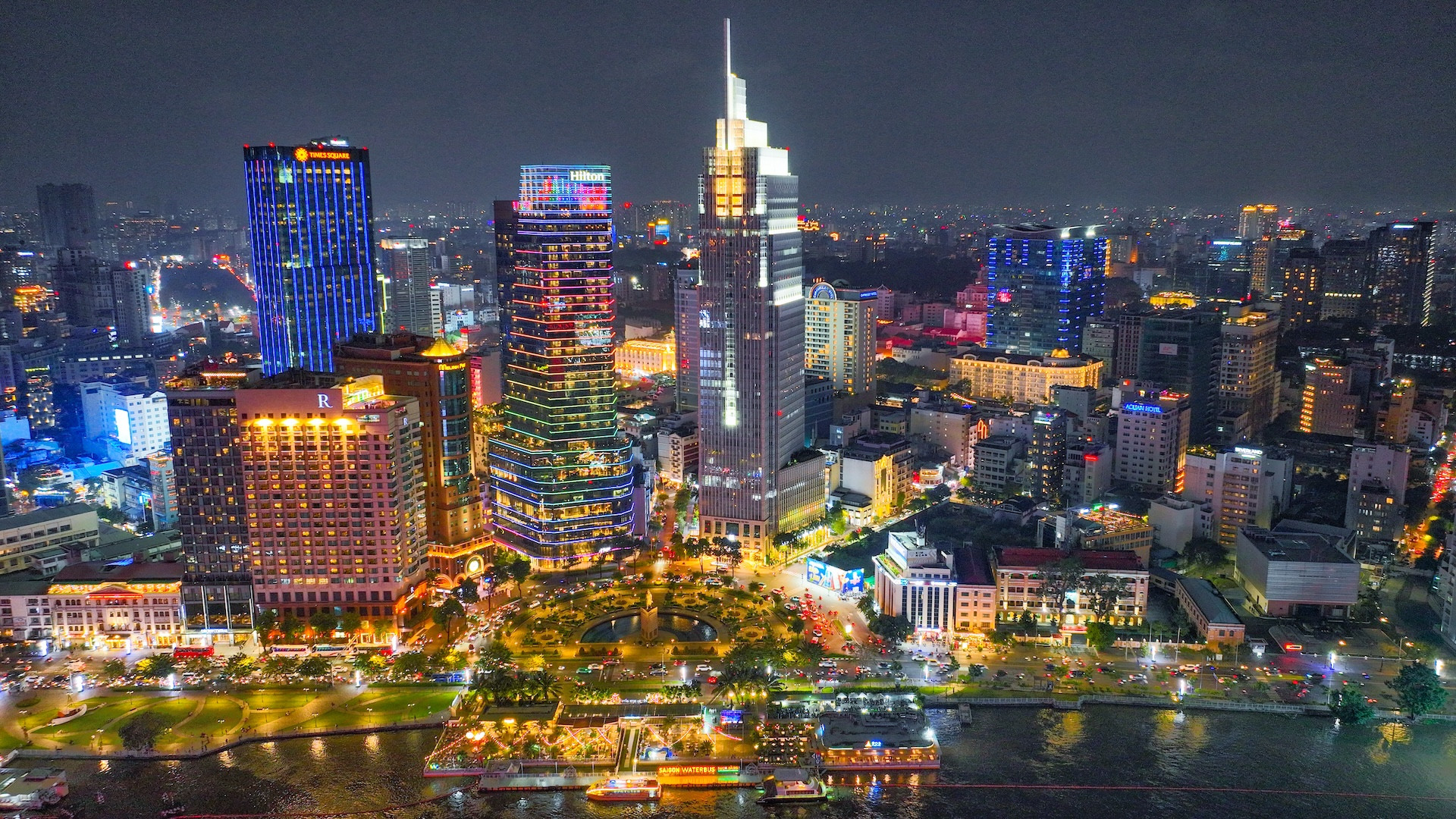
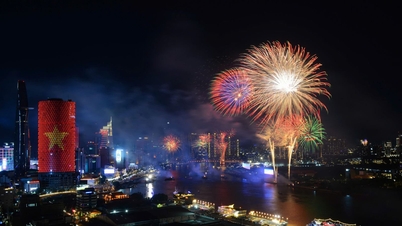
After the merger, Ho Chi Minh City has become a megacity with long rivers, vast seas, and high mountains, and is even more vibrant with mega-projects connecting these resources. Photo: Hoang Ha
Throughout its more than 300-year history, Saigon - Gia Dinh - Ho Chi Minh City has always been closely associated with waterways, especially the Saigon River flowing through the city. From 2022 to the present, in just a short period, Ho Chi Minh City has shaped itself into a riverside city, close to the sea, with well-planned and beautiful riverside areas.
The bridges built across the river recently are no longer just means of transportation connecting the two banks, but also serve as special decorative elements to enhance the city's beauty. Along with this are activities to renovate the Saigon Riverbed, build embankments, improve roads along the river, construct modern bridges, develop river bus routes, plan the architecture of houses on both sides of the river, build parks, create green landscapes, and develop public entertainment and cultural areas…
After the merger, Ho Chi Minh City has become a megacity with long rivers, wide seas, and high mountains, even more vibrant with projects and mega-projects connecting resources. But before the merger of Binh Duong and Ba Ria – Vung Tau, it was hard to imagine that the highest mountain in this largest city in the country was only 13 meters high. Yet, it is precisely Chua Mountain in the middle of Thieng Lieng island hamlet (formerly part of Can Gio district) – where the Saigon River merges with the sea – that has become a highlight, attracting tourists from near and far.
Connecting the Thiềng Liềng island hamlet, located 50km from the mainland, to the bustling riverside was the result of the efforts of people within Ho Chi Minh City's tourism ecosystem. Ms. Nguyen Thi Thanh Thao, Head of the Product Research and Development Department (Ho Chi Minh City Department of Tourism), and two PhDs from the Ho Chi Minh City Institute of Tourism Economics... spared no effort, traveling back and forth countless times to educate and train residents who had never left the island hamlet, such as the families of Mr. Sau Trung and Ms. Hai Tho, on how to engage in tourism.
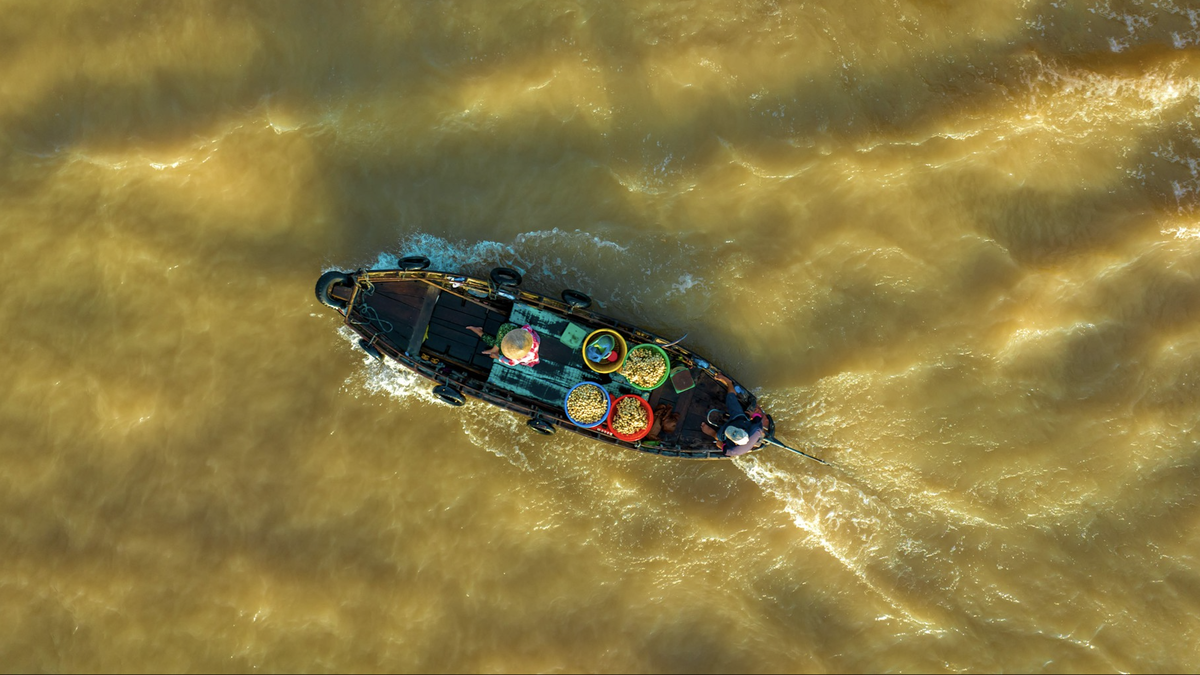
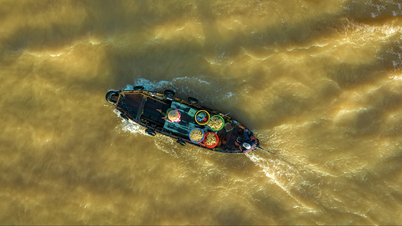
On my second trip out of Bach Dang Wharf, I was still overwhelmed by the large boats, the wide river, and the hustle and bustle of a city that knows how to connect the crowded streets, the long river, and the vast sea. Tall, sturdy boats with fluttering sails sped through the waves, heading out to sea. It was clearly the grand river of a large city. There were boats carrying goods, passengers, those traveling long distances, and those returning nearby – you name it.
Every time I return to Ho Chi Minh City every few months, I see both sides of the Saigon River changing for the better. It feels as if both the people and the river are "flowing" tirelessly to make this city more beautiful and reach further.
The Gianh River flows majestically… green.
It is no coincidence that in the 2024 "Stories of Rivers" writing contest organized by VietNamNet newspaper, there were 5 entries about the Gianh River. The stories of the Gianh River, told through words, flow endlessly, depicting a land like a carrying pole connecting the two ends of the country.
Then, in July of this year, the Gianh River no longer flows through the districts of Minh Hoa, Tuyen Hoa, and Quang Trach (Quang Binh province), but instead connects the two banks of the communes of Tuyen Lam, Tuyen Son, Tuyen Binh, Tan Gianh, Ba Don, Nam Gianh, etc., in Quang Tri province.
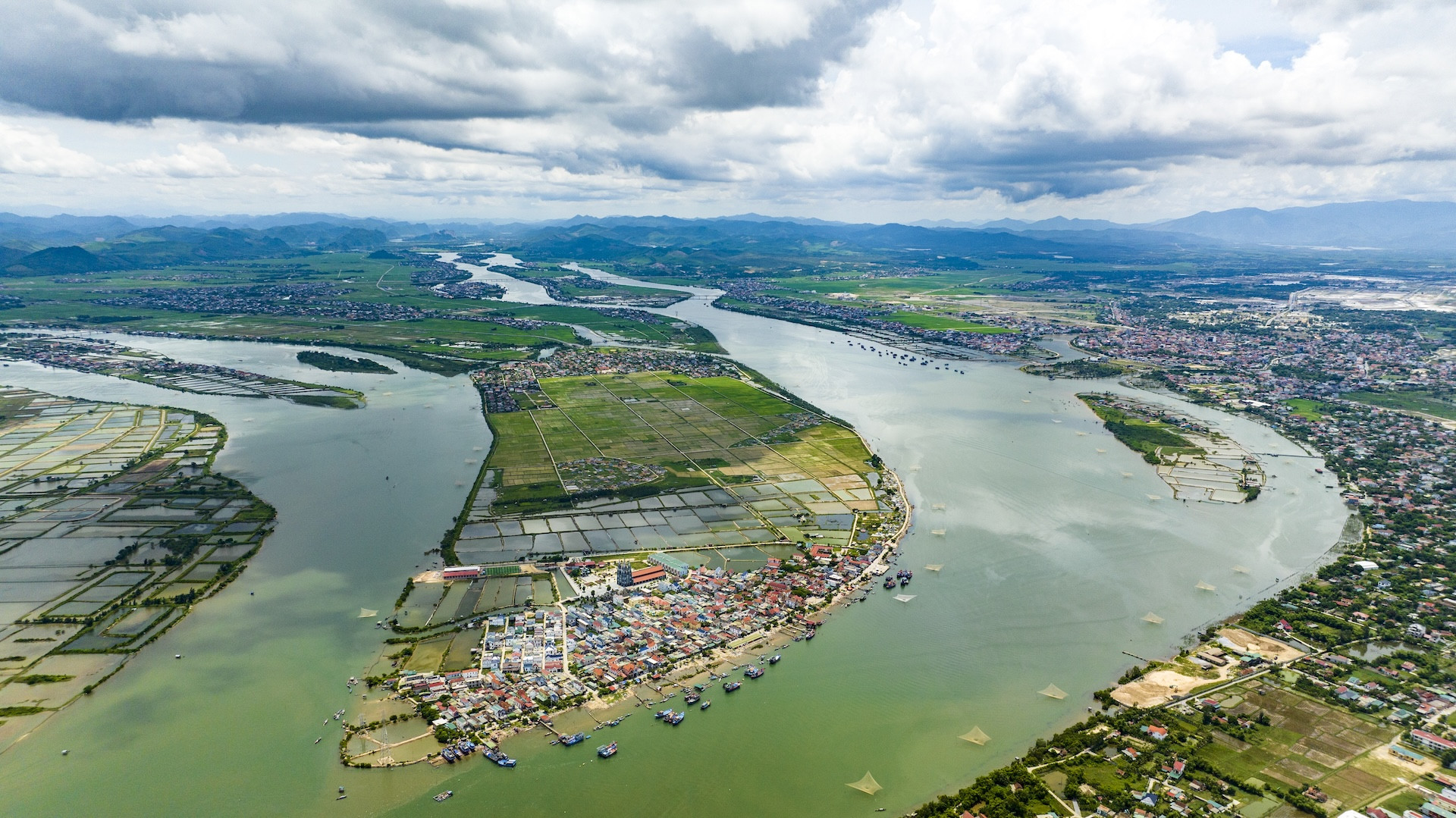
For many years, a stretch of the Gianh River passing through nearly two districts, Tuyen Hoa and Quang Trach (of the former Quang Binh province), was virtually impassable. Photo: Hoang Ha
Administrative place names have changed, but riverbanks like Ben Cho Vang, Cho Gat, Kinh Chau, Cho Cuoi, Minh Cam, Cay Thi, Ba Don… and ferry crossings remain unchanged in the hearts of the people of this homeland, whether they are far away or still living nearby.
For many years, a section of the Gianh River passing through nearly two districts, Tuyen Hoa and Quang Trach (of the former Quang Binh province), had virtually no ferries. The only means of crossing between the two banks were small, rowboats, carrying people and vehicles.
The fateful ferry crossing at Quang Hai ferry terminal on the 30th day of the Lunar New Year in 2009 (January 25, 2009), which claimed 42 lives, served as a powerful impetus for the successive construction of three bridges across the Gianh River (Quang Hai Bridge inaugurated in 2009, Chau Hoa Bridge in 2010, and Van Hoa Bridge in 2013). Ancient villages like Le Son, Kinh Chau, and Ma Thuong, which had resembled isolated oases for years, suddenly came alive: electricity, roads, schools, clinics, and clean water were readily available; sturdy houses and rural roads were rapidly built, as if by a dream.
But along with development, the mountains are threatened by erosion from the appearance of cement factories along the same short stretch of river, and the river is being eroded by continuous sand mining. "Mountains erode, rivers dry up," floods become more frequent and devastating. What direction will this once idyllic land along the Gianh River take?
Mr. Hoang Xuan Phuc, former Head of the Education Department of the old Tuyen Hoa district, currently the Secretary of the new Tuyen Binh commune, home to Minh Cam wharf with its rich historical relics and beautiful ancient palm forest, stated: “To capitalize on the tourism advantages of a commune on the Gianh River, Tuyen Binh must undertake many tasks such as increasing investment attraction, strengthening connections with communes along the Gianh River and travel agencies to build unified and attractive tourism products; mobilizing and training people to participate in the development of professional tourism services…”.
The newly established Tuyen Hoa commune in Quang Tri province is currently facing significant environmental pollution issues due to cement factory operations and river erosion caused by sand mining. “When businesses operate more cleanly, the government manages more strictly, and the people participate more effectively in monitoring, then the goal of sustainable development for the locality can truly be achieved. Economic growth must be maintained while preserving a clean environment for today and tomorrow,” shared Minh, the Party Secretary of Tuyen Hoa commune.
Having been invited to attend the Party Congress of Tuyen Hoa commune, the author of this article had the opportunity to hear some delegates "speak frankly": "We have faith in this group of officials who know how to stay close to the people and the work. We hope they can keep their word and not engage in the practice of leveling mountains and digging rivers for profit anymore."
"The Miracle on the Red River"
What I love most about Hanoi are the morning markets near the river after Tet, when people and vehicles haven't yet become a bustling crowd. At that time, the women and mothers from Phu Thuong, Ke Ve, Nhat Tao... sell off their last few late-ripening pomelos, a few broken peach branches, and some herbs hastily picked from their gardens. After many changes in agricultural land, few people in the outskirts of Hanoi are still poor enough to go to the market early to "scrape" a few thousand dong. "I've been going to the market for many years, I don't carry heavy loads anymore, my shoulders feel so light, sometimes I'm not used to it..." an old woman said when I asked her that morning, "It's just after Tet, you're old, why bother carrying heavy loads?" Hanoi, as a natural consequence, has rapidly developed into a modern city on both sides of the river, but the traditional features of a riverside market town along the Cai River are not easily lost.
Since the beginning of 2025, Hanoi has commenced construction on major bridges across the Red River, including Tu Lien, Ngoc Hoi, Van Phuc, Hong Ha, Me So, Thuong Cat, and Tran Hung Dao. Representative Bui Hoai Son, Vice Chairman of the National Assembly's Committee on Culture and Social Affairs, once shared: Hanoi is nurturing the aspiration to create a "Red River miracle" – a new symbol of revival, connection, and sustainable development. If the "Han River miracle" has made Seoul one of the most livable cities in Asia, then the "Red River miracle" will be Hanoi's way of both honoring history and building the future. Hanoi is busily preparing a new look for a Tet holiday marked by historical significance.
Finally, with the decisive actions of the new Hanoi Party Committee and government, it seems that important bottlenecks are beginning to be resolved. I believe this as the year draws to a close, and once again I travel across Hanoi's old and new bridges, listening to the Red River tell its story through its flow…
Vietnamnet.vn
Source: https://vietnamnet.vn/chay-di-song-oi-2490851.html




















































Comment (0)