

Competing through product diversification
Vietnam possesses abundant tourism resources that many countries around the world envy. However, the development of diverse tourism products has not received sufficient attention. Minister of Culture, Sports and Tourism Nguyen Van Hung, the head of Vietnam's tourism industry, acknowledged that current destinations lack appeal to tourists; we have only approached tourism based on what we have available, not what tourists need. While the system of products and services in many localities has been diversified and improved in quality, it has not yet been widely replicated or popularized, failing to create an attraction that would draw visitors back or encourage them to spend more.
According to the General Statistics Office, although the average daily spending of international tourists in Vietnam increased from US$91.2 to US$117.8 between 2009 and 2019, it remains very low compared to other countries in the region. To achieve the goal of making tourism a key economic sector, contributing over 10% to GDP by 2030, diversifying high-class and unique tourism products is a top priority.
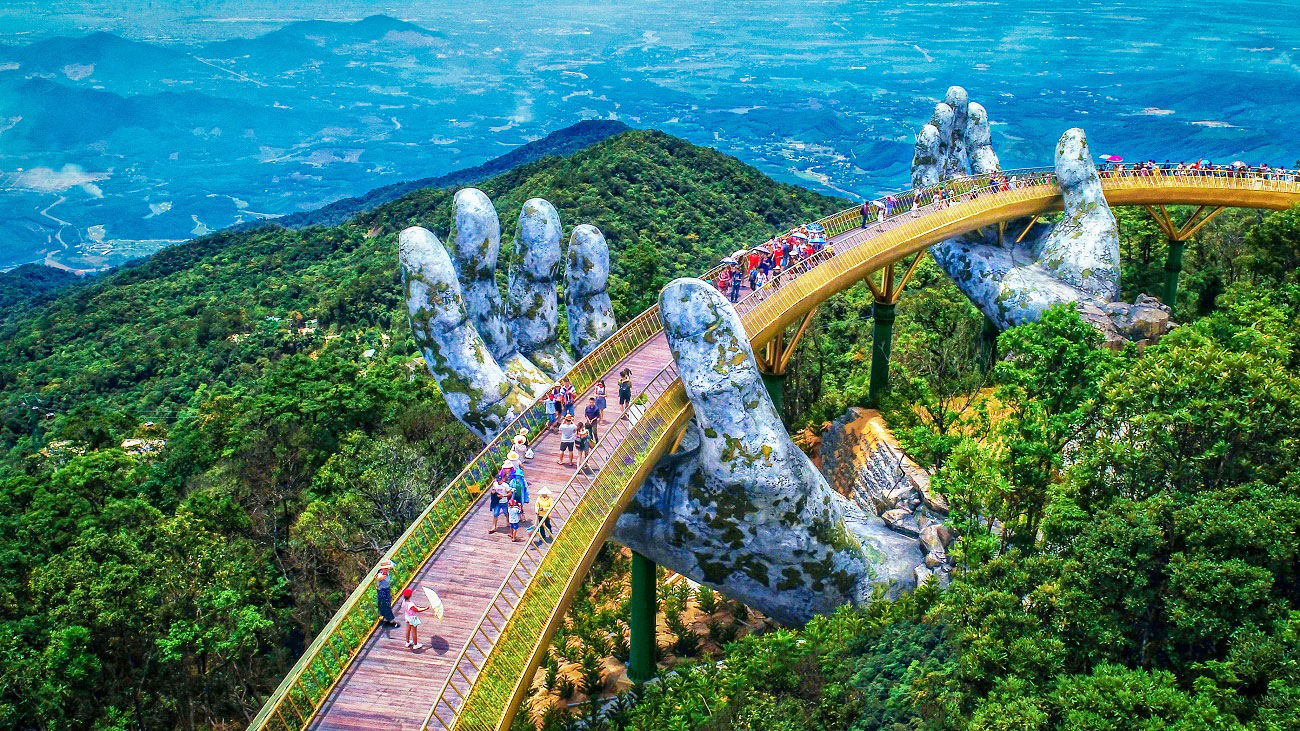
Vietnam needs more unique tourism products to attract international tourists.
Ms. Tran Nguyen, Deputy General Director of Sun World - Sun Group, affirmed: Developing unique tourism products is becoming an irresistible trend. No matter how beautiful a destination is, even world-class ones like Ha Long and Bai Tu Long; no matter how rich a community's traditions are, if it only focuses on experiencing existing resources, it will quickly become boring for tourists. Most tourists today are not just looking for a trip, but an experience. The richer and higher quality that experience, the more enjoyable it is for tourists, making them want to return and explore further, and readily spend money.
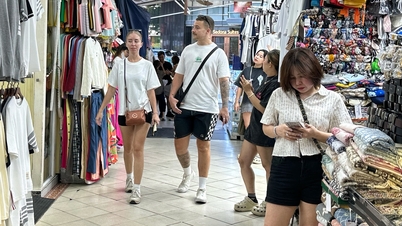
Drawing on the experiences of leading tourism nations around the world, Ms. Tran Nguyen analyzed: Thailand's tourism industry knows how to elevate the visitor experience, creating attractive products. In Bangkok, a city without many advantages in forest or marine resources, it has created numerous "specialties." These include diverse tourism products ranging from cuisine and spirituality to ecology… and even high-class, high-quality commercial complexes. Shopping and entertainment complexes with luxury restaurants such as Icon Siam, Asiatique, Siam Paragon… all possess unique and distinctive characteristics, creating highlights that attract visitors.
The "miraculous" development of South Korean tourism is another example. By using cultural products to elevate destinations, the "Korean Wave" – Hallyu – has contributed to stimulating tourism demand particularly effectively. According to a survey following a Kpop music festival in France, 9 out of 10 people expressed a desire to travel to South Korea, and 75% of them immediately planned their trip. Croatia possesses a tourism asset that the whole world envies. However, Croatians themselves, after the Covid-19 pandemic, are realizing that they cannot live forever on the fame of a UNESCO heritage site. Most recently, in the Mediterranean and Caribbean regions, despite their rich natural resources, countries are investing billions of dollars to develop new tourism products.
"From the successful models of other countries, it can be seen that good tourism products will establish a strong position for the destination. Even in top global destinations, iconic regions, governments have long identified a long-term strategy: diversifying tourism products. We often say that Vietnam's tourism industry is weak in promotion and marketing, but in reality, destination promotion and marketing activities will only be truly effective if there is a foundation of good products," a representative from Sun Group commented.
Each area has its advantages, but there are also many gaps.
Discussing the diversification of tourism products and services, Dr. Luong Hoai Nam, a member of the Vietnam Tourism Advisory Board (TAB), assessed that this issue has been raised for many decades, and the Vietnamese tourism industry has already made certain progress. Regarding beach tourism, before Vinpearl Nha Trang, Vietnam almost didn't have the concept of a true "resort." However, currently, along the coast from North to South, the system of resorts and beach hotels has developed remarkably.
These are all high-end resorts and quality hotels. The experiential park sector has also seen breakthrough development with the emergence of impressive destinations such as Ba Na Hill in Da Nang, Sun World Ba Den Mountain complex in Tay Ninh, and Sun World Fansipan Legend in Sa Pa (Lao Cai)... The system of entertainment complexes offers a diverse and attractive range of products, but it lacks truly spectacular attractions, not yet the "big names" capable of competing with Disneyland or Universal Studios in Singapore. According to Mr. Nam, if this gap could be filled, the appeal would increase significantly.
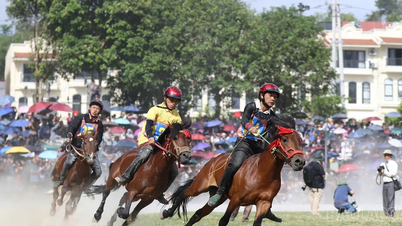
Meanwhile, Vietnam has many advantages for developing high-end cruise tourism, attracting the super-rich, but currently, this potential is almost completely untapped. Activities related to luxury cruises are virtually non-existent. Similarly, festivals in many countries are highly attractive products, such as the Carnival in Brazil, the bullfighting festival in Spain, the beer festival in Germany, or the cherry blossom season in Japan, each attracting millions of tourists and compelling international visitors to plan trips to those countries during those times. Vietnam has thousands of festivals, from small to large, each year, but none have created an international appeal. Events and festivals are spread throughout the country, but they lack elaborate programs, widespread promotion, and genuine appeal. From the script and program to the promotion, they are only focused on "making it for our people to watch," not on attracting international tourists.
Similarly, Vietnamese people abroad spend a lot of time visiting museums. There are many stories told in museums that tourists want to hear. A small coffee museum or a railroad museum in Sacramento (USA), with just vintage locomotives and carriages, can be incredibly attractive. While Vietnam has many museums, the number of truly captivating ones can be counted on one hand. We have a strong advantage in war relics, with world-famous battles that have even become a brand for Vietnam, but we lack the technology and the ability to transform that advantage into an attractive war tourism brand.
"I'm giving a few specific examples to show that, when discussing tourism products, we must delve into each small area to see what we've already done well and continue to build upon it; and identify areas that are still lacking, assessing whether there are opportunities for development, and if so, what needs to be done. Developing tourism products requires a national program, with specific individuals creating detailed plans, clearly assigning roles to each ministry, sector, business, locality, and investor… Most importantly, when businesses are free to innovate and propose investment ideas, from the local to the central level, there must be encouragement, support, and incentives to transform those ideas into unique and attractive products," emphasized Dr. Luong Hoai Nam.
Northern Vietnam has a winter season, so many localities focus their tourism development on only the three summer months. This leads to unstable tourism economies and difficulties in maintaining the quality of human resources and services. To truly have a diverse range of products and high-quality services, tourism must operate year-round. Ha Long Bay, previously only a summer tourist destination, has seen Quang Ninh province create many winter products such as Onsen (hot spring baths). Other localities should do the same. Northern winters are not as cold as in South Korea or Japan, nor as hot as in the south, making them advantageous for developing golf tourism and creating "off-season" products. Diversifying products to ensure year-round tourism activity is key to increasing the proportion of tourism and service industries in a locality in a stable and sustainable manner.
Dr. Luong Hoai Nam, member of the Vietnam Tourism Advisory Board (TAB)
Source link
![[Image] Close-up view of the interchange connecting the two expressways and Long Thanh Airport.](https://vphoto.vietnam.vn/thumb/1200x675/vietnam/resource/IMAGE/2026/05/25/1779703378210_ndo_br_z7863716673926-224453a31600126cce10622af6290afd-4549-jpg.webp)

![[Image] Hanoi's urban life under the challenge of a "scorching hot" environment](https://vphoto.vietnam.vn/thumb/1200x675/vietnam/resource/IMAGE/2026/05/25/1779706979265_nang-nong-t5-2026-minh-duy-7-4636-jpg.webp)






















































Comment (0)