

Race against time
Entering the Campaign, Quang Ninh had to face unprecedented pressure: The huge workload when the need to review, collect and convert up to nearly 331,200 land transaction records out of a total of about two million land plots in the whole province. Meanwhile, the record system that has existed for many years is mainly based on traditional documents, leading to a state of dispersion and lack of connectivity, increasing the difficulty of data digitization, putting great pressure on state management agencies and localities.
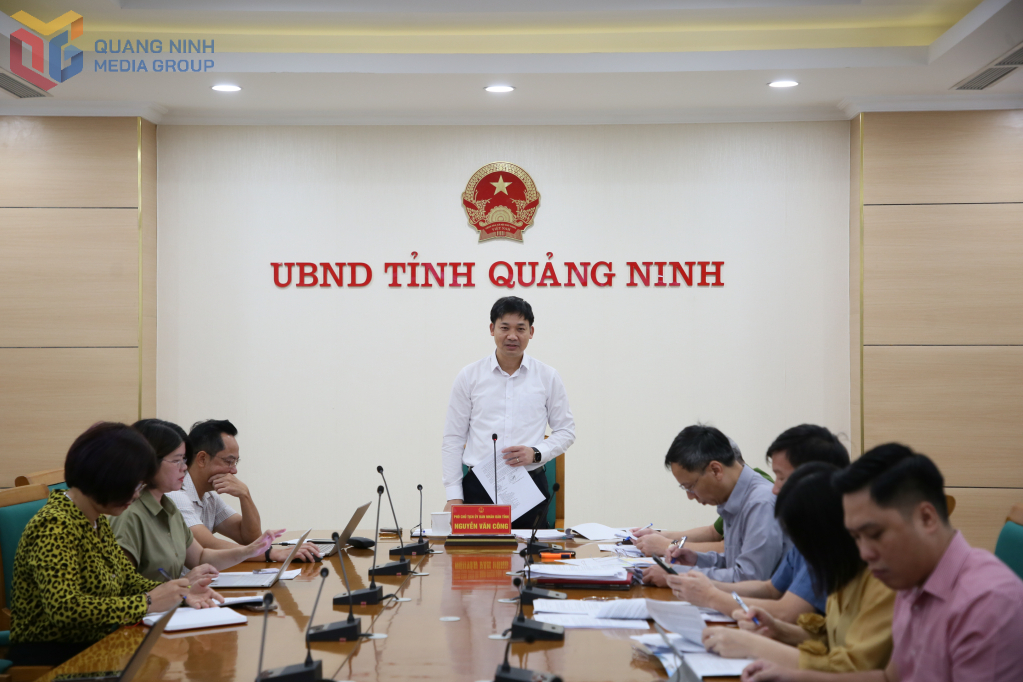
The difficulties are multiplied in localities with their own characteristics. Typically, in Van Don special economic zone, after implementing the 2-level local government model, Van Don has to handle the largest number of records in the whole province with over 22,000 records, while most other localities average about 3,000-7,000 records. The large number of records combined with the complex terrain conditions of the islands, scattered population and long distances make the already large workload even more difficult.
Even when the records were collected, the initial reconciliation process of the Provincial Land Data Cleanup and Enrichment Campaign Task Force showed that there were still many problems. A large number of records had errors or the owner information could not be found, forcing the authorities to spend a lot of time verifying. In addition, there were nearly 7,500 cases that had not been collected, mainly mortgaged properties or absent owners.

Mr. Nguyen Manh Cuong, Vice Chairman of Mong Duong Ward People's Committee, said: Each household has dozens of data fields. There are records that seem simple, but when checked, the information is found to be inconsistent, and we have to verify them from the beginning, which takes a lot of time. Accordingly, out of nearly 2,700 records that must be collected and digitized, we have to complete and compare all the information for 125 records.
Big challenges, short time, high requirements, all create unprecedented pressure on the government system from the province to the grassroots. The urgent requirement for the Campaign is the need for synchronous and strong participation from the people, the information holders, and at the same time the direct beneficiaries of the standardized land data. Accordingly, to create consensus, communication work has been widely deployed by localities, reaching more than 2.6 million people, helping all people understand the meaning of data standardization for personal property rights and the common interests of the province.
Ms. Ninh Thi Moc, Party Cell Secretary, Head of Nam Tut Village (Luc Hon Commune) said: Through the commune's training sessions, we have a firm grasp of the information collection process to ensure accuracy and keep information safe and secure for the people. We notify the people through the village's zalo group, the village's public address system, and call households so that they can proactively go to the cultural house to complete the procedures. For families living far away, we also contact them to arrange their time.
It can be seen that, in such a difficult context, community resources have become the golden key, turning challenges into motivation. Immediately after understanding the meaning of the Campaign, Quang Ninh people were no longer in a passive position, but became active subjects in the entire process, supporting the government to complete the database. The consensus and joint efforts of the people, combined with the key role of grassroots cadres, have created a vibrant competitive atmosphere, helping the work to be deployed at lightning speed.

In Van Don special economic zone, Mong Duong ward, Mong Cai 1 ward, Co To special economic zone... the working teams have pioneered the method of approaching each house, each alley, and at the same time established mobile teams and organized on-site support for special households, to ensure administrative services are aimed at citizens and not miss any cases.
Lien Hoa Ward showed outstanding determination when mobilizing the participation of schools and neighborhoods to set a goal of completing the task in just 50 days. Viet Hung Ward, Bai Chay established many working groups asking neighborhoods to closely follow each residential group, focusing on collecting and digitizing data for records. For land plots whose owners are in other localities or vacant plots, localities have also closely coordinated with functional agencies to contact and get information from owners.
Mr. Pham Van Thu, Vice Chairman of Viet Hung Ward People's Committee shared: The ward is simultaneously implementing a series of campaigns (cleaning vehicle and driver's license data; converting lump-sum tax to declaration, cleaning marriage data...), but the campaign to clean and enrich land data has its own characteristics and the largest volume. To implement the campaign, the ward needs to collect 9,700 records. To divide the work, we assigned tasks to each member of the working group in 25 neighborhoods and the neighborhoods play a very important role in collecting records and entering data of people in the area. It is the tireless support of the people in the neighborhoods that has helped Viet Hung ward complete the collection and digitization as soon as possible in the province.
Overcoming difficulties to reach the finish line
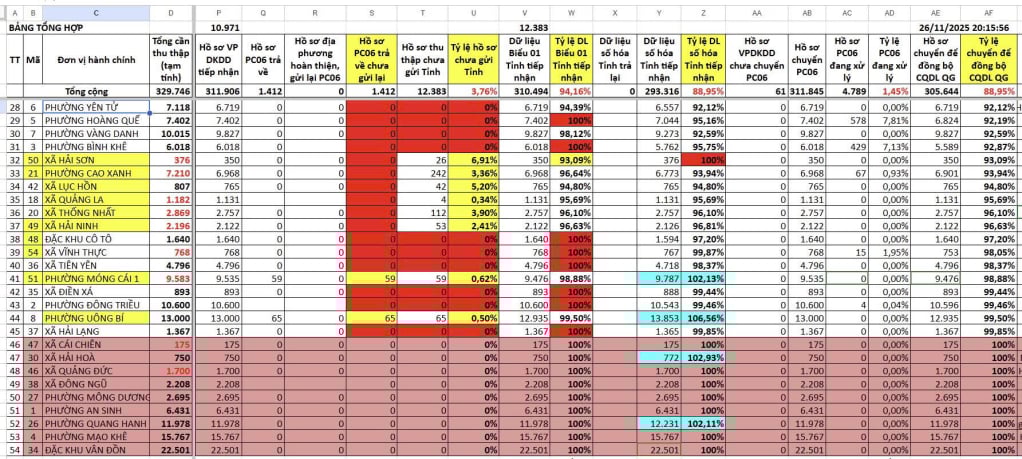
As of November 26, the entire province had 9 localities that finished ahead of all the requirements and tasks set out in the campaign (collecting records, digitizing records, the rate of digitized data received by the province, the rate of transfer to synchronize the national database) for the entire campaign. Including: Van Don Special Zone; Mao Khe Ward; Quang Hanh Ward; An Sinh Ward; Mong Duong Ward; Dong Ngu Commune; Quang Duc Commune; Hai Hoa Commune; Cai Chien Commune.
Mr. Ngo Quoc Vuong, Head of the Department of Agriculture and Environment (Van Don Special Zone) shared: Although the volume of documents that need to be collected and digitized by the locality is the largest in the whole province, thanks to the active cooperation from the villages, neighborhoods and people, by October 31, we have completed the collection work. In November, we focused on digitizing and cross-checking data, thanks to which 100% of the documents were received by the province and 100% of the documents were transferred to synchronize the national database.

Immediately after the data was collected and digitized by localities, the Provincial Land Data Cleaning and Enrichment Campaign Working Group urgently implemented the phase of comparing and authenticating owner information, ensuring that the data is always "correct - sufficient - clean - alive". The total number of records transferred to the Provincial Police for authentication is 432,609 records (reaching 94%); the total number of records transferred to synchronize the national population database is 337,894 records (reaching 73.4%); the number of records put into digital environment exploitation is 33,379 (reaching 7.25% of the expected target).
Most importantly, 254,124 land user records have been identified to match the information in the national population database. Thus, the data collection work has basically met the progress according to the target set by the Provincial Working Group. The remaining number of records that have not been collected (about 7,500 records) are mainly records that are currently mortgaged or where the land user is absent. To ensure the Campaign is completed as planned, the Provincial Working Group requires communes, wards, and special zones to urgently complete the collection, synthesis, and transfer of daily data and must ensure the requirements of data security and safety during the transfer process; continue to review, supplement, and complete missing data for the data returned by the Provincial Police to ensure the quality and progress as set.
Mr. Phan Thanh Nghi, Deputy Director of the Department of Agriculture and Environment, emphasized: For the Campaign to achieve the above results in just over 60 days, the core factor is the support and cooperation of the people in the province. During the implementation process, there was no negative feedback about having to provide information. Many cases from far away were still willing to cooperate with the local authorities. Along with that, the participation of grassroots cadres, youth, teachers... helped the collection work take place day and night.
The implementation of the Land Data Cleanup and Enrichment Campaign has profound strategic significance, not only resolving historical backlogs, but also creating a solid stepping stone for the development of digital administration. When land data is standardized, it will be the core basis for integrating property information into people's electronic identification accounts, serving modern state management. At the same time, clean data will pave the way for streamlining administrative processes and making transactions transparent.
The initial success of the Campaign has affirmed the province's strategic vision and especially the enduring strength of the people's consensus. This is the golden key to help Quang Ninh not only complete the digitalization goal, but also create a unified digital data platform, affirming the province's pioneering position in the national digital transformation process associated with the implementation of Resolution 57-NQ/TW of the Politburo , ensuring a modern, transparent and serving administration.
Source: https://baoquangninh.vn/chien-dich-lam-sach-du-lieu-dat-dai-suc-manh-tu-su-chung-suc-dong-long-3386376.html


![[Photo] Prime Minister Pham Minh Chinh receives President of Cuba's Latin American News Agency](/_next/image?url=https%3A%2F%2Fvphoto.vietnam.vn%2Fthumb%2F1200x675%2Fvietnam%2Fresource%2FIMAGE%2F2025%2F12%2F01%2F1764569497815_dsc-2890-jpg.webp&w=3840&q=75)














































































Comment (0)