

Each emotional shock can leave lasting scars, especially on adolescent girls and those from disadvantaged backgrounds who help their parents make a living. Given these risks, the "Dandelion" model, supporting women and children, was established in Ho Chi Minh City with the active participation of relevant authorities, healthcare facilities, and the community.
Reporters from the Vietnam News Agency have produced a series of two articles on the theme "A Safe Haven for Victims of Violence and Abuse," reflecting the operational process and initial results of the one-stop service model to support women and children who have experienced violence and abuse, from the moment they return to normal life, as well as future operational directions.
Lesson 1: Rebirth of Unfortunate Lives
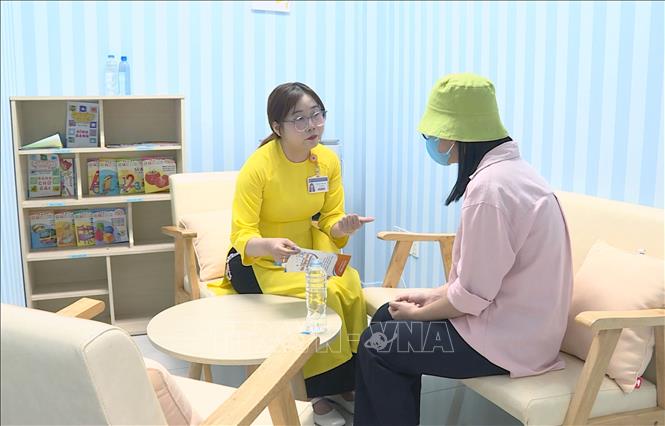
The "Dandelion" model is a closed-loop, inter-sectoral protection mechanism that mobilizes multiple departments and organizations such as health, police, women's organizations, and youth organizations to cooperate. Upon receiving information from hospitals, the 111 hotline, or the city's hotline 1900.545.559 (input), relevant units are activated to quickly conduct a confidential consultation to provide medical support, care, accommodation, and initial counseling for the victim. Afterward, the victim is transferred to a temporary shelter (output) at the City's Youth Vocational Education and Social Work Center for continued support, psychological counseling, and vocational training for approximately three months, helping them gradually stabilize and reintegrate into society.
A consultation between emotion and reason
Having been involved with the "Dandelion" model for over two years, Dr. Pham Quoc Hung, Head of the Social Work Department at Hung Vuong Hospital (the first pilot site of the model in Ho Chi Minh City), is deeply impressed by its humanistic nature and effectiveness, and has participated in supporting many unforgettable cases of "adversity." The model is not just a place for medical emergencies or handling administrative procedures; each staff member strives to build a compassionate society where supporting victims of gender-based violence is a top priority.
Recently, Dr. Hung's unit received an extremely sensitive case: a girl under 14 years old in a suburban ward of the city was pregnant. The incident was reported to the police by the victim's family, but the investigation revealed that the perpetrator was also a minor of the same age and a classmate of the victim.
Dr. Hung said that initially, the family suggested terminating the pregnancy, but the fetus was nearly 20 weeks old, and medical intervention carried the potential risk of affecting the girl's future ability to have children.
From a medical standpoint, Hung Vuong Hospital refused to perform a late-term abortion to protect the victim's future obstetric prospects. This medical decision marked the beginning of a complex interdisciplinary consultation involving specialized agencies, the police, and the judiciary.
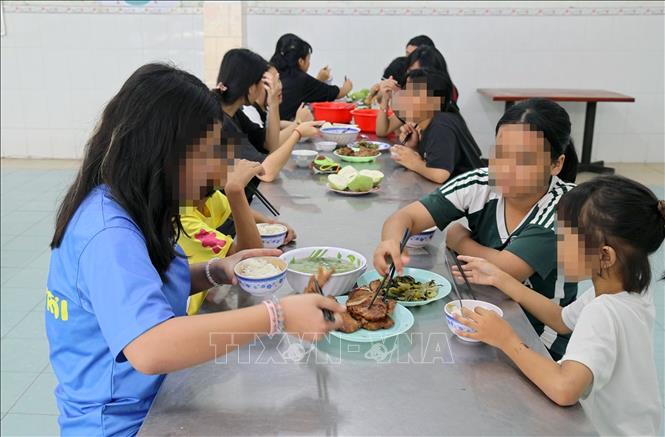
"This is a situation where the legal aspect (sexual intercourse with a minor resulting in serious consequences is a violation of the law) needs to be considered, alongside the educational and preventative aspects, and the psychological stability of both children. Essentially, before the law becomes a tool for punishment… it must have elements of deterrence, education, and general prevention," Dr. Hung analyzed.
During the consultation process, the victim's family also expressed deep concern about the social consequences if the case were to be publicly tried.
Dr. Hung stated that after nearly two hours of intense debate, the final solution was adopted, based on the legal basis allowing for "community-based mediation." This decision sets a humane precedent, protecting both young lives, preventing the victim and the perpetrator from being dragged into legal proceedings while ensuring their rights and education are protected.
This decision not only provides legal reassurance but also opens up a humane approach towards the recovery and future of those who have been harmed, bringing a sigh of relief to everyone...
Following a consultation between the emotional and rational parties, it was agreed that Hung Vuong Hospital would provide healthcare support for the girl and her unborn child until delivery. The education authorities agreed not to release the information or discipline the boy, allowing him to continue his studies; the girl's academic results would be preserved so she could resume her studies after giving birth.
It is evident that the superiority of this model lies in its skillful handling of issues, balancing "reason and compassion," striking a balance between strict law and profound humanism – where complex issues concerning the future of minors are addressed with thoroughness; where justice and humanity are considered in every decision.
A closed healing journey
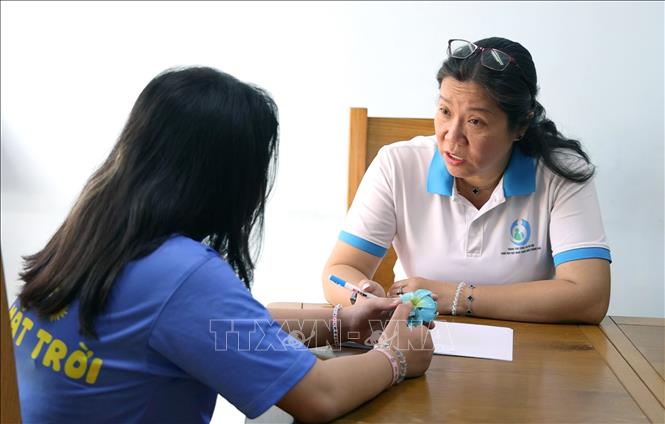
The superiority of the Dandelion model lies not only in its closed-loop support process but also in ensuring safety and continuity between the input and output of the temporary shelter. Each victim of violence, abuse, or unwanted pregnancy is protected by a team of experienced professionals, ensuring absolute safety and leaving no women behind.
The story of Ms. ALP (from Bac Giang province) is a typical example of domestic violence. After being severely abused by her husband on numerous occasions, she had to leave her home with her two young children while eight months pregnant.
Ms. P and her two children had no money for rent, so they wandered from place to place until they went into labor. With the help of locals, they were taken to Hung Vuong Hospital for emergency treatment. Ms. P gave birth to a baby girl weighing 2.5 kg. Ms. P and her children's difficulties were addressed by Ms. Ngo Thiep Thiet Ngan, a social worker at Hung Vuong Hospital, who advised them to move to the Dandelion Safe Room for support.
Here, Hung Vuong Hospital and the Ho Chi Minh City Youth Vocational Education and Social Work Center are coordinating to provide postpartum healthcare for the mother and baby, offering nutritional support; and arranging safe temporary accommodation for Ms. P and her child to stabilize their health and avoid violence.
Inter-agency bodies also advised on various temporary support solutions and proposed long-term support through the Tan Hiep Social Welfare Center to help Ms. P and her children stabilize their lives and find employment. “However, because Ms. P expressed a desire to be proactive in her life, the program provided guidance and financial and psychological support to help her return to normal life,” Ms. Ngan shared.
Even more tragic is the case of NGV (born in 2012), an orphan living with her elderly grandmother in a suburban village of Ho Chi Minh City. V became the victim of a gang rape after being drugged with alcohol.
Ms. Nguyen Thi Thuy Duong, Deputy Director of the Ho Chi Minh City Center for Social Work, Education, and Vocational Training for Youth, said that due to panic and her young age, the young girl could not remember the perpetrator. It wasn't until she showed unusual symptoms that local authorities took her to Hung Vuong Hospital for examination, where it was discovered she was 27 weeks pregnant.
“Due to extremely difficult circumstances and lack of safe shelter, the pregnant woman wanted support with food and accommodation throughout her pregnancy and childbirth. The Dandelion Process was immediately activated and proceeded to accept the pregnant woman and arrange temporary shelter,” Ms. Duong recounted.
However, due to her young age and underdeveloped reproductive system, within just two months of temporary shelter, NGV experienced persistent abdominal pain, threatening premature birth and requiring multiple emergency transfers to the hospital. Thanks to the seamless interdisciplinary collaboration between obstetricians and social workers, NGV received timely monitoring and treatment, including the placement of a cervical cerclage to maintain the pregnancy.
By the end of her pregnancy, NGV had given birth naturally to a baby girl weighing 2.5 kg. This outcome was considered "very fortunate" by the doctors, thanks to the interdisciplinary model and the efforts of doctors, nurses, and social workers, NGV received healthcare, had a safe place to live, and the lives of both mother and newborn were protected.
According to Ms. Duong, this is a typical case illustrating the level of necessary medical and social support services provided to underage victims. In particular, after safely giving birth, the domestic worker requested to return to live with her family and continued to receive support with diapers and formula for the next six months to prevent the risk of psychological trauma or abuse…
These seemingly diverse stories and destinies share a common thread: the "closed embrace" of the Dandelion model, encompassing emergency care, treatment, support, counseling, temporary shelter, and reintegration. This comprehensive support ensures that victims are not interrupted or abandoned amidst life's "events" and, more importantly, gives them the best chance to return to their families unharmed.
The "Dandelion" model is seen as a haven of peace for victims of violence and abuse – a place where every sad story is listened to, every pain is soothed, and every vulnerable person is given renewed hope to be reborn and move forward.
Final part: Starting a new life
Source: https://baotintuc.vn/xa-hoi/chon-binh-yen-cua-nan-nhan-bao-luc-xam-hai-bai-1-tai-sinh-nhung-manh-doi-bat-hanh-20251217163146689.htm
![[Image] Leaked images ahead of the 2025 Community Action Awards gala.](/_next/image?url=https%3A%2F%2Fvphoto.vietnam.vn%2Fthumb%2F1200x675%2Fvietnam%2Fresource%2FIMAGE%2F2025%2F12%2F16%2F1765882828720_ndo_br_thiet-ke-chua-co-ten-45-png.webp&w=3840&q=75)
![[Live] 2025 Community Action Awards Gala](/_next/image?url=https%3A%2F%2Fvphoto.vietnam.vn%2Fthumb%2F1200x675%2Fvietnam%2Fresource%2FIMAGE%2F2025%2F12%2F16%2F1765899631650_ndo_tr_z7334013144784-9f9fe10a6d63584c85aff40f2957c250-jpg.webp&w=3840&q=75)
![[Photo] Prime Minister Pham Minh Chinh receives Lao Minister of Education and Sports Thongsalith Mangnormek](/_next/image?url=https%3A%2F%2Fvphoto.vietnam.vn%2Fthumb%2F1200x675%2Fvietnam%2Fresource%2FIMAGE%2F2025%2F12%2F16%2F1765876834721_dsc-7519-jpg.webp&w=3840&q=75)
![[Photo] Prime Minister Pham Minh Chinh receives the Governor of Tochigi Province (Japan)](/_next/image?url=https%3A%2F%2Fvphoto.vietnam.vn%2Fthumb%2F1200x675%2Fvietnam%2Fresource%2FIMAGE%2F2025%2F12%2F16%2F1765892133176_dsc-8082-6425-jpg.webp&w=3840&q=75)
![[Image] The tenacious fighting spirit of Vietnamese women's football](/_next/image?url=https%3A%2F%2Fvphoto.vietnam.vn%2Fthumb%2F1200x675%2Fvietnam%2Fresource%2FIMAGE%2F2025%2F12%2F17%2F1765990260956_ndo_br_4224760955870434771-copy-jpg.webp&w=3840&q=75)































![[Live] Closing Ceremony and Award Presentation for the "Impressive Vietnam Tourism" Video/Clip Creation Contest 2025](https://vphoto.vietnam.vn/thumb/402x226/vietnam/resource/IMAGE/2025/12/17/1765974650260_z7273498850699-00d2fd6b0972cb39494cfa2559bf85ac-1765959338756946072104-627-0-1338-1138-crop-1765959347256801551121.jpeg)













Comment (0)