

The Vinh Long Business Association recently organized a workshop titled "Accessing Standards and Greening Key Industries." This affirmed that the green transformation trend is essential for deeper and broader integration into global markets and supply chains.
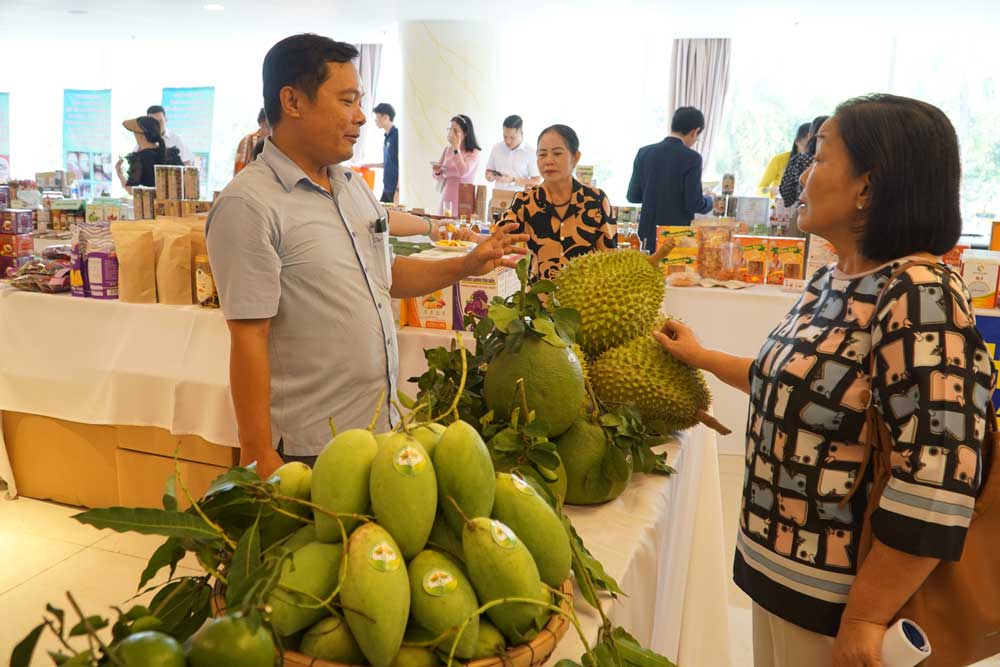 |
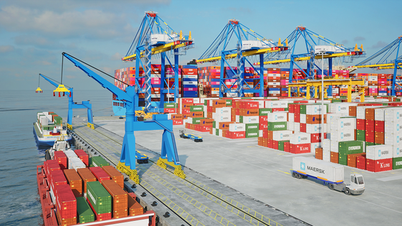
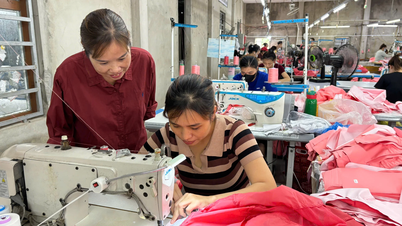
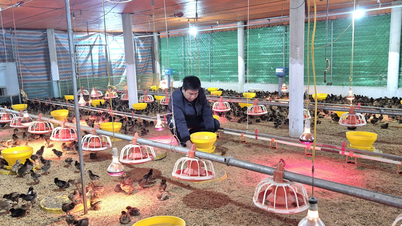
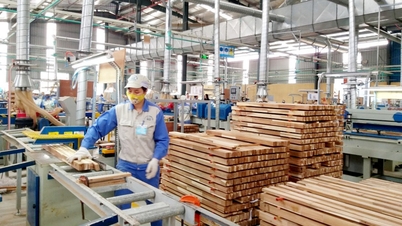
| The green transition is an inevitable choice. (Illustrative image) |
Greening key industries
In the context of a global market increasingly prioritizing sustainable values, greening is not just a trend, but a condition for maintaining and enhancing competitiveness.
Mr. Tran Van Duc, Chairman of the Ben Tre Business Association, Chairman of the Board of Directors, and General Director of Benico, stated that Ben Tre has a developed coconut industry, and Vietnam is one of the top five countries with the largest coconut growing area and ranks fifth in the world in terms of production, with total export turnover reaching over 1.1 billion USD in 2024.
Vinh Long has nearly 117,300 hectares of coconut plantations, accounting for almost 60% of the Mekong Delta's coconut production and 58% of its output. Currently, ESG (environmental, social, and governance) standards and market trends in the coconut industry present many challenges but will also bring many benefits.
“ESG is not only a competitive advantage but is becoming a prerequisite for coconut products to access demanding export markets such as the EU, the US, Japan, and South Korea…”
"In addition, it helps businesses maintain stable orders and avoid the risk of losing market share in the global supply chain. At the same time, it helps businesses mobilize investment capital effectively, access technical support, and enhance innovation capacity," Mr. Duc said.
Furthermore, implementing ESG helps businesses identify, measure, and effectively manage risks such as climate change, supply chain disruptions, changes in import and export policies, or resolve disputes effectively. This can be seen as a foundation for the sustainable development of the coconut industry in an ecological, equitable, and efficient manner in the long term.
Established in June 2025, Lac Dia Sustainable Agriculture Cooperative has set a strategic goal of providing carbon credits, aiming towards Vietnam's Net-Zero target by 2050, by applying a circular economy model to native coconut trees, creating multiple values, adapting to climate change, and reducing emissions.
According to Mr. Tran Anh Thuy, Chairman of the Ben Tre Young Entrepreneurs Association, Chairman of the Board of Directors, and General Director of Phu Le Joint Stock Company, the cooperative currently has 56 members, including 3 companies and 53 individuals who voluntarily participate in contributing capital for production and business, all of whom are local residents. Thanks to this, the three factors of economy, society, and environment are developed harmoniously, creating a healthy and sustainable community.
“The coconut-growing region offers opportunities for sustainable tourism, such as educational tours focusing on ESG (Economics, Ecotourism, and Community-Based Ecotourism), creating green livelihoods for local people. Meanwhile, it provides a platform for green education and startups, summer camps, and playgrounds focused on sustainable development for students. For the local community, training, technology transfer, and awareness-raising activities within cooperatives and the community regarding circular economy, emission reduction, and carbon credits are crucial. In particular, the integration of technology, traceability, a product journey from ‘garden to table,’ measuring CO₂ absorption, establishing carbon credit profiles, and reporting ESG according to international standards will boost the development of the coconut industry,” Mr. Thuy shared.
Technological innovation, improving green production processes.
According to Mr. Nguyen Tuong Nam, Chairman of the Vinh Long Business Association, the association always promotes green transformation in businesses. This includes organizing training courses and workshops; collaborating with experts, consultants, and investors; as well as introducing exemplary green businesses and proposing policies for green transformation.
Currently, the Provincial Business Association is strengthening business linkages and developing green businesses; the Leading Business Club - Outstanding Brands of Vinh Long Province is promoting business linkages; approaching green standards for the rice industry; greening the ceramics industry;…
According to Mr. Nam, green production will help businesses adopt new standards, innovate technology, improve production processes in an environmentally friendly direction, meet technical barriers, and integrate more deeply into the global value chain.
At the same time, it helps businesses proactively change their mindset, gradually improve their management capacity, innovate production and business models, protect the environment, and enhance national brands, for a sustainable economic development…
It can be said that adopting green standards for key industries is a timely, practical, and strategic topic in the context of a green economy and sustainable growth becoming inevitable global trends.
The merger of the three provinces of Vinh Long, Ben Tre, and Tra Vinh into the new Vinh Long province will open up a larger space for development, but it also creates an urgent need to restructure industries, promote regional linkages, and especially to green key industries and comprehensively green the production-consumption process to efficiently utilize resources and adapt to climate change.
According to the Department of Industry and Trade, in recent times, the province has focused its resources and prioritized support for industries such as coconut, ceramics, and renewable energy, aiming to reduce emissions, increase added value, and expand export markets.
However, in reality, the majority of production facilities are still small-scale, use outdated technology, do not meet international standards, and have difficulty accessing increasingly stringent global supply chains regarding ESG, low carbon, and traceability. According to Mr. Tran Van Duc, many businesses currently have limited awareness of ESG standards because ESG is not yet mandatory.
Furthermore, there is still a lack of specific policies and guidelines for the industry. Simultaneously, there are limitations in terms of financial, human, and technological resources. In addition, the industry structure is fragmented, making it difficult to implement ESG uniformly, and there is a lack of resources, tools, and enforcement mechanisms.
Mr. Tran Quoc Tuan, Standing Committee member of the Provincial Party Committee and Director of the Department of Industry and Trade, stated that identifying green transformation is not an option, but an inevitable path. The industry and trade sector will implement several orientations to develop in the field of green economy.
This includes supporting businesses in greening production, prioritizing support for projects that innovate clean technologies, save energy, and support the development of low-carbon value chains and internationally standardized raw material areas.
"Through various solutions, we strive to connect businesses with ESG standards, green trade, and digital transformation. We recognize that if we don't work alongside businesses, they will waste a lot of time before reaching their goals."
Therefore, the industry and trade sector will advise the Provincial Party Committee and the Provincial People's Committee to pay attention to investing in infrastructure, logistics, and eco-industrial parks. Surveys will be conducted to select and build environmentally friendly industrial clusters, as this is an inevitable trend,” Mr. Tuan said, adding: The industry and trade sector will promote the “four-party” linkage, technology transfer, and close cooperation between businesses, research institutes, universities, and local authorities.
At the same time, we invite visionary experts with sufficient planning capacity and international organizations to provide strategic advice on greening to help the province develop faster in this field.
| According to the European Commission (EC), an ESG strategy is the process of planning a company's development based on three fundamental pillars: E (Environmental), S (Social), and G (Governance). |
Text and photos: KHANH DUY
Source: https://baovinhlong.com.vn/kinh-te/202507/chuyen-doi-xanh-gia-nhap-chuoi-cung-ung-toan-cau-0ef09b4/

































































Comment (0)