

1. As the weather turns gray and the cold sets in, the streets begin to empty, and people hurry home to gather for the evening ancestral worship ceremony on the 30th, the scent of incense smoke brings an indescribable warmth.
Every house suddenly became bustling with activity. Sticky rice cakes, already prepared since the 29th, were served along with familiar dishes: boiled chicken sprinkled with lime leaves, fried spring rolls, pork sausage, head cheese, pickled onions, and pickled mustard greens. A steaming bowl of bamboo shoot soup with pork trotters sat in the center of the table, accompanied by stir-fried vegetables, usually stir-fried kohlrabi sprinkled with pepper and cilantro, giving off a wonderfully fragrant aroma.
In Hanoi , the New Year's Eve feast might include a plate of fragrant charcoal-grilled cinnamon pork sausage or jellied meat, a plate of stir-fried almonds, gac fruit sticky rice, and three types of soup: bamboo shoot soup, fish ball soup, or vermicelli soup with chicken offal. Even more extravagant would be the specialty braised black carp with galangal, a rare and expensive delicacy only available during Tet.
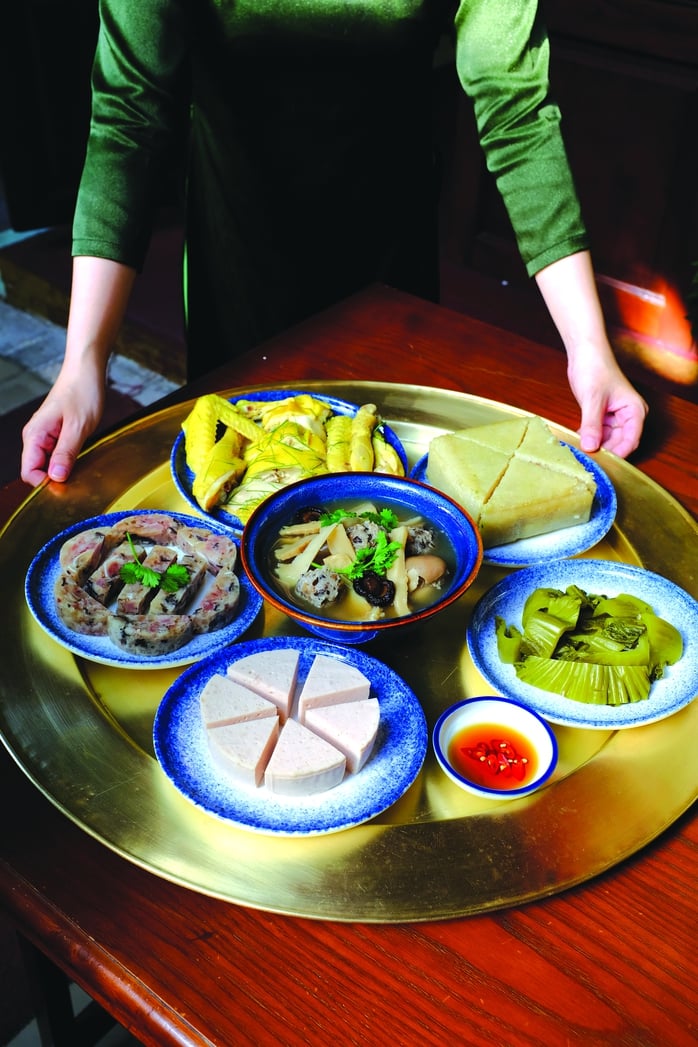
Northern Vietnamese Tet feast
I vividly remember the feeling from my childhood: the warm, fragrant scent of incense, and the murmured prayers of my grandmother and mother on the last afternoon of the year. That memory is sacred, yet somehow tinged with sadness. Beyond the lingering aroma of incense came the mingled smells of food, making my stomach rumble with hunger. And Tet truly began with the feast on the afternoon of the 30th.
The Tet feast has many dishes, but the most memorable ones that remain unforgettable over the years are jellied meat and braised fish served with pickled vegetables, and sticky rice cakes (banh chung) served with pickled onions. In cold weather, jellied meat is like a cool, refreshing jelly, with many flavors and textures. Importantly, this dish is only available during Tet, unlike boiled chicken which can be eaten year-round. The braised carp with galangal is the product of braising the fish after removing it from the pot of sticky rice cakes, then simmering it in rice husks until the fish turns golden brown and the liquid evaporates. This dish has an incredibly refined and high-class smoky aroma.
I also remember the bee-shaped sweet soup for dessert, fragrant with cardamom and pleasantly sweet, something I only got to eat once a year. The sticky rice cake was cooked until soft and fragrant with the scent of banana leaves, and absolutely no artificial coloring, so it brought out the aroma of sticky rice, mung beans, and tender meat. The richness of the sticky rice cake was balanced by the sourness of the pickled onions and sugarcane.
Thanks to such delicious food, people can escape the extreme harshness of the freezing weather.
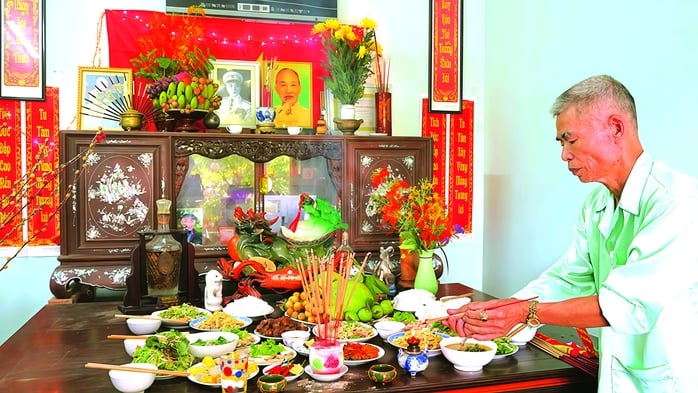
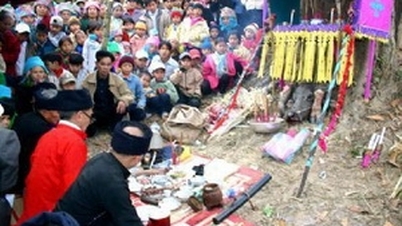
A ceremonial meal offered to ancestors in Le Thuy commune, Quang Tri province. Photo: HOANG PHUC
2. My mother-in-law is a traditional Hue woman. In her youth, she always prepared a lavish New Year's Eve feast, a truly extravagant meal, both as a hobby and to welcome her children home from afar and to entertain relatives who came to visit.
When my grandmother was still in Hue, on the afternoon of the 30th of Tet (Lunar New Year's Eve), I said goodbye to Hanoi and went back to Hue to celebrate Tet. The weather was just as cold as in Hanoi, but I could smell a distinctly different aroma of food wafting through the air, as well as the characteristic scent of incense smoke in Hue.
Every year, the Tet feast includes braised pork with shrimp and sour pickles, served with fresh vegetables such as thinly sliced figs, herbs, unripe bananas, starfruit, banh tet (sticky rice cake), pickled vegetables, fried mackerel in tomato sauce, stir-fried vegetables (chayote, green beans, and carrots), pork knuckle soup with enoki mushrooms and vermicelli, shrimp and pork stew or braised pork, pork marinated in fish sauce, and Hue-style nem tre (fermented pork sausage). People in Hue and Central Vietnam usually eat banh tet with salty and spicy pickled vegetables, not with sour vegetables. To make the offering more elaborate, people will prepare more of the above dishes. To avoid feeling overwhelmed by the richness, on the third day of Tet, when visiting ancestors, they might add dishes like white sticky rice with braised pork, chicken curry, beef noodle soup, or mixed noodles with chicken or duck offal... My mother also makes various kinds of jams like ginger jam and white bean jam to snack on during Tet.
On the first day of the Lunar New Year, almost every family eats a vegetarian meal. This is probably due to the habit of visiting temples on the first day of the year, where the vegetarian food is delicious and helps counteract the richness of the traditional New Year dishes, or it could simply be due to the deeply ingrained Buddhist culture. There are at least four vegetarian days in a month, so the Lunar New Year is no exception.
3. When I moved to live in Ho Chi Minh City, Tet was determined
It means something completely different. People enjoy Tet with warm sunshine and vibrant yellow apricot blossoms; it's more about celebrating Tet than eating. The ancestral offering meal is simple but not haphazard; it still possesses a subtle, almost imperceptible, sophistication.
A typical example is braised pork with duck eggs. Simple yet delicious, it requires selecting a young coconut that's neither too young nor too old, with a rich, sweet flavor. When simmered, it creates a beautiful, natural reddish-brown color for the pork without needing much artificial coloring. Using a young coconut will make the stew sour quickly, while using an old coconut will cause the broth to become oily if simmered for too long. The pork should be a large piece of pork belly with the ribs removed, tied with string to prevent it from breaking apart during the long simmering process. Watching this braised pork stew is just as labor-intensive as cooking sticky rice cakes. This dish is best enjoyed with quick-pickled mustard greens.
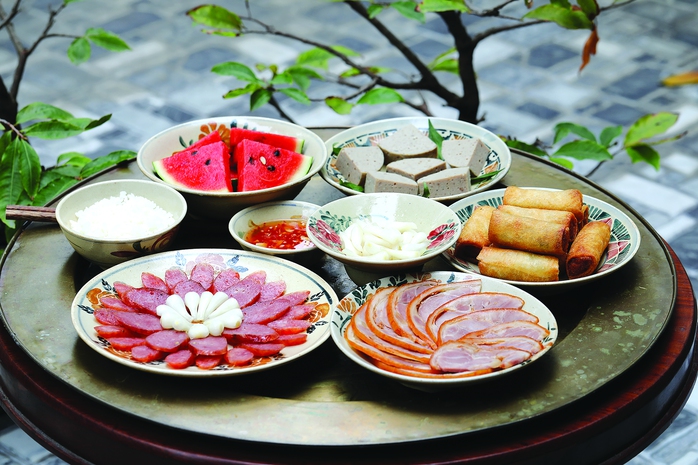
Southern Vietnamese Tet feast
Furthermore, they also stuff snakehead fish with finely chopped wood ear mushrooms to make bitter melon soup, secretly wishing that with the arrival of the new year, all the hardships of the previous year will vanish. Snacks on the Tet feast table include Chinese sausage or pickled shallots with dried shrimp, and adding a few slices of century egg makes it even more appealing.
Tet (Vietnamese New Year) also features the traditional spring rolls with taro, shrimp, and pork, wrapped in crispy wheat flour wrappers. According to many sources, Hanoi spring rolls originated from these rolls but were modified to suit Hanoi's taste, replacing the wrapper with rice paper made from rice flour.
Even in just three major provinces and cities, the Tet (Lunar New Year) dishes are so diverse. With 54 ethnic groups in Vietnam, the list of Tet dishes would be incredibly long. This demonstrates the immense richness and diversity of cuisine across the North, Central, and South of Vietnam. While the Tet meals may differ, they all share a common sentiment: reverence for ancestors and the bonding of family members.
Source: https://nld.com.vn/co-xuan-3-mien-196260211155549632.htm





















































Comment (0)