

Minister of Information and Communications Nguyen Manh Hung emphasized that if Vietnam wants to become a developed, high-income country, digital transformation is mandatory.

Prime Minister Pham Minh Chinh and delegates attend the National Digital Transformation Day program on October 10. Photo: Hai Nguyen
The digital economy is growing at a rate 3-4 times higher than GDP.
On the morning of October 10th, in Hanoi, Politburo member and Prime Minister Pham Minh Chinh, Chairman of the National Committee on Digital Transformation, attended the National Digital Transformation Day program organized by the Ministry of Information and Communications (MIC).
Attending the program were Minister of Information and Communications Nguyen Manh Hung - Vice Chairman of the National Committee on Digital Transformation; members of the Central Committee of the Party, and leaders of central ministries and agencies.

Prime Minister Pham Minh Chinh and delegates attending the program. Photo: Hai Nguyen
Speaking at the event, Minister Nguyen Manh Hung emphasized that if Vietnam wants to become a developed, high-income country, digital transformation is essential.
Digital transformation is developing rapidly because it creates a digital economy with a growth rate 3-4 times higher than GDP growth. Digital transformation is sustainable development because it consumes fewer resources and generates and multiplies data.
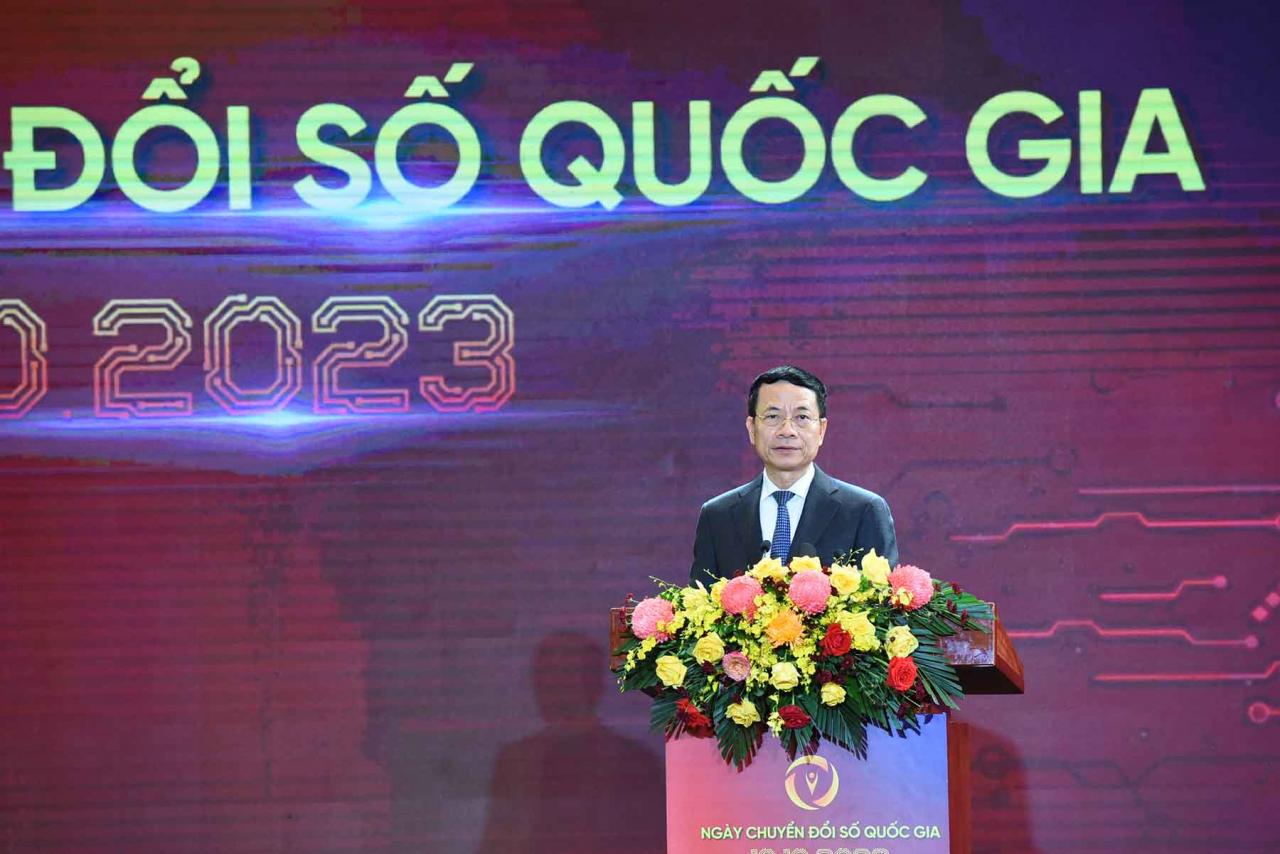
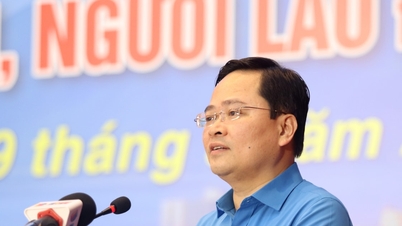
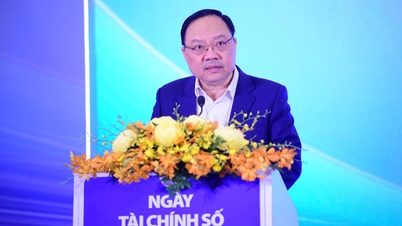
Minister of Information and Communications Nguyen Manh Hung delivers a speech. Photo: Hai Nguyen
According to Minister Nguyen Manh Hung, digital transformation increases the resilience of the economy because the digital environment is contactless and distance-free. Digital transformation is inclusive development; anyone, anywhere, with mobile coverage and a smartphone, can access all digital services, leaving no one behind.
"We have entered the fourth year of digital transformation. 2020 was the year of launching the national digital transformation, the year of raising awareness about digital transformation. 2021 is the year of a comprehensive rehearsal of the national digital transformation in the context of the pandemic."
"2022 is the year of action, the year we define digital transformation as a new development method, the year to bring all people's activities to the digital environment using Vietnam's digital platforms," Minister Nguyen Manh Hung reiterated.
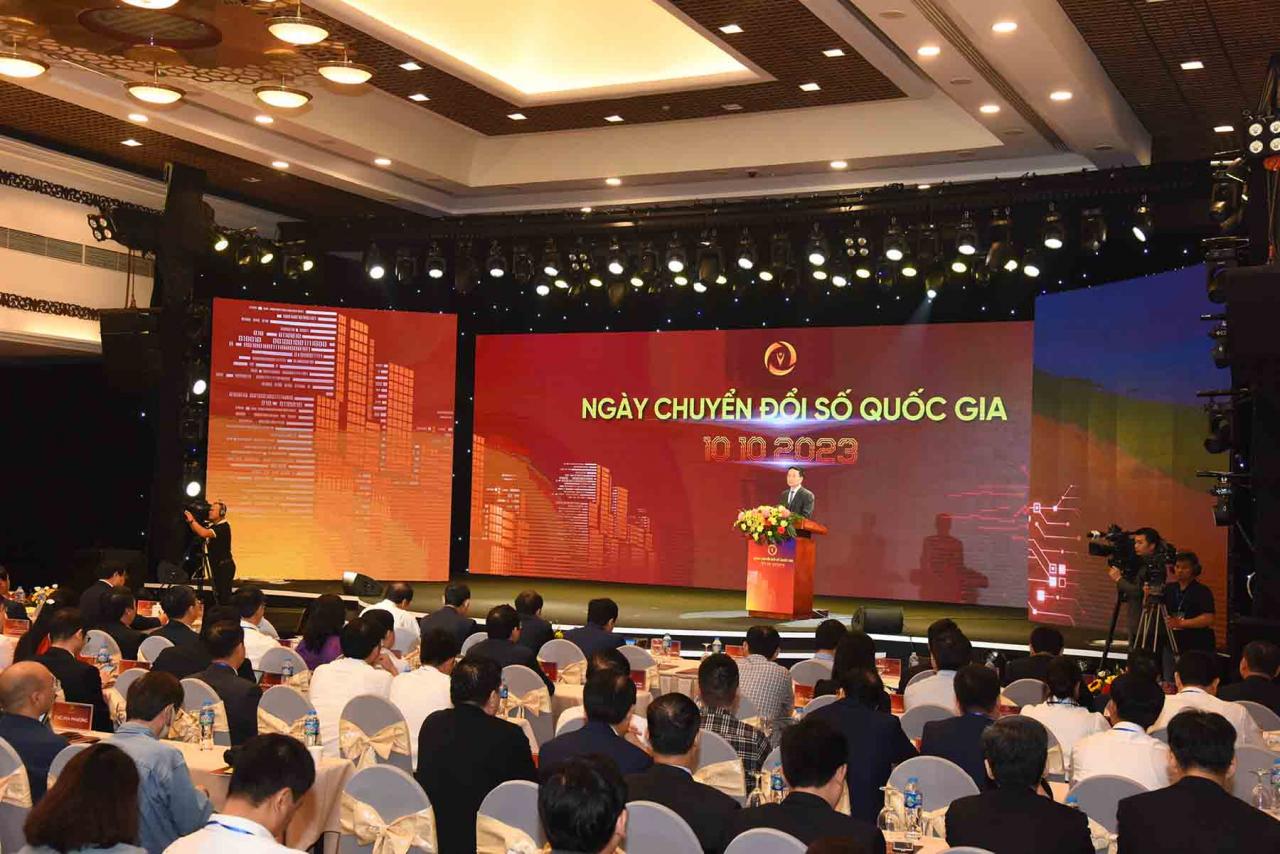
Overview of the National Digital Transformation Day program. Photo: Hai Nguyen
Regarding 2023, Minister Nguyen Manh Hung stated that it is the year of national digital data, creating new value from data. 2023 is a year to generate practical results, utilizing new technologies, high technology, and especially artificial intelligence to solve specific problems facing Vietnam.
According to the Minister, the digital economy is based on new resources, resources created by humans that are inexhaustible. For the first time in human history, instead of depleting resources, humans are creating resources for development.
Furthermore, in cyberspace, whoever controls the digital platform controls the data. The person who controls the data will be the one who makes the decisions.
Therefore, if Vietnam's digital transformation is not based on Vietnamese digital platforms, the main beneficiaries of digital transformation will not be Vietnam.
Vietnam's digital platform is the key and breakthrough solution for Vietnam's digital transformation. Vietnam's digital transformation has become nationwide and comprehensive. The goal of digital literacy has always been identified as a central focus. Our country now has nearly 100,000 community digital technology teams in every village and hamlet to guide people in their digital transformation.
To achieve rapid and sustainable digital transformation, we must walk on two legs. First, we must quickly popularize the basics through nationwide shared digital platforms. Second, we must quickly embrace new technologies through experimentation.
Developing 4 virtual assistants
The Minister stated that 2023 was also a year of explosive growth in the field of AI. The dream of every citizen, every civil servant, having a personal assistant. The dream of empowering people, of nearly 3 million workers and civil servants, and of hundreds of millions of Vietnamese people, has become a reality.
The ICT industry is currently deploying four key virtual assistants.
One example is a virtual assistant that supports the legislative field by detecting inconsistencies and overlaps between legal texts, which are now so numerous that they are beyond human detection.
Secondly, there are virtual assistants that support the executive branch. These assistants help civil servants perform their duties according to regulations. Civil servants ask questions about their work, and the virtual assistant will find the answers from the relevant legal regulations.
Thirdly, there is the virtual assistant for the judicial system. This virtual assistant supports judges, specifically by assisting with the search for legislation, case law, etc.
Fourth, virtual assistants provide legal support to citizens, answering their questions related to laws and government regulations.
Laodong.vn



![[Photo] General Secretary and President To Lam presides over the meeting to approve the draft report on the results of the second inspection by the Politburo of the Standing Committee of the Hanoi City Party Committee.](https://vphoto.vietnam.vn/thumb/1200x675/vietnam/resource/IMAGE/2026/05/26/1779789811432_a2-bnd-4430-9620-jpg.webp)






























































































Comment (0)