

 |
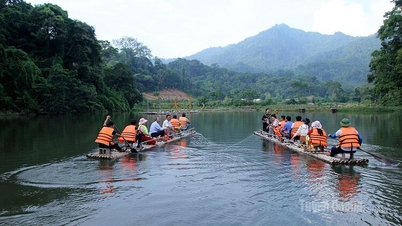
| The boat racing activity is organized in conjunction with events and festivals at Thanh Toan tiled bridge to attract tourists. |
Identifying and leveraging the strengths of each region.
Recently, the People's Committee of Hue City issued Plan No. 188/KH-UBND dated April 2, 2026, on identifying and promoting the tourism strengths of each region. Accordingly, there are four distinct experiential regions: the heritage region - Perfume River - traditional craft villages and Hue gardens; the coastal region - Tam Giang lagoon - fishing village culture and fishing livelihoods; the mountainous region - waterfalls and streams - indigenous ethnic culture; and the ecological agricultural region - rural villages - OCOP experiences.
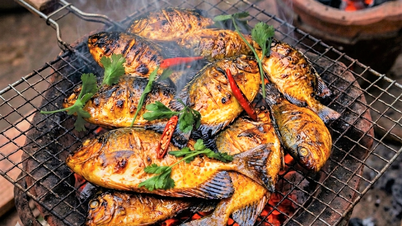
Besides zoning, the city also clearly defines the scope and potential for development orientation. Wards and communes along the Perfume River and near the city center, with advantages in Hue's garden houses, traditional craft villages, distinctive cuisine , and favorable infrastructure, such as Kim Long, Thuy Xuan, Phu Xuan, Vy Da, Hoa Chau, My Thuong, Duong No, Thanh Thuy… are located within the heritage area of the Perfume River, traditional craft villages, and garden houses. Priority will be given to developing the system of garden houses, ancient villages, traditional craft villages, and riverside ecological spaces; developing products such as Hue garden house experiences, traditional cuisine, small-scale homestays, handicraft workshops (experiential sessions), and riverside agricultural tourism.
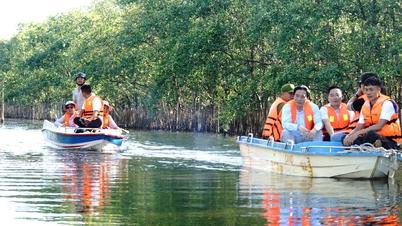
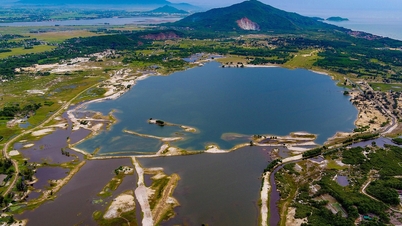
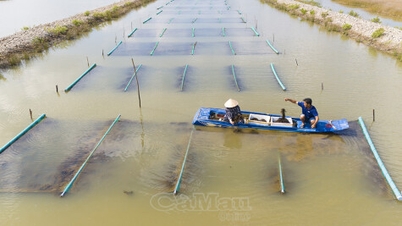
The communes bordering the Tam Giang - Cau Hai lagoon and the coast, with their unique lagoon ecosystem, fishing village culture, and marine landscape, including Phong Quang, Thuan An, Phu Vang, Vinh Loc, Phu Vinh, Chan May - Lang Co, Phu Loc, Loc An, Dan Dien, etc., are identified as being within the Tam Giang lagoon - fishing village culture and fishing livelihood zone. The city and the tourism industry will focus on exploiting the ecological value of the lagoon and sea; developing community-based tourism models linked to fishing livelihoods, fishing experiences, seafood cuisine, and fishing village tours. In addition, community-based tourism will be connected with beach resort tourism.
For mountainous areas – ecological features of streams and waterfalls – and indigenous ethnic culture, the designated area will encompass mountainous and semi-mountainous communes with unique forest ecosystems, streams, waterfalls, and ethnic cultures, including the communes of Nam Dong, Long Quang, Khe Tre, Phu Bai (Duong Hoa), Hung Loc, Binh Dien, Chan May - Lang Co, and A Luoi 1, 2, 3, 4, and 5. The city and tourism sector will focus on developing ecotourism linked to streams, waterfalls, natural forests, and trekking (adventure tourism, long-distance hiking). Preservation and promotion of the cultural values of ethnic minorities will be linked to the exploitation of local cuisine and products. In addition, efforts will be focused on upgrading and improving existing tourist destinations in a sustainable and environmentally friendly manner. The development of community-based accommodation models (homestays) on an appropriate scale will also be pursued.
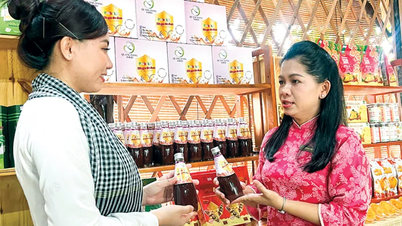
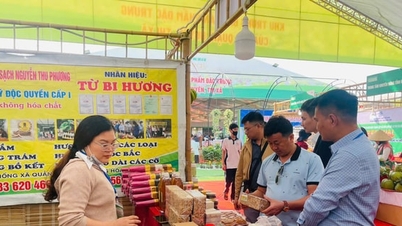
Meanwhile, suburban and hilly communes that still maintain their distinctive agricultural spaces—such as Kim Tra, Huong Tra, Quang Dien, and Huong An—will be included in the OCOP ecological agricultural zone. The orientation for this zone is to develop agricultural tourism models such as farmstays, seasonal experiences, and educational tourism linked to environmental education and green agriculture. Connecting OCOP products with on-site production, processing, and consumption experiences will contribute to enhancing the value of local products. Furthermore, the advantage of proximity to urban areas will be leveraged to develop short-term and weekend tourism products to meet market demand.
Development linked to advantages
Zoning is not just about spatial arrangement, but about restructuring tourism products in terms of experiential depth. Each region needs to create its own unique identity, thereby forming a chain of interconnected products, rather than competing in a repetitive manner.
A long-standing reality in many localities is that tourism development has not been truly systematic, products are similar, and the linkages between localities, and between localities and travel businesses, remain weak. Once each region has been clearly defined, the requirement is to strengthen connections to form valuable routes and product clusters.
Mr. Tran Thanh Tu, Director of Tu Tran Trading & Tourism Co., Ltd., believes that with Hue's tourism potential, detailed planning and the organization of a rational and effective development model for each region are appropriate. In particular, it is necessary to maximize strengths and invest strategically in established tourist areas and potential regions that have not yet been exploited. In addition, it is necessary to identify the main target market that suits the characteristics of each region.
According to Tran Thi Hoai Tram, Director of the Department of Tourism, the Department has been coordinating with localities to conduct investigations, surveys, and assessments of the current state of tourism resources, technical infrastructure, environmental conditions, and tourism development potential in communes and wards throughout the province. Based on this, potential areas will be selected for the development of ecotourism and community-based tourism models, with priority given to investment in the 2026-2027 period.
Based on this orientation, the tourism sector will focus on developing distinctive tourism products, services, and models for each region; supporting the creation of product narratives, designing brand identities, and standardizing explanatory content for each destination model; and strengthening linkages with travel agencies to develop themed tours and inter-regional tours. In addition, efforts will be intensified in promotion and training and developing human resources.
Source: https://huengaynay.vn/du-lich/dinh-hinh-khai-thac-tiem-nang-du-lich-theo-vung-165676.html


![[Photo] General Secretary and President To Lam presides over the meeting to approve the draft report on the results of the second inspection by the Politburo of the Standing Committee of the Hanoi City Party Committee.](https://vphoto.vietnam.vn/thumb/1200x675/vietnam/resource/IMAGE/2026/05/26/1779789811432_a2-bnd-4430-9620-jpg.webp)















































Comment (0)