


However, experts and businesses warn that it is necessary to act quickly and proactively to not miss golden opportunities and transform advantages into sustainable value chains.
Export breakthrough but many potentials remain untapped
The Comprehensive and Progressive Agreement for Trans -Pacific Partnership (CPTPP) has created a particularly attractive tariff incentive mechanism, paving the way for Vietnamese goods to penetrate deeper into the markets of American countries such as Canada, Mexico, and Peru. According to the commitment roadmap in CPTPP, thousands of tax lines are deeply cut, towards 0%, helping Vietnamese goods increase their price competitiveness compared to competitors without FTAs.
To date, management agencies have had many solutions to support and institutionalize these commitments. Specifically, the Ministry of Finance has issued a Decree amending the CPTPP preferential export tariff schedule for the 2022-2027 period, accordingly, the average tax rate will gradually decrease, creating the most favorable conditions for export enterprises. This is a clear demonstration of the Government's efforts in turning the agreement's incentives into practical competitive advantages.
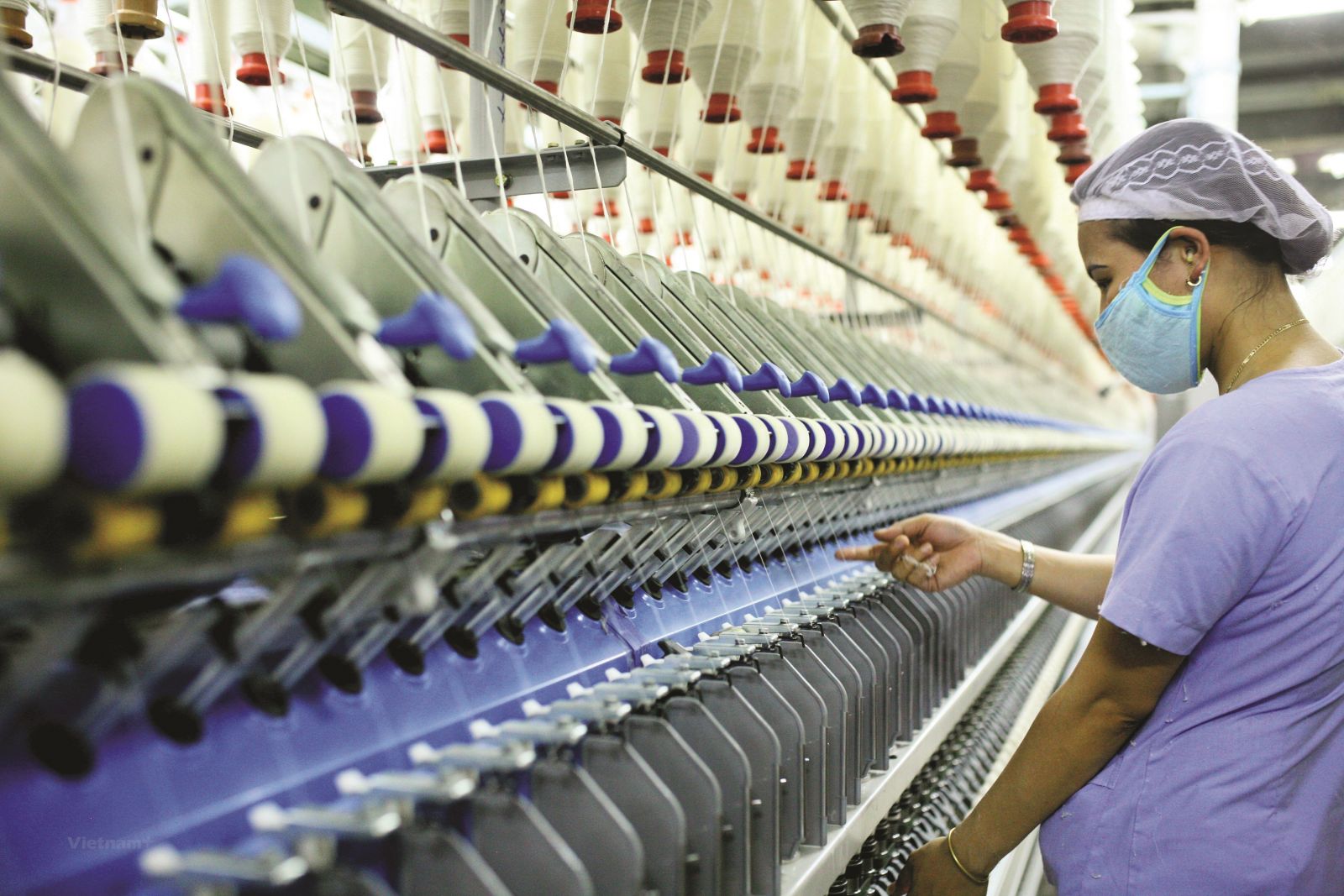
Although tax incentives from CPTPP are very attractive, the rate of incentive utilization (using CPTPP C/O) by Vietnamese enterprises is still not high.
In fact, the effectiveness of CPTPP has been confirmed through trade data. According to the Ministry of Industry and Trade , by the end of October 2025, trade turnover between Vietnam and CPTPP members had reached 102.8 billion USD, an increase of 20.6% over the same period last year. Of which, Vietnam's exports reached 58.3 billion USD, an impressive growth of 26%. Although this growth occurred across the bloc, new and potential markets such as Canada and Mexico are showing significant breakthroughs in key products such as textiles, footwear, and seafood. The leader of the Import-Export Department (Ministry of Industry and Trade) assessed that this growth is not only in quantity but also a strategic shift, reducing dependence on traditional markets, consolidating Vietnam's position in the global supply chain.
However, great opportunities always come with challenges. Mr. Ngo Chung Khanh, Deputy Director of the Multilateral Trade Policy Department (Ministry of Industry and Trade) recommended that although the tax incentives from CPTPP are very attractive, the rate of preferential utilization (using CPTPP C/O) by Vietnamese enterprises is still not high. Especially for distant markets such as the Americas, this rate is still modest. "Enterprises need to be more proactive in researching and mastering the Rules of Origin (ROO) - the key factor to enjoy preferential taxes, along with the declaration mechanism and related documents. Passivity can cause businesses to miss out on important comparative advantages, especially when the tax reduction roadmap is going into a deeper stage," Mr. Khanh emphasized.
From a business perspective, many large exporters have quickly recognized the "golden opportunity" in the American markets. A representative of a textile and garment enterprise in Hung Yen shared: "The fact that tariffs on Vietnamese textiles and garments entering Mexico are significantly lower than those in other major markets has opened up a new direction. We are diversifying our orders, reducing risks from fluctuations in some key markets. The Americas with three large CPTPP markets are a strategic exit."
However, the challenge of rules of origin remains a major barrier for many small and medium enterprises (SMEs). To enjoy incentives, products must prove their origin and the localization rate must meet strict requirements. For example, in the textile and garment industry, Mr. Truong Van Cam - Vice President and General Secretary of the Vietnam Textile and Apparel Association said that proving "domestic production facilities" sometimes requires changes in technology, investment in supply chains and complex document management systems that many SMEs cannot meet immediately. This is the time when stronger support from management agencies and professional consulting organizations is needed.
From tax incentives to value added: Sustainable development strategy
In order for CPTPP tax incentives to not only be an initial advantage but to truly become a strong and sustainable driving force for Vietnam's exports to the Americas, there needs to be a shift in thinking and synchronous action from both the state and the business community.
Regarding this issue, Dr. Nguyen Minh Phong, an economic expert, warned that if Vietnam only focuses on tax incentives without fundamentally improving the quality of goods, enhancing production capacity and optimizing the supply chain, it risks being "stuck in the hole". This means that the initial tax incentives will no longer be advantageous when other competitors also participate in similar agreements or when businesses fail to increase the added value of their products. The core factor to maintain high and sustainable growth is investment in technology, green transformation and supply chain transparency.

Tax incentives from CPTPP are a strategic "window of opportunity" for Vietnamese exports to break through to the Americas.
To overcome current barriers, economic experts believe that it is necessary to support businesses with training courses and seminars that focus on practical guidance on specific rules of origin for each industry, how to collect documents, and the process of applying for a C/O under the CPTPP. At the same time, the Ministry of Industry and Trade needs to build a more comprehensive "support ecosystem", including initial financial support for consulting costs and supply chain inspections so that businesses can prove origin more easily and effectively.
In addition, we need a mechanism to monitor and evaluate the effectiveness of tax incentives periodically. The Government and the Ministry of Industry and Trade need to regularly review and grasp the practical difficulties that businesses encounter when applying for C/O or when goods are inspected in the importing country to adjust policies and procedures in a timely manner. This ensures that preferential policies are not blocked in the implementation stage, helping businesses make the most of the negotiated benefits.
On the other hand, it is necessary to promote the role of Vietnamese trade offices abroad, especially in CPTPP countries in the Americas. Trade offices need to become more active bridges, not only stopping at trade promotion but also supporting Vietnamese enterprises in finding import partners, building sustainable distribution channels, and resolving trade disputes that may arise. This helps Vietnamese goods not only "go" but also "stand firm" and "develop" in the American market.
From the association's perspective, Mr. Cam recommends that businesses, in addition to taking advantage of tax incentives, need to focus on three core strategies: diversifying raw material supply sources to meet strict rules of origin; investing in deep processing and high technology to increase product added value, avoiding just stopping at exporting raw goods; and increasing compliance with international standards on labor, environment, and social responsibility, as these are non-tariff barriers that are increasingly valued by developed markets such as Canada and Mexico.
It can be seen that tax incentives from CPTPP are a strategic "window of opportunity" for Vietnam's exports to break through to the Americas, as the 26% export growth data has proven. However, for this leverage to fully exert its power, it requires close and proactive coordination from both the state through timely support policies and in-depth training and businesses by improving technology, enhancing management capacity, and seriously and systematically complying with rules of origin. Only then can Vietnam transform tax incentives into sustainable competitive advantages, building a solid product brand in the potential American market./.
Source: https://vtv.vn/don-bay-thue-cptpp-canh-cua-ty-do-cho-hang-viet-tai-thi-truong-chau-my-10025112710284899.htm
























































































Comment (0)