

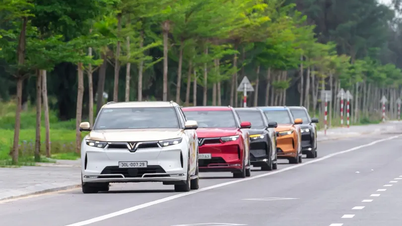
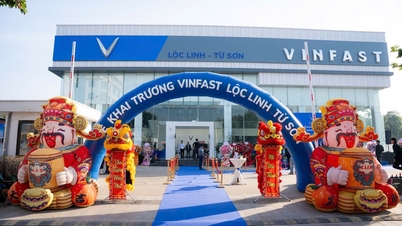
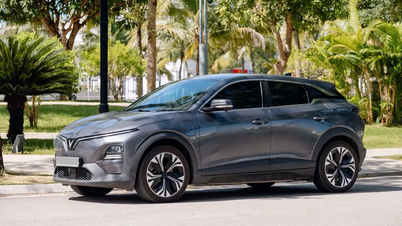
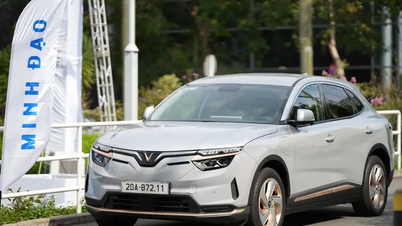
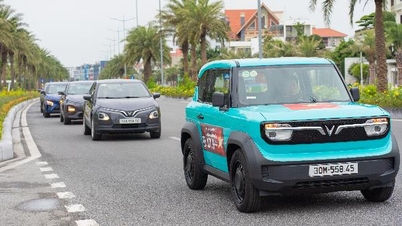
Sales of electric vehicles in ASEAN are growing rapidly while gasoline vehicles are slowing, but the pace of electrification varies across markets. Vietnam stands out, where VinFast leads the way with 110,362 EVs sold through September, according to data compiled by PwC, surpassing BYD’s 70,000 EVs. The majority of VinFast’s sales (94%) occurred in Vietnam; in the third quarter, related parties bought 26% of the vehicles, according to VinFast’s financial report.

Vietnam's unexpected acceleration, regional market differentiation
“Vietnam’s growth has definitely been a big surprise,” Akshay Prasad, director of consultancy Arthur D. Little, told Nikkei Asia. Total auto sales in Vietnam (commercial and passenger vehicles, both electric and gasoline) rose 18% in January-September compared to the same period in 2024; electric vehicle sales increased 84%, according to PwC.
Across ASEAN, PwC said EV sales in the first three quarters of the year were up 62% year-on-year, but penetration is uneven, with Malaysia and the Philippines lagging behind among the bloc’s six major economies . By October, EVs accounted for 4.5% of new registrations in Malaysia, according to government data, compared with the regional average of 17%, according to PwC.
Charging infrastructure: local advantages and concentration risks
Lack of consistent charging infrastructure is a bottleneck in many places. According to the Thai Electric Vehicle Association, the country leads the way with 21 companies operating more than 4,000 public charging points. Vietnam is highly ranked in PwC’s ASEAN EV Readiness Index and has already exceeded its target this year, according to Yossapong Laoonual of Thonburi University of Technology.
In contrast, Vietnam is the only market with a single dominant operator: V-Green (a subsidiary of VinFast) manages about 3,000 charging stations. This level of concentration raises concerns about the risk of monopoly, which could hinder market expansion. In the US, Tesla’s network only expanded its reach more widely after the White House requested the opening of some stations “to expand freedom of movement for all electric vehicles.” “That’s the government’s involvement,” Yossapong said, suggesting compliance with international technical standards to make the network globally accessible.
Another perspective, according to Mohammad Mudasser, transaction director of PwC Vietnam: users mainly charge at home or at work, so the lack of public stations is not a decisive barrier. “Convenience is the key to the future,” he said.

Fragmented supply chains and the “one ASEAN hub” problem
In terms of manufacturing, fragmented supply chains are a weakness as ASEAN seeks to expand localization. “If each market remains isolated, some companies will have to withdraw or cease operations,” Akshay Prasad said. Patrick Ziechmann (PwC) believes that ASEAN should operate as a single automotive hub, despite the current low intra-regional trade barriers. According to him, countries want to create local jobs and receive technology transfer, so the “closed” trend remains.
Yossapong suggests dividing roles based on advantages: Indonesia (nickel) for batteries, Thailand for mechanical components, Malaysia leveraging the electronics supply chain. “ASEAN can cooperate,” he said.
China increases influence; joint ventures with Vietnamese enterprises
While VinFast dominates in Vietnam, Chinese brands dominate many other ASEAN markets. Some are teaming up with Vietnamese partners: Chery (Anhui) cooperates with Geleximco; Wuling (Guangxi) joins hands with TMT Motors. Mohammad Mudasser predicts that in about 5 years, the market will become less concentrated when more Chinese brands join.
In Thailand, once known as the “Detroit of Asia,” the rapid expansion of Chinese brands raises the question of domestic companies’ competitiveness. “Many Chinese companies have not yet cooperated with Thai companies,” Yossapong said, suggesting that domestic companies increase their R&D capacity.
Market performance: Malaysia, Indonesia, Thailand
PwC said the ASEAN car market shrank 1.5% in the first three quarters, largely due to a decline in gasoline vehicles. Malaysia, though larger than Indonesia in the second quarter, still has a low EV penetration; by October, EVs accounted for 4.5% of new registrations, up 44% from the same period last year, with sales led by BYD, Proton, Tesla, Zeekr and BMW. Proton said electric vehicles accounted for 22% of its market share this year; Perodua (42% of total deliveries) is expected to enter the EV market in December, which could drive mass demand.
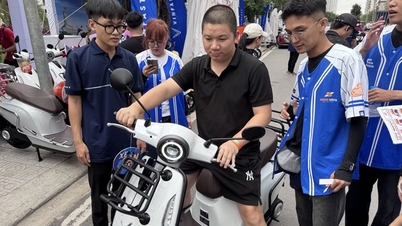
Indonesia, previously the biggest market, is being hit by a shrinking middle class and tightening financial conditions; electric scooters are growing rapidly. From about 2% of two-wheelers being electric last year, current trends suggest it could reach 30% by 2030, according to the International Energy Agency. In Thailand, despite economic hardship and cautious credit (banks are still wary of EVs), electric vehicle registrations through October were 8% higher than for the whole of 2024, according to an industry association.
Key figures
Indicators | Data | Source |
|---|---|---|
VinFast EV sales by September | 110,362 vehicles | PwC, VinFast report |
Sales ratio in Vietnam | 94% | VinFast Report |
Sales to related parties (Q3) | 26% | VinFast Report |
BYD EV Sales | More than 70,000 vehicles | PwC |
ASEAN EV Growth (3 Quarters) | +62% YoY | PwC |
Vietnam: Electric Vehicle Growth (1–9) | +84% | PwC |
Vietnam: total automobile market (1–9) | +18% | PwC |
Malaysia: EV weighting (up to 10) | 4.5% new registrations | Government of Malaysia, PwC |
Regional average EV | 17% | PwC |
ASEAN: Automobile Market (3 Quarters) | -1.5% | PwC |
Thailand: public charging points | >4,000, 21 businesses | Thai Electric Vehicle Association |
Vietnam: V-Green charging station | About 3,000 | Yossapong Laoonual |
Indonesia: electric two-wheelers | ~2% (last year) → 30% (2030, forecast) | IEA |
Conclude
VinFast is leading the ASEAN electric vehicle market thanks to its domestic advantage and widespread charging infrastructure, in the context of increasing but fragmented EV demand in the region by country. The challenge for the next phase is to standardize infrastructure, reduce network concentration to encourage competition, and coordinate the supply chain within the region to expand production scale.
Source: https://baonghean.vn/vinfast-dan-dau-xe-dien-asean-khi-xe-xang-chung-lai-10313276.html


![[Photo] Prime Minister Pham Minh Chinh receives President of Cuba's Latin American News Agency](/_next/image?url=https%3A%2F%2Fvphoto.vietnam.vn%2Fthumb%2F1200x675%2Fvietnam%2Fresource%2FIMAGE%2F2025%2F12%2F01%2F1764569497815_dsc-2890-jpg.webp&w=3840&q=75)






















































































Comment (0)