

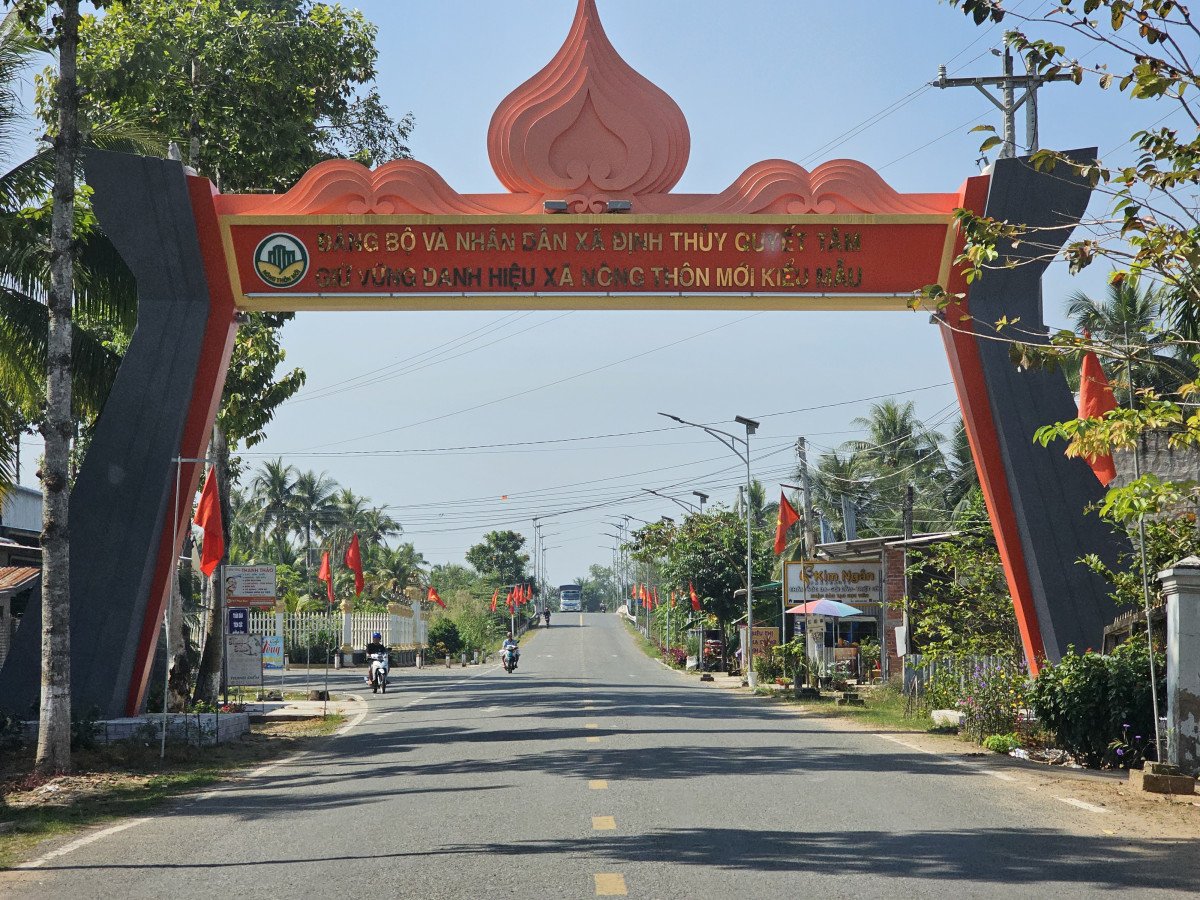
Dinh Thuy commune in Mo Cay Nam district is undergoing a significant transformation.
The Uprising goes down in history.
Throughout the years 1957-1959, the revolution in South Vietnam faced extreme difficulties. The US-Diem regime intensified its repressive and terrorist activities, setting up military posts everywhere, launching the "denounce communism, exterminate communists" campaign, applying Law 10/59, openly outlawing patriotic Vietnamese, and carrying out executions throughout South Vietnam to kill all revolutionary forces and our compatriots, committing countless horrific crimes; the entire South was engulfed in a sea of blood. In the province, by the end of 1959, they had imprisoned over 17,000 people, and thousands more were killed. From a province with over 2,000 party members and 117 branches, only 162 party members and 18 branches remained, but the Party Committee and the people of the province always maintained their faith in the Party and President Ho Chi Minh. The Resolution of the 15th Central Committee Conference (2nd term) came as a much-needed rain after a drought, fulfilling the aspirations and desires of the entire population. The Provincial Party Committee led the people in a three-pronged attack ( political , military, and armed forces) to rise up in rebellion.
On the night of January 17, 1960, the people from various communes and hamlets were mobilized to participate in all activities of the uprising to eliminate evil, break the enemy's grip, destroy the collaborators, and eliminate traitors. This began in three communes of Mo Cay district: Dinh Thuy, Binh Khanh, and Phuoc Hiep, then spread to the districts of Giong Trom, Chau Thanh, Thanh Phu, and Ba Tri, and quickly spread throughout the province, region, and the entire area, becoming the "Dong Khoi" movement with earth-shattering power that nothing could suppress.
One year after the Uprising, the province leveled more than 100 military outposts, dismantled all the collaborators and repressive apparatus in the countryside, 51 out of 115 communes were completely liberated, and 21 out of 115 communes were partially liberated; the people took control of the entire rural area, and people's governments were established at all levels.
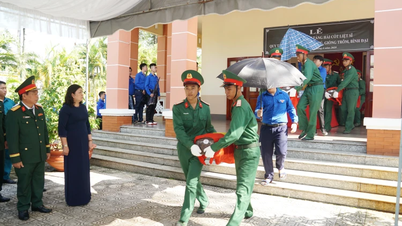
It can be said that the 1960 Uprising in the province has gone down in history as a leading example, a glorious highlight in our nation's resistance war against the US to save the country.
According to the Provincial Party Secretary and Chairwoman of the Provincial People's Council, Ho Thi Hoang Yen, the province proudly affirms that the victory of the Dong Khoi movement is a testament, clarifying the correctness and timeliness of the Resolution of the 15th Central Committee Conference (2nd term); it is a valuable lesson about "the Party's will and the people's hearts," about the close bond between the Party and the people; about the close relationship between "the army and the people"; about the mobilization and encouragement of all the capabilities of the masses... which is the decisive factor in the success of all revolutionary movements.
With the victories and historical significance of the 1960 Uprising and the 1968 Tet Offensive, the province was honored to be commended by the Regional Command, awarded the eight golden words "Heroic Uprising, Defeating the Americans, Destroying the Puppet Regime," and the Women's Liberation Association - "The Long-Haired Army" - was awarded the title of Hero of the People's Armed Forces.
The cradle of the Đồng Khởi uprising is getting a new look.
We had the opportunity to return to Dinh Thuy commune (Mo Cay Nam district), the "cradle of the Dong Khoi movement," and witness the many changes in this land that was once ravaged by bombs and bullets. We were impressed by the clean, paved village roads and alleys, and the many new, sturdy, and spacious houses that have sprung up side by side. Vo Trung Tin, Vice Chairman of the Dinh Thuy Commune People's Committee, said that Dinh Thuy today is no longer isolated; this once difficult revolutionary homeland has transformed, becoming the first commune in Mo Cay Nam district to achieve the model new rural standard, with an average per capita income of 79 million VND/person/year (in 2024).
Witnessing the changes and development of her hometown, Mrs. Tran Thi Xem (born in 1954) from Dinh Nghia hamlet, Dinh Thuy commune, Mo Cay Nam district shared: “After the liberation of the South, Dinh Thuy commune faced poverty, underdeveloped economy, and transportation mainly by boat... Now, the main road has developed, and the nearly 25km from the commune to Ben Tre City is easily accessible by car. Electricity, roads, schools, and health stations are all available, and the people's lives have improved many times over.”
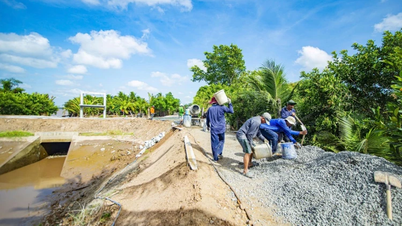
According to Nguyen Quoc Hung, Vice Chairman of the People's Committee of Mo Cay Nam District, Dinh Thuy commune in particular and Mo Cay Nam district in general are undergoing strong transformations in socio -economic development, and the material and spiritual lives of the people are constantly improving. Specifically, 100% of district, commune, hamlet, and inter-hamlet roads, and 94.4% of alleyways and village roads have been invested in to meet the prescribed standards; many production models with high economic efficiency have been built, replicated, and effectively implemented. Currently, the district has 15 concentrated coconut growing areas in 15 communes with a total area of 16,082 hectares… In 2024, Mo Cay Nam was recognized as a New Rural District by the Prime Minister, becoming the second New Rural District in the province.
"New Uprising" breaks through and rises
The more honored and proud of the historical traditions of the Đồng Khởi uprising, the more conscious the Party Committee and people of the province are of their responsibility in the cause of building and developing their homeland. Accordingly, the province always preserves and cultivates the tradition of patriotism, the indomitable will and resilience in combat, applying, creating and promoting the tradition of the 1960 Đồng Khởi uprising, concretizing it through many policies, resolutions, and revolutionary action programs, especially the "New Đồng Khởi" emulation movement, which has connected and formed a continuous and endless flow between the past, present, and future. In this, the core remains the valuable lesson of "the Party's will and the people's hearts," the unity and solidarity of the entire Party, people, and military of the province in all revolutionary action movements, the unwavering will to overcome all difficulties and obstacles; staying close to the people, staying close to the land, and working for the people and for the development of the homeland.
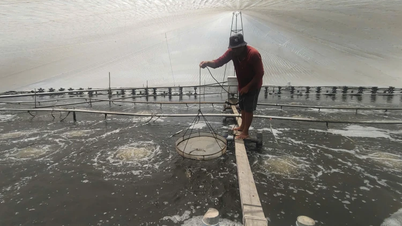
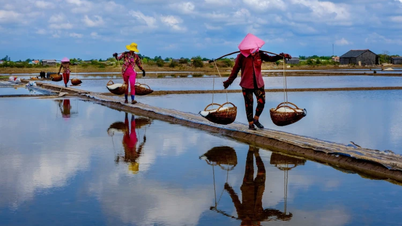
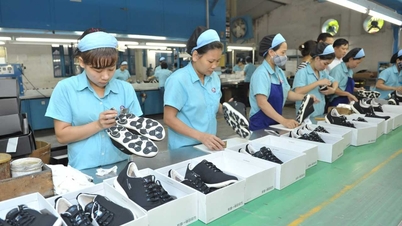
With the motto "Two legs, three prongs" in the "New Uprising" emulation movement, the province has achieved many outstanding results in various fields, contributing to the successful implementation of the goals and tasks of the annual resolutions and the resolutions of the Provincial Party Congress over many terms. Particularly in 2024, for the first time, the province achieved an import-export turnover of over 2.2 billion USD, of which exports reached 1.75 billion USD, and coconut exports reached 0.52 billion USD. State budget revenue in the province reached 6,632.9 billion VND, of which domestic revenue was 6,513 billion VND, reaching 113.97% of the central government's assigned target, 112.42% of the local target, and an increase of 18.62% compared to the same period. In the first quarter of 2025 alone, the province's economy continued to grow steadily, with a GRDP growth rate of 7.46%. In particular, the industrial and construction sector recorded an impressive growth rate of 12.24%, becoming the main pillar driving the economy…
According to the Standing Vice Chairman of the Provincial People's Committee, Nguyen Truc Son, the locality is determined to strive to achieve the highest possible results in socio-economic targets for the 5-year period 2021-2025; creating momentum and impetus for the growth phase from 2026-2030 with the goal of achieving double-digit growth from 2026.
“The good news is that on April 19, 2025, the Rach Mieu 2 bridge connecting Tien Giang and Ben Tre provinces will be completed (4 months ahead of schedule); on April 27, 2025, the two access roads to the Rach Mieu 2 bridge will be inaugurated. The Rach Mieu 2 bridge is expected to be operational in September 2025. This will contribute to meeting the increasing transportation demand on National Highway 60, relieving pressure on the existing Rach Mieu bridge; and at the same time, promote socio-economic development and ensure national defense and security of the provinces and cities in the Mekong Delta region in particular and the whole country in general.” (Permanent Vice Chairman of the Provincial People's Committee Nguyen Truc Son) |
Text and photos: Chuong Dai
Source: https://baodongkhoi.vn/dong-khoi-khang-chien-den-dong-khoi-moi-vuon-len-25042025-a145710.html


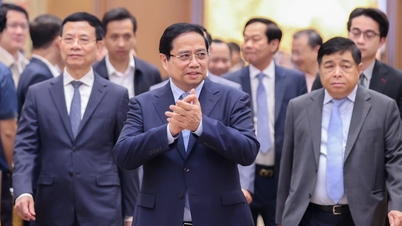
![[Photo] Prime Minister Pham Minh Chinh presides over a meeting on private sector economic development.](/_next/image?url=https%3A%2F%2Fvphoto.vietnam.vn%2Fthumb%2F1200x675%2Fvietnam%2Fresource%2FIMAGE%2F2025%2F12%2F20%2F1766237501876_thiet-ke-chua-co-ten-40-png.webp&w=3840&q=75)




























































Comment (0)