

Overcoming difficulties to become wealthy.
We arrived in the Tánh Linh rice-growing region right during the peak harvest season of the winter-spring crop. The Suối Tum rice fields in Hamlet 2, Bắc Ruộng commune, resembled a golden silk carpet under the early morning sun. Nestled amidst these rice paddies was the house of Mr. Cáp Kim Thành, bustling with the laughter and chatter of many farmers. “Today we’re visiting Mr. Thành’s VietGAP-certified rice production model, using his new rice variety, to learn how to reduce the cost of producing clean rice,” one farmer said with a laugh. Then, looking at Mr. Thành seriously, he added, “We must learn Mr. Thành’s methods of getting rich.”
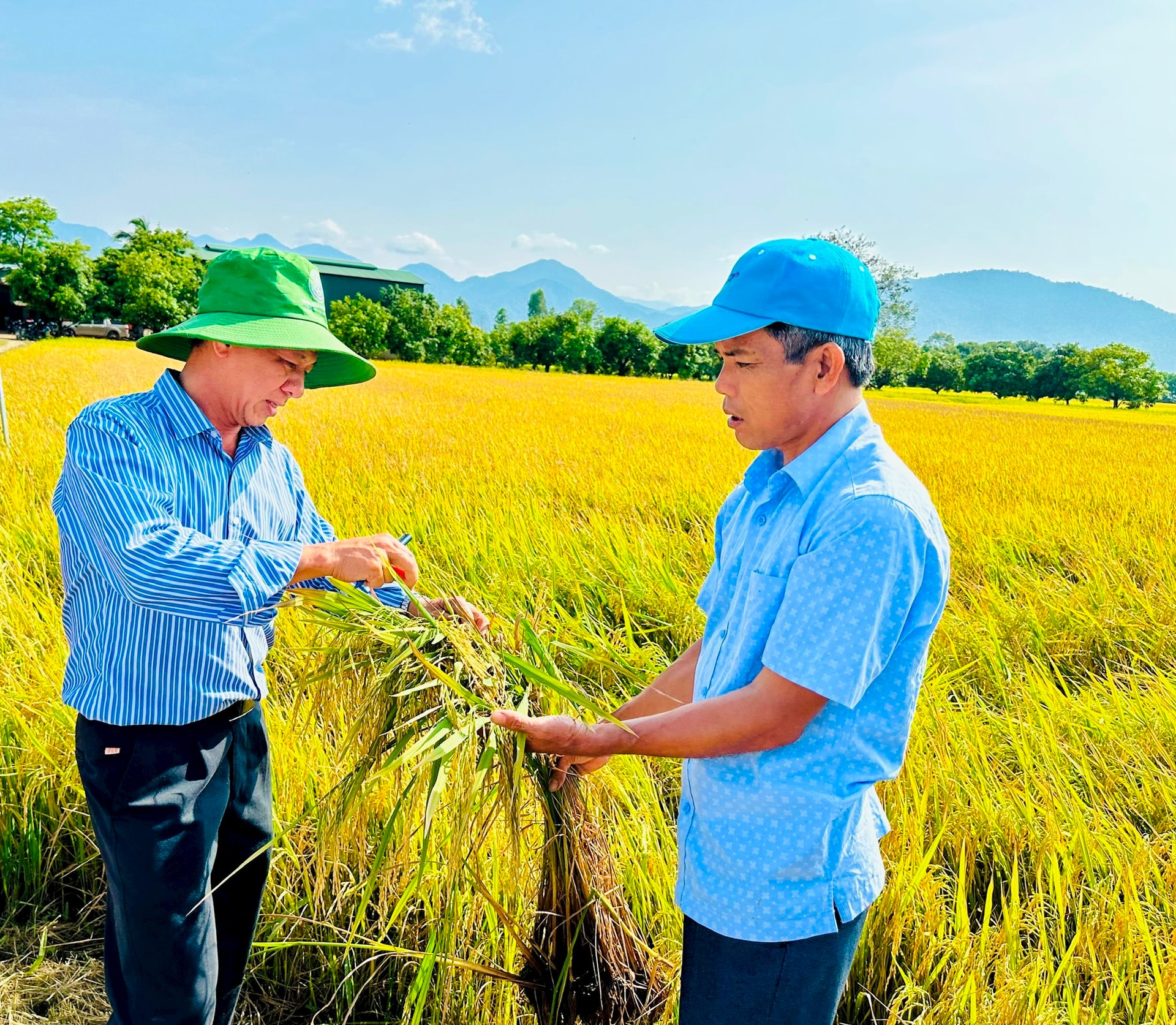
Mr. Thanh shared: “Currently, our family cultivates 3.5 hectares of durian and mango trees, and 11 hectares of rice paddies, along with providing agricultural machinery services, selling certified rice seeds, and baled straw…”. The family's single-story house is quite simple but spacious. Behind the house are dozens of durian trees in their harvesting season and a fish pond. In front of the house, right at the edge of the ripening rice fields, are rows of mango trees preparing for harvest. With such a property, it's easy to understand why the family's average income after deducting expenses reaches nearly 1 billion VND per year. This also provides seasonal employment for 10-18 local laborers, with salaries ranging from 9-14 million VND per month per person.
That achievement, for someone in their 50s like him, is the result of a long process. "My hometown is in Hai Xuan commune, Hai Lang district, Quang Tri province. My family has a tradition of farming. After moving with my parents to settle in Bac Ruong area, Tanh Linh district when I was young, life was very difficult and full of hardships." From 1996, when he was only 24 years old and one year after getting married, he and his wife reclaimed land in the Suoi Tum area, 3 km from their home. Because this was a high hilly area, they gradually reclaimed and converted the land to grow rice... With the land, the couple borrowed capital to invest in planting two rice crops interspersed with one corn crop and digging a 1-hectare fish pond, but they failed and lost hundreds of millions of dong, so he switched to planting three rice crops…
Having risen to wealth through agricultural production, Mr. Thanh is now the Chairman of the Farmers' Association in the commune. Therefore, his wife, Ms. Tam, still manages everything while he is working. In the evenings, the couple takes their flashlights and goes to the fields to check on the crops, opening and closing the irrigation systems to care for each rice pad. As a result, this year's winter-spring rice crop averaged about 85 quintals/hectare, with some well-cared-for fields achieving yields of up to 92 quintals/hectare.
An elderly farmer whispered to me, "Mr. and Mrs. Thanh are also members of the Bac Ruong 1 Agricultural Service Cooperative, which has achieved VietGAP certification. Mrs. Tam – Mr. Thanh's wife – even drives the tractor herself during peak season."
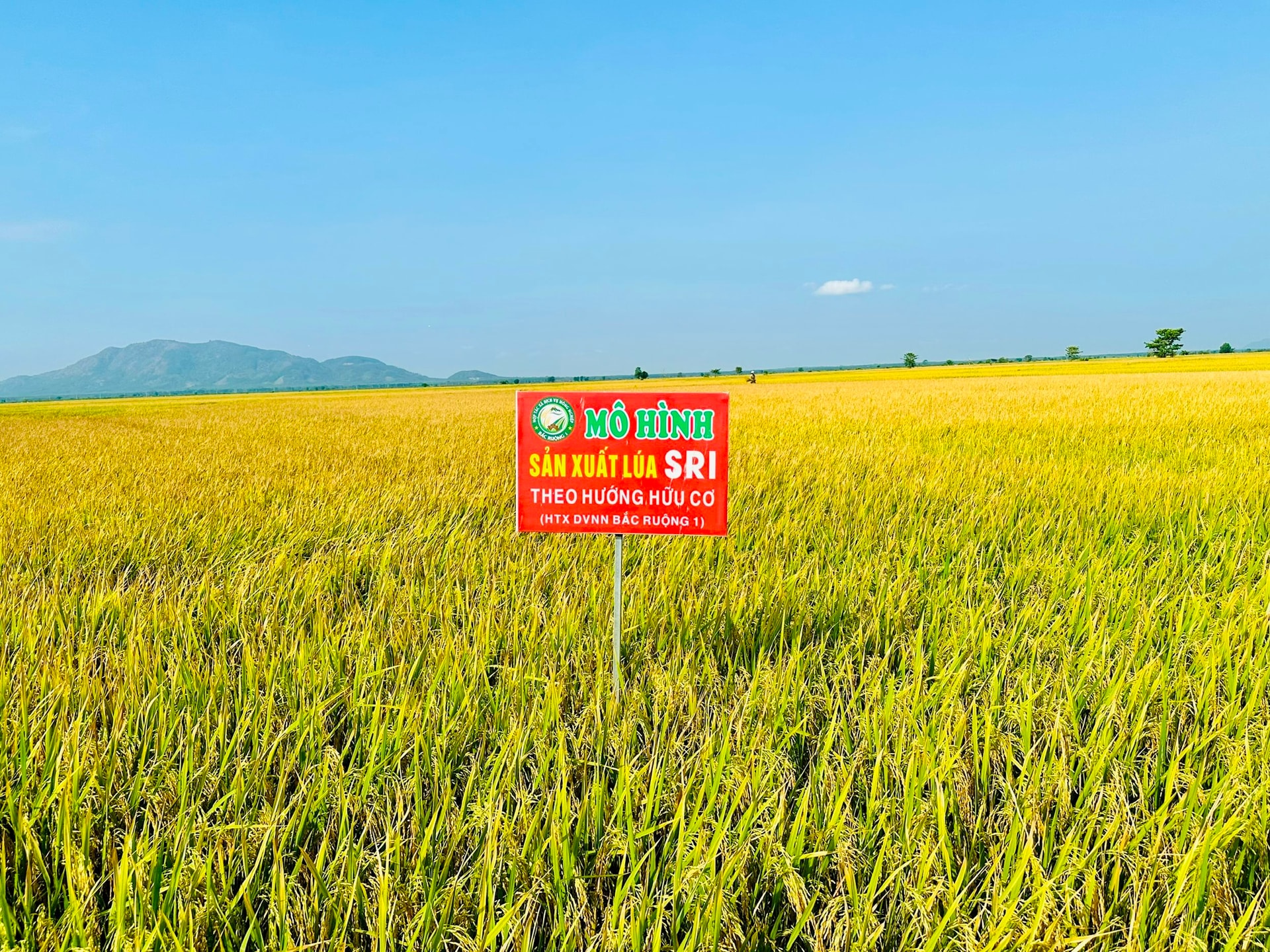
From 2010 to the present, he has consistently received the title of outstanding farmer at the provincial and district levels. Over the past few years, his family and several members of the cooperative have been applying new rice varieties. For example, this year they mainly cultivated the high-yielding OM 18 variety, combined with clean production processes, and together with some members, have created the Bac Ruong rice brand, which is increasingly popular in the market.
Paving the way for the future of Tánh Linh rice brand.
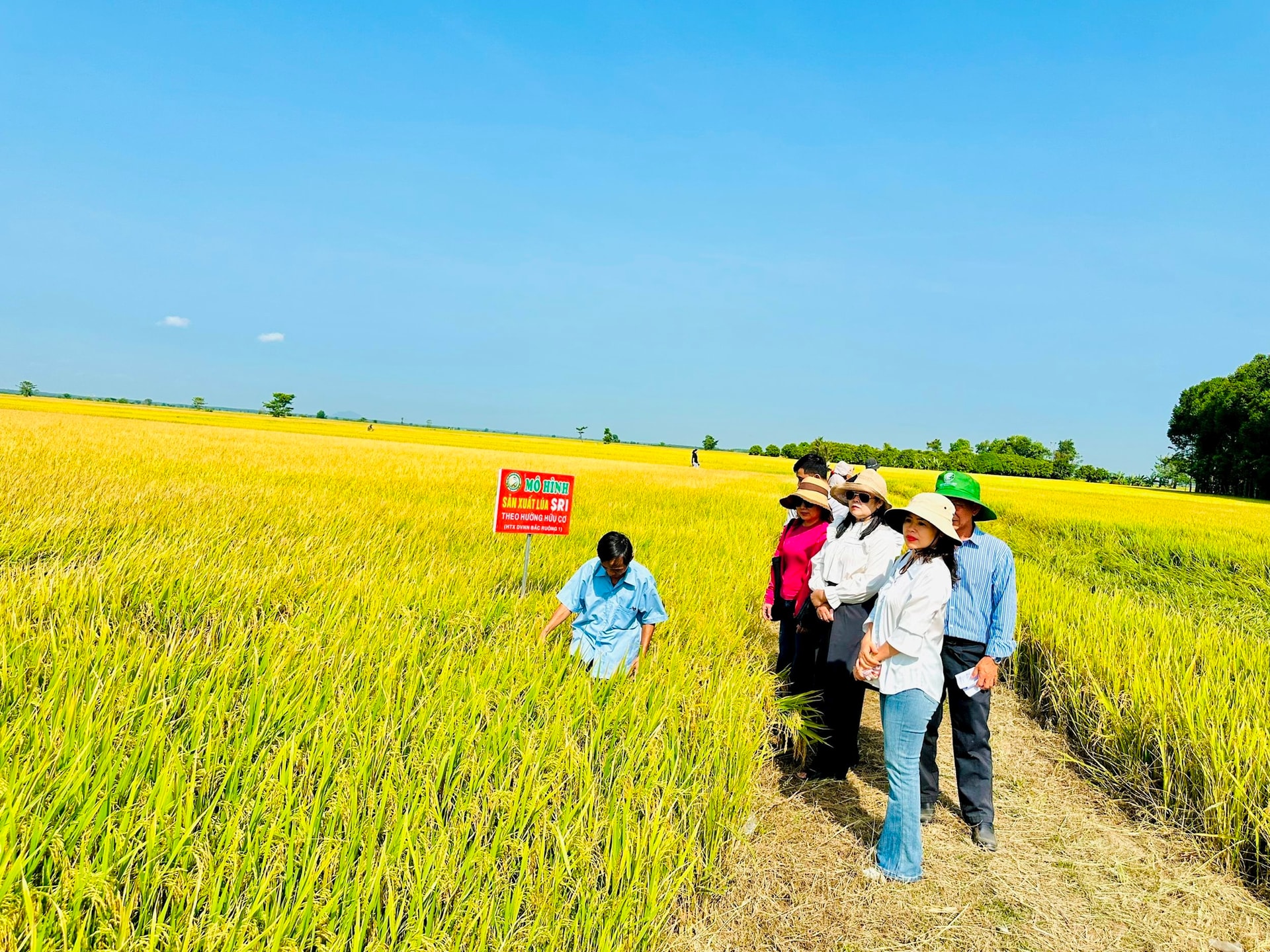
Tanh Linh is one of the southern rice granaries of the province. In this winter-spring crop season alone, the district's rice production area has exceeded 9,000 hectares, with an average yield of 75 quintals/hectare, resulting in a total production of nearly 69,000 tons. In particular, in Bac Ruong commune, farmers are focusing on investing in high-quality rice production. For example, in the 2025 winter-spring crop season, Bac Ruong commune planted 1,300 hectares, primarily rice, accounting for 1,100 hectares.
According to Mr. Nguyen Huu Phuoc, Vice Chairman of the People's Committee of Tanh Linh district, the success of the winter-spring rice crop in the district is due to the relatively favorable water resources for production. In addition, the attention and support from the provincial agricultural extension model and the capital support for rice land have created conditions for localities to access scientific and technical advancements and select suitable rice varieties for the local climate and soil conditions.
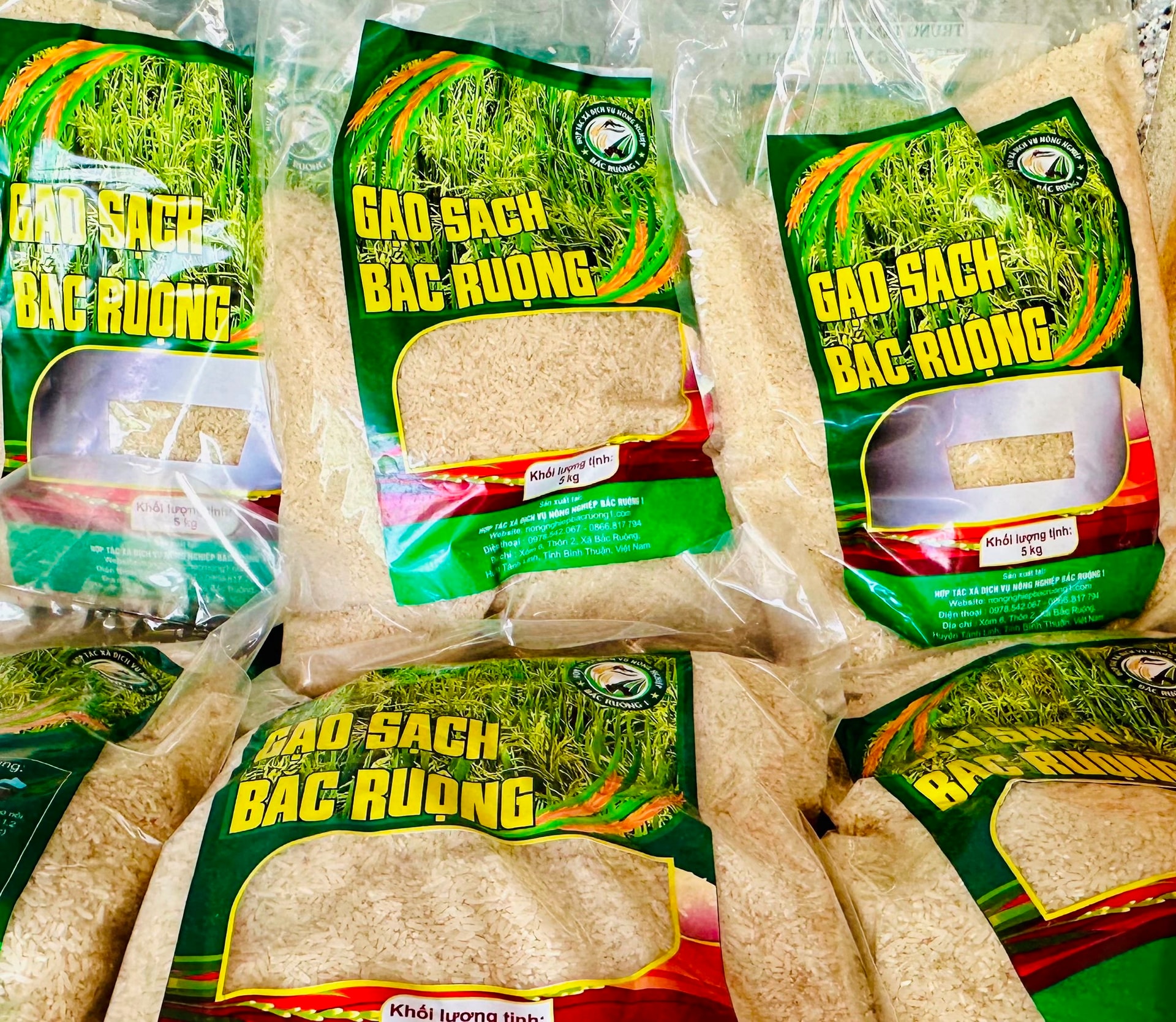
Returning to the success of farmer Cap Kim Thanh, when we met him, he eagerly "showed off" the achievements he had made after the efforts of his family and the Bac Ruong 1 Agricultural Service Cooperative. This included the "Certificate of Food Safety Compliance" recently awarded by the Binh Thuan Provincial Department of Agricultural Product Quality and Rural Development in mid-April 2025. Prior to that, in 2023, the Bac Ruong Commune Rice Seed Production Cooperative had received VietGAP certification, thanks to the support and guidance of the Agricultural Extension Center. Mr. Thanh also introduced the "Bac Ruong Clean Rice" brand of the Bac Ruong 1 Agricultural Service Cooperative, a 3-star OCOP product, which is constantly improving its packaging to meet the demand for clean and safe agricultural products. This includes varieties such as OM 18 and ST25, each with a distinctive white color, packaged in 5 kg and 10 kg bags. What I've noticed when I've tasted this brand of whole-grain rice is that the cooked rice is soft, fragrant, and delicious...
Although clean production is not easy, Mr. Thanh's family and the members of the cooperative are all aiming to create safe agricultural products for themselves and consumers. That is also the reason why Mr. Thanh's family is one of the pioneering households participating in the "rice production according to VietGAP or equivalent standards - Footprint-free fields" model on a scale of 10 hectares in the commune during the 2025 winter-spring crop season, implemented by the Provincial Agricultural Extension Center and related units. The goal is to support farmers with good agricultural production processes, create safe products, help increase the value of agricultural products, and increase economic efficiency on the same area of cultivated land.
When assessing the 2025 winter-spring crop season, the leaders of the Tánh Linh District People's Committee acknowledged several difficulties in rice production in the area. These include the continued practice of dense planting by farmers, which has not yet been resolved, leading to increased disease outbreaks and reduced yields. Furthermore, production linkages are hampered by the fragmented and small-scale nature of farmers' land. Moreover, the supply of equipment such as rice transplanters and seeders is limited, requiring farmers to rent them from distant localities and transport them to the area. Following this winter-spring season, farmers in the province, along with those in Tánh Linh, are preparing to plant the summer-autumn crop around mid-May 2025 with various solutions regarding crop varieties, application of advanced techniques, and improvement of irrigation systems... aiming for another bountiful harvest.
Shortly after returning from my trip to Bac Ruong, I received an invitation to meet Mr. Cap Kim Thanh in Phan Thiet. Our brief conversation early that morning only increased my admiration for him. He's a workaholic who diligently attended the entire training course organized by the Binh Thuan Farmers' Association for farmers' officials throughout the province. Witnessing his family's successful farming practices and considering his role as a Farmers' Association official in the commune, I firmly believe that in the future, many more farmers in Tanh Linh will gain access to advanced scientific knowledge and production methods to increase their income and become wealthy through agriculture. Together, they will strive for breakthroughs, achieve success, and develop sustainably on their homeland – the rice granary of southern Binh Thuan – where "the rice fields promise bountiful harvests."
In VietGAP and equivalent rice production models, farmers are introduced to new scientific and technical advancements such as cluster sowing and drone spraying. In the model implemented by Mr. Thanh, the actual yield in the winter-spring crop was 3.8 quintals/hectare higher than outside the model. Furthermore, the effectiveness of applying organic fertilizer as a base dressing and sparse sowing helps the plants grow strong and develop well, thus limiting disease and reducing investment costs...
The Provincial Agricultural Extension Center stated.
Source: https://baobinhthuan.com.vn/dong-lua-hen-ho-nhung-mua-gat-129707.html

![[Photo] The General Secretary attends the groundbreaking ceremony for the construction of the Truong Ha Primary and Secondary Boarding School.](/_next/image?url=https%3A%2F%2Fvphoto.vietnam.vn%2Fthumb%2F1200x675%2Fvietnam%2Fresource%2FIMAGE%2F2026%2F01%2F28%2F1769604498277_vna-potal-tong-bi-thu-du-le-khoi-cong-xay-dung-cong-trinh-truong-pho-thong-noi-tru-tieu-hoc-va-trung-hoc-co-so-truong-ha-8556822-jpg.webp&w=3840&q=75)


![[Photo] Commemorating the unwavering friendship between Vietnam and Laos](/_next/image?url=https%3A%2F%2Fvphoto.vietnam.vn%2Fthumb%2F1200x675%2Fvietnam%2Fresource%2FIMAGE%2F2026%2F01%2F27%2F1769518372051_ndo_br_1-jpg.webp&w=3840&q=75)


![[Photo] National Assembly Chairman Tran Thanh Man meets with former leaders of the National Assembly from various periods.](/_next/image?url=https%3A%2F%2Fvphoto.vietnam.vn%2Fthumb%2F402x226%2Fvietnam%2Fresource%2FIMAGE%2F2026%2F01%2F28%2F1769601014034_anh-man-hinh-2026-01-28-luc-18-50-04.png&w=3840&q=75)


![OCOP during Tet season: [Part 3] Ultra-thin rice paper takes off.](/_next/image?url=https%3A%2F%2Fvphoto.vietnam.vn%2Fthumb%2F402x226%2Fvietnam%2Fresource%2FIMAGE%2F2026%2F01%2F28%2F1769562783429_004-194121_651-081010.jpeg&w=3840&q=75)


![OCOP during Tet season: [Part 2] Hoa Thanh incense village glows red.](/_next/image?url=https%3A%2F%2Fvphoto.vietnam.vn%2Fthumb%2F402x226%2Fvietnam%2Fresource%2FIMAGE%2F2026%2F01%2F27%2F1769480573807_505139049_683408031333867_2820052735775418136_n-180643_808-092229.jpeg&w=3840&q=75)
![OCOP during Tet season: [Part 1] Ba Den custard apples in their 'golden season'](/_next/image?url=https%3A%2F%2Fvphoto.vietnam.vn%2Fthumb%2F402x226%2Fvietnam%2Fresource%2FIMAGE%2F2026%2F01%2F26%2F1769417540049_03-174213_554-154843.jpeg&w=3840&q=75)


Comment (0)