

Granting more power to local authorities and investors.
According to a report by the Ministry of Construction , the draft Law on Construction (amended) revises 141 out of 168 articles of the current law, restructuring it into 8 chapters with 96 articles, focusing on 4 major policy groups, including a group of policies on strong decentralization and delegation of power in construction management.
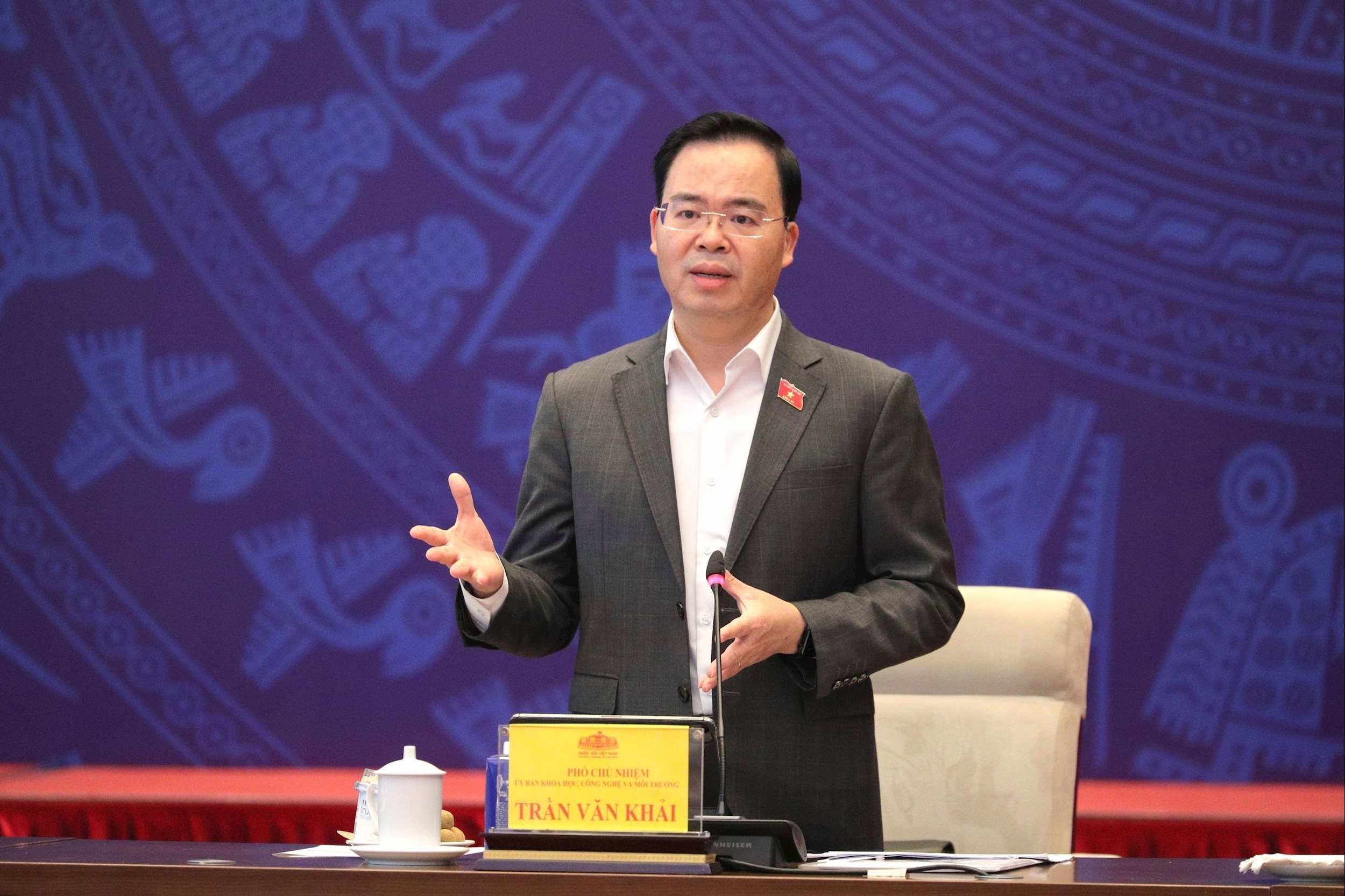
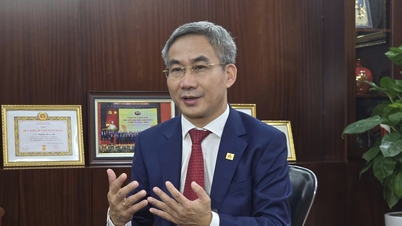
Deputy Chairman of the Committee on Science , Technology and Environment Tran Van Khai noted that the draft law has consistently upheld the principle of promoting decentralization from the central to local levels, coupled with increased transparency of responsibilities for entities involved in construction activities. This means granting more autonomy to localities and investors. The draft law also limits the detailed regulation of technical issues within the law itself, instead delegating the authority to the Government to regulate them, creating flexibility for adjustments when needed. This is also a form of legislative "decentralization," meaning the National Assembly only enacts the legal framework, while the Government implements the specifics, aiming to increase proactiveness and responsiveness to practical situations.
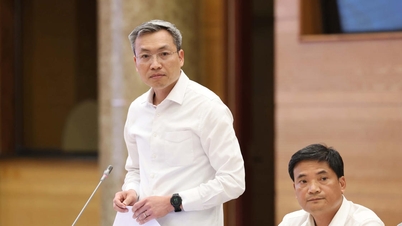
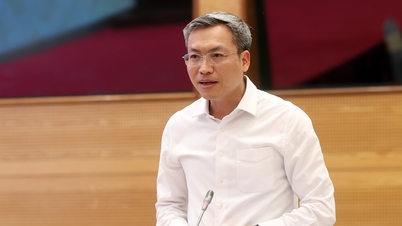
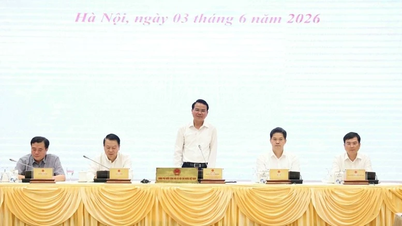
Reporting at the workshop, Deputy Minister of Construction Bui Xuan Dung stated that the draft law has clearly defined the responsibilities of state management for the Government , the Ministry of Construction, other ministries and agencies, and People's Committees at all levels. Accordingly, the Ministry of Construction and ministries managing specialized construction projects are responsible for matters related to policy development, regulations, and standards, while local authorities are responsible for organizing administrative procedures and managing the implementation of construction investment projects in their localities.
The Deputy Minister of Construction also stated that the draft law does not specify the authority to carry out administrative procedures, but instead assigns the Government to provide detailed regulations, aiming to thoroughly decentralize authority to local governments for procedures related to granting construction permits and construction practice certificates. For procedures related to appraising feasibility studies and inspecting acceptance testing, maximum decentralization will be granted to specialized agencies under the People's Committees at the provincial and commune levels, retaining central authority only for issues that are inter-provincial, inter-regional, and international; related to national defense, national security, and national sovereignty; involving highly specialized technical expertise; or related to nationally important projects and key technological projects.
The regulations specify more clearly the responsibilities of ministries and agencies in guiding and supporting localities.
Contributing to the refinement of the draft law, opinions agreed with the trend of promoting decentralization and delegation of power in construction management and concurred with the provision in the draft law that only important management contents should be retained at the central level, while boldly entrusting the rest to local authorities and investors within the framework of the law. Delegates emphasized that this is in line with the Party's policy of decentralization and delegation of power (according to Resolution 68-NQ/TW and Conclusion 19-KL/TW), and is also consistent with the process of streamlining the local government apparatus.
According to Nguyen Van Hanh, Deputy Director of the Ninh Binh Provincial Department of Construction, the draft law has made significant changes regarding project appraisal regulations. Specifically, the appraisal of construction designs following the basic design phase is no longer carried out by specialized construction agencies as before, but is now assigned to the investor. Specialized construction agencies will only appraise feasibility study reports for public investment projects, PPP projects, large-scale business investment projects, or projects with significant impacts on public safety and interests (for projects in these cases that only require an economic and technical report, appraisal by a specialized construction agency is not required). This regulation will contribute to simplifying administrative procedures, facilitating investment and business, significantly reducing the workload of specialized construction agencies, and enhancing the role of investors and the responsibilities of design and verification consultants in professional matters.
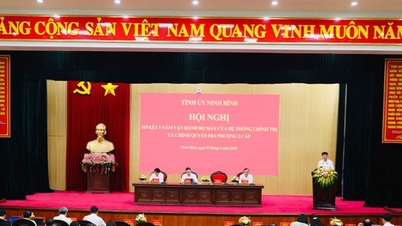
The Deputy Director of the Ninh Binh Provincial Department of Construction also stated that after implementing the two-tiered local government model, the province established a team to inspect and address difficulties at the commune level. Through practical surveys, regarding the implementation of Decree No. 140/2025/ND-CP of the Ministry of Construction on the delineation of authority of two-tiered local governments in the field of state management, and Decree No. 145/2025/ND-CP of the Government on the delineation of authority of two-tiered local governments, decentralization, and delegation in the field of urban and rural planning, the inspection teams found that localities faced many difficulties related to personnel structure and administrative apparatus while the workload was very large.
For example, in terms of personnel, Ninh Binh has 129 communes and wards, but the number of construction specialists (including personnel previously transferred from the district level) is very small, while commune and ward-level officials do not meet the professional requirements. Therefore, the construction workforce at the commune and ward levels after the merger faces significant difficulties.
Deputy Director of the Thanh Hoa Provincial Department of Construction, Dao Vu Viet, pointed out that the task of appraising projects delegated to the commune level is very large, while the local administrative apparatus is still being streamlined. Therefore, the representative of the Thanh Hoa Provincial Department of Construction proposed a regulation allowing the People's Committees of communes to invite experts to participate in the appraisal council to conduct appraisals for some important projects that have been delegated to them.
Other opinions also suggested that the draft law needs to specify more clearly the responsibilities of ministries and agencies in guiding and supporting localities, and add provisions on the responsibility of the Ministry of Construction and related agencies in monitoring and inspecting the implementation of the law at the local level, ensuring strong decentralization but without lax control.
Commenting on the content of assigning the task of preparing, submitting for appraisal, and approving public investment projects decided by the commune level, Deputy Director of the Department of Construction of Hung Yen province, Pham Viet Anh, stated that for communes that do not have the conditions to establish and maintain a professional project management board as the project owner, assigning the project owner would be difficult. Assigning the Economic Department as the project owner has experience in project management, but this unit also acts as the lead appraisal agency, which does not guarantee objectivity when it is responsible for preparing, submitting, appraising, and advising on approval. If assigned to other departments, they lack the experience and expertise in project management. Therefore, the representative of the Department of Construction of Hung Yen province requested the Ministry of Construction to consider researching and providing specific guidance to facilitate the implementation of projects by commune-level authorities.
Opinions also suggested that the draft law needs to specify more clearly the reporting and inspection regime after decentralization, as well as the responsibilities of ministries and agencies in guiding and supporting localities. Responding to this, Deputy Chairman of the Committee on Science, Technology and Environment Tran Van Khai also suggested that the drafting committee add regulations on the responsibility of the Ministry of Construction and related agencies in monitoring and inspecting the implementation of the law at the local level, ensuring "strong decentralization but not laxity," and that those who fail to fulfill their responsibilities will be punished.
Source: https://daibieunhandan.vn/du-thao-luat-xay-dung-sua-doi-phan-cap-manh-nhung-khong-buong-long-10389466.html

![[Photo] General Secretary and President To Lam presides over a meeting with the Central Organizing Committee.](https://vphoto.vietnam.vn/thumb/1200x675/vietnam/resource/IMAGE/2026/06/03/1780482764658_a1-bnd-4741-3342-jpg.webp)

![[Photo] Secretary of the National Assembly Party Committee, Chairman of the National Assembly presides over the meeting of the Standing Committee and Executive Committee of the National Assembly Party Committee.](https://vphoto.vietnam.vn/thumb/1200x675/vietnam/resource/IMAGE/2026/06/03/1780480353201_ndo_br_bnd-2585-jpg.webp)

























![[Photo] General Secretary and President To Lam attends the 14th Congress of the Vietnam Trade Union](https://vphoto.vietnam.vn/thumb/1200x675/vietnam/resource/IMAGE/2026/06/04/1780543339765_anh-man-hinh-2026-06-04-luc-10-22-07.png)




























![[Video] Sunset at Lap An Lagoon – Where the sun sets over the fishing nets](https://vphoto.vietnam.vn/thumb/1200x675/vietnam/resource/IMAGE/2026/05/31/1780192137701_beach-landscape-sea-water-nature-grass-745871-pxhere-com.jpeg)

































Comment (0)