

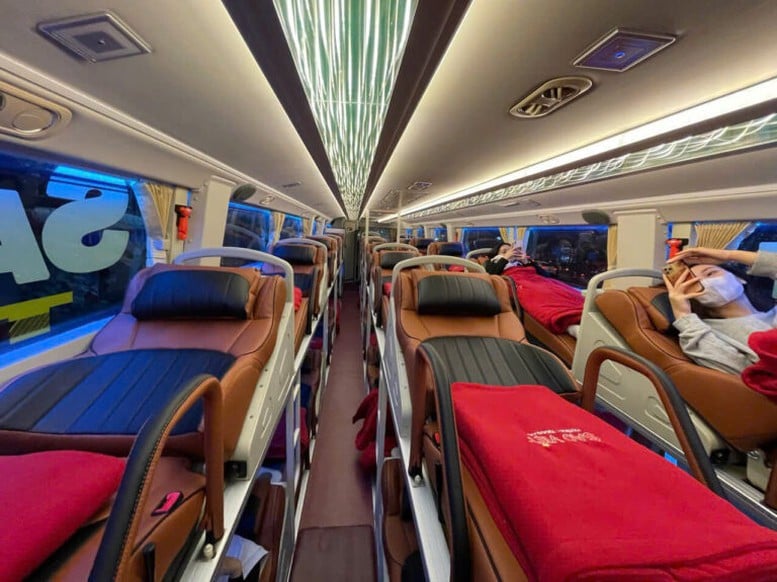
Many sleeper bus companies provide good service for people, such as the elderly and those traveling long distances, allowing them to sleep comfortably and ensuring their health.
Recently, at a conference on traffic safety and order held on August 1st by the Traffic Police Department (C08, Ministry of Public Security ) with road transport businesses, Hoang Long Transport Company Limited stated its opinion: " Sleeper buses are unsafe vehicles. Sleeper buses are essentially modified 45-seat buses; to reduce accidents, sleeper buses should be banned ."
However, many businesses and transportation experts disagree with the above viewpoint.
In fact, road transport currently plays a very significant role in a context where air, rail, and water transport still have many limitations; airfares are constantly reaching new highs; and high-speed rail has not yet been built... therefore, to meet the long-distance travel needs of the people, there is still no alternative means of transport that can replace sleeper buses in the near future.
It's not the car's fault.
According to Mr. Nguyen Van Quyen, Chairman of the Vietnam Automobile Transport Association: There is no legal basis to "ban sleeper buses." This is because all sleeper buses permitted to operate have been registered and inspected in accordance with regulations on technical safety and environmental protection. Modifications only involve the interior, and must be designed, approved, and constructed according to proper procedures by competent authorities.
" It is incorrect to conclude that a vehicle is unsafe to circulate simply because its interior has been modified (after being assessed and approved by the relevant authorities) ," Mr. Quyen stated.
According to Mr. Quyen, the cause of many accidents does not lie in the vehicle's structure but in human factors, such as using expired tires, lack of maintenance checks, or failure to comply with operating regulations. Blaming sleeper buses entirely is not objective.
Sharing the same view, Mr. Do Van Bang, Chairman of the Hanoi Transport Association, stated: Currently, 99% of sleeper buses are "original" and fully meet technical standards, not modified vehicles as previously claimed by businesses. If sleeper buses cause accidents, it's because most long-distance passenger buses are sleeper buses to meet passenger demand; seated buses are rare, so accidents occur more frequently with this type of vehicle.
"Accidents are caused by reckless driving and speeding violations, not by the vehicles themselves, and the business management unit bears some responsibility. The vast majority of accidents are due to human error; you can't blame the vehicles and then propose banning them ," Mr. Bang said.
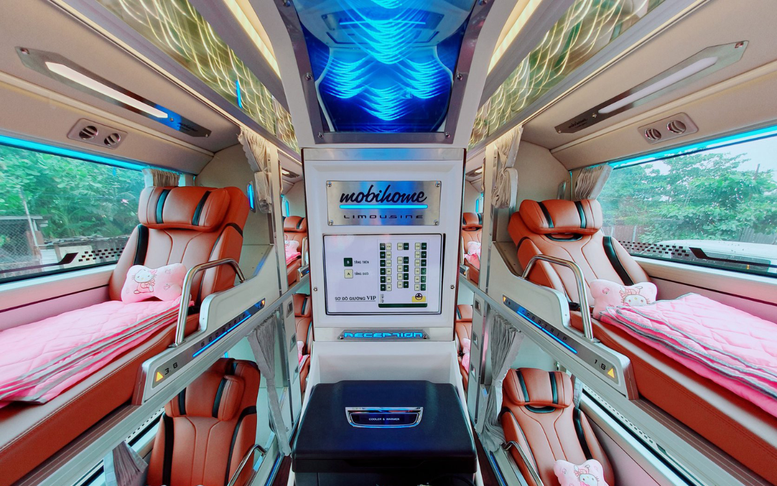
All sleeper buses permitted to operate have been registered and inspected in accordance with regulations on technical safety and environmental protection.
It should be regulated, not banned.
Mr. Do Van Bang also analyzed: According to statistics, 97% of traffic accidents are due to driver error. Therefore, to minimize accidents involving sleeper buses, the first thing to do is to tighten driver management. Next, businesses also need to strengthen supervision and comply with legal regulations; drivers need to improve their awareness and comply with the law, including regulations on speed and working hours under specific conditions…
According to transportation expert Nguyen Van Thanh, sleeper buses should not be banned because this type of service suits the needs of the people in terms of cost, method, and current infrastructure.
"The Hanoi- Dien Bien route involves dozens of hours of travel, and passengers would be very tired if they just sat in the car. In contrast, with a sleeper bus, passengers can board in Dien Bien at night, sleep soundly, and arrive in Hanoi the next morning to seek medical treatment or work; then they can travel back from Hanoi at night, sleep soundly, and arrive in Dien Bien the next morning," Mr. Thanh explained.
In addition, to reduce accidents involving passenger buses, the first step is to control the quality of vehicles, preventing modifications and additions. Secondly, the quality of drivers is crucial, especially on mountain routes at night, where two drivers should be assigned, drivers must adhere to the designated route, and drivers should be given rest periods.
Disagreeing with the proposal to ban sleeper buses, Mr. Le Trung Tinh, Chairman of the Ho Chi Minh City Passenger Transport Association, argued that instead of banning them, stricter management of this type of vehicle is needed to ensure safety. He also stressed the need to identify the root causes of accidents – whether technical faults, driver error, or infrastructure deficiencies – in order to effectively control them.
"Ho Chi Minh City has over 1,000 sleeper buses, and other provinces also have over 1,000 buses entering the city to transport and serve the people. Many sleeper bus companies provide good services for people, such as ensuring that elderly people and those from far away can sleep comfortably on the bus, thus protecting their health. Therefore, when proposing a ban on sleeper buses, relevant units need to provide specific statistics on accidents caused by sleeper buses," Mr. Tinh added.
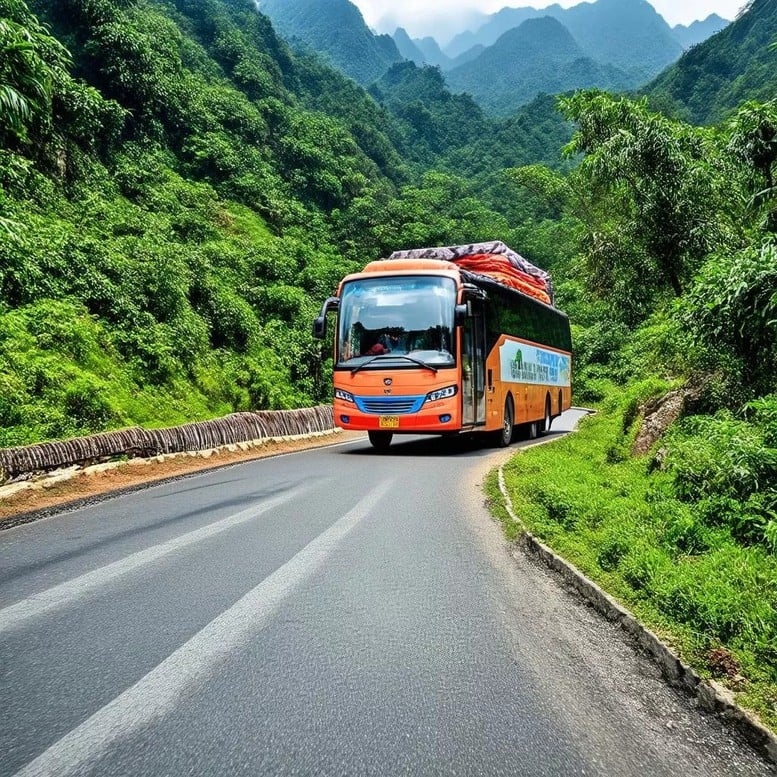
Do not use double-decker sleeper buses for operation on mountainous roads classified as level V and level VI.
Regarding traffic safety for sleeper buses, due to the specific characteristics of routes to Cao Bang province where visibility is obscured, and roads are often foggy and slippery at night, the Cao Bang Provincial Department of Construction recently issued a document requesting the heads of transportation businesses to enhance their responsibility in managing their transportation operations, monitoring traffic safety conditions, and strictly and fully implementing all procedures for ensuring traffic safety.
Businesses need to assign personnel to monitor the activities of drivers and vehicles throughout the passenger transportation process using data from vehicle tracking devices. This will allow for timely correction and reminders to drivers when speeding, exceeding continuous driving time, exceeding daily working hours, or when the vehicle tracking device is not receiving a signal. Strengthen measures to correct, remind, and strictly penalize driver violations; absolutely prohibit the use of vehicles that do not meet technical safety standards or do not have vehicle tracking devices installed.
"Do not assign drivers who do not meet the required qualifications to operate vehicles on public roads; Do not use double-decker sleeper buses on mountainous roads classified as level V and level VI," a representative from the Cao Bang Department of Construction stated.
For drivers, the Cao Bang Department of Construction requires businesses to employ drivers with appropriate driver's licenses for the type of vehicle they operate, with relevant experience and expertise in driving sleeper buses. To minimize traffic accidents at night, drivers are required to strictly adhere to the regulations of the Road Law and the Law on Road Traffic Safety, such as: driving in the correct lane, maintaining the correct speed, keeping a safe distance from the vehicle in front, avoiding and overtaking vehicles according to regulations, and absolutely not using alcohol, beer, or any stimulants or drugs while driving.
Drivers assigned to sleeper buses must meet all the required conditions. Drivers and bus companies should be reminded to use experienced drivers with many years of experience operating passenger vehicles to operate sleeper buses on routes with many steep slopes, curves, fog, and ravines, which pose a high risk of traffic accidents.
Ensure that drivers are in good health and that there are enough drivers available. Pay particular attention to reminding drivers who operate vehicles at night or who are drowsy to be replaced promptly.
Regularly remind drivers to pay attention to unusual situations on mountain passes such as landslides, fog, storms, slippery surfaces, etc., and ensure safety before allowing vehicles to proceed. Regularly educate and remind drivers and onboard staff to comply with regulations for sleeper buses.
Strengthen regular inspection and maintenance of vehicles, and absolutely prohibit the use of vehicles that do not meet technical safety and environmental protection standards in transportation business; Equip vehicles and drivers with additional warning devices such as reflective signs and reflective vests to handle situations when incidents occur on the road during rain, when visibility is limited, in fog, and especially at night.
Phan Trang
Source: https://baochinhphu.vn/dung-do-loi-cho-xe-giuong-nam-102250805155634062.htm

![[Photo] Solemn bathing ceremony and Buddha procession in Hue](https://vphoto.vietnam.vn/thumb/1200x675/vietnam/resource/IMAGE/2026/05/31/1780228263543_1-jpg.webp)

![[Photo] Admire the coral "masterpiece" amidst the million-year-old heritage of Dak Lak province.](https://vphoto.vietnam.vn/thumb/1200x675/vietnam/resource/IMAGE/2026/05/31/1780221235105_anh-man-hinh-2026-05-31-luc-16-53-27.png)
![[Photo] The General Secretary, President and his wife begin their state visit to the Philippines.](https://vphoto.vietnam.vn/thumb/1200x675/vietnam/resource/IMAGE/2026/05/31/1780230559452_anh-man-hinh-2026-05-31-luc-19-28-11.png)
![[Image] Hanoi Police officially crowned champions of V-League 2025/2026](https://vphoto.vietnam.vn/thumb/1200x675/vietnam/resource/IMAGE/2026/05/31/1780244769054_ndo_br_039d561b692be875b13a-jpg.webp)








![[Video] Sunset at Lap An Lagoon – Where the sun sets over the fishing nets](https://vphoto.vietnam.vn/thumb/340x192/vietnam/resource/IMAGE/2026/05/31/1780192137701_beach-landscape-sea-water-nature-grass-745871-pxhere-com.jpeg)






































![[Photo] Admire the coral "masterpiece" amidst the million-year-old heritage of Dak Lak province.](https://vphoto.vietnam.vn/thumb/402x226/vietnam/resource/IMAGE/2026/05/31/1780221235105_anh-man-hinh-2026-05-31-luc-16-53-27.png)

































Comment (0)