

It is necessary to continue amending laws, especially the Law on Science and Technology, to ensure they are consistent, relevant to reality, and meet development requirements.
On the morning of February 15th, the National Assembly (NA) held group discussions on the draft Resolution of the NA on piloting a number of policies to remove obstacles in science and technology activities, innovation, and digital transformation.
The choice of technology must be one of "leapfrogging"
Speaking at the group meeting, General Secretary To Lam emphasized that this is a very important and urgent resolution. Resolution No. 57-NQ/TƯ was issued at the end of 2024, but its implementation faces numerous difficulties. If we wait for amendments to some laws, especially the Law on Science and Technology, then according to the program, the earliest it can be implemented is mid- or late 2025. Therefore, Resolution 57 cannot be implemented throughout 2025, or its implementation would be meaningless due to the numerous difficulties. "The spirit of the resolution is clear, but it must be institutionalized to urgently put it into practice," the General Secretary said.
The General Secretary agreed with the delegates' opinions that this resolution should not only remove difficulties and obstacles but also encourage and promote development. According to the General Secretary, everyone recognizes the value and necessity of science and technology development, but why isn't it progressing? Because there are still many obstacles; even amending the Law on Science and Technology wouldn't be enough to promote its development. "For example, the Law on Bidding has problems. Bidding for science and technology, if done mechanically as currently regulated, will only lead to the purchase of cheap technological equipment and ultimately become a 'dumping ground' for science and technology, a place that receives outdated technologies from around the world," the General Secretary emphasized.
According to the General Secretary, technology selection requires a proactive approach. Investment in science and technology cannot prioritize low prices as stipulated in the Bidding Law; this point must be addressed. "If the Bidding Law continues to be regulated as it is now, focusing only on low prices, we will encounter this situation, where some technologies are even given away for free," the General Secretary said.
Referring to tax policy, the Party leader cited the impact of tax exemptions and reductions. Accordingly, when the Government implements tax exemptions and reductions, it can actually help increase state revenue. Similarly, reducing interest rates can help banks earn more. If interest rates are too high, people will not borrow capital or invest in production, leading to economic stagnation. Conversely, when interest rates decrease, more people have business opportunities and generate profits, allowing banks to lend more and earn greater benefits. "These things must be considered. Regulations in the law should encourage development, not just collect taxes. In the context of increasingly urgent demands for scientific and technological development, legal barriers need to be removed to mobilize the participation of the whole society," the General Secretary emphasized.
The General Secretary stated that there is still much work to be invested in and that it will take time. He pointed out that the "untapped land" needs to be exploited, involving risks and challenges, not a wide, open road accessible to everyone, and that "waiting for all the necessary conditions to be met will be very difficult." Therefore, the National Assembly's pilot resolution is the first step in institutionalizing Resolution 57. In the long term, it is necessary to continue amending laws, starting with the Law on Science and Technology, to ensure consistency, relevance to reality, and responsiveness to development requirements. "We need to innovate our thinking and methods, look directly at the problems of reality to find solutions, and not be afraid of any challenges," the General Secretary affirmed.
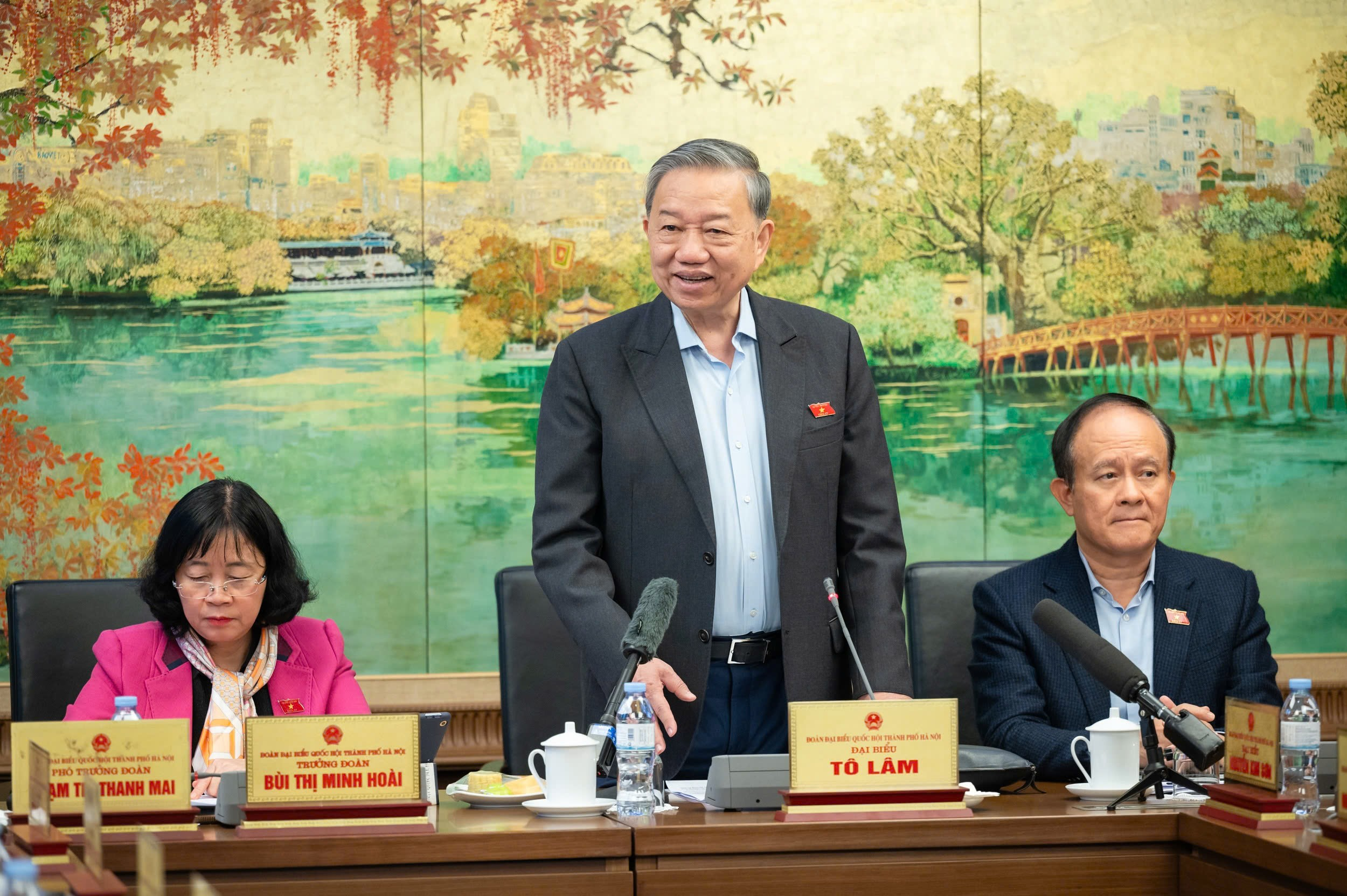
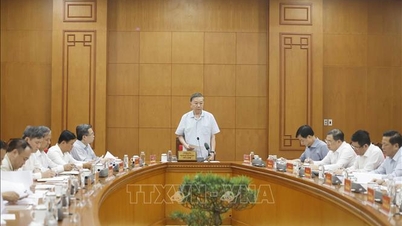
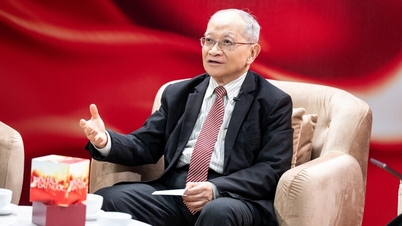
General Secretary To Lam speaks at the group discussion session. (Photo: Lam Hien)
There must be special mechanisms and policies.
Expressing concern about tax incentives for science, technology, and innovation activities, Deputy Vu Hai Quan, Director of the Vietnam National University Ho Chi Minh City, shared that when public universities become autonomous, the initial period is very difficult due to the lack of funding for science and technology development activities. Deputy Quan proposed that corporate income tax should not be applied to science, technology, and innovation activities of universities.
According to Deputy Phan Van Mai, Chairman of the People's Committee of Ho Chi Minh City, a mechanism is needed for breakthroughs, and we shouldn't be overly afraid of vested interests. If there is sufficient evidence of corruption or violations, then they should be dealt with. Only then will we truly embrace the spirit of openness in the field of science and technology.
Representative Tran Luu Quang (Hai Phong City) argued that the draft resolution needs to clearly define the authority, scope, and responsibilities. "For example, regarding authority, who will decide on the disbursement of funds or the awarding of contracts?" Secondly, when this resolution is issued, there will certainly be legal conflicts with existing laws or laws currently under amendment. Therefore, a very strong principle is needed: "If any content overlaps with the resolution, then the resolution must be followed to reassure officials during implementation."
During group discussions, Prime Minister Pham Minh Chinh emphasized that for the country to develop rapidly and sustainably, it must rely on science and technology, innovation, and digital transformation. This is an objective requirement, a strategic choice, and a top priority. He stressed that to implement Resolution 57, special mechanisms and policies are needed, not just specific ones. He argued that more concrete policies are necessary to truly implement Resolution 57 and bring about real innovation. The Prime Minister suggested that research should be conducted to supplement these special mechanisms and policies, not just specific ones, which should be addressed at a different level. This specialness is reflected in several points.
First, the Prime Minister mentioned a "special mechanism" for developing science and technology infrastructure, innovation, and digital transformation. Secondly, a "special mechanism" is needed for managing and governing science and technology activities, encompassing forms such as: public leadership and private management; public investment and private management; and private investment with public use. For example, in public investment and private management, the state could invest in science and technology infrastructure but entrust its management to private entities. That's what a special mechanism is. Thirdly, the Prime Minister also suggested the need for a "special mechanism" to enable scientists to commercialize their scientific work; a "special mechanism" in procedures, decentralization, and delegation of authority to provinces, cities, ministries, and sectors; eliminating the "request-and-grant" mechanism, reducing administrative procedures, and managing and evaluating based on overall effectiveness. Fourth, the Prime Minister addressed the issue of liability exemption for policy makers and developers when risks occur, but there is no exemption mechanism for implementers. "Without a mechanism to protect implementers, it will lead to a fear of responsibility, 'shifting from one place to another,' and 'not wanting to work because they are not protected.' Therefore, it is necessary to design a mechanism to exempt both those who organize implementation and those who design policies from liability when risks occur." Fifth, there is the issue of a "special mechanism" in attracting human resources, not only to attract people from outside the state sector to the state sector, but also to develop private enterprises in science and technology and attract foreign personnel to Vietnam.
Regarding the aforementioned "special mechanisms," the Prime Minister noted the need to design "special tools" to manage, enhance effectiveness, and ensure transparency and openness, preventing violations, corruption, negative practices, and waste. At the same time, in the implementation process, to create breakthroughs in science and technology, one must accept risks, failures, and even pay a price. "Excluding personal motives, risks and losses due to objective factors, if those implementing the process are selfless and sincere for the development of science and technology and the development of the country, then they must accept them as tuition fees to do better," the Prime Minister said.
Proposal to assign KPIs to evaluate employee performance.
On the afternoon of February 15th, the National Assembly discussed in the plenary session the supplementary plan for socio-economic development in 2025, aiming for a growth rate of 8% or higher. Representative Nguyen Van Than (from Thai Binh province), Chairman of the Vietnam Association of Small and Medium Enterprises, proposed a Key Performance Indicator (KPI) for evaluating the work performance of officials, civil servants, and public employees on a quarterly, semi-annual, and annual basis. He suggested this as an important criterion for rewards, disciplinary actions, and promotion/appointment consideration, thereby improving the quality of public services.
Railway and urban rail construction: Prioritize contracting with domestic enterprises.
During the National Assembly discussion on the draft resolution piloting some specific and special mechanisms and policies for the development of urban railway networks in Hanoi and Ho Chi Minh City, National Assembly Deputy Hoang Van Cuong (Hanoi delegation) proposed that in the construction of railway lines and urban railways, priority should be given to commissioning and assigning tasks to domestic enterprises to participate in the construction of tracks, bridges, and tunnels; and the production of rails and rolling stock. According to this Deputy, this commissioning helps domestic growth, whereas purchasing from foreign countries would lead to foreign investment and prevent the development of a domestic railway industry. Therefore, prioritizing commissioning should be included in the resolution. The government should commit to ensuring domestic enterprises have market share to encourage and reassure investment, coupled with mandatory transfer of technology to domestic enterprises.
Source: https://nld.com.vn/gap-rut-go-rao-can-phap-ly-196250215203953794.htm


![[Photo] National Assembly Chairman Tran Thanh Man working with the Standing Committee of the Law and Justice Committee](https://vphoto.vietnam.vn/thumb/1200x675/vietnam/resource/IMAGE/2026/05/21/1779378929214_ndo_br_1-4610-jpg.webp)


![[Photo] General Secretary and President To Lam presides over a working session with the Central Policy and Strategy Committee on the development of the materials industry.](https://vphoto.vietnam.vn/thumb/1200x675/vietnam/resource/IMAGE/2026/05/21/1779359935432_a3-bnd-3129-1412-jpg.webp)














































































Comment (0)