

Domestic coffee prices increase slightly, Central Highlands prospers
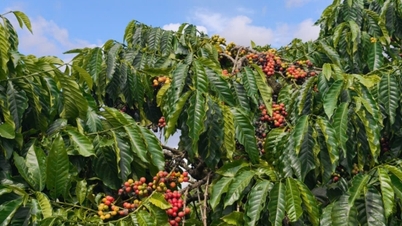
At the opening of the first trading session of the week (December 1), coffee prices in the Central Highlands region increased slightly by 300 to 500 VND/kg compared to the last session of the previous week. After a few days of sideways trading, the coffee price market quickly regained its upward momentum.
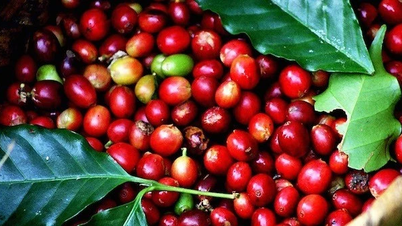
Dak Nong continues to be the locality with the highest coffee purchase price, reaching 112,500 VND/kg. In Dak Lak, the price of green coffee has increased to 112,300 VND/kg. Gia Lai and Kon Tum provinces are trading at around 111,900 VND/kg. In Lam Dong alone, the coffee price has also recovered to 111,300 VND/kg.
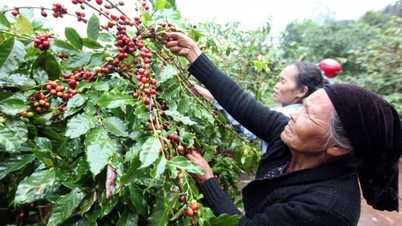
Purchasing agents said that although it is the main crop season, the amount of goods brought to warehouses is not as much as in previous years. The reason is that the rainy weather slows down the drying process, and farmers tend to "hoard" their goods waiting for higher coffee prices, creating local tension in supply.

World coffee prices maintain upward momentum in both robusta and arabica
At the end of the previous trading week, the price of Robusta coffee online on the London floor increased slightly. The January 2026 futures contract reached 4,565 USD/ton, up 1.3% (59 USD/ton). The March 2026 futures contract also increased 1.4% (60 USD/ton), to 4,413 USD/ton.
Arabica coffee prices also saw significant growth on the New York Stock Exchange. The December 2025 contract increased by 3.3% (13 US cents/pound) to 413 US cents/pound. Similarly, the March 2026 contract increased by 3.2% (11.8 US cents/pound) to 381.2 US cents/pound.
The race between Vietnam and Brazil in robusta production
The taste of coffee from Brazil, the world’s largest producer of arabica, may change slightly in the coming years. As climate change makes it harder to grow arabica (the mild-flavored variety), some farmers are switching to robusta (which is more bitter but more heat- and disease-resistant).
Brazil’s traditional coffee-growing regions are regularly hit by drought and rising temperatures. While Arabica remains the main export, Robusta production is growing at a faster pace, up more than 81% in the past 10 years, according to the U.S. Department of Agriculture (USDA).
Fernando Maximiliano, Director of Coffee Market Analysis at StoneX, said robusta offers Brazil the opportunity to maintain its position as the world’s largest coffee supplier even as climate impacts increase. He explained that climate issues and losses in arabica production are the main drivers of robusta growth, not necessarily demand.
Brazil’s Arabica production has increased by about 2-2.5% per year, while Robusta has increased by about 4.8% per year over the past three years. This year’s crop alone has seen Robusta production increase by nearly 22%. This shows that Robusta stands out due to its ability to adapt well to adverse weather conditions and its higher profitability.
Robusta has a higher caffeine content and a stronger taste than Arabica. However, today’s younger generation of consumers care less about the type of coffee they drink and tend to prefer drinks with added milk, cream or syrup, which detract from the original flavor of the bean.
They don't pay too much attention to origin or flavor notes, says Matthew Barry, global research director at Euromonitor International.
If coffee prices continue to climb, consumers may switch to cheaper robusta beans. In Europe, the price gap between robusta and arabica coffee may widen in the coming years. A new law could increase demand for instant coffee (made mainly from robusta), which is exempt from some import regulations.
Although Robusta is generally cheaper than Arabica, its prices are still at record levels. The high price of Robusta coffee, combined with its productivity, which is nearly double that of Arabica, has encouraged more Brazilian farmers to invest in Robusta. Additionally, Robusta producers are improving the quality of their beans, making it more attractive to consumers and driving up prices.
Source: https://baodanang.vn/gia-ca-phe-hom-nay-1-12-2025-tay-nguyen-phu-sac-xanh-3312118.html


![[Photo] Prime Minister Pham Minh Chinh receives President of Cuba's Latin American News Agency](/_next/image?url=https%3A%2F%2Fvphoto.vietnam.vn%2Fthumb%2F1200x675%2Fvietnam%2Fresource%2FIMAGE%2F2025%2F12%2F01%2F1764569497815_dsc-2890-jpg.webp&w=3840&q=75)
![[Photo] President Luong Cuong holds talks with Sultan of Brunei Darussalam Haji Hassanal Bolkiah](/_next/image?url=https%3A%2F%2Fvphoto.vietnam.vn%2Fthumb%2F1200x675%2Fvietnam%2Fresource%2FIMAGE%2F2025%2F12%2F01%2F1764567099556_ndo_br_1-jpg.webp&w=3840&q=75)













































































Comment (0)