

THE WORRY OF "IT'S COMING AGAIN"…
Every flood season, people living in dilapidated houses in Hoi An ancient town are in constant fear. The particularly heavy rains at the end of October caused the water level of the Thu Bon River at Cau Lau station to exceed the historical level of 1964 by about 0.12 m. This is considered the highest flood peak in many decades, causing the entire area of Hoi An ancient town to be deeply flooded. Water overflowed the roads adjacent to the Hoai River, many residential areas and relic sites were flooded by 1-2 m. The Japanese Covered Bridge - a symbol of Hoi An World Cultural Heritage - was also covered by water, recording the deepest flooding level in the past few decades.
At 23 Tieu La Street, Mr. Duong Thanh Cuong's nearly 100-year-old house has been severely degraded, from the rafters, tiled roof to the crumbling walls. Every time it rains heavily, the family has to stretch tarps to cover the leaks, place furniture high up and use buckets to catch water all night. For many years, this has always been a hot spot in plans to prevent collapse and relocation during the rainy season. Without enough funds to repair, Mr. Cuong's family only hopes for a timely emergency solution before the house completely collapses.
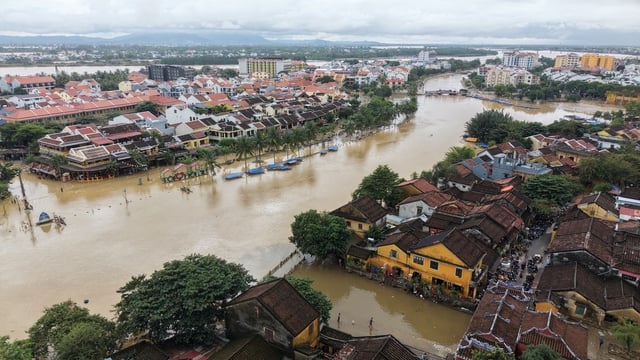
Hoi An ancient town was deeply submerged in the flood at the end of October, causing serious damage to ancient houses.
PHOTO: SX
According to Mr. Pham Phu Ngoc, Deputy Director of Hoi An World Cultural Heritage Conservation Center, during the recent severe flood, in order to ensure the safety of the entire relic system in Hoi An ancient town, the center coordinated with the People's Committees of the wards to review and grasp the degradation of the relics. The center also encouraged people and relic owners to proactively check, reinforce and support their works in the context of the complicated rainy and stormy season; cutting down trees can affect the safety of the relics.
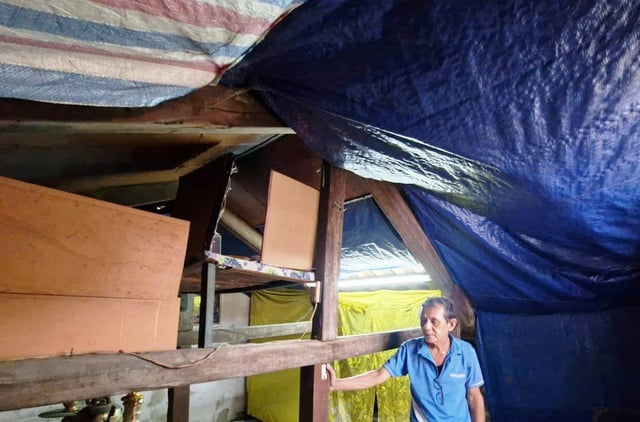
Owners of dilapidated ancient houses hope for better support policies so that relics can be restored soon.

Before the storm season, the authorities in the ancient town of Hoi An supported the relic at 68 Tran Phu.
PHOTO: PHAM PHUOC TINH
Initial survey results show that out of 1,155 inspected relics, 30 relics are degraded, including 9 relics that are seriously degraded, 14 are heavily degraded, and 7 are slightly degraded. The Center has supported the support of 1 relic (house number 23 Tieu La in the endangered group); the relic owner himself organized the support and reinforcement of 19 relics. "We also proposed urgent restoration or demolition of 10 relics. These are relics that were supported in previous years, but are now very seriously degraded and no longer able to continue to be supported safely," Mr. Ngoc assessed.
ESTABLISHING A FUND TO PRESERVE HOI AN HERITAGE
Mr. Pham Phu Ngoc said that the protected area 1 of the old town currently has more than 1,155 relics and houses, of which over 83% are private houses - an important component of the heritage and a place for residents to live and do business. However, many structures are seriously degraded but do not have clear legal documents on ownership and usage rights; the cost of restoration is too high, especially for households in alleys that do not have business conditions, so it is almost impossible to invest in repairs themselves. To preserve the originality of the relics and ensure the safety of residents and tourists, the Hoi An World Cultural Heritage Conservation Center proposed that the Department of Culture, Sports and Tourism of Da Nang City consider the policy of urgent restoration of relics and houses at risk of collapse in the old town with a mechanism of 100% funding support for valuable structures.

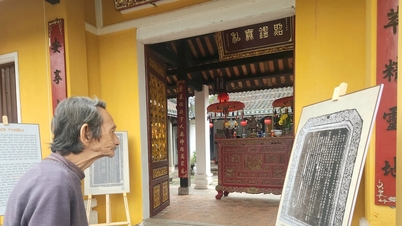
Image of a ruined ancient house in Hoi An ancient town
PHOTO: MQ
According to Mr. Ngoc, the Department of Culture, Sports and Tourism needs to advise the People's Committee of Da Nang City to issue a mechanism to support the restoration and embellishment of relics with the state supporting 40-100% for works inside and outside the old town. The Center also proposed to establish a Fund for the Conservation of the World Cultural Heritage of Hoi An Ancient Town to promptly support relics at risk. At the same time, it is recommended that the City People's Committee unify the policy to allow the establishment of an emergency restoration project for relics at risk of collapse; hire consulting units and research institutes to assess the impact of climate change, especially the recent severe flood on the heritage site, to propose solutions for sustainable response and conservation.
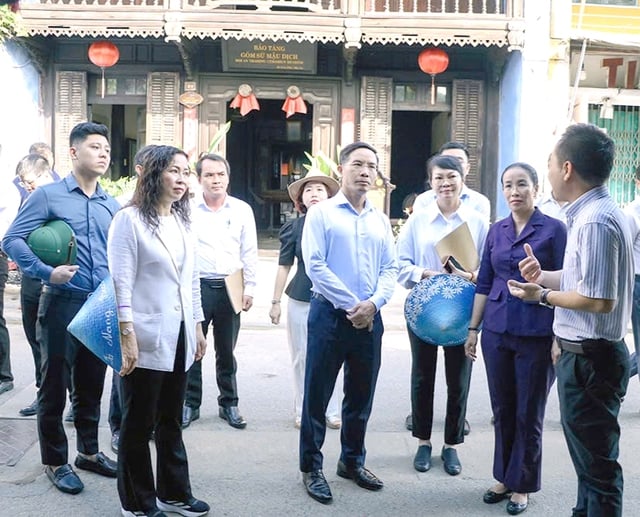
Chairman of Da Nang City People's Committee Pham Duc An ( center ) inspected the impact of floods on Hoi An ancient town on November 9.
PHOTO: MQ
Mr. Nguyen Duc Binh, Secretary of the Hoi An Ward Party Committee, said that in the period of 2025 - 2030, the locality aims to preserve the outstanding global value of the heritage, linking conservation with sustainable development and expanding links with neighboring wards and communes to develop tourism spaces and products. Hoi An will develop a long-term restoration plan, prioritizing seriously degraded relics; at the same time, expand international cooperation, take advantage of resources from UNESCO, JICA and conservation funds, and promote socialization.
Mr. Binh proposed that Da Nang City issue a specific financial mechanism for conservation work, including the establishment of the Hoi An Heritage Conservation Fund under the City People's Committee, with revenue from ancient town entrance tickets, voluntary contributions, support from businesses, international aid and the state budget. He also recommended allocating a portion of the entrance ticket revenue to Hoi An Ward so that the locality can proactively and promptly manage the ancient town. Along with that, it is necessary to study the mechanism of ordering and allocating restoration expenses to capable units and individuals to shorten the time and improve the efficiency of relic repair. At the same time, it is necessary to apply a socialization model with counterpart budget support, creating conditions for the community and businesses to initiate conservation projects. With this mechanism, Hoi An will have a stable source of funding, proactively handle emergency situations and attract wide participation of society in heritage conservation work.
After the field inspection of the old town on November 9, Chairman of the People's Committee of Da Nang City Pham Duc An requested the Department of Culture, Sports and Tourism to coordinate with the Heritage Conservation Center and relevant units to propose an emergency conservation plan for relics and houses at risk of collapse, ensuring safety for people and tourists, and maintaining the integrity of the world heritage. Notably, Mr. An assigned the Department of Culture, Sports and Tourism to advise on the establishment of the Da Nang City Cultural Heritage Conservation Fund to promptly preserve and restore relics at risk of collapse; assess the impact of the recent severe flood to develop response solutions and sustainable conservation; proactively propose conservation solutions, improve administrative procedures and ensure harmony between conservation, tourism development and improving community life.
Source: https://thanhnien.vn/go-nut-that-cap-cuu-nha-co-cho-sap-o-hoi-an-185251130231740617.htm




























![[Photo] Dan Mountain Ginseng, a precious gift from nature to Kinh Bac land](/_next/image?url=https%3A%2F%2Fvphoto.vietnam.vn%2Fthumb%2F1200x675%2Fvietnam%2Fresource%2FIMAGE%2F2025%2F11%2F30%2F1764493588163_ndo_br_anh-longform-jpg.webp&w=3840&q=75)

























































Comment (0)