Ensuring income during the tapping off-season.
On the morning of September 28th, our delegation arrived at Dong Phu - Kratie Rubber Company, its headquarters located in Kratie commune, Kratie town, Kratie province. We were greeted not only by Vietnamese officials but also by Cambodian officials, all young people who had studied and lived in Vietnam.
The access road to the Dong Phu - Kratie Rubber Company's project is relatively complex, with many sections crossing large streams. The 23-kilometer stretch of road from National Highway 7 to the project site frequently deteriorates during the rainy season. Currently, the company has 3 plantations and 1 processing plant with a capacity of 7,500 tons/year, serving the rubber processing needs of Dong Phu - Kratie Rubber Company and several other rubber companies in Kratie province.
Currently, the company employs over 1,000 local workers. Of these, nearly 290 are from Kratie province; almost 260 are from Sambor district alone, mainly residents from the surrounding areas within the project zone in Okdia Senchey and Rolus Meanchey communes, while the remainder are workers from other localities.
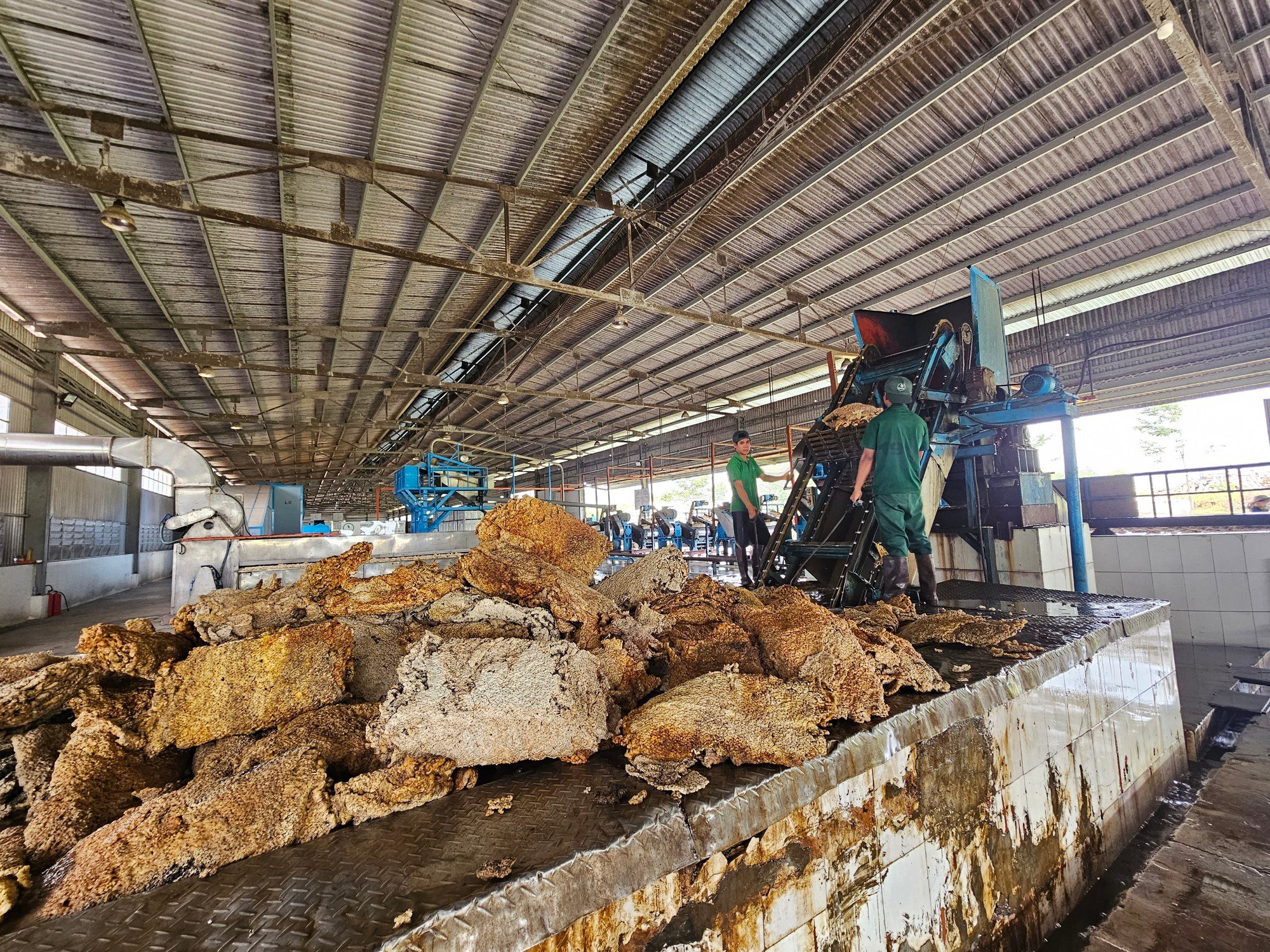
The CSR10 latex processing plant of Dong Phu - Kratie Rubber Company.
Our group was thrilled to witness firsthand the rubber processing process at the CSR10 Rubber Processing Plant (operating since 2018). The factory workers were diligently at work, with rows of finished products waiting to be shipped for sale. Currently, the plant produces 50-60 tons of finished rubber products daily for export to Vietnam. The plant also processes rubber for several other companies. All production processes are ensured to be environmentally friendly. Interestingly, the wastewater from washing the rubber is filtered through a wastewater treatment system consisting of nine natural filtration ponds, the final pond of which is even suitable for fish farming.
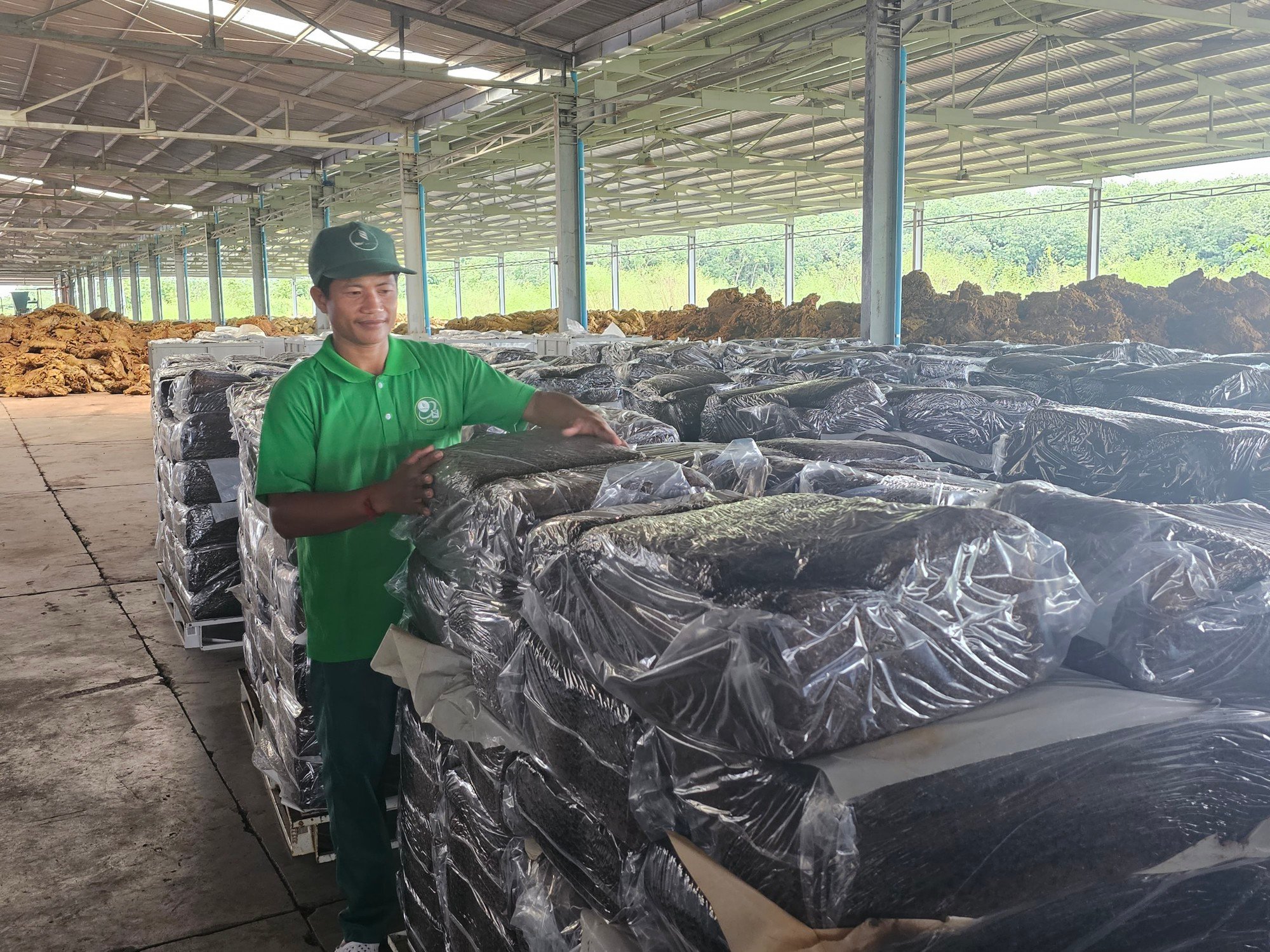
Khoen Sothanh, 30 years old, is the production team leader at the CSR10 rubber processing plant.
Khoen Sothanh, 30 years old, is a production team leader at the CSR10 rubber processing plant and has been working there for about four years. Previously, Khoen worked on a farm, but his income was insufficient to support his family of six. Khoen recounted that when the village head announced a recruitment drive for the rubber company, he and his wife applied. Khoen hoped to have a long-term career with the company, save money to build a house, and secure a better future for his children.
Currently, the rubber processing plant operates for 11 months a year, then takes a one-month break for machinery maintenance. During this time, the company always creates jobs to ensure workers maintain their income and prevent them from abandoning tapping or quitting to work in the fields.


Upon arriving at the plantation, our group was amazed by the rows of rubber trees, meticulously equipped with materials such as supports, cups, troughs, and rain covers, all neatly arranged...
Mr. Vu The Duy, Deputy General Director of Dong Phu - Kratie Rubber Company, said that each year, workers may have to stop tapping for 1-2 months during the rubber tree leaf-shedding season. This is the time when workers are most likely to quit and it is very difficult to get them back to work. This is also why the company always focuses on creating jobs for workers and ensuring their livelihoods during the non-tapping season. That is also why Dong Phu - Kratie Rubber Company always manages to retain its plantation workers.
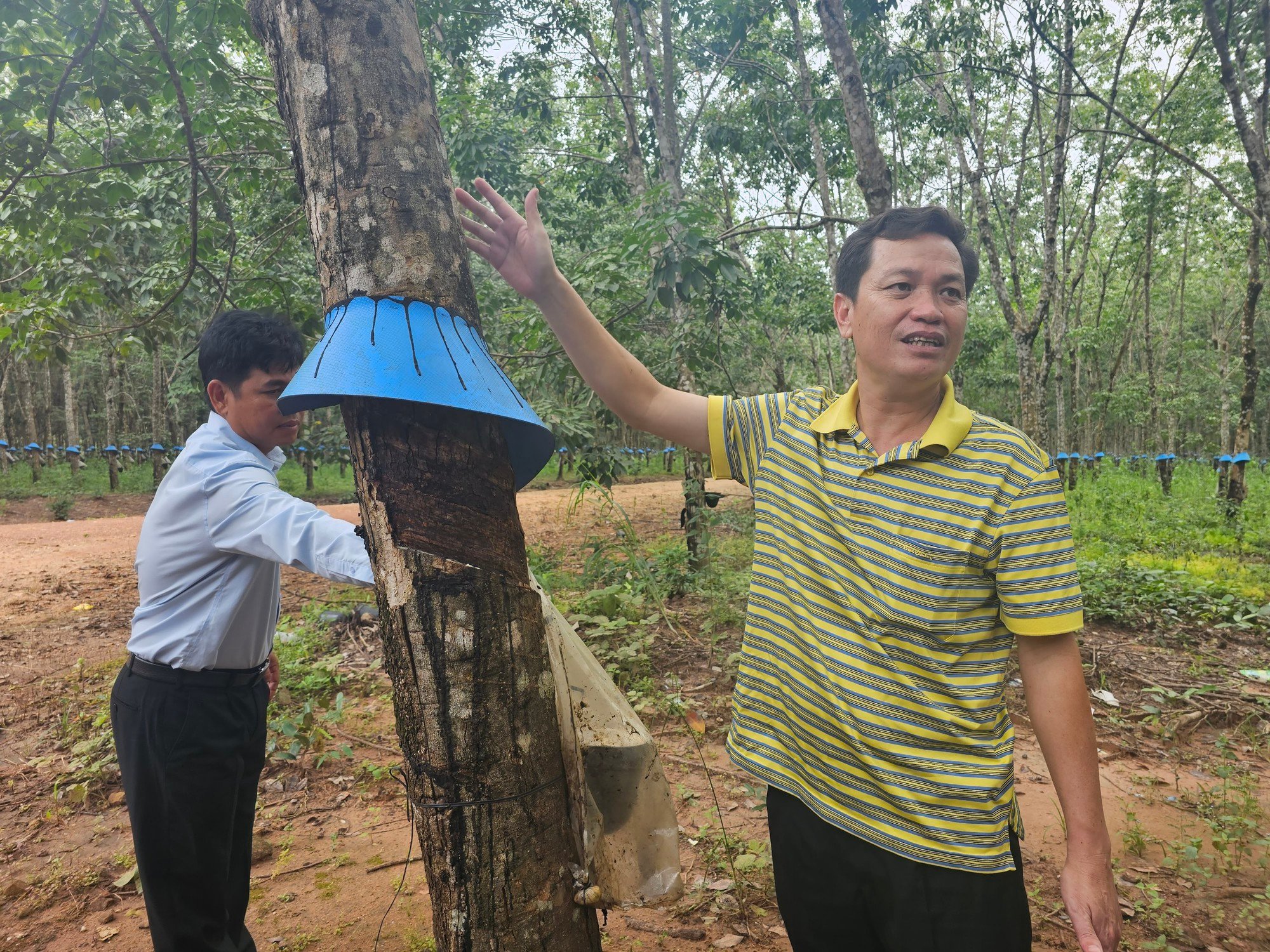
Mr. Vu The Duy introduced the jobs that workers can do during the tapping off-season to ensure their income.
Mr. Duy carefully pointed to each tapping line: "When the trees are resting, the workers will draw the stencil beforehand to use as a guide during the tapping season. Without the stencil, the slope wouldn't be as required; they also build rain shelters and fire safety systems… so the workers are loyal to us and rarely go elsewhere because they have a guaranteed income year-round."
On the bus ride from the plantation to the social infrastructure projects in the project area, we listened to rubber plantation officials recount the early days when local workers were employed at the plantation. During the initial land clearing and planting phase, most local laborers were "shocked" to receive high monthly wages that they had never received before.
Planting the seeds of literacy amidst the rubber forest.
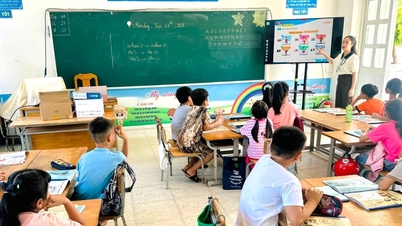
Our car stopped in front of the school of the Dong Phu - Kratie Rubber Company at Farm 1, where students of all ages were engrossed in their studies.
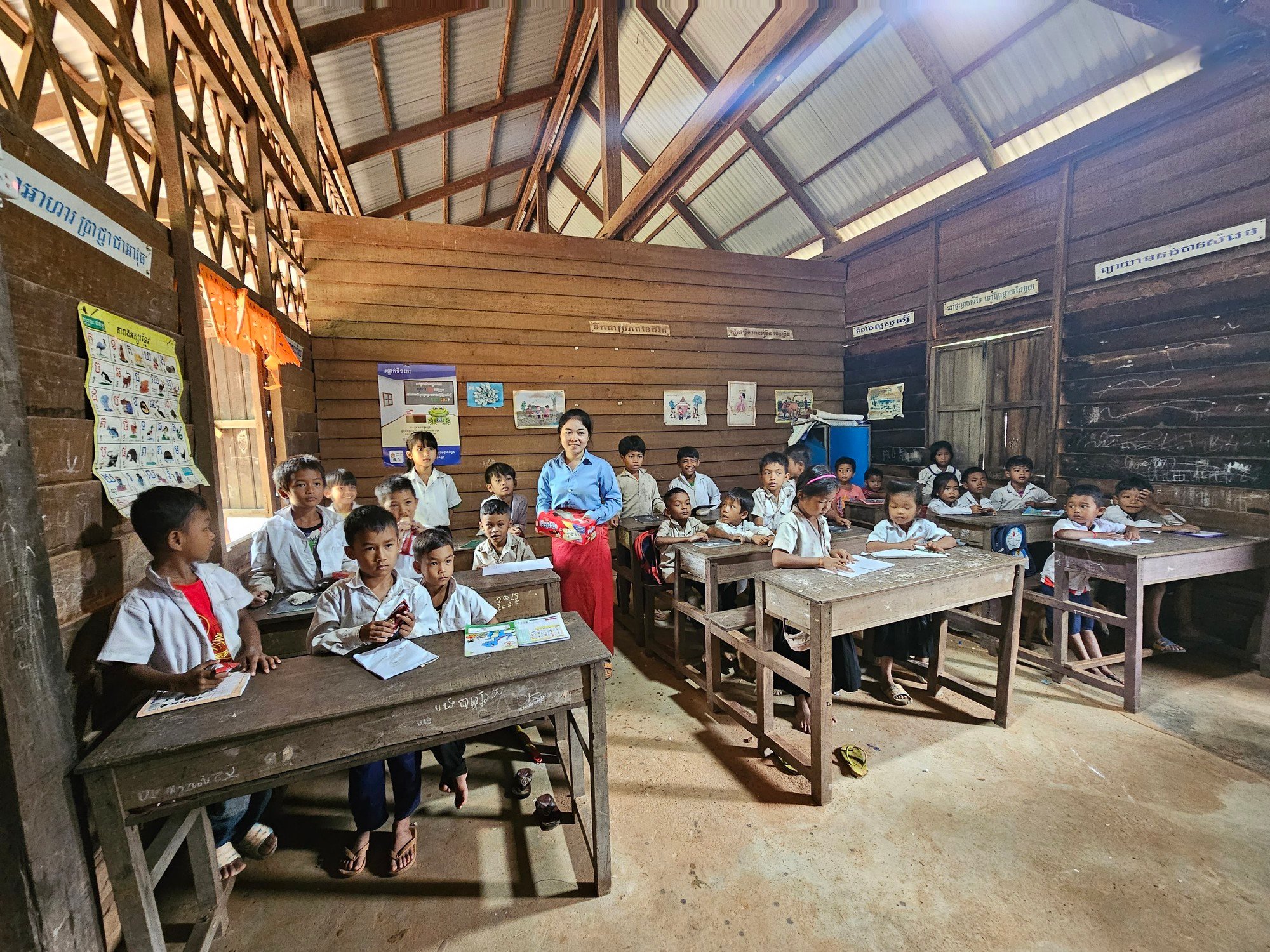
Students of various ages study together in the same class.
This year, the company's two schools have 181 students, all children of rubber plantation workers. Because they are not all the children of the appropriate age to form separate classes, they are grouped together, with each class having approximately 40 to 50 students. The local Department and Office of Education are providing support and helping the company find teachers.
During recess, we chatted with Ms. Keonita, a teacher at the rubber company's school. Ms. Keonita said that she and her husband have been assigned to teach here for a long time. When they first arrived at the school, they weren't married yet. Eleven years ago, her husband was transferred to the school, and three years later, Ms. Keonita was also assigned to teach at this school.
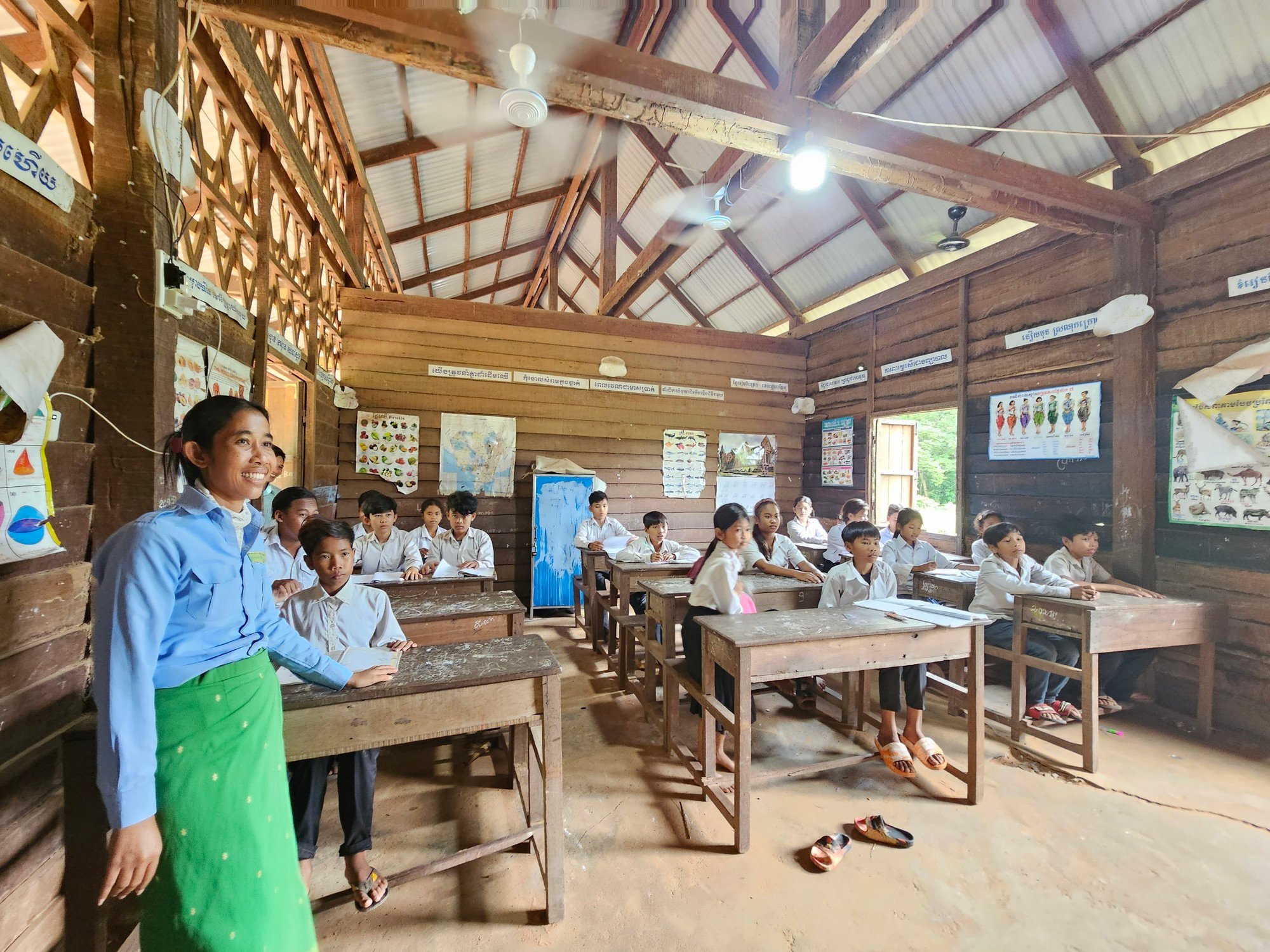
Teacher Keonita at the Dong Phu - Kratie Rubber Company's school.
Every day, Keonita and her husband travel about 8 km from their home to the school where they teach, going in the morning and returning in the afternoon, with Sundays off. Keonita shared that teaching students of different ages is quite challenging, encountering many difficulties due to the varying learning abilities of the students. The school run by the Dong Phu - Kratie Rubber Company teaches up to grade 6; after completing grade 6, the children go to school in other communes.
"I just want the children to come to school regularly, so they can gain knowledge and literacy to escape poverty. The rubber company has also helped the teachers and the children a lot. The teachers all want to stay at the school, and they only have one small wish: to have a playground in front of the school gate, a place for the children to play," said Ms. Keonita.
Our car drove away. The teachers saw us off to the school gate. A few curious students ran after us. These students, living in the middle of a rubber forest, despite the lack of material resources, always receive plenty of love from their teachers.
Source link