Preserving traditional crafts
Soft and chewy, delicious rice paper
It's dried in the sun during the day and exposed to dew at night.
The people of Trang land are so kind and loving.
Following the cake along all paths.
(Bui Thi Ngoc Diep)
When mentioning Tay Ninh , many people immediately think of Trang Bang sun-dried rice paper, a rustic yet flavorful dish that has been recognized as a National Intangible Cultural Heritage. For many years, Loc Du neighborhood (Trang Bang ward) has been considered the "cradle" of the craft, a place where artisans holding family secrets gather. Although time has caused many artisans to leave the profession, and the number of households still involved has dwindled, the flame of the craft has never died out.
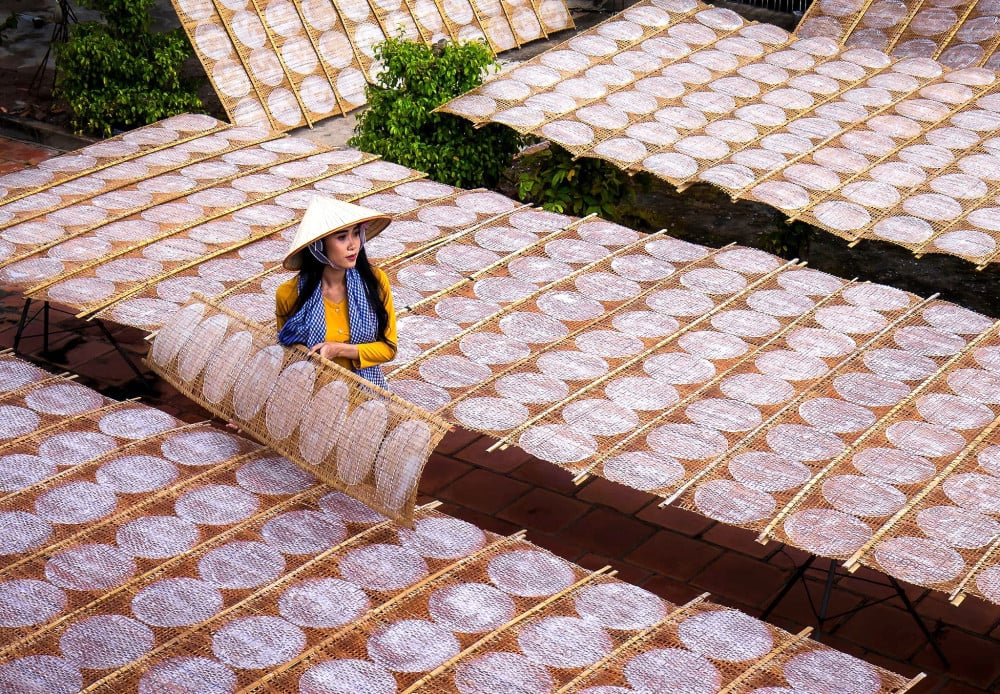
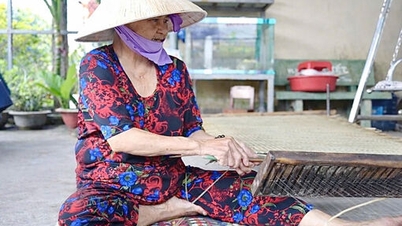
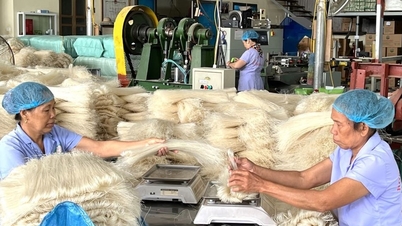
Drying rice paper in Trang Bang craft village (Photo: Nguyen Huynh Dong)
One sunny morning, in her small kitchen, Mrs. Nguyen Thi Luan (a resident of An Phu neighborhood) nimbly spread thin rice paper sheets while reminding her husband to bring the sheets that had been drying since morning inside to air dry in the shade. Having married into the Trang family decades ago, watching her mother-in-law and sister-in-law make rice paper, Mrs. Luan learned the "secret" to continue her family's traditional work. For her, the secret to the craft is simple: patience, skilled hands, and experience in controlling the flour, the fire, the sun, and the dew... "My family still uses a rice husk stove because rice paper made with it has a very unique flavor, like rice cooked over a wood fire – much more fragrant and sweet than rice cooked over an electric stove," she shared with a smile.
On a sunny day, she can make over 20kg of rice paper. The work is hard but stable because the sun-dried rice paper is always popular in the market, and above all, the love for the craft remains firmly rooted in the hearts of the artisans of Trang Bang.
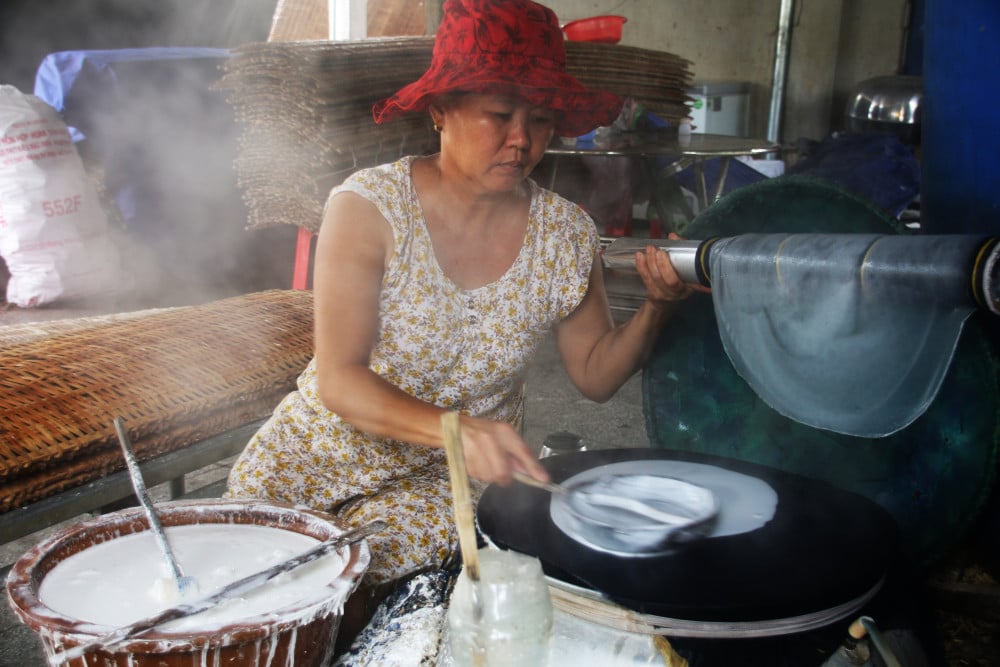
Having married into the Trang family, Mrs. Nguyen Thi Luan (residing in An Phu neighborhood) continues to follow her family's traditional craft of making sun-dried rice paper.
Nowadays, many families use electric ovens for convenience and increased productivity, but no matter the method, the soul of the craft still lies in the skillful hands and dedication of the baker to ensure the rice paper is evenly and beautifully coated, and dried in the sun and dew just enough to become soft, chewy, and infused with moisture. From these fragrant, chewy rice papers, they also create many new varieties to cater to the diverse tastes of customers.
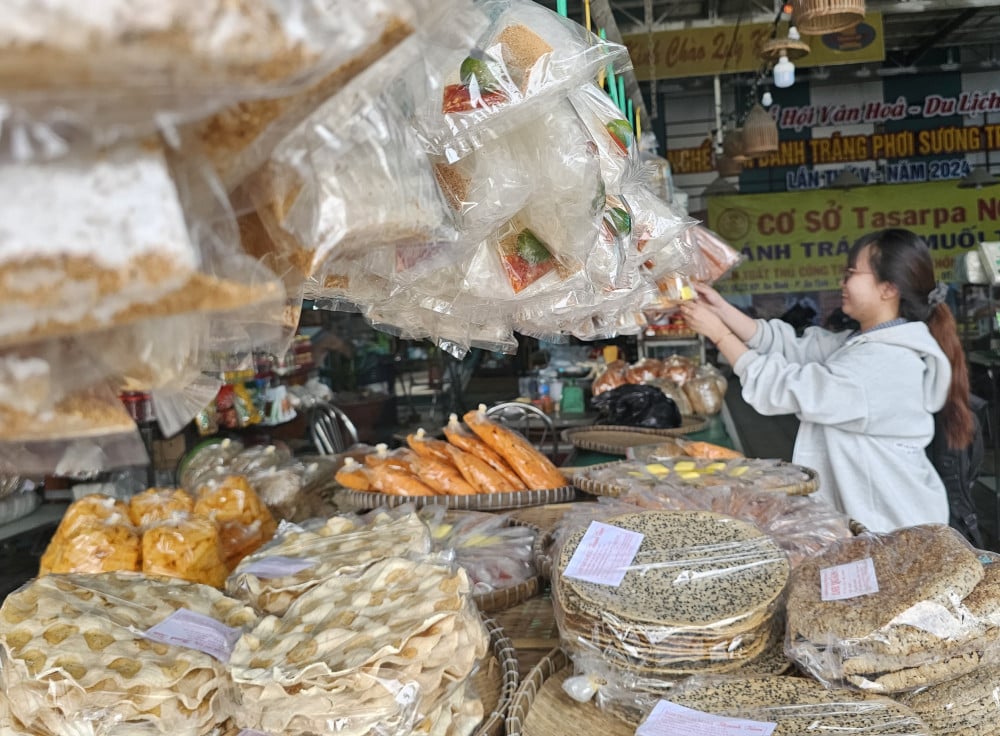
Besides sun-dried rice paper, Trang Bang also has many other types of rice paper thanks to the creativity of its artisans.
According to Huynh Thi Thuy Trang, Vice Chairman of the People's Committee of Trang Bang Ward, the locality always focuses on preserving and promoting traditional crafts. The Trang Bang Sun-Dried Rice Paper Making Culture and Tourism Festival is an opportunity to honor the heritage, spread the brand of local cuisine, and contribute to socio -economic development.
Festival highlights
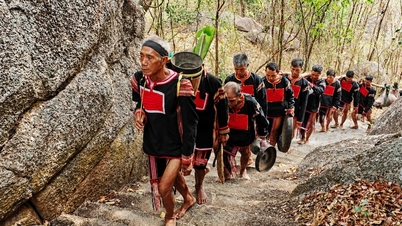
While Trang Bang boasts the traditional craft of sun-dried rice paper, Tam Vu preserves the Lam Chay Festival, a unique cultural tradition stemming from gratitude for those who sacrificed for the country. Over the years, the festival has become a place where beliefs intersect, harmonizing the rituals of various religions, embodying the principle of "drinking water, remembering the source," and fostering a spirit of compassion and tolerance.
Mr. Bui Van Biet (Management Board of Tan Xuan Temple) shared: “The festival always includes rituals of Cao Dai and Buddhism, along with prayers for the souls of fallen heroes and martyrs, so that the villagers may have peace and a bountiful harvest.” The harmonious blend of rituals from different religions in the Lam Chay Festival has been maintained to this day, a testament to the unity and compassion of the local community. Regardless of their religion or occupation, the people of Tam Vu still share a common devotion to their country and ancestors, always imbued with tolerance and kindness through every activity and program in the festival.
The Làm Chay Festival in Tầm Vu is not only a source of pride for the homeland but also a tradition of "remembering the source when drinking water" of the Vietnamese people. The festival attracts not only local people and visitors from afar but also serves as a homecoming for overseas Vietnamese. Despite living abroad for over 10 years, Mr. Phạm Thế Hùng (from Tầm Vu commune) remains a key member of the annual Làm Chay Festival.
Mr. Hung once shared that there were years he couldn't make it home for Tet (Lunar New Year), but he always attended the festival. Although his relatives all live abroad, he still wants to return to participate in the Lam Chay Festival to feel connected to his homeland and roots, and to meet his neighbors and relatives.
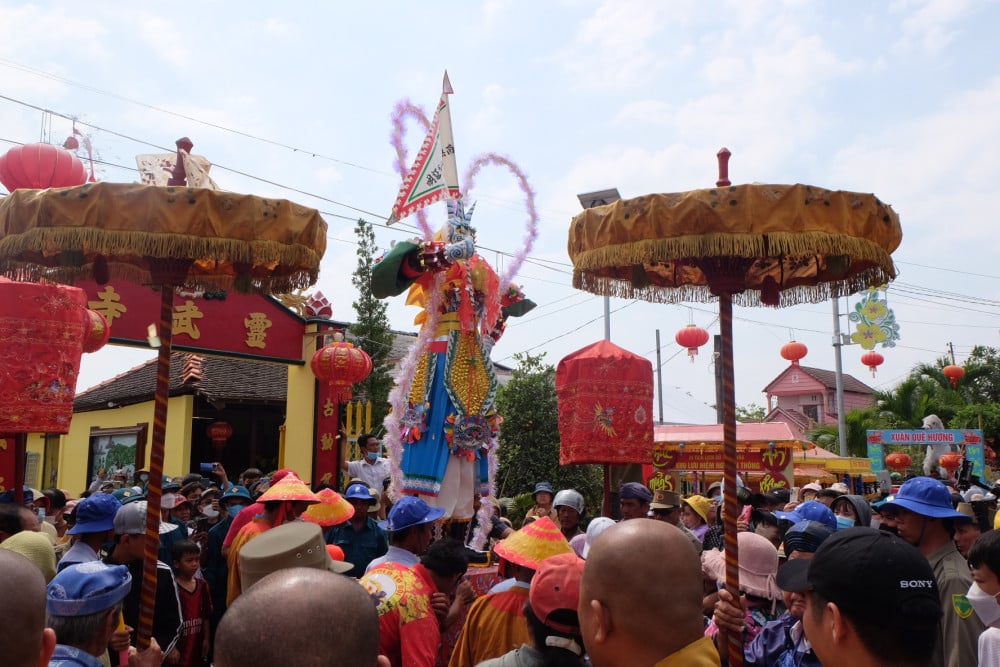
The rituals and ceremonies of the Lam Chay Festival have been preserved to this day.
Over time, the Làm Chay Festival has developed many additional activities to attract large crowds, such as folk games, parades, and folk performances, drawing tens of thousands of participants. To preserve the unique characteristics of the festival and the joy of the people, while ensuring that all activities do not become excessive, unsafe, or create a negative image, the local authorities have made efforts in public awareness campaigns and maintaining order.
According to Ms. Le Thi Thanh Yen, in her article "Preserving and Promoting the Value of Festivals in Vietnam - Current Situation and Solutions," festivals are considered a bridge connecting the past with the present, one of the best environments for educating young people about national traditions and culture, and a legitimate spiritual need of everyone that should be cherished. Festivals are not only a mirror reflecting the national culture but also an environment for preserving, enriching, and promoting the value of national culture.
Preserving and promoting the value of traditional crafts, villages, festivals, or historical relics means retaining the beautiful cultural values that have been nurtured and refined over hundreds of years by the local community. These are the core values of the community, the bonds that create cohesion and strength within the community and the nation.
In order to preserve and promote the fine cultural values of the province, in recent years, the Department of Culture, Sports and Tourism has taken the lead in advising and implementing the preservation and promotion of intangible cultural values in Tay Ninh province in conjunction with community tourism development, such as widely publicizing historical relics; preserving and promoting traditional festivals like the New Year Festival in Tay Ninh province in conjunction with community tourism development; launching a Khmer cultural experience tourism product in Long Hoa ward with the model of "Exploring Khmer cultural heritage"; coordinating with localities to periodically organize programs and events honoring the craft of making sun-dried rice paper in Trang Bang, the art of preparing vegetarian dishes in Tay Ninh province, etc.
In addition, the province also has many activities aimed at developing festival tourism products: the Lam Chay Festival, the Long Thuong Five Elements Goddess Festival, the commemoration ceremony for national hero Nguyen Trung Truc, etc. The focus is on developing historical and cultural relic values, while simultaneously improving the quality of organizing festivals that are representative of the province's festival tourism.
Today, Tay Ninh embarks on a new path of development, but in every aspect of life, every custom, every festival, the "spirit" of tradition remains, creating a unique identity that is both simple and sacred. Preserving and spreading these precious values is the connection between the past, present, and future, as well as safeguarding the core cultural values of the ethnic community.
Festivals originate from the community, and the community is the main entity; therefore, festival organization is carried out by the community. The community organizes, protects, and enjoys the festival. However, the support of the State in its role of state management is necessary. Depending on the scale of the festival, the State participates in the organization to support issues such as: ensuring security, order, food safety and hygiene, guiding the community in managing funds effectively, etc., in order to avoid unforeseen problems that could distort the essence and value of the festival, and prevent its misuse. The State always creates all conditions for people to organize and enjoy festivals themselves.” Deputy Director of the Department of Culture, Sports and Tourism Nguyen Tan Quoc |
Moc Chau
Source: https://baolongan.vn/giu-gin-va-lan-toa-gia-tri-van-hoa-qua-tung-di-san-a203205.html


![[Photo] Capturing the moment the tide recedes at Yen Binh Son rapids - a million-year-old scenic spot in Quang Ngai.](https://vphoto.vietnam.vn/thumb/1200x675/vietnam/resource/IMAGE/2026/05/19/1779175463885_yen9-1199-jpg.webp)
![[Photo] General Secretary and President To Lam presides over a meeting on the implementation of Directive No. 34-CT/TW of the Party Central Committee.](https://vphoto.vietnam.vn/thumb/1200x675/vietnam/resource/IMAGE/2026/05/19/1779187768672_a1-bnd-2350-631-jpg.webp)
![[Photo] National Assembly Chairman Tran Thanh Man attends the groundbreaking ceremony for the National Highway 1A spatial axis project.](https://vphoto.vietnam.vn/thumb/1200x675/vietnam/resource/IMAGE/2026/05/19/1779161360398_ndo_br_bnd-1412-jpg.webp)
































![[Photo] General Secretary and President To Lam receives Indian Defense Minister Rajnath Singh](https://vphoto.vietnam.vn/thumb/402x226/vietnam/resource/IMAGE/2026/05/19/1779184046302_anh-man-hinh-2026-05-19-luc-16-46-58.png)















Comment (0)