

The warmth from the country roof
The final days of the old year, as we prepare to welcome the new year, always carry a unique atmosphere—a mix of hustle and bustle, yet also a sense of tranquility. It's a time when people are busy completing tasks, packing their bags to return home to their families, and at the same time, a time for reflection, focusing on cherished values. In this atmosphere, every street, market corner, and rooftop seems to don a new coat, imbued with the breath of spring.
On the last afternoon of the year, the sun was fading, and the breeze was cooler. Along the roads leading back to their hometowns, crowds of people hurried back and forth, carrying gifts, red envelopes, and small hopes for a joyful spring reunion. In the markets, vendors selling flowers, ornamental plants, and sweets lingered a little longer, hoping to sell everything they had so they could get home in time for New Year's Eve.
In every family, the atmosphere of Tet preparations is bustling. Some sweep the yard, clean the tables and chairs, and tidy up the doors; others arrange the five-fruit tray, watermelons, and ornamental flowers... In many families in the Mekong Delta, the division of labor is very natural. Men take on the heavy work, women handle the cooking, and children help with the lighter tasks. Everyone works together; no one is left out of the cycle. It is in this sharing that family bonds are nurtured quietly and enduringly.
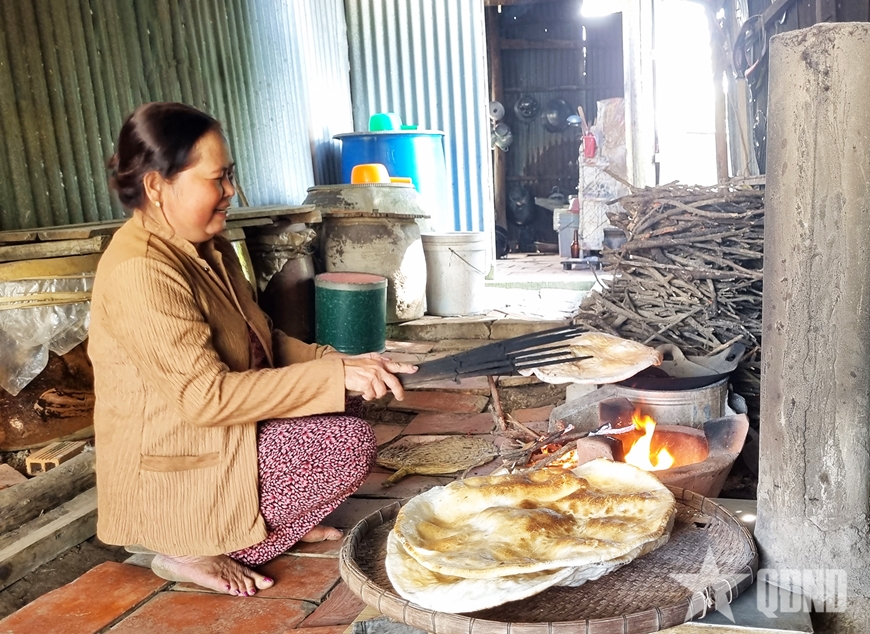 |
Puffed rice cakes are one of the favorite snacks of many people in the Mekong Delta region. |
In the small kitchen, the image of mothers and grandmothers busily working by the glowing fire becomes familiar. Batches of coconut jam, gooseberry jam, dried bananas, rice cakes, sticky rice cakes... are prepared one after another. The aroma of fresh sticky rice, coconut milk, and caramelized sugar mingles with the kitchen smoke, creating a unique flavor of Tet in the countryside.
The most joyful moment is when the whole family gathers to wrap bánh tét (Vietnamese sticky rice cake). Each leaf is carefully cleaned, the sticky rice is meticulously washed, and each slice of meat and mung bean is neatly arranged. Some wrap skillfully, others tie the strings securely, and still others light the fire and watch the pot... These perfectly square and uniform cakes are not just a dish, but also the culmination of hard work, patience, and love.
At dusk, after many hours of cooking, the pot of sticky rice cakes was taken out of the pot. The offering meal for the ancestors was solemnly arranged: sticky rice cakes, braised pork with eggs, stewed bitter melon, pickled mustard greens, pickled shallots… These simple, familiar dishes fully embody the heartfelt devotion of descendants to their ancestors.
Before the ancestral altar, incense sticks are lit in a solemn atmosphere. Everyone respectfully prays for a peaceful and prosperous new year, and family harmony. After the ceremony, the whole family gathers around the dinner table, enjoying the fruits of a year's labor and hard work. No matter how busy life outside may be, in these final moments of the year, the family home remains the most peaceful place to return to.
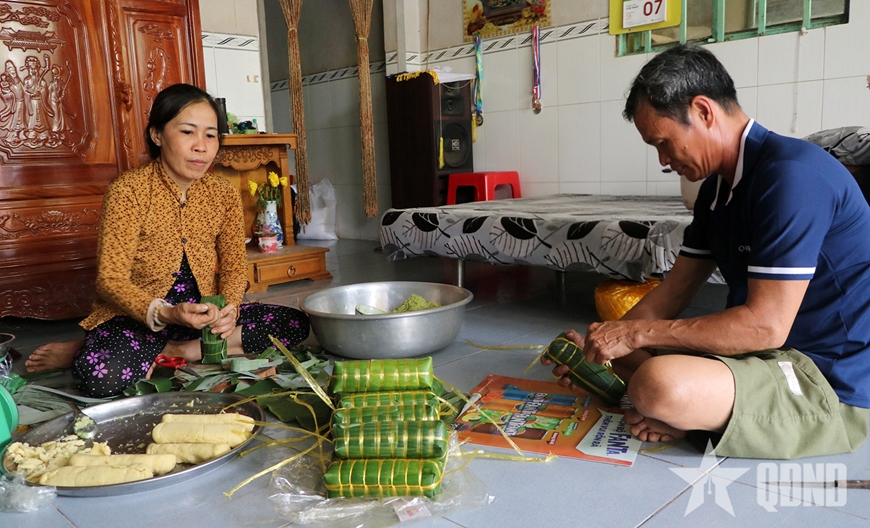 |
During Tet (Vietnamese Lunar New Year), people often make banh tet (sticky rice cakes) to offer to their ancestors. |
Preserving the spirit of Tet in every cake and every batch of candied fruit.
A prominent feature of Tet (Lunar New Year) in the rural areas of Dong Thap province is the preservation of traditional cake and jam-making crafts. Amidst an increasingly diverse market of goods, many families still persistently maintain the habit of making cakes and jams by hand for personal consumption and offerings to their ancestors.
In Tan Dan hamlet, Cao Lanh ward, the small kitchen of Mrs. Nguyen Thi Tho's family is always bustling with activity in the days leading up to Tet. From early morning until late at night, family members are busy washing sticky rice, cleaning leaves, preparing the filling, and lighting fires to cook the rice cakes throughout the night. For Mrs. Tho, the pot of rice cakes is not just a product of labor, but also a symbol of spring and family reunion.
"Cooking bánh chưng (traditional Vietnamese rice cakes) is hard work; you have to watch the fire for hours on end, but you're used to it. Without bánh chưng during Tet, the spring atmosphere feels incomplete," Mrs. Tho shared. Besides serving her family, she also makes bánh chưng for people in and outside the local area, contributing to her family's income each year-end.
Layers of white sticky rice, slices of meat and mung bean filling neatly arranged, symbolize wishes for a prosperous and abundant new year. For many people, the value of banh tet lies not in its appearance or price, but in the sincerity and meticulousness of the person who makes it.
Besides sticky rice cakes (bánh tét), the traditional jam-making craft is also preserved in many rural areas. In Hoa Dinh 2 hamlet, Phong Hoa commune, Mrs. Do Thi Suong's family has been involved in jam-making for nearly 20 years. Every year, starting from the 10th lunar month, she begins preparing ingredients and drying jam in her yard, creating a characteristic scene of the end of the year.
According to Ms. Suong, making jam requires patience and experience. From selecting ingredients, preparing them, sun-drying, to simmering in sugar, everything must be done carefully. "Just one mistake and the whole batch is ruined," she said. Importantly, her family does not use artificial colors or preservatives, ensuring safety for consumers.
Thanks to her commitment to quality and reputation, Mrs. Suong's family's jam products have always earned the trust of customers. Every Tet holiday, she makes many kinds of jam, such as puffed banana, tamarind, ginger, coconut, gooseberry, and winter melon, all bearing the authentic flavors of her hometown.
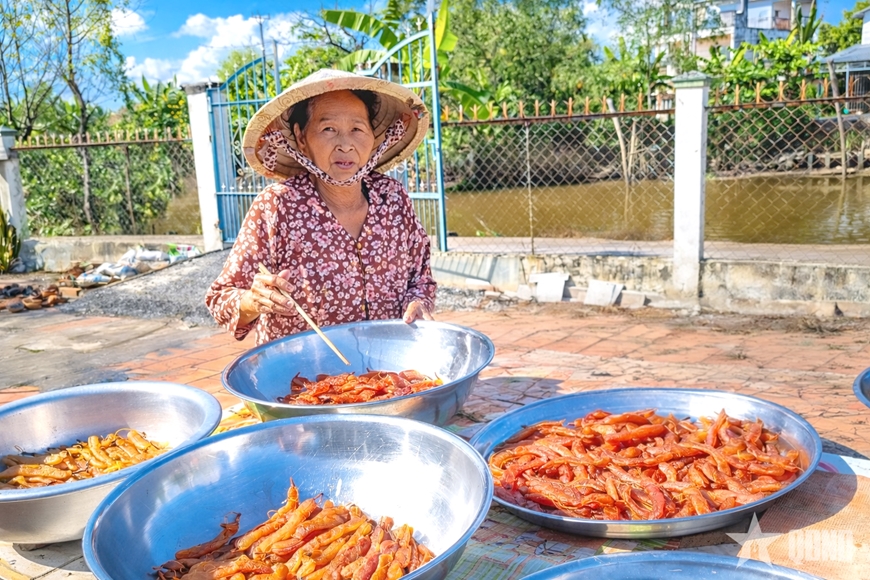 |
| Tamarind jam is popular and widely consumed during the Lunar New Year. |
For many families, making cakes and jams not only helps increase income but also preserves traditional crafts, passing them on to their children and grandchildren. Evenings spent together in the kitchen, wrapping cakes, making jams, sharing stories of the past year, and discussing plans for the new year have become a natural "classroom" for learning about family culture and ethics.
Many young people, by participating alongside their parents and grandparents in these tasks, have gained a deeper understanding of the value of labor, perseverance, and gratitude. Through this, an awareness of preserving cultural identity is naturally and sustainably formed.
In the midst of modern life, where everything can be bought ready-made, homemade sticky rice cakes and jams still hold a special place. This is because each piece of cake and jam contains not only natural flavors but also the feelings, memories, and care of the person who made them.
From the homes where families gather on the last evening of the year to the kitchens blazing with fire all night long, from the steaming pots of banh tet (traditional Vietnamese rice cakes) to the yards overflowing with dried candied fruits, all these elements create a vibrant picture of Tet in Dong Thap province. It's a simple yet profound picture, reflecting the deep connection between people and their families, homeland, and traditions. Amidst the hustle and bustle of modern life, preserving old customs—from the ancestral offerings and the pots of banh tet to the traditional candied fruits—is how the people of Dong Thap retain the "spirit of Tet," preserving the bond that connects generations.
And as the melodies of spring fill the air, as New Year's Eve fireworks blaze across the sky, the warmth of family quietly permeates every small home. This is the foundation upon which each person confidently steps into the new year, carrying with them the hope for a peaceful, happy, and loving spring.
Source: https://www.qdnd.vn/van-hoa/doi-song/giu-hon-tet-tu-gian-bep-que-1026094































































Comment (0)