

GONE ARE THE SCENES OF TEACHERS LECTURE ON THE BLACKBOARD AND STUDENTS SITTING BELOW LISTENING.
Project-based learning, model design, drama... are some of the creative ways of teaching history that teachers in many high schools in Ho Chi Minh City are applying to spark interest and improve students' hard and soft skills.
Project-based history teaching is an initiative of teachers and students from 9 high schools in Cluster 1 (District 1, District 3, Ho Chi Minh City). During a recent presentation of the history project "Vietnam Heroic Legacy" at Le Quy Don High School (District 3), students dressed in period costumes and reenacted historical anecdotes associated with national heroes. Through this project, Mr. Nguyen Viet Dang Du, head of the history department at Le Quy Don High School, hopes that students will find Vietnamese history fascinating and colorful, while also fostering a love of history through this innovative teaching method.
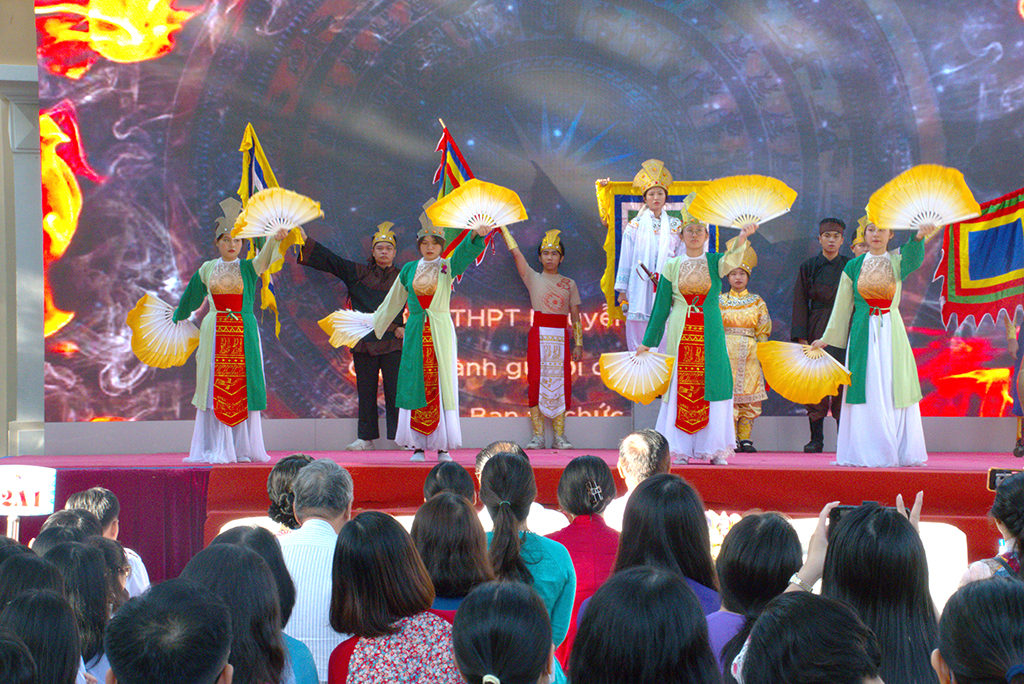
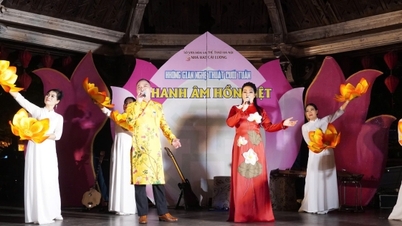
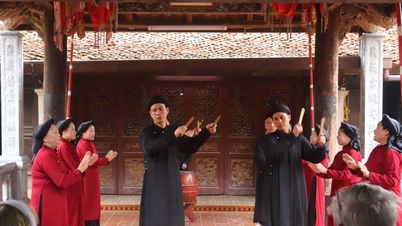
A theatrical performance by students of Nguyen Thi Dieu High School (District 3, Ho Chi Minh City) as part of a project on heroic Vietnamese history.
In addition to the cultural performances, the presentation also featured a vibrant display of "handmade" models. Among them, teachers and students from the High School for Gifted Athletes (District 1) presented dioramas that encapsulated knowledge, showcasing the students' design talents. "No longer are teachers lecturing at the blackboard while students sit and listen; now students can 'step outside' to immerse themselves in the flow of history," expressed Mr. Le Van Tan, a history teacher at the High School for Gifted Athletes.
Driven by a desire to help students deepen their knowledge, Ms. Nguyen Thi Ha Diem, a teacher at Hung Vuong High School (District 5), asked her students to design desk calendars based on the themes of each lesson. For example, with the theme "The Immortal Epic Resounds Forever" from the 12th-grade history curriculum, students would create calendars about key dates in the Vietnamese People's Army's resistance against the French and American forces.
In another lesson, Ms. Diem updated students on the latest knitting trends among young people, encouraging them to crochet keychains in the shape of bucket hats, soldiers, etc. According to her, the process of independently creating meaningful items like these will make the lesson more enjoyable for the students.
Emphasizing the creativity of his students, Mr. Che Anh Thien, a teacher at Tran Van Giau High School (Binh Thanh District), had his students write scripts, rent or design costumes for plays. After each performance, he would comment and summarize the lesson's content. "When history becomes a compulsory subject and its status is elevated, the responsibility of teachers in investing and creating must be greater to keep students enthusiastic about learning," Mr. Thien shared.
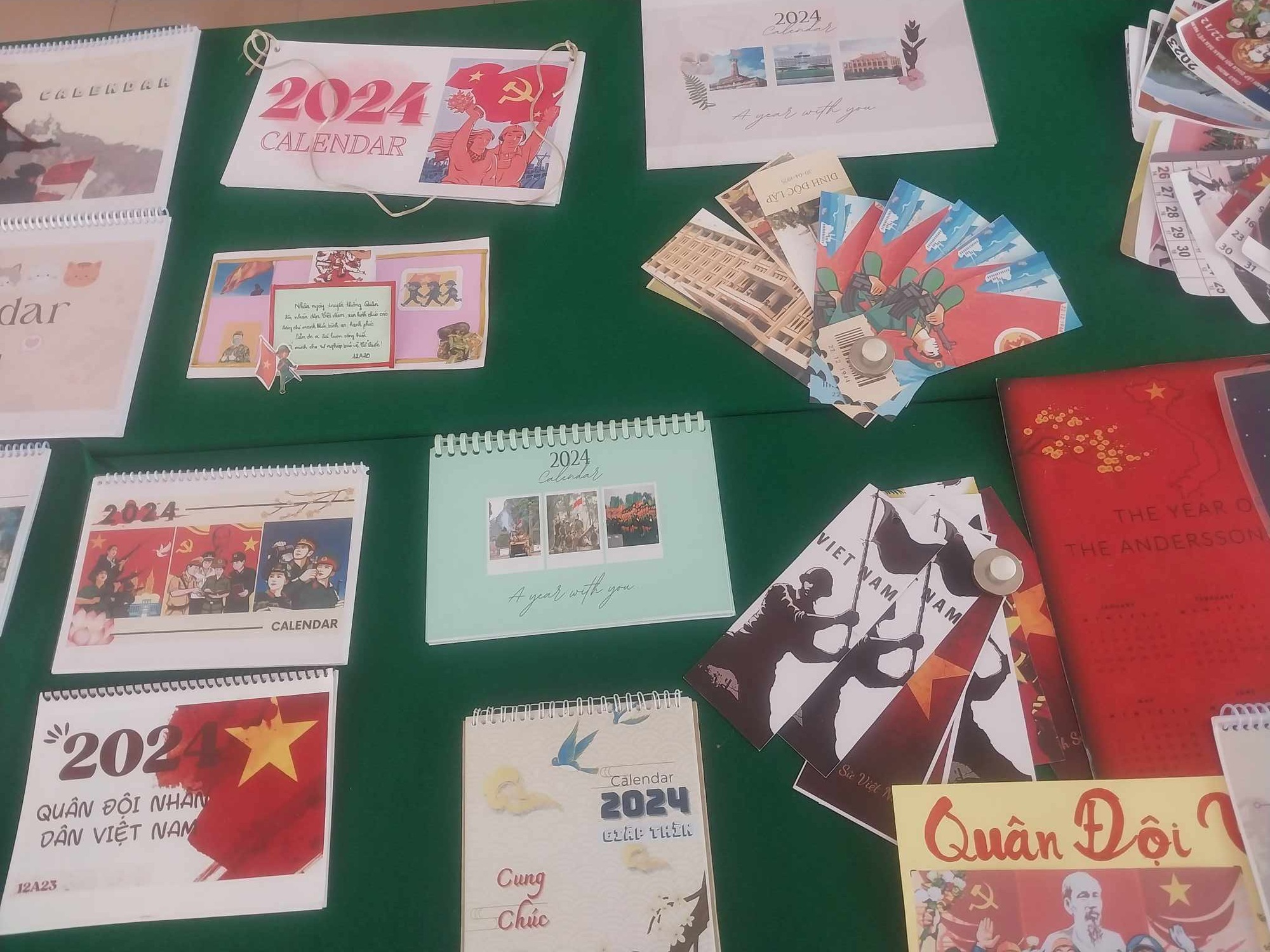
Student projects resulting from studying history.
K is no longer a "dry" subject.
Participating in a performance about President Ho Chi Minh at a presentation at Le Quy Don High School in November this year, Tran Huynh Minh Vy and Phan Thanh Huong (both 12th-grade students from Marie Curie High School, District 3) shared: "Visual reenactment of history is an interesting way to learn, helping us proactively explore knowledge and remember data perfectly, instead of rote memorization."
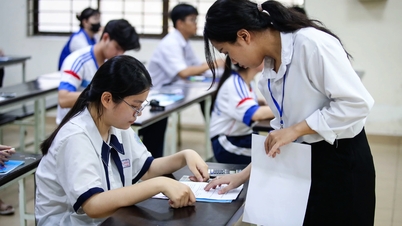
Previously, history was a dry subject for Vu Phuong Linh (a 11th-grade student at Pham Hong Thai High School, Hanoi ), with difficult-to-remember dates. Since approaching the subject through new methods like model building, presentations, poster design, and drama, Linh and her classmates' perceptions of the subject have changed. Linh says that these creative activities are often used during observation lessons or as a replacement for 15-minute written tests. As a result, students' motivation and grades have improved.
TO PREVENT STUDENTS FROM BEING OVERWHELMED BY INNOVATION
However, the only thing that worries many students like Linh is how to avoid being overwhelmed by the changes. For example, Phuong Linh usually needs 2-3 days to complete a PowerPoint presentation. If it's a product design activity, the time spent doubles. On some days, multiple subjects have exams, requiring presentations or product creation, leaving Linh scrambling to finish. "Creating new ways of learning is good, but I only want to do it in my free time so I can allocate time for other subjects," Linh expressed.
Understanding this, Ms. Diem suggested that teachers should not overuse the product creation method but should consider factors such as the purpose, content of the lesson, cost, and students' ability to complete it. Sharing this view, Mr. Thien argued that teachers need to plan each lesson in detail, including assigning tasks appropriately and guiding students' learning.
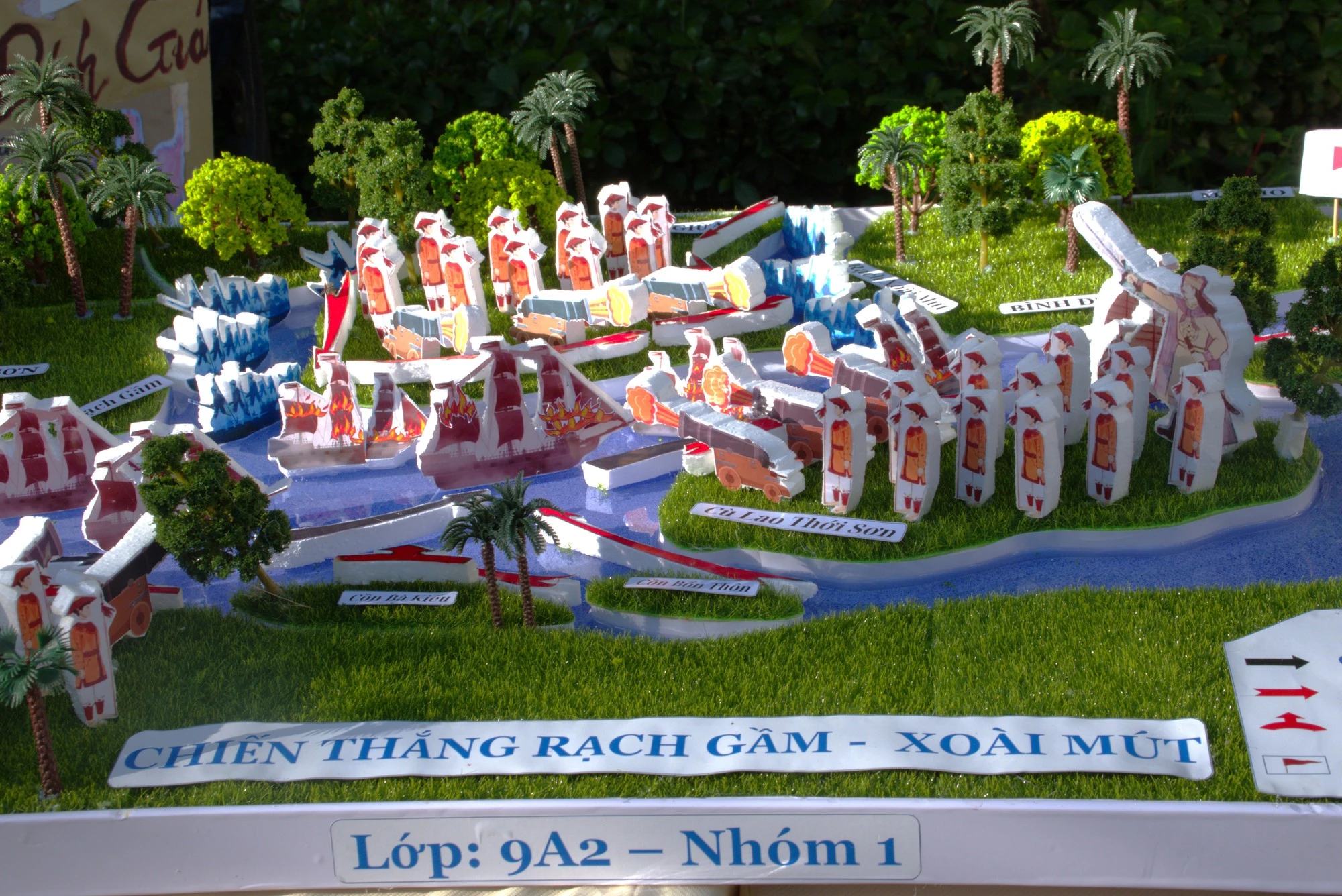
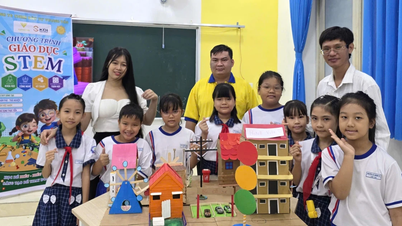
Student models for history lessons.
Ultimately, regardless of the teaching method, teachers recognize that the key issue is using history to educate students' character and ideology. Specifically, teachers must provide proper guidance, infusing each lesson with patriotism, national pride, and a sense of territorial integrity.
From the students' perspective, teachers encourage them not to confine their studies to the 45-minute lesson but to combine it with reading additional books, newspapers, and external materials, or visiting historical sites to proactively spark their learning inspiration and fully immerse themselves in the subject of history.
Source link



![[Photo] National Assembly Chairman Tran Thanh Man working with the Standing Committee of the Law and Justice Committee](https://vphoto.vietnam.vn/thumb/1200x675/vietnam/resource/IMAGE/2026/05/21/1779378929214_ndo_br_1-4610-jpg.webp)
![[Photo] General Secretary and President To Lam presides over a working session with the Central Policy and Strategy Committee on the development of the materials industry.](https://vphoto.vietnam.vn/thumb/1200x675/vietnam/resource/IMAGE/2026/05/21/1779359935432_a3-bnd-3129-1412-jpg.webp)

























































Comment (0)