

 |
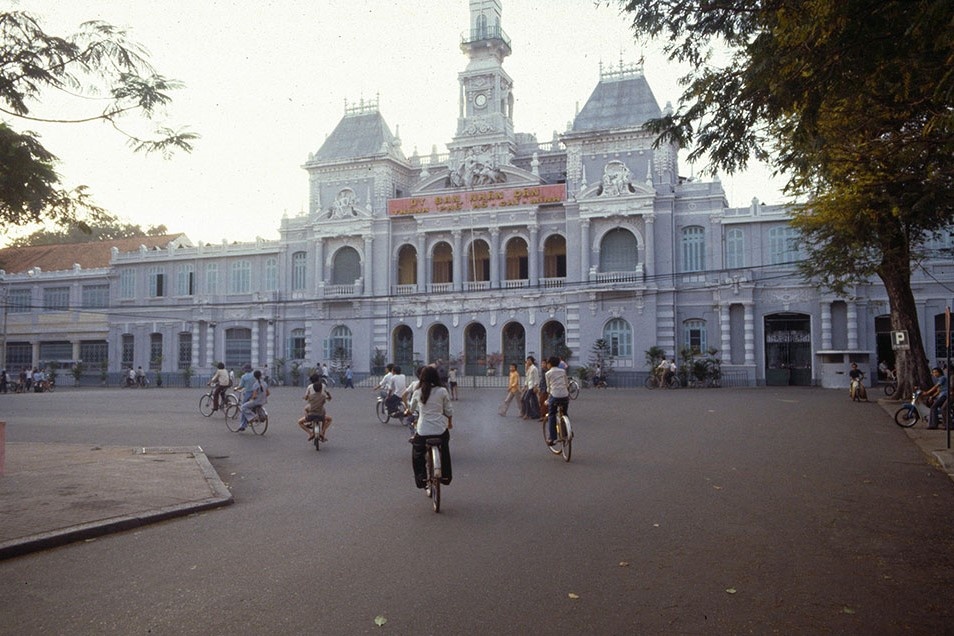
Around the end of 1979, Dutch photographer Ab Stokvis, along with a volunteer group including journalists and medical professionals, visited Vietnam to see medical facilities and centers for orphans and homeless children. After spending time in Hanoi, Hai Phong, Hue, and Da Nang, his group arrived in Ho Chi Minh City in early 1980. At this time, the centrally-controlled economy was still in effect, there weren't many foreign tourists, and very few photographs of Ho Chi Minh City were taken. A notable architectural landmark was the Ho Chi Minh City People's Committee building, constructed between 1902 and 1908. In front of it was a square, now the Nguyen Hue pedestrian street. |
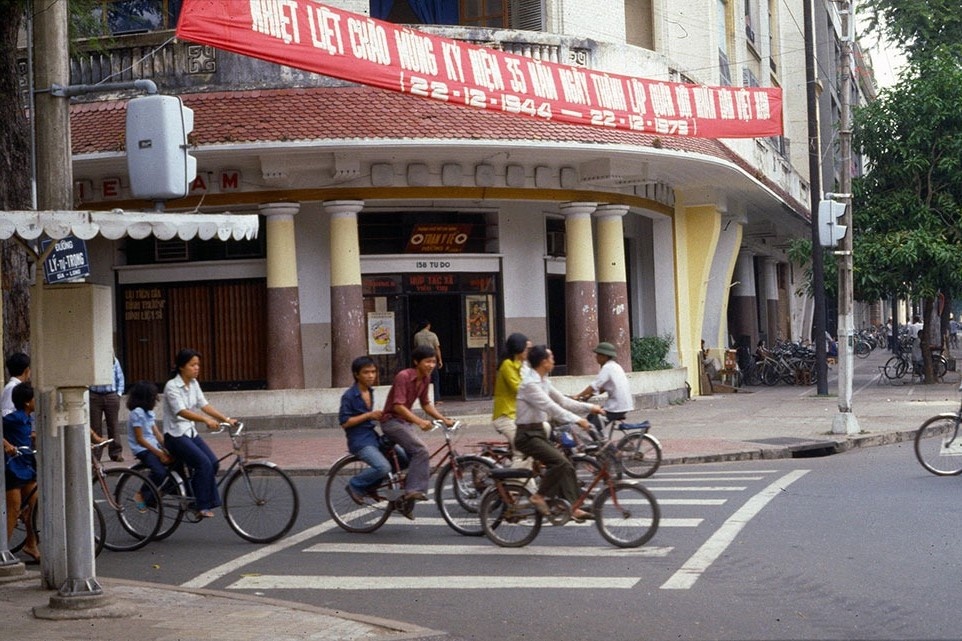 |
The intersection of Ly Tu Trong and Dong Khoi streets (now part of Saigon ward) was bustling with people, and the street signs were still hand-painted. In 1980, bicycles were the most common mode of transportation, and it was easy to see groups of people cycling to work. Motorbikes were very rare, mostly Honda 67s, Vespas, Lambrettas, and Mobylettes that were remnants from before 1975. |
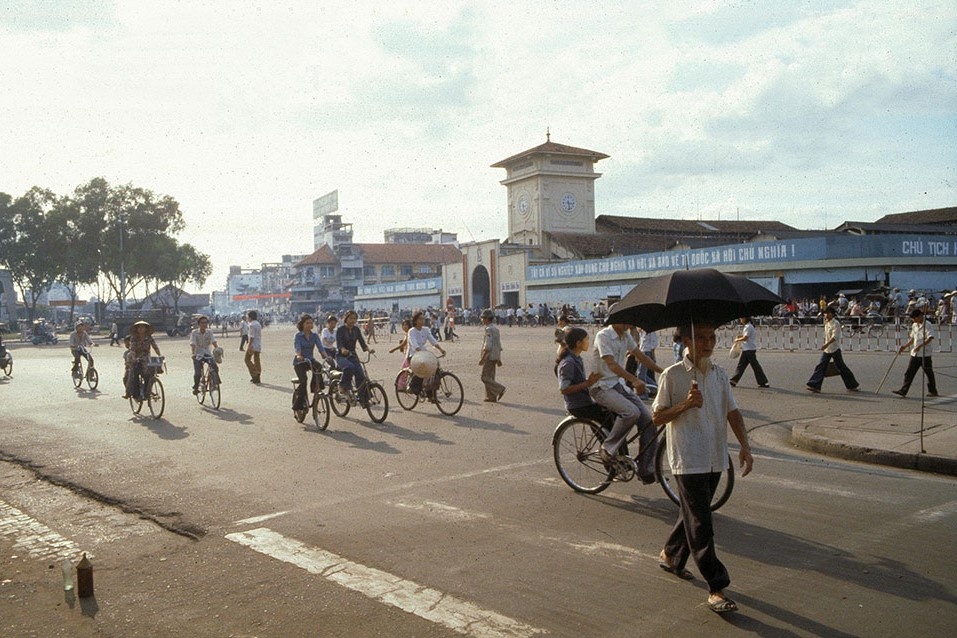 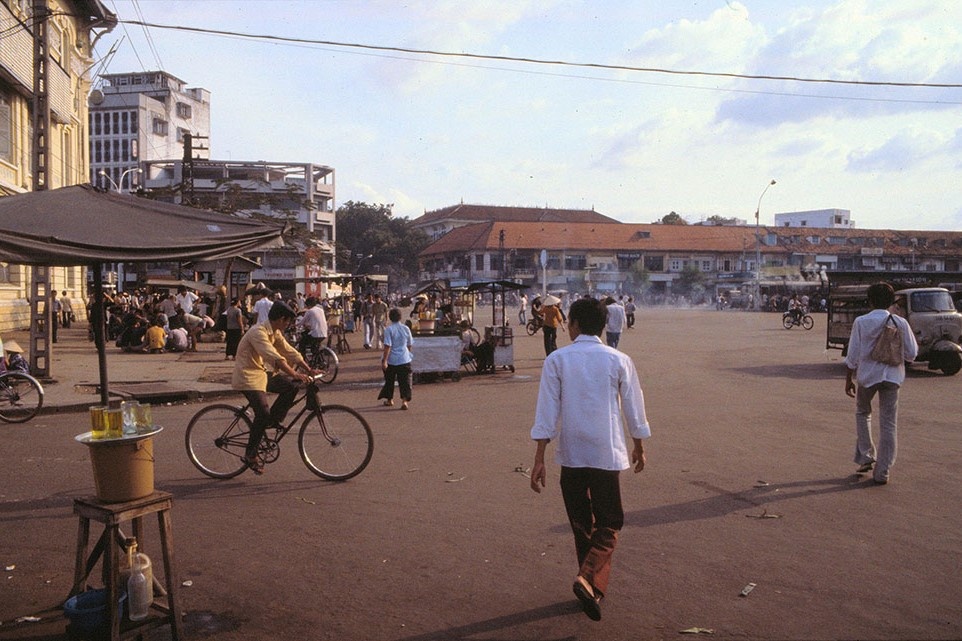 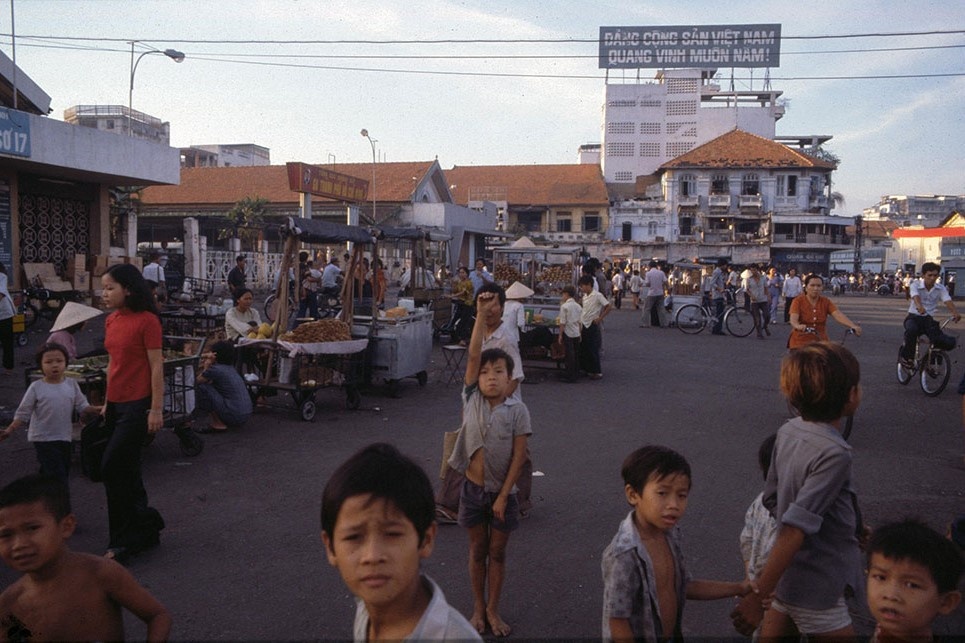  |
The scene in front of Ben Thanh Market (now part of Ben Thanh Ward). The sight of food and fruit vendors creating a lively morning atmosphere. At this time, the Quach Thi Trang roundabout had not yet been built; it was still a crossroads with old buildings and wide roads. |
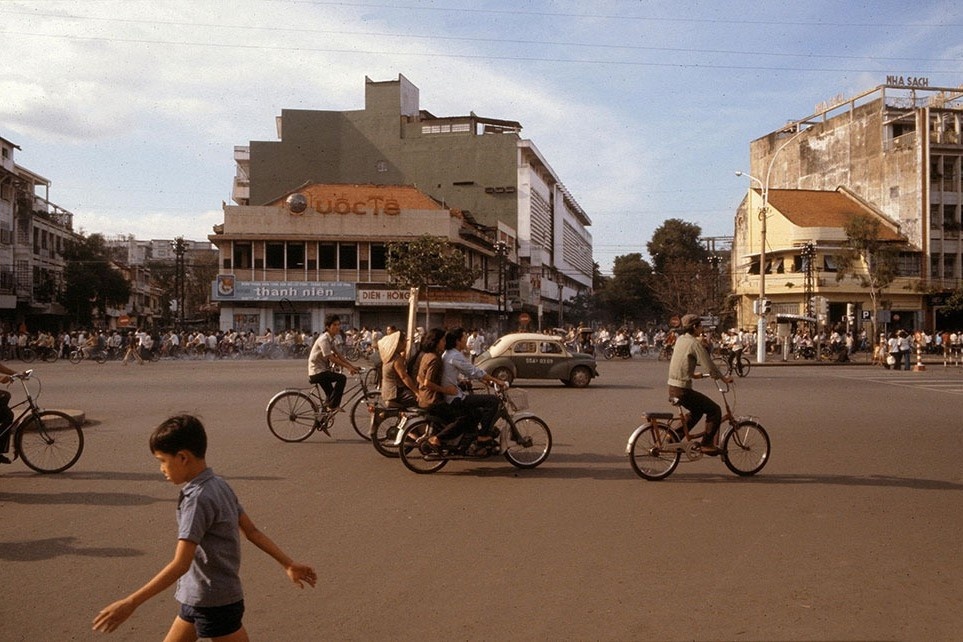 |
The corner of Le Loi, Nguyen Trung Truc, and Nam Ky Khoi Nghia streets (now part of Saigon ward), with the International Tea Room in the middle before 1975. Photographer Stokvis once remarked that the lives of people in Ho Chi Minh City at that time were still poor, but by 1986 the economy began to prosper. Since 1995, Ho Chi Minh City has been bustling with foreign tourists, and the central area (Dong Khoi, Nguyen Hue, Bui Vien) is always lively. |
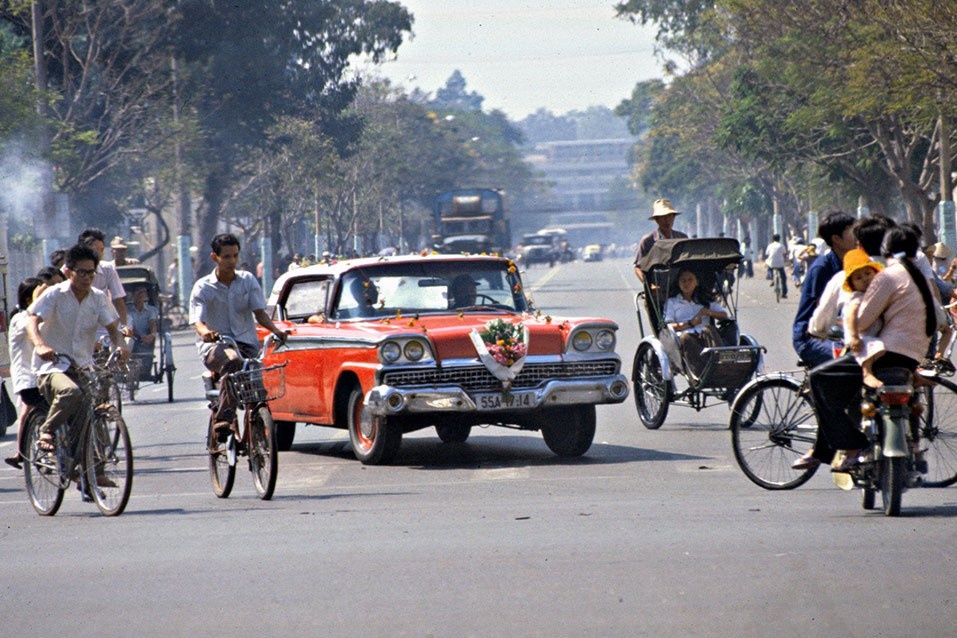 |
In 1980, 30/4 Street (now Le Duan Street) was bustling with traffic, and the rows of old trees on both sides leading to the Reunification Palace had been planted in neat rows. During the French colonial period, this road was called Norodom, and after 1955 it was renamed Thong Nhat. |
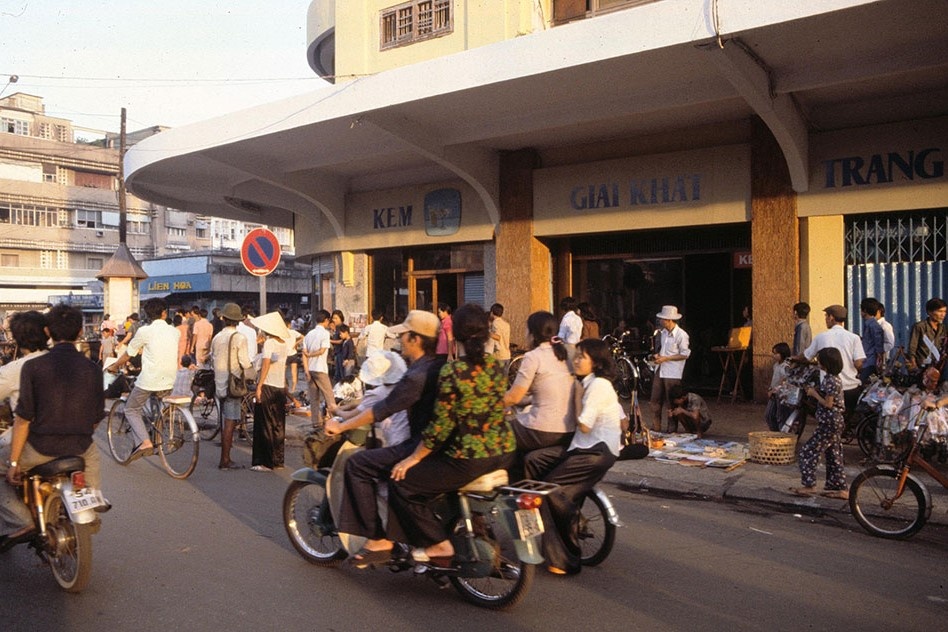 |
Located at the corner of Le Loi and Dong Khoi streets (formerly Nguyen Hue street), the TAX department store (a high-end department store) was built in a modern Western architectural style with a glass facade, but without the ornate details of old French architecture. Inside, the floors were tiled with polished tiles, and the shelves were neatly arranged. The floors displayed a wide variety of goods rarely seen at the time, such as clothing, shoes, household goods, and imported food. Many street vendors still operate on the sidewalk in front of the department store. Currently, the building is no longer a bustling commercial center, but has become a cultural and exhibition space. |
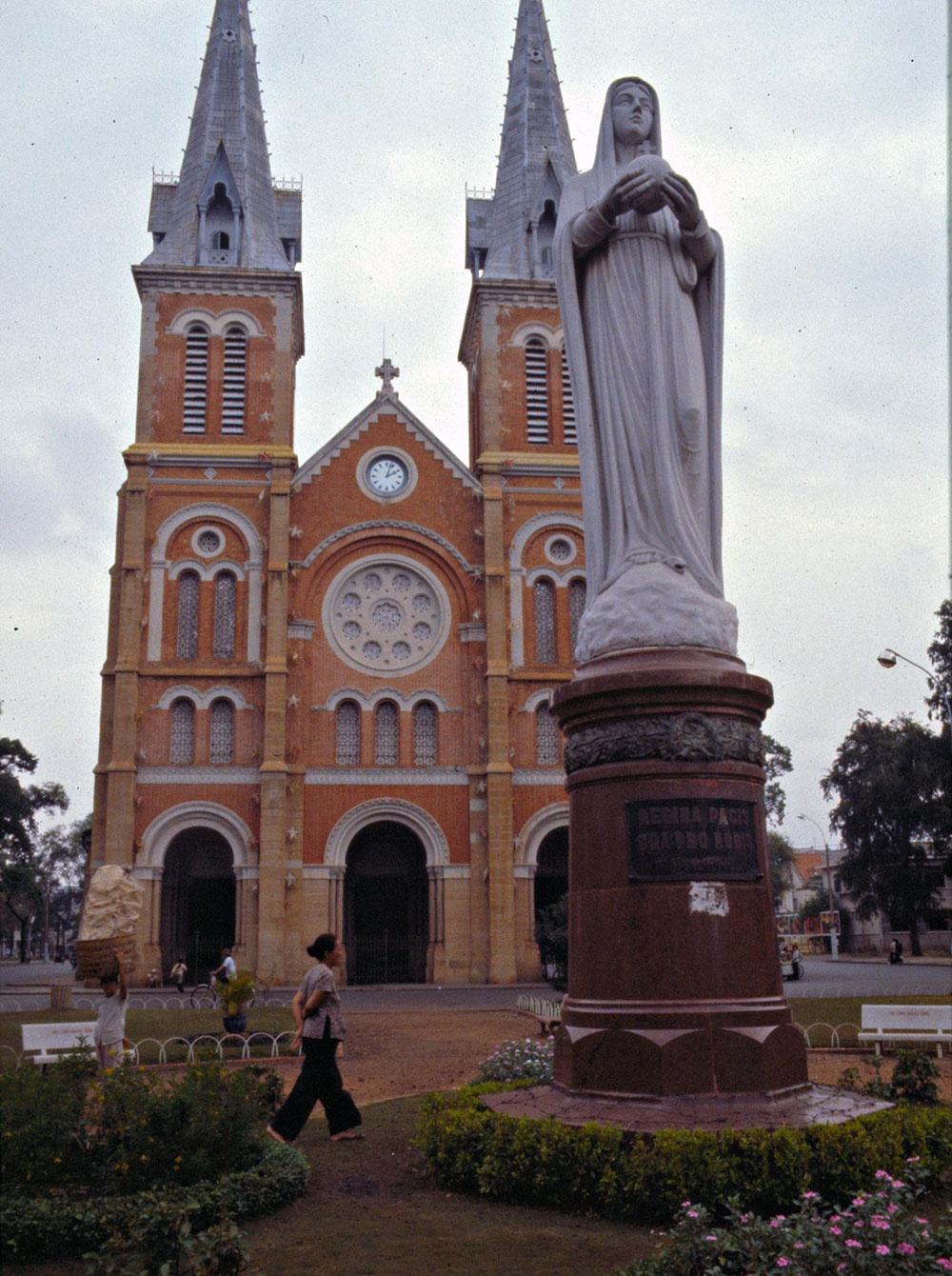 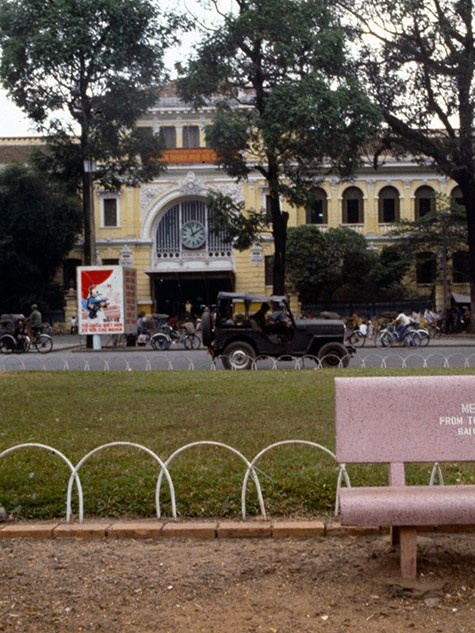 |
The scene in front of Notre Dame Cathedral (left) and the Central Post Office (right) in 1980. It's clear that both buildings have retained their original architecture to this day. However, since 2017, the cathedral has undergone a large-scale restoration. The Central Post Office, on the other hand, remains open to visitors for sightseeing, mail delivery, and postal services. This building embodies the spirit of late 19th-century European architecture with its central clock and red tiled roof. Inside, there are numerous souvenir shops serving both domestic and international tourists. |
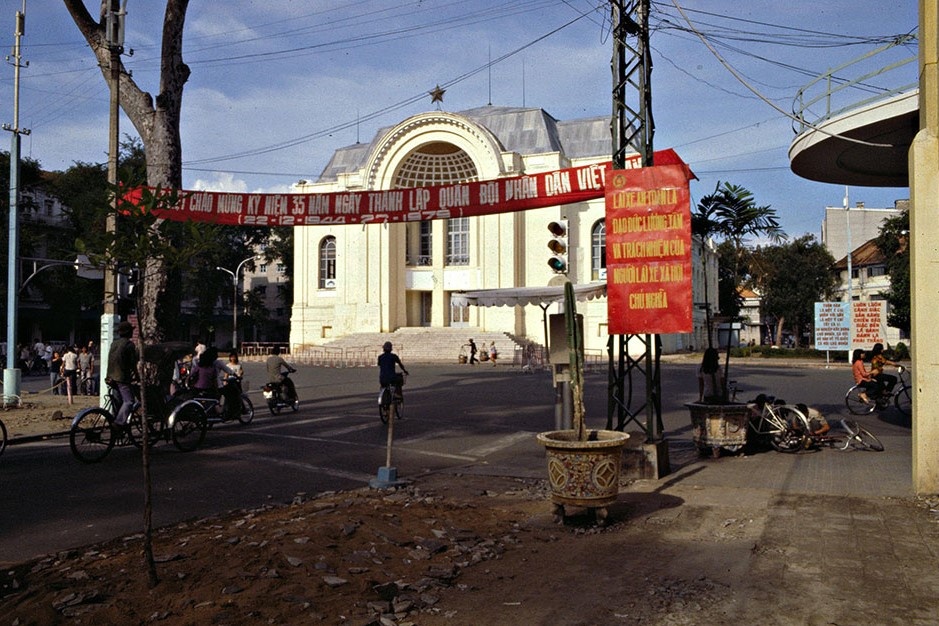 |
Completed in 1900, the City Theatre was considered the leading cultural and artistic center of Ho Chi Minh City at the time, facing Lam Son Square – a large square in front of the theatre. Its impressive facade features numerous Corinthian columns, high arched doorways, and elaborately decorated iron balconies. Inside, the grand hall boasts high ceilings, classical chandeliers, and upholstered wooden chairs. While the sound and lighting systems were limited, they were suitable for performances of music, dance, cải lương (Vietnamese traditional opera), and plays during the 1980s and 1990s. |
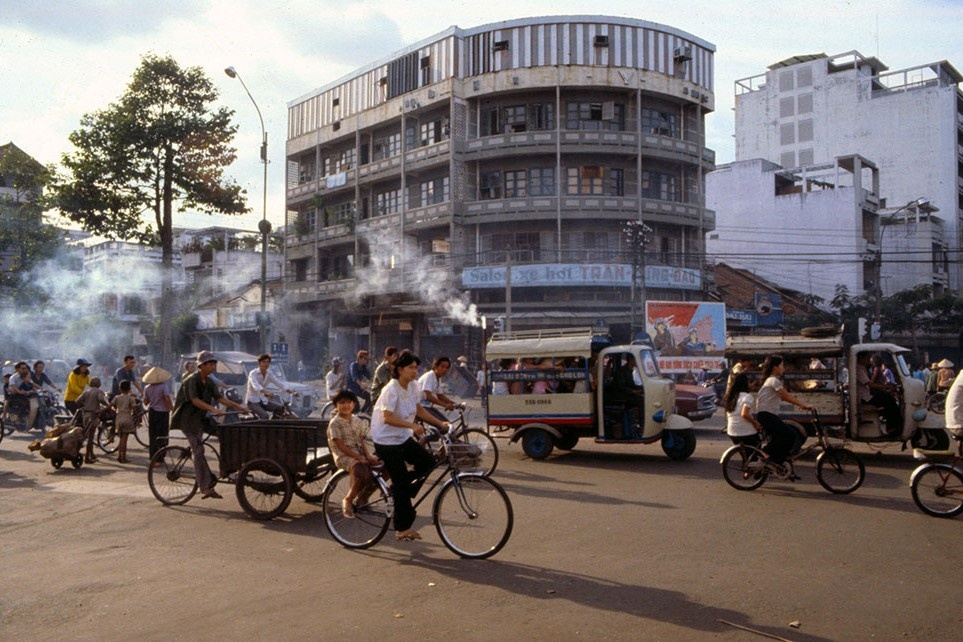 |
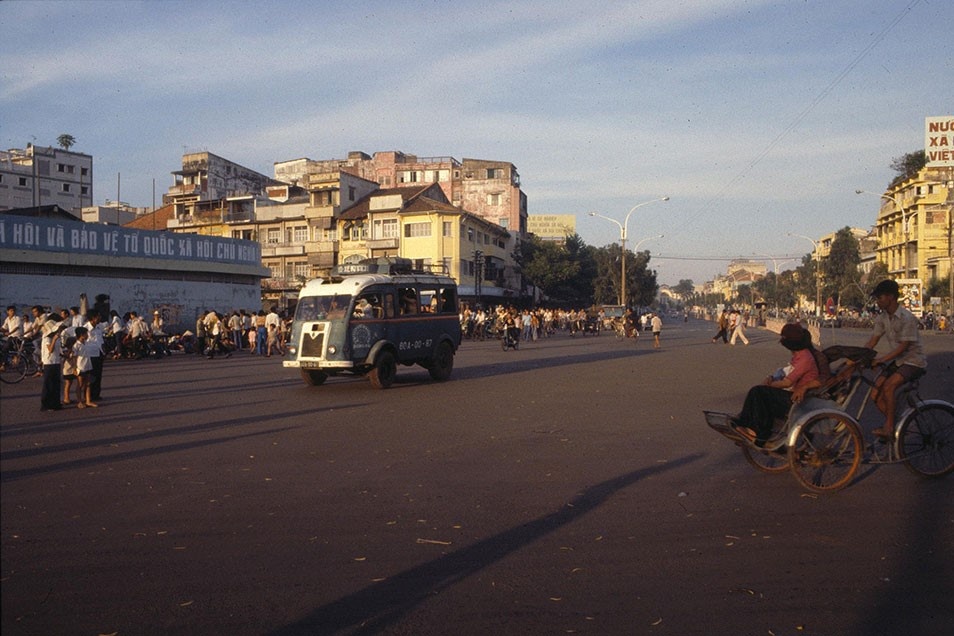
The corner of Tran Hung Dao and Nguyen Thai Hoc streets (now part of Saigon ward) was always crowded. Bicycles and old buses jostled for space during rush hour. Street vendors were short of goods, and many items had to be purchased using ration coupons. |
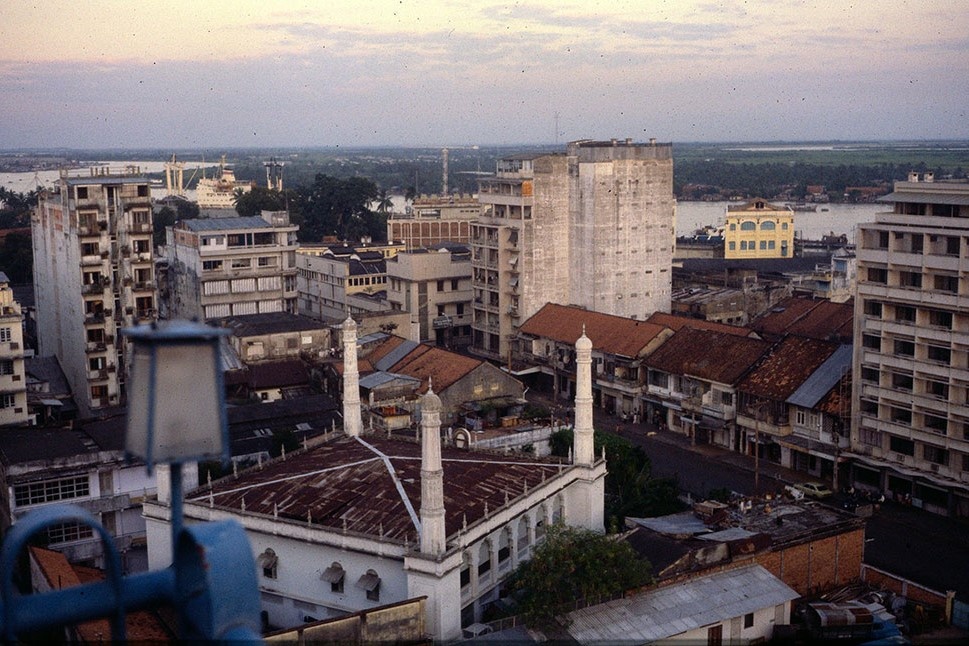 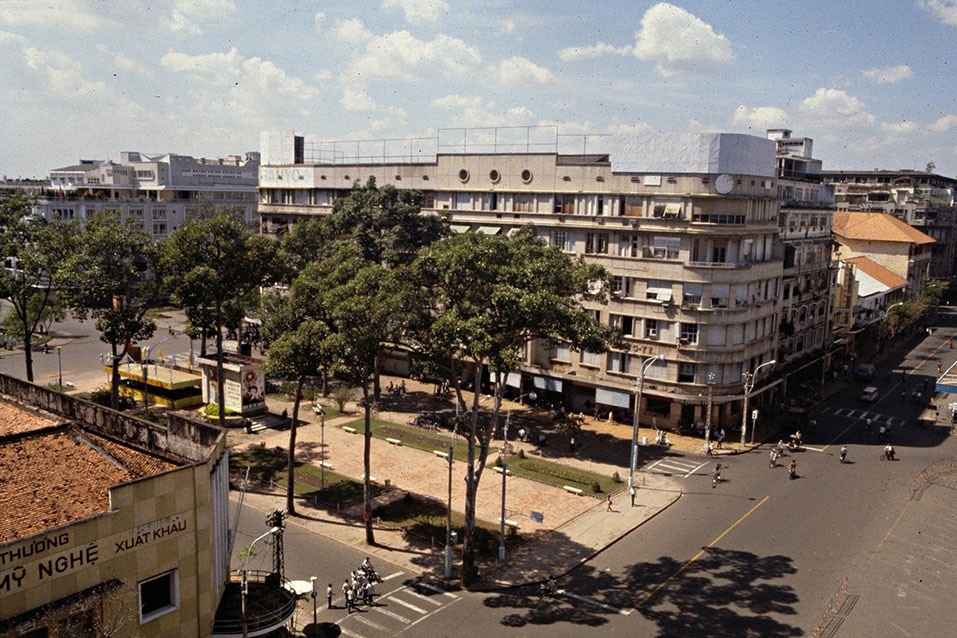 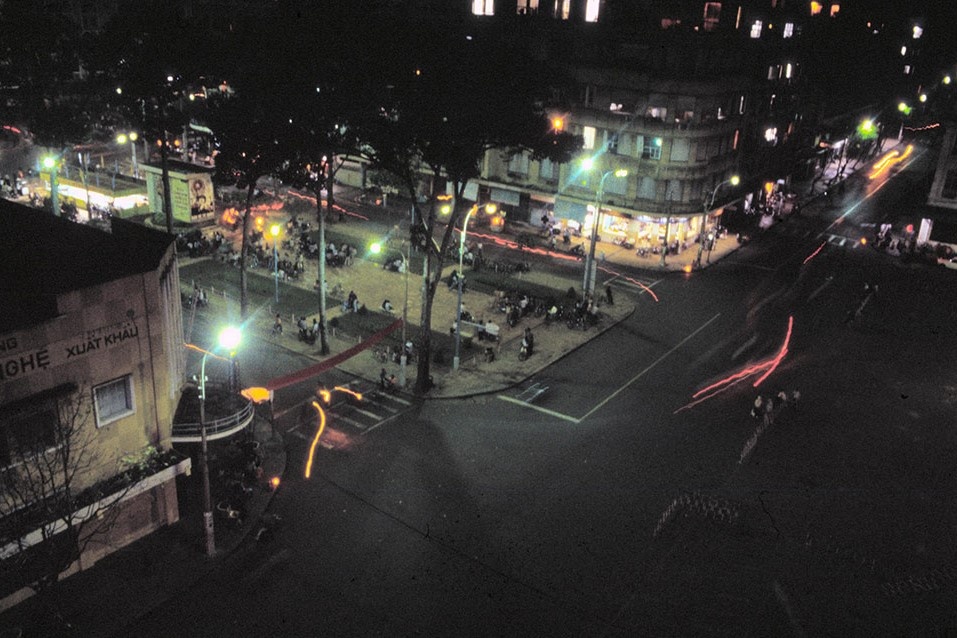 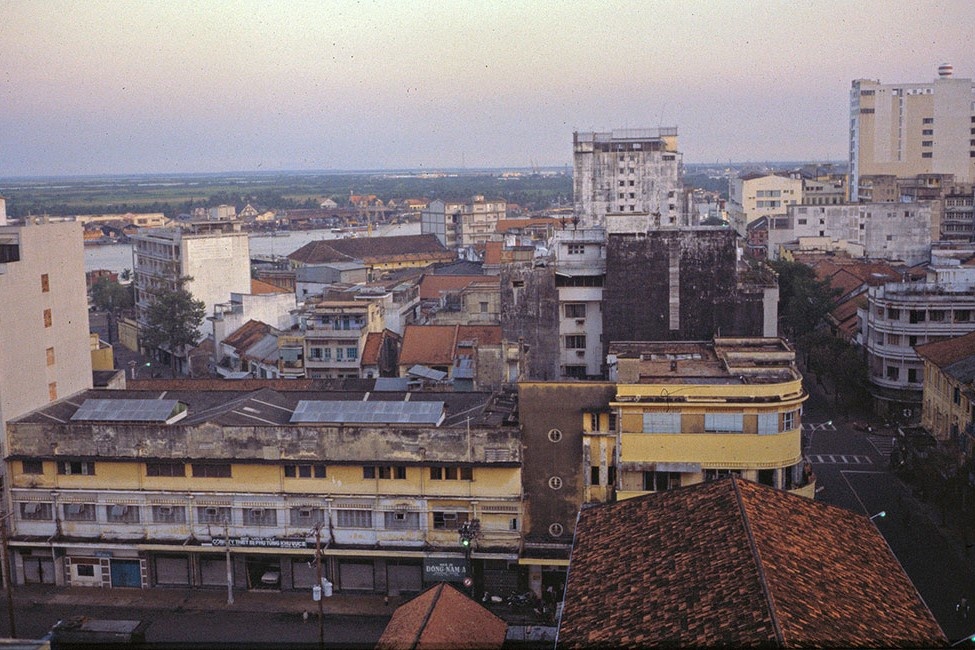 |
From the Caravelle Hotel (formerly the Doc Lap Hotel), one can look down and see the Jamia Al-Musulman Mosque, Dong Du Street, the intersection of Dong Khoi and Mac Thi Buoi streets, the Bong Sen Hotel, the Continental Palace Hotel, and the entire Lam Son construction site. |
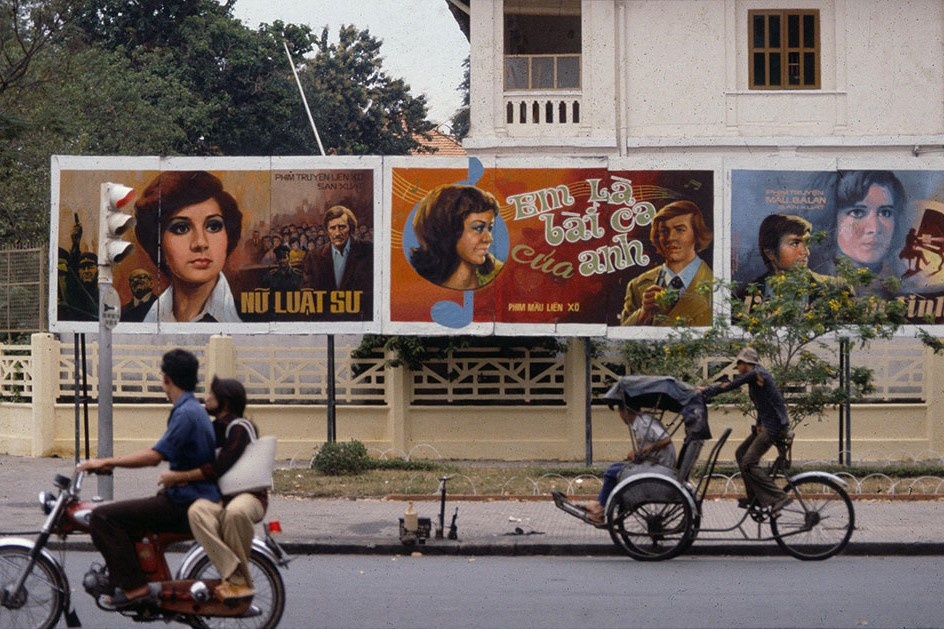 |
On a central street, numerous posters promoting the film are displayed on the sidewalk. |
Source: https://znews.vn/khong-nhan-ra-tphcm-nam-1980-post1604296.html
![[Photo] Prime Minister Pham Minh Chinh receives the Director of RMIT University Melbourne (Australia)](https://vphoto.vietnam.vn/thumb/1200x675/vietnam/resource/IMAGE/2026/04/02/1775142120087_thiet-ke-chua-co-ten-2026-04-02t214220784-png.webp)























































Comment (0)