

The global economy remains resilient.

According to the National Institute for Economic and Social Research (NIESR) Fall Report, despite the headwinds and uncertainties from U.S. tariff policies, the global economy has so far shown considerable resilience. After achieving growth of 1.8% in 2024, developed economies slowed in 2025, reflecting a slowdown in the U.S. economy (from 2.8% in 2024 to 2.1% in the first half of 2025). Conversely, growth in China and India has been sustained, even stronger than in the Eurozone and Japan.
As a result, the relatively stable global growth momentum recorded since 2023 continues to be maintained. This resilience reflects stronger activity in the services sector. Inflation in most developed economies has fallen (though still above target levels in the US, UK, and Japan), allowing central banks to ease monetary policy.
Regarding the global economic outlook, the NIESR Institute forecasts that global trade growth will slow from 3.8% in 2024 to 3.0% in 2025 and 2.3% in 2026. Despite this, global GDP growth is expected to remain at 3.2% in 2025 and further slow to 3.0% in 2026 due to the negative impact of trade restrictions and increased uncertainty continuing to affect investment and trade.
The role of "communication" in trade cooperation strategies.
According to the Lowy Institute (Australia), as Indonesia accelerates its efforts to sign the Comprehensive Economic Partnership Agreements (CEPA) network from Europe to North America, the transmission of information and messages is becoming increasingly important and crucial to the sustainability of these agreements.
Indonesia's integration process is taking place in a digital environment fraught with complex political factors. The old model of government negotiations, businesses benefiting, and the public tacitly accepting is no longer suitable. Recent events demonstrate this. The Comprehensive and Progressive Trans-Pacific Partnership (CPTPP) and the Transatlantic Trade and Investment Partnership (TTIP) between the EU and the US did not collapse because of tariffs, but because of public opinion, perceived as a threat to sovereignty and jobs, and potentially becoming politically toxic. The TCEPA in Indonesia and the EU are facing similar challenges.
To bridge this perception gap, a public relations narrative is needed that can connect reason and emotion: positioning Indonesia as an indispensable partner in building sustainable supply chains, while portraying Europe as a cooperative partner that respects Indonesia's development path and priorities.
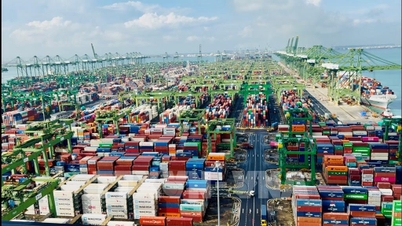
The Suez Canal Economic Zone is building a prefabricated factory complex.
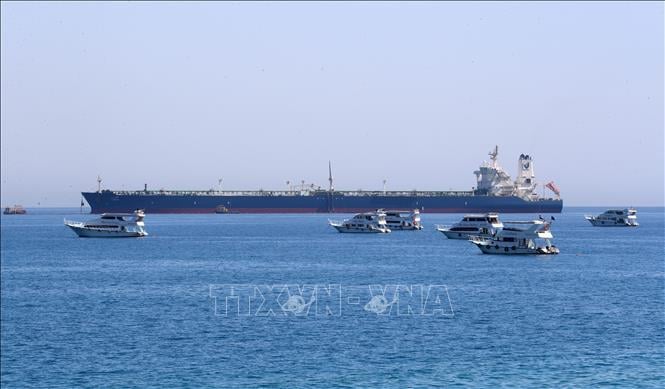
Egypt's Suez Canal Economic Zone (SCZone) recently signed a contract to build a large-scale prefabricated industrial complex in Qantara West to expand production capacity and attract new investors.
The project, with a total investment of 1 billion EGP (approximately 20.3 million USD), is being implemented by Main Development Company (MDC) – the developer of SCZone – on an area of 200,000 m². The complex is designed to provide prefabricated factory units, allowing businesses to quickly begin production without having to build facilities from scratch. This model is expected to significantly reduce initial investment costs and shorten the time to commissioning for investors.
The project will be implemented over 36 months, divided into two phases, each covering an area of 100,000 m² with a total cost of 500 million EGP. The first phase is expected to be completed in 18 months.
SCZone Chairman Walid Gamal El-Din said the project at Qantara West targets small and medium-sized manufacturers, particularly in the textile, food processing, agricultural production, and medical supplies sectors. He noted that this model had previously been implemented at the Ain Sokhna industrial park and had proven effective in attracting investment.
Source: https://baotintuc.vn/kinh-te/kinh-te-do-day-20251228113552149.htm




![[Image] Hanoi's urban life under the challenge of a "scorching hot" environment](https://vphoto.vietnam.vn/thumb/1200x675/vietnam/resource/IMAGE/2026/05/25/1779706979265_nang-nong-t5-2026-minh-duy-7-4636-jpg.webp)









































































Comment (0)