


An inevitable trend
Recently, the Vinhomes Green Paradise Can Gio project has become the focal point of the real estate market. This large-scale, reclaimed land tourism urban area, spanning 2,870 hectares, is being developed by Can Gio Tourism Urban Development Joint Stock Company (part of Vingroup ), and is expected to create an international-standard "city on the sea." Not only Vingroup, but many other large corporations are also preparing to build large urban areas ranging from hundreds to thousands of hectares, complete with all amenities, stretching across cities from North to South.
Dr. Le Xuan Nghia, former Vice Chairman of the National Financial Supervision Committee, commented: The development of mega-urban real estate projects is an inevitable trend; the reason is that the supply of real estate is still "scarce," while land in inner-city areas is becoming increasingly "limited." After a period of rapid urbanization, the remaining land plots are small and fragmented, not suitable for large-scale urban development. Therefore, the inevitable trend is for investors to shift to the outskirts or even further away from the centers of large cities.
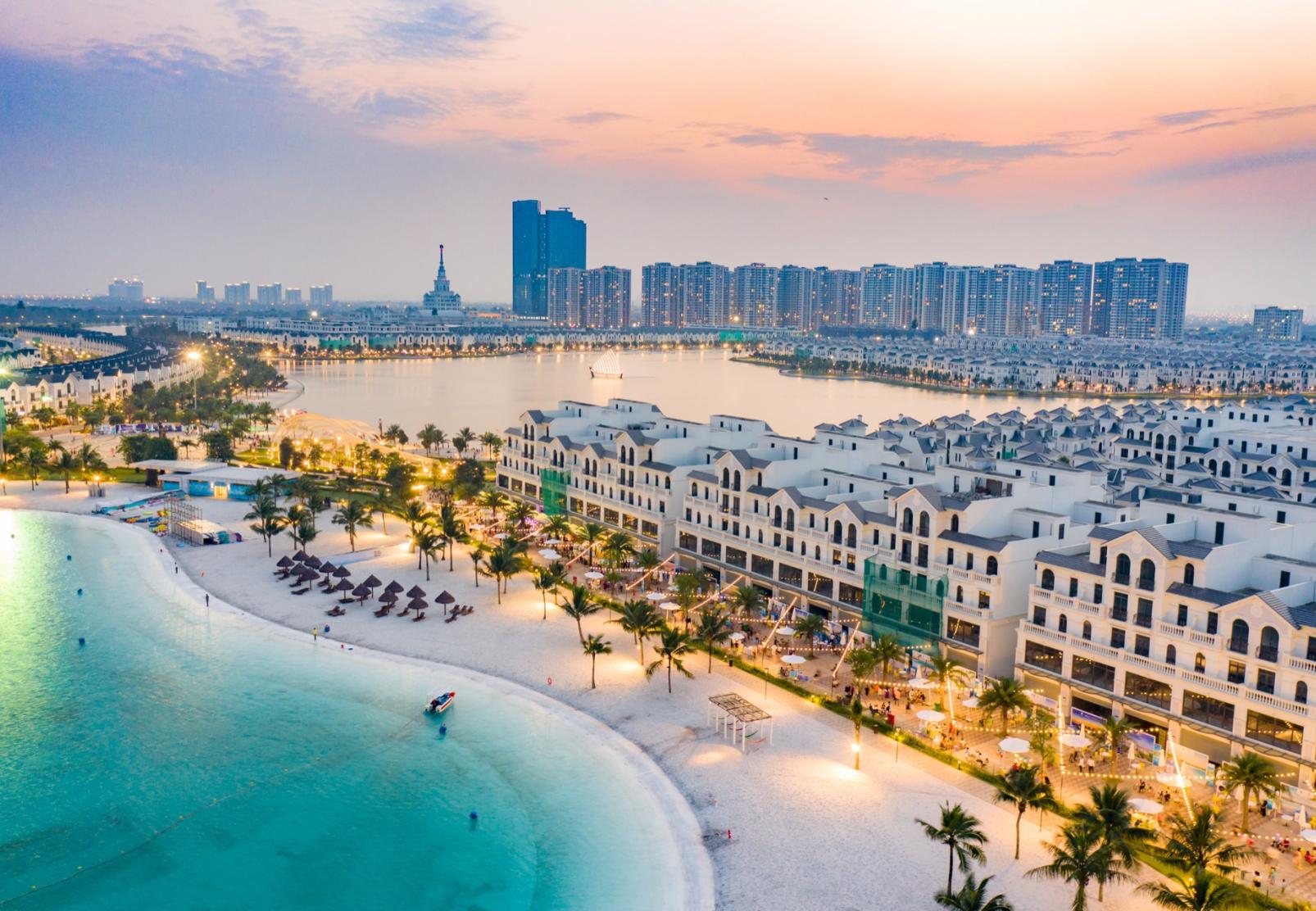
Vietnamese cities are entering a new era, the era of meticulously planned megacities with comprehensive ecosystems of amenities.
PHOTO: MH
When developing in suburban or outlying areas, projects must be comprehensively planned, encompassing both hard infrastructure (roads, electricity, water, telecommunications, parking lots, electric vehicle charging stations, etc.) and soft infrastructure ( education , healthcare, services, culture, etc.). Many areas even invest in electric bus routes or inner-city railways for convenient connectivity to the city center. Therefore, new projects tend to expand in scale, no longer limited to a few dozen hectares, but potentially reaching 500 hectares, 1,000 hectares, or even 10,000 hectares, creating "cities within cities".
"In the city center, land prices are so high that implementing large-scale projects is almost impossible. Only outside the central area can businesses access large plots of land at reasonable prices, sufficient to plan a complete urban area integrating functions such as living, working, studying, and recreation. This explains why new megacities often appear in the outskirts of major cities like Hanoi , Ho Chi Minh City, Hai Phong, or Da Nang…," Mr. Nghia analyzed.
According to Mr. Le Xuan Nghia, urban real estate developments are no longer just well-planned complexes; urban development technology has advanced rapidly. Many large corporations such as Vingroup, Ecopark, and Sun Group are implementing projects with high demands on overall design, environment, architecture, and infrastructure systems. Building on this foundation, developers continue to invest in smart city models, ensuring safety, energy efficiency, green spaces, and convenience for residents' daily lives, education, healthcare, and shopping. As a result, large-scale megacities create a complete living structure: internal and inter-regional transportation, a clean environment, and multi-layered amenities. This is the urban model that people expect for the future, meeting their needs for living, working, entertainment, and business investment.
"The trend of developing 'megacities' is a positive sign, contributing to reducing pressure on population, employment, housing, and traffic congestion in central urban areas. When the North-South high-speed railway is implemented, with 23 stations, it is expected that approximately 15-20 more large-scale cities will be formed across the country," predicted Dr. Le Xuan Nghia.
Opening the future for urban development in Vietnam.
In fact, Vietnam has long been aiming for a multi-centered urban structure, reducing pressure on the old central core. Megacities in the surrounding and satellite areas are encouraged to help distribute the population rationally, reduce congestion, and create new growth poles.
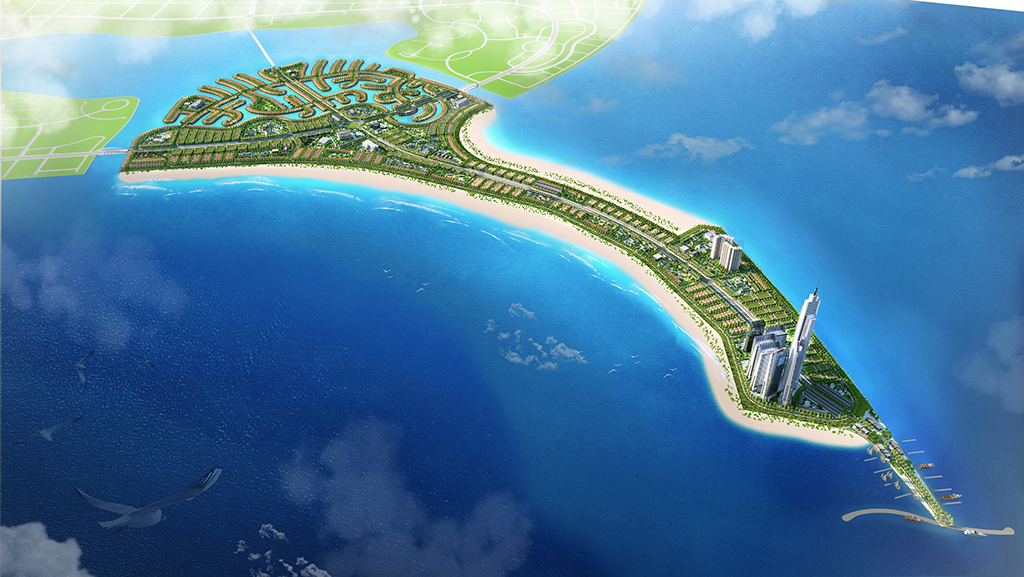
Perspective of the Can Gio reclaimed land urban area, envisioned to become a world-leading ESG++ urban area.
Photo: VG
However, Professor Dang Hung Vo, former Deputy Minister of Natural Resources and Environment, believes that the formation of a megacity does not automatically attract residents. The most crucial aspect of megacities is their ability to provide employment opportunities for residents. Many modern urban areas have been built but fail to attract residents because people still have to commute long distances to the city center for work every day. Since the transportation infrastructure is inadequate, they are forced to remain in large cities. As a result, housing shortages persist in the inner city, while the strategy of relocating people to the suburbs has failed.
Drawing on the experiences of other countries, Mr. Dang Hung Vo cited the example of Germany, where there are approximately 10 well-planned megacities with complete infrastructure, from housing to transportation, and full of high-end services and tourism... Their approach is to develop a dense network of smaller cities surrounding larger cities, creating momentum for the economy. In these smaller cities, people not only live but can also find diverse employment opportunities. This is a very good approach to urbanization.
In Vietnam, if industrialization is completed, the proportion of the population living in urban areas must reach at least 75%. This presents an opportunity for strong future growth in the real estate market. However, development cannot continue in the fragmented and uncontrolled manner of the past; instead, well-planned urban areas must be formed – places for settlement that create jobs. Keeping pace with global trends, these urban areas require extensive public services, meeting green criteria, sustainable development, and being closely linked to the rapidly emerging era of technology and artificial intelligence.
"The megacity in Can Gio can be considered a model if judged by the above standards. Can Gio has very strong advantages; if the investor's plan is implemented correctly, we will have a coastal city that surpasses Singapore in every aspect, from tourism to trade and logistics on the Pacific-Indian Ocean shipping route. In fact, there will be no other coastal city in the world as unique as this one. Most importantly, people in Can Gio will have many job opportunities. The metro system connecting to Ho Chi Minh City and the sea bridge connecting to Vung Tau will also ensure convenient travel to the core of major urban centers. This will be a prime example of natural population decentralization. Where people's needs are fully met, they will naturally come. In the future, the world will also aim to form such model megacities," Professor Dang Hung Vo stated.
According to a report by the Ho Chi Minh City Department of Planning and Architecture, the Vinhomes Can Gio mega-city, with its ESG++ model, marks a transformation of Ho Chi Minh City from a traditionally developed urban area to a sustainable multi-centered era. The project, with a total investment of US$10 billion, is estimated to generate 230,000 billion in economic value and establish a strategic green growth pole for the city. This aligns with the modern multi-centered urban planning direction that Ho Chi Minh City is pursuing.
Source: https://thanhnien.vn/ky-nguyen-cua-cac-sieu-do-thi-185251119201846944.htm
















































































Comment (0)