

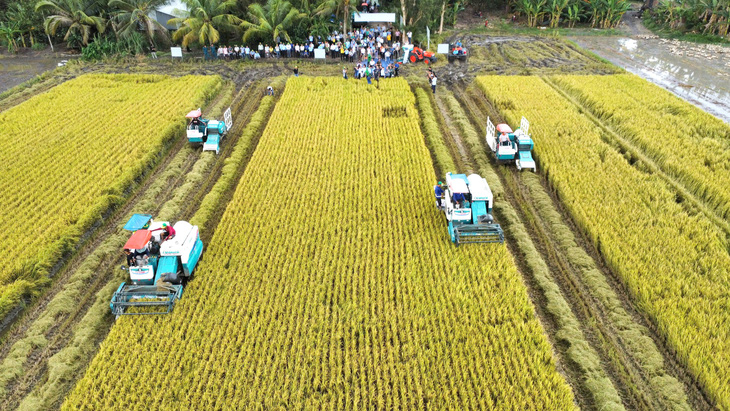
Harvesting rice from a pilot model of the 1 million hectare high-quality rice program in Can Tho City – Photo: HX
Following the Prime Minister 's directive, localities in the region are urgently and resolutely implementing this program.
Reduce production costs.
Recently, Can Tho City held a preliminary review of the pilot model, with very positive initial results. Mr. Nguyen Cao Khai, director of Tien Thuan Cooperative, said that participating in the 1 million hectare high-quality rice project has brought many benefits to members and farmers. Compared to traditional rice cultivation methods, the amount of fertilizer used is reduced by 20-30%, and input costs per hectare are reduced by 10-15%.
Dr. Nguyen Van Hung from the International Rice Research Institute (IRRI) stated that participating in the model of 1 million hectares of high-quality, low-emission rice linked to green growth in the Mekong Delta has resulted in a reduction of 1.9 million VND/ha in seed and fertilizer costs alone compared to current rice cultivation methods. Rice yields in the summer-autumn crop reached 6.13 – 6.51 tons/ha, 7% higher than the control crop (yield of 5.9 tons/ha).
Lower input costs have led to increased profits for farmers, ranging from 1.3 to 6.2 million VND/ha, equivalent to approximately 50 to 280 USD/ha. Furthermore, production following standardized processes can reduce greenhouse gas emissions by 2 to 6 tons of CO2/ha through proper water and straw management.
Meanwhile, Mr. Tran Thai Nghiem – Deputy Director of the Department of Agriculture and Rural Development (ARD) of Can Tho – said that they are summarizing the model to implement it in the 2024-2025 winter-spring crop. The city registered 35,000 hectares in 2025 and 48,000 hectares by 2030 to participate in the project. In each locality where the project is implemented, the city will create a model so that farmers can see firsthand the economic , environmental, and health benefits and participate in the project.
Mr. Nguyen Ngoc He, Vice Chairman of the People's Committee of Can Tho City, stated that the results of this model serve as a foundation and basis for the city's agricultural sector to replicate it across the entire area participating in the project, as committed to the Ministry of Agriculture and Rural Development.
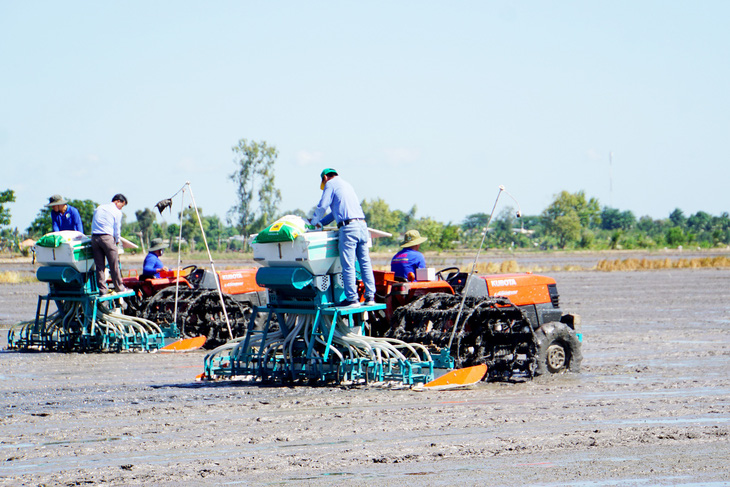
Dong Thap province has launched a pilot project on 50 hectares of high-quality rice with reduced emissions in the 2024 autumn-winter crop – Photo: DANG TUYET
Simultaneous deployment
In Soc Trang, Mr. Tran Tan Phuong – Deputy Director of the Department of Agriculture and Rural Development – said that the province has registered to implement 72,000 hectares in the 1 million hectare high-quality rice program, to be implemented from 2024 to 2030. In the first year, 2024, Soc Trang will pilot 50 hectares at Hung Loi Agricultural Cooperative (Long Duc commune, Long Phu district).
Having been involved with rice farming for many years, Mr. Phuong said that the implementation of the program in Soc Trang has been quite smooth. Over the past seven years, Soc Trang has implemented the Sustainable Agricultural Transformation Project (VnSAT project), which has positively impacted the rice cultivation process of farmers. With this foundation in place, farmers are no longer surprised when transitioning to new farming methods.
Furthermore, according to Mr. Phuong, Soc Trang is also the cradle of producing high-quality specialty fragrant rice, especially the ST variety which won the "crown" at the world's best rice competition, so the rice farming skills of Soc Trang farmers have been significantly improved.
In Dong Thap, Mr. Nguyen Van Vu Minh – Director of the Department of Agriculture and Rural Development – said that for the 2024 autumn-winter crop, the province has implemented a pilot project on 50 hectares of high-quality, low-emission rice grown at Thang Loi Cooperative (Thap Muoi district), which is now 28 days old.
According to Mr. Minh, by 2025, Dong Thap province will implement the project in seven rice-growing districts and cities: Tan Hong, Hong Nguy, Tam Nong, Thanh Binh, Cao Lanh, Thap Muoi, and Hong Nguy City, with a total area of nearly 70,000 hectares. By 2030, it will be expanded to Lap Vo district, aiming for a total area of 161,000 hectares.
In Kien Giang province, according to Mr. Le Huu Toan, Director of the Department of Agriculture and Rural Development, the province is participating in the high-quality, low-emission rice program with an area of approximately 200,000 hectares. The locality is implementing the program in two phases: Phase 1 (2024-2025) focuses on consolidating the existing areas of the VnSAT project, which is 24,738 hectares, and expanding the area outside the VnSAT project zone, aiming to reach 100,000 hectares by 2025 (60,000 hectares in 2024).
In Phase 2 (2026-2030), the locality will identify key areas for investment projects to develop high-quality, low-emission rice cultivation zones, adding another 100,000 hectares, aiming for a target of 200,000 hectares of high-quality, low-emission rice cultivation in the districts of Giang Thanh, Kien Luong, Hon Dat, Tan Hiep, Chau Thanh, Giong Rieng, Go Quao, An Bien, An Minh, U Minh Thuong, Vinh Thuan and Rach Gia City.
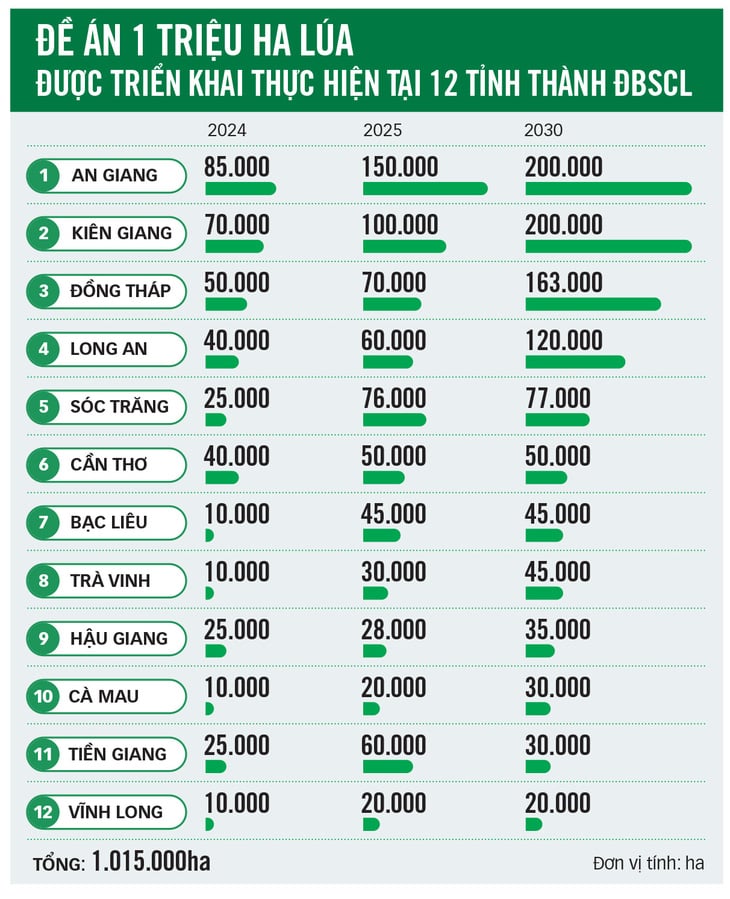
Source: Ministry of Agriculture and Rural Development – Graphics: T. ĐẠT
Suggestions and recommendations
According to Mr. Tran Tan Phuong, the implementation of the program changes an entire method of production, therefore it requires persistent communication to help people understand the purpose and requirements of the project, so that they will change their perceptions and support it.
According to Mr. Phuong, the current infrastructure is still limited and needs more attention. Similarly, Mr. Nguyen Van Vu Minh stated that the locality needs resources to improve the technical infrastructure for rice cultivation and to ensure water control in the fields.
The goal is to collect 70% of straw from fields by 2025, aiming for 100% by 2030. In unavoidable circumstances, straw can be shredded and returned to the fields. Achieving this collection rate requires careful and detailed implementation.
Furthermore, Mr. Minh believes that a specific mechanism is needed to make this program effective. "Currently, a large number of businesses are quite enthusiastic. However, for sustainable linkages, more focus is needed in negotiating with participating parties in subsequent scaling-up models."
"The agricultural sector will anticipate this linkage story and propose to the Government in the near future specific mechanisms for the program. Because the program is only for about 6-7 years, a specific mechanism is needed to implement the models," Mr. Minh said.
Meanwhile, Mr. Le Huu Toan pointed out that the difficulty lies in the current lack of tools and a framework for MRV (Maritime Vehicle Monitoring and Verification) measurement systems to support monitoring activities and the development of technical support plans. The program's requirement of a straw collection rate of over 70% in phase 1 and 100% in phase 2 is considered challenging by localities due to weather and seasonal variations, the inability to utilize large quantities of straw, and the lack of financial guidance on selling carbon credits.
Therefore, Mr. Toan proposed that agencies under the Ministry of Agriculture and Rural Development should soon implement training courses, provide guidance on the MRV measurement system framework, and offer financial guidance on selling carbon credits.
● Mr. Cao Duc Phat (former Minister of Agriculture and Rural Development, Chairman of the Board of Directors of IRRI in Vietnam):
Fulfilling the Vietnamese Government's commitments to the international community.
The goal of the 1 million hectare high-quality, low-emission rice program is to increase farmers' income and, through reduced pesticide use, water usage, and plant protection products, reduce environmental pollution and greenhouse gas emissions, thus fulfilling the Vietnamese government's commitment to the international community. Based on the report from Can Tho City, we are on the path to achieving these two goals.
I hope that this model will spread throughout the Mekong Delta and the entire country to fulfill the expectations of farmers. First and foremost, rice farmers will have a better life, with higher incomes, a cleaner environment, and contribute to the global effort to combat climate change.
This is one of the relatively complete models. We built upon what we did seven years ago with the help of the World Bank in the VnSAT project, completing a step-by-step infrastructure development, especially in irrigation, and applying technical packages. With this pilot model, we are taking another step to further refine it. If farmers find it satisfactory, we can expand it together, aiming to reach 1 million hectares by 2030.
Implemented in 12 provinces and cities.
The program to cultivate 1 million hectares of high-quality, low-emission rice linked to green growth in the Mekong Delta by 2030 is being implemented in 12 provinces and cities in the Mekong Delta (excluding Ben Tre province).
Before widespread implementation, the Ministry of Agriculture and Rural Development conducted pilot projects in five localities: Can Tho City, Tra Vinh, Soc Trang, Kien Giang, and Dong Thap. Can Tho was the first locality to implement the project during the summer-autumn crop season, covering 50 hectares at Tien Thuan Cooperative (Thanh An commune, Vinh Thanh district).
● Mr. Le Thanh Tung (Deputy Director of the Department of Crop Production, Ministry of Agriculture and Rural Development):
The initial results are very encouraging.
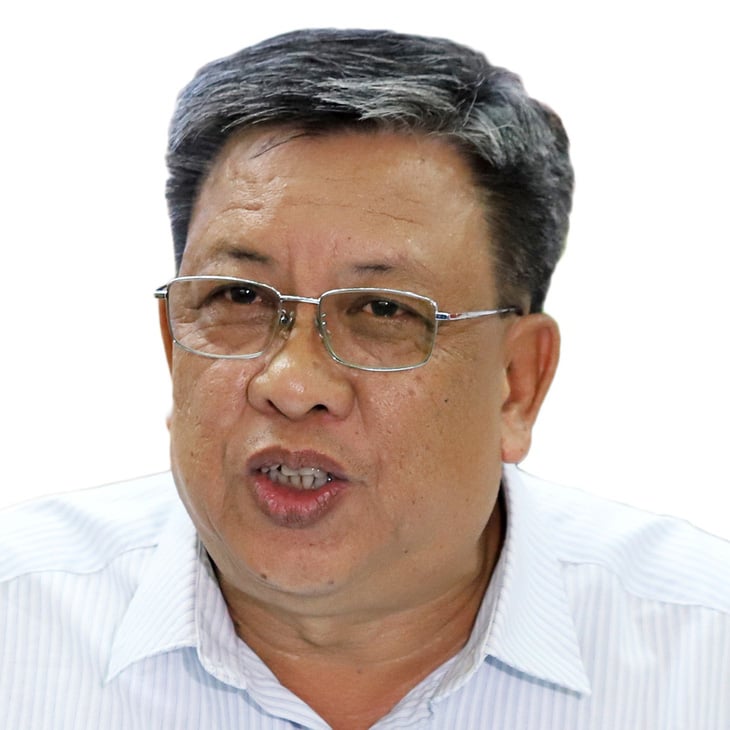
The Ministry of Agriculture and Rural Development and the provinces in the Mekong Delta are actively implementing the project to cultivate 1 million hectares of high-quality, low-emission rice, and the initial results are very encouraging.
Currently, the Ministry of Agriculture and Rural Development continues to direct the implementation of seven models in five provinces and cities: Can Tho, Kien Giang, Soc Trang, Dong Thap, and Tra Vinh. Tra Vinh and Kien Giang each have two models. The first model in Can Tho has already been harvested, showing a reduction in costs of 1-6 million VND/ha, an increase in yield of 200-500 kg/ha, and a reduction in carbon emissions of 2-6 tons/ha.
The Ministry of Agriculture and Rural Development's directive for these seven models is to implement them for three consecutive seasons, then summarize the models, identify advantages, difficulties, achievements, and shortcomings in order to continue implementation.
Specifically, these five provinces and the remaining seven have all developed plans to expand the model within their respective provinces. In parallel with the ministry's model, each district in these provinces is also developing a model on a scale of 30-50 hectares or more, depending on the province's capacity. These models implement all the criteria of the program, such as strengthening cooperatives, organizing linkages, implementing cultivation processes, and completing the internal field system…
Simultaneously, provinces have also developed implementation plans for the program up to 2025 and 2030. Accordingly, by 2025, the target is to reach 180,000 – 200,000 hectares. Currently, the provinces have fully registered and mapped the areas, and have also assessed the infrastructure system (inland irrigation, transportation) to serve rice production and meet the program's requirements in the coming years.
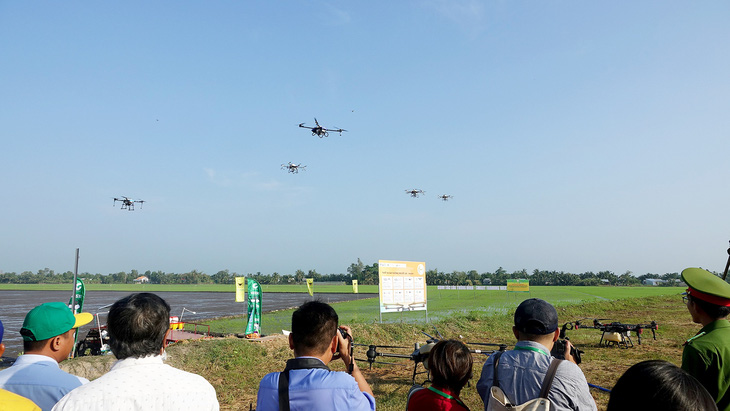
Hau Giang demonstrates the application of advanced technology in a pilot model of rice cultivation to reduce emissions – Photo: CHI CONG
* Sir, in practice, what difficulties and obstacles have been encountered in implementing the program that need to be overcome?
– Businesses supplying inputs are fully capable of implementing the technical cultivation procedures set by the Department of Crop Production. Even the measurement and calculation of greenhouse gas emission reductions involve many businesses, with IRRI also providing support. However, few businesses are participating in linking the consumption of agricultural outputs according to the program's criteria.
Secondly, the outreach and awareness campaign regarding the program among farmers has been slow. We've only been disseminating technical information about reducing emissions and costs, but there's still no specific program outlining the more concrete benefits for agriculture, rural areas, and farmers. This isn't just the responsibility of the Ministry of Agriculture and Rural Development, but also of the entire political system and the media.
The third difficulty lies in the foundation of the linkages. Farmers participating in the project are caught up in the rapid growth of their cultivated area. While the cultivated area may increase very quickly, the development of cooperatives to keep pace with this growth is slow due to legal issues and the need to organize farmers.
* Some businesses have reported difficulties in accessing funding for the program. How will this be resolved, sir?
– During a meeting with constituents in Can Tho City on July 14th, Prime Minister Pham Minh Chinh stated that he had instructed the State Bank of Vietnam to resolve this issue. I believe this obstacle will be addressed soon.
The Ministry of Agriculture and Rural Development has also formulated most of the legal documents to serve the program, such as establishing steering committees, issuing participation criteria, technical procedures, and providing agricultural extension training. This includes issues related to securing funding, establishing management boards to develop programs and projects to secure support funds, and fostering cooperation with international organizations.
The remaining issue is how to implement it synchronously in each locality. In the past, some localities have implemented it very decisively and effectively, but many provinces have not yet truly gotten involved. Localities need to have focal points, more decisive direction and guidance. Provincial leaders need to participate in directing it; if it is only delegated to the departmental level, it will be very difficult.
Source: https://tuoitre.vn/lam-cho-duoc-1-trieu-ha-lua-chat-luong-cao-20240716091531986.htm



![[Image] Nearly 125,000 Hanoi students completed the Literature exam for the 10th grade entrance exam.](https://vphoto.vietnam.vn/thumb/1200x675/vietnam/resource/IMAGE/2026/05/30/1780117233041_ndo_br_thiet-ke-chua-co-ten-2-png.webp)











![[Photo] Admire the coral "masterpiece" amidst the million-year-old heritage of Dak Lak province.](https://vphoto.vietnam.vn/thumb/1200x675/vietnam/resource/IMAGE/2026/05/30/1780107638639_y25-jpg.webp)

























































Comment (0)