

Besides glutinous rice flour, other ingredients include rice flour, wheat flour, potato flour, tapioca flour, etc. The name of the ingredient following "banh it" will become the proper name. For example, banh it nep (glutinous rice cake), banh it mi (wheat flour cake), banh it gao (rice cake)... However, no matter what type of cake it is, it's always wrapped in banana leaves, so who knows what's inside?
Therefore, customers often ask whether the cakes are sweet or savory? What filling? Mung bean, peanut, black bean, red bean, or shredded coconut? Everyone has their own opinion. To sell cakes successfully, sellers need... experience. They need to know which neighborhoods prefer sweet cakes with coconut filling, and which prefer savory cakes with shrimp filling... so they can sell the cakes in the right direction.
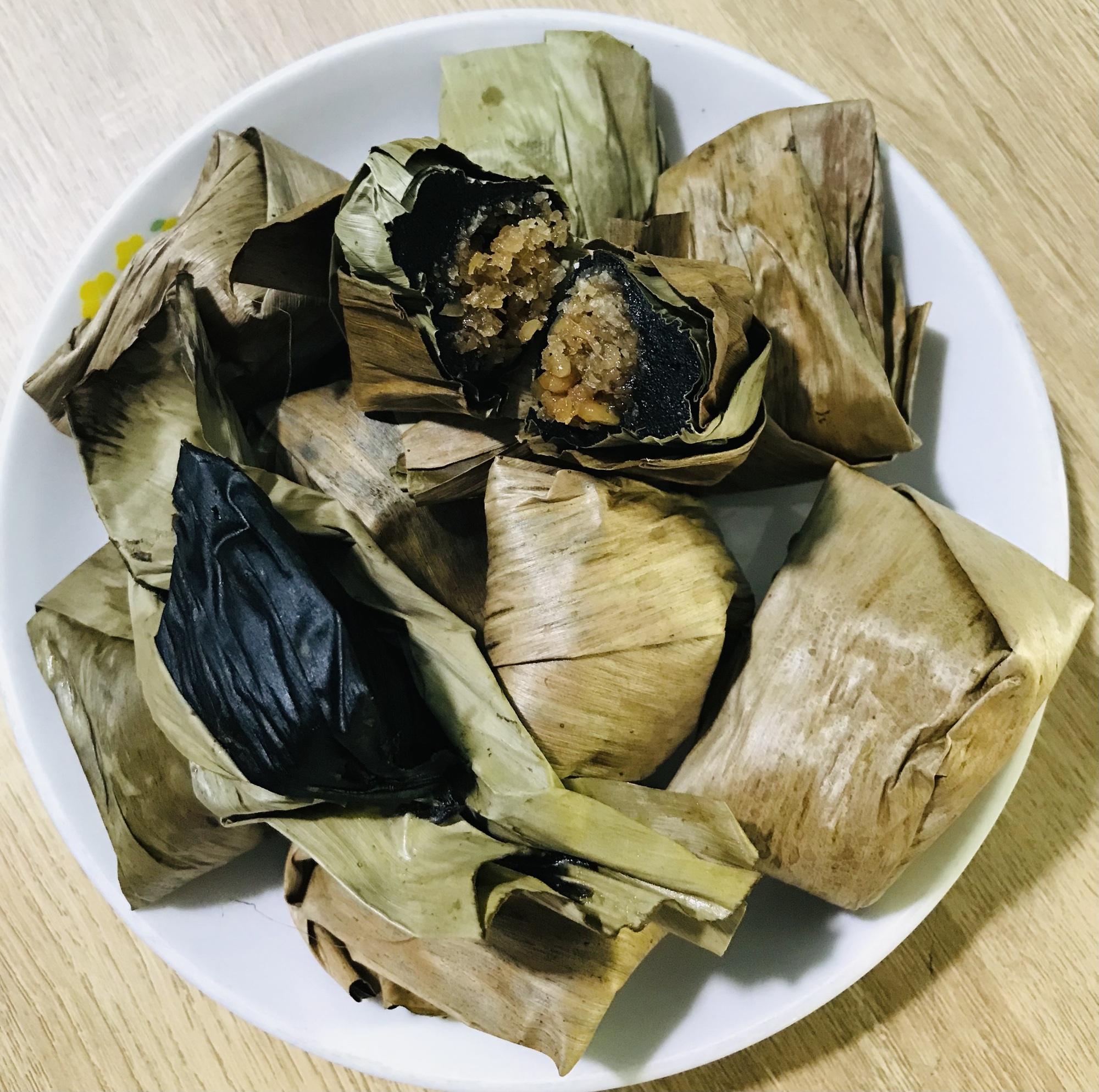
Soft, fragrant, and subtly sweet bánh ít lá gai (sticky rice cake wrapped in thorny leaves).
Villagers selling bánh ít (a type of Vietnamese cake) don't make much profit, but they're very talkative. They're quick to "promote" their cakes all along the village streets and alleys. Auntie Năm, Auntie Bảy, Sister Tư… all eagerly introduce their cakes, saying things like, "What kind of flour is this cake made? What kind of filling is it? It's so delicious, folks…"
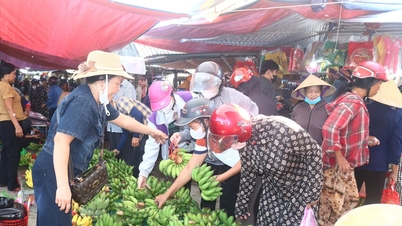
Sticky rice cakes (Bánh ít) are a common sight at rural markets. Besides that, you can also find them at ferry terminals, village crossroads, and village intersections… Nowadays, no one gathers family members to make and cook these cakes, sweating and toiling like before. The traditional village sticky rice cake has also undergone a “digital transformation,” resulting in online availability. Just a simple “shop, shop!” online, and the next day you'll have sticky rice cakes delivered right to your door, exactly the right style, quantity, quality, and time.
For some reason, I found myself remembering the sticky rice cake made with wheat flour after 1975 and continuing into the 1980s… After the war, food was severely scarce. Even the smallest plot of land by the fence was used to grow cassava to harvest the tubers for making sticky rice cakes. For ancestral worship ceremonies, sticky rice cakes made with wheat flour had to be replaced with sticky rice cakes made with shredded coconut stir-fried with salt and seasoned with MSG – absolutely no meat. Yet, they were incredibly delicious. After the ceremony, guests would each take a few cakes home for their children and grandchildren. That's how it was in the countryside. Without sticky rice cakes, the journey home was so sad.
Nowadays, amidst a market flooded with various types of cakes, the "banh it la gai" (sticky rice cake wrapped in thorny leaves) is still highly regarded by people in the countryside. This type of cake can be found throughout the villages of Central Vietnam. While there are cakes, there isn't a lyrical folk song like the one Binh Dinh has and continues to possess: "If you want to eat banh it la gai, marry a man from Binh Dinh to make the journey longer." No one has compiled statistics on how many girls from afar have married into Binh Dinh because of this "motivated" cake. But at least it speaks volumes: the irresistible appeal of banh it la gai is undeniable.
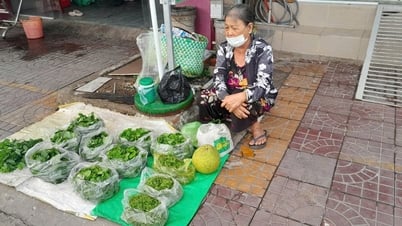
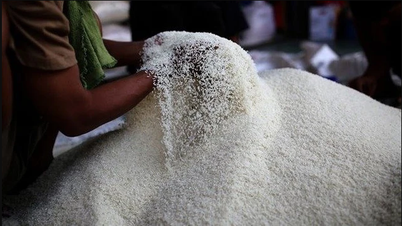
The green leaves of the nettle plant, pounded until finely crushed to a deep black color, are mixed with glutinous rice flour and a spoonful of cooking oil, then pounded again until very smooth to form the outer layer of the cake. The filling consists of mung beans or shredded coconut mixed with sugar. Wrapped in banana leaves, the cake is placed in a steamer and steamed. When the cake is opened, the banana leaves release their fragrance first, followed by the nettle leaves and the subtle aroma of the glutinous rice. The creamy white coconut strands nestled within the nettle leaves retain their crispness, offering a sweet and slightly fatty taste that is very appealing.
The name "bánh ít" (small rice cake) reminds you not to eat too much because it's easy to gain weight. "Don't eat bánh ít in the late afternoon or evening because the energy accumulated overnight leads to weight gain. It's better to eat it in the morning or at lunchtime because daytime activities will burn off the energy," revealed someone with 60 years of experience eating bánh ít.
Source link

![[Photo] The 14th Party Congress discusses the Congress documents in the assembly hall.](/_next/image?url=https%3A%2F%2Fvphoto.vietnam.vn%2Fthumb%2F1200x675%2Fvietnam%2Fresource%2FIMAGE%2F2026%2F01%2F21%2F1768970813473_image.jpeg&w=3840&q=75)



































![[Image] Ho Chi Minh City simultaneously commences construction and breaks ground on 4 key projects.](https://vphoto.vietnam.vn/thumb/1200x675/vietnam/resource/IMAGE/2026/01/15/1768472922847_image.jpeg)



















Comment (0)