

The Tale of Kieu followed traveling theater troupes, village gatherings, and even the difficult times, gradually becoming a part of the way of life, a way for the people of Cam Lam to preserve their cultural voice in this turbulent coastal land.
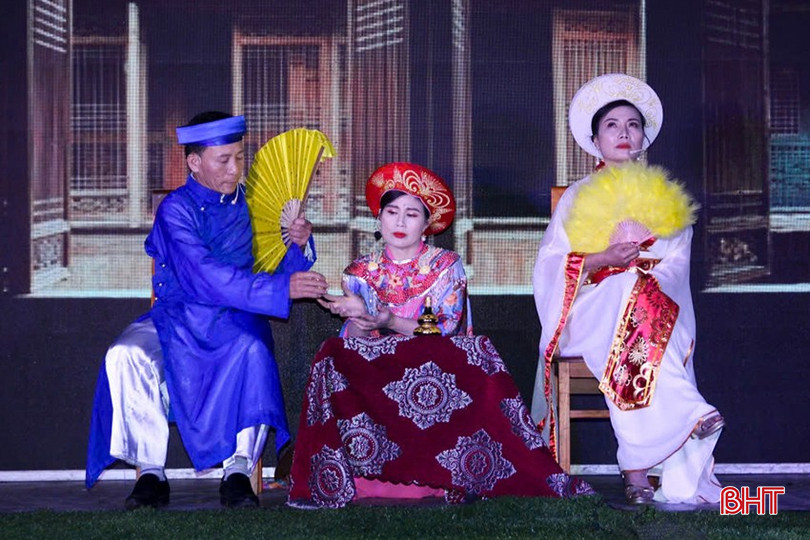
In the days leading up to Tet (Lunar New Year), the fishing village of Cam Lam remains the same, only the people's hearts are a little more restless. The sea is still salty, the work continues endlessly, but the way the fishermen return from the sea has changed. As soon as the boats dock, everything on shore is quickly arranged, not for rest, but to be ready for a familiar appointment. When the afternoon sun is still waning, they change their clothes and head to the village cultural center, as if even a slight delay would leave something very familiar missing from that afternoon.
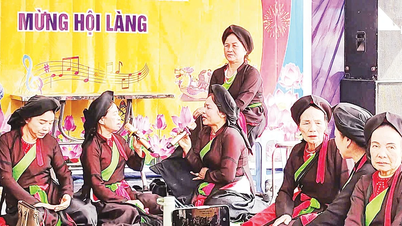
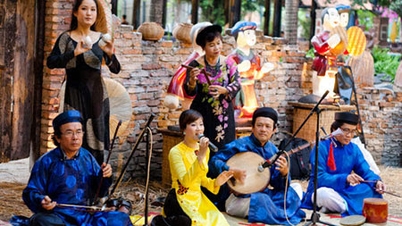
When I arrived with Mr. Mai Tung, Vice Chairman of the Kieu Xuan Lien Club, the courtyard was already quite lively. People were getting dressed up, others changing costumes, meticulously putting on familiar outfits. Then, from somewhere behind the stage, a voice began to sing. The verses from the Tale of Kieu were recited slowly, clearly, in rhythm with someone who had just left the sea.
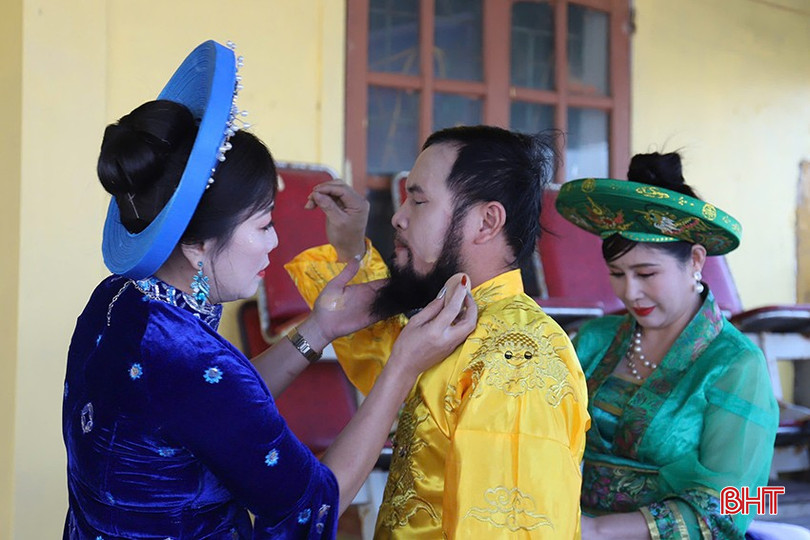
“The Tale of Kieu in Cam Lam begins like this, gently, naturally, like a habit that has followed the villagers for generations. For generations, whether there is an audience or not, each performance must be meticulously prepared. Whoever plays a role must be properly dressed for that role. For us, performing the Tale of Kieu is about not betraying the tradition, not betraying what has been passed down. In the last days of the year, that meticulousness becomes even more natural, as a way of keeping our hearts pure before the old year closes.”
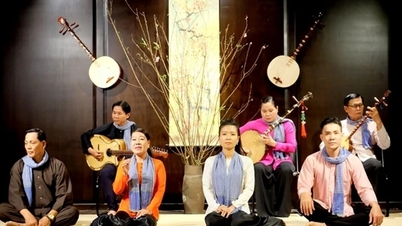
The Tale of Kieu doesn't have its own distinct style of singing. It wasn't born as an independent theatrical form, but rather adapted from the Tale of Kieu , then brought to life from the pages of the book. In it, the verses are dramatized through singing, acting, and performance, borrowing and blending various melodies: sometimes soft and gentle like the folk songs of Nghe Tinh, sometimes graceful like Hue songs, and at other times dramatic like Cheo and Tuong... Sometimes it's just a recitation of Kieu during a conversation, sometimes it's an entire performance with costumed characters engaging in direct dialogue with the audience. Yet, in every form, it captivates the listeners.
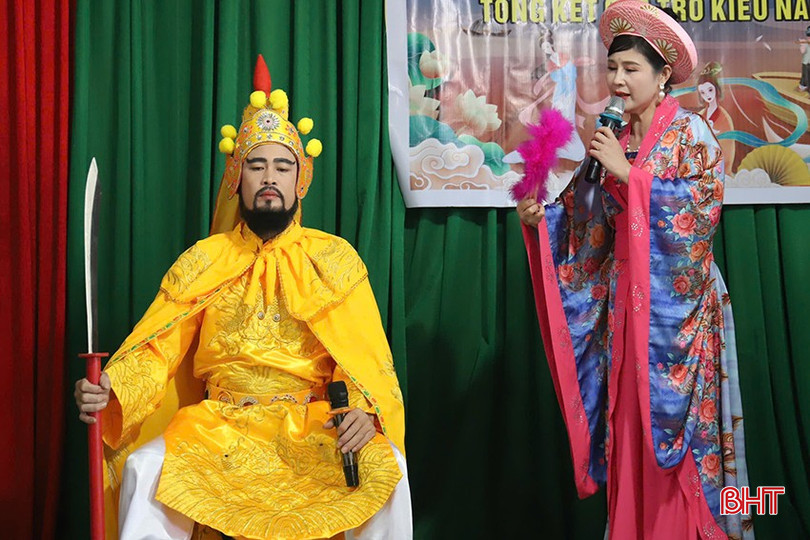
In the 1960s and 70s, ever since Mr. Mai Ngan (Mr. Mai Tung's father) brought the Kieu folk opera to the village, this art form quickly gained popularity among the people of Cam Lam. Being a land of singing, and with their inherent passion for art, they quickly absorbed the beauty and charm of the Kieu folk opera and incorporated it into their daily cultural activities.
In those days, the members of the troupe were all young men and women, beautiful and talented, who came to the Tale of Kieu with all their passion. Then time passed. War cast its shadow over the village, bombs and bullets sometimes interrupted even performances. There were years of poverty, when there wasn't enough food to eat or clothes to wear, but when evening fell, the stage of the Tale of Kieu was still set up, and the songs were still sung. That flame of passion wasn't dazzling or ostentatious, but smoldering and enduring, just like how the people of Cam Lam preserved the Tale of Kieu amidst the vicissitudes of life.
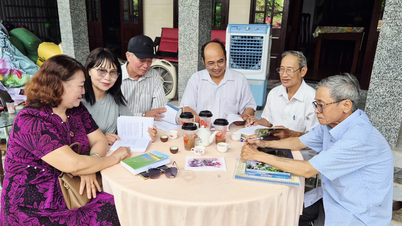
"Here, the 'Tro Kieu' performance never resembles a proper show. It's more like a familiar village activity, where the performers and audience sit very close together. Some people initially stand outside the singing, but a moment later they've unknowingly stepped into a role," a villager who came to listen to the performance told me.
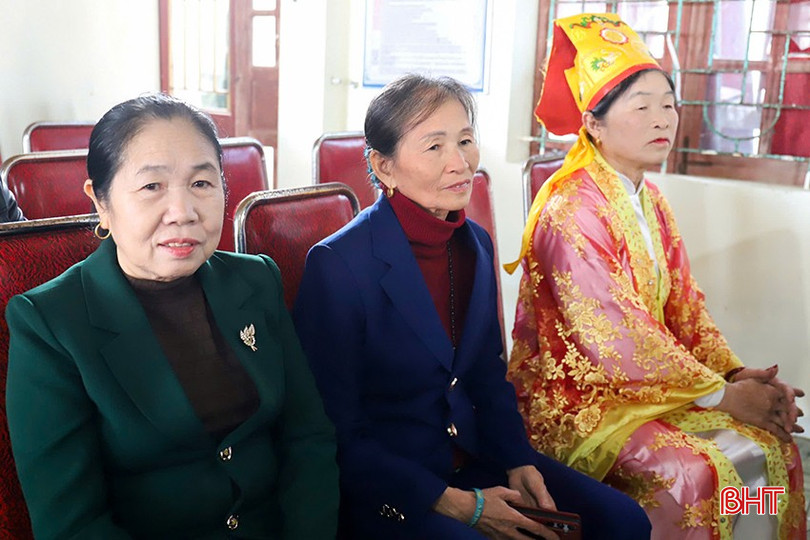
That afternoon, I met many faces from generations who had been involved with the Trieu Kieu performance in Cam Lam village. Each person had their own story and memories, but when it came to Trieu Kieu, the name most frequently mentioned was Mr. Mai Ngan. He has passed away, but it seems he never left this stage. His mark isn't in his eloquent storytelling, but quietly emerges in the way people pronounce words clearly, lower their voices correctly... What the current generation is doing has become a tradition from the years when Mr. Ngan performed on stage. And in these last days of the year, that memory emerges more clearly, quietly yet persistently, as an indispensable part of the Trieu Kieu performance in Cam Lam.
On stage, fisherman Truong Cong Duc, having just finished playing Tu Hai, still retained the character's stern expression, which slowly softened, returning to the gentle demeanor of a man accustomed to the rough seas. Because he's been associated with the role of Tu Hai for so long, his goatee has stayed with him for years. Seafaring is hard work, especially during the busy end-of-year period, but no matter how busy he is, he always tries to make time for the performance.
Having just finished playing the role of Hoan Thu, Ms. Nguyen Thi Vinh also shared: “This is a difficult role, with many layers of personality, not allowing the actor to let emotions run wild. The most important thing when playing Hoan Thu is knowing when to stop, the voice must be concise and firm, so that the character appears both sharp and restrained.” Hearing her say this, one realizes that behind each role is very careful consideration, not only to play the role correctly, but also to preserve the core humanistic values of The Tale of Kieu .
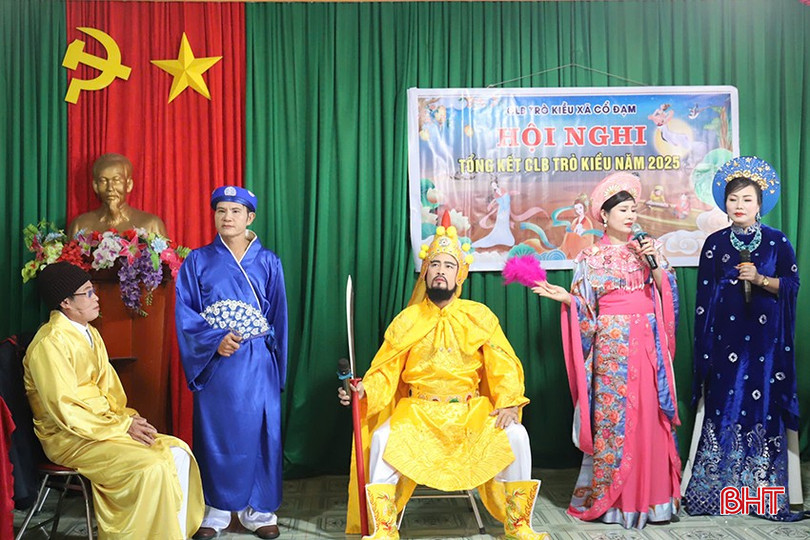
The singing session ended as the afternoon light outside the cultural center had softened. Some left early, others lingered, a few lines from the Tale of Kieu still echoing in the air, as if wanting to dissolve with the waves into the very fabric and waters of the village. As I prepared to leave, the space had returned to the familiar appearance of a seaside village afternoon, but in that quietude, everyone knew that the singing had still remained, deeply embedded in the hearts of many.
And on that afternoon just before Tet, I clearly felt the profound essence of the Kieu folk performance in Cam Lam. Each song, each performance seemed to quietly encapsulate the memories of the past year, allowing people to walk more slowly and gently towards the new year. And, a deep belief arose in the hopes of many that the Kieu folk performance would continue to resonate and deepen in today's cultural life…
Source: https://baohatinh.vn/lang-tieng-tro-kieu-tren-dat-cam-lam-post306004.html

















































Comment (0)